Roof Replacement & Roofing
in Downey.
A roofing estimate should explain what happens beneath the finished surface as well as the material you see. Start with the existing roof, the areas of concern, and any work already planned for solar or insulation.
Get my virtual estimate ↗Team All Star Construction · CA license #1009760
Serving your area from our Southern California operation.
Virtual Estimates Available
Start by phone or video. Share your photos and project priorities; we then arrange the measurements and site review needed for your estimate.
What to share for your
Downey project
- Share ground-level photos of each roof side and any visible ceiling staining; do not climb onto the roof for an estimate.
- Tell us the approximate roof age, material, number of stories, and any known leak history.
- Mention existing solar panels, skylights, patio connections, or planned attic insulation.
Decisions to discuss
- Compare the proposed tear-off, underlayment, flashing, ventilation, and finish material.
- Ask how concealed decking damage will be assessed and priced if discovered.
- Coordinate roofing with solar removal and reinstallation before setting a schedule.
Can you price a roof from photos?
Send your address and photos to start a virtual estimate. We review the roof measurements, access, existing layers, and repair needs before finalizing the installation plan.
Planning a project in Downey
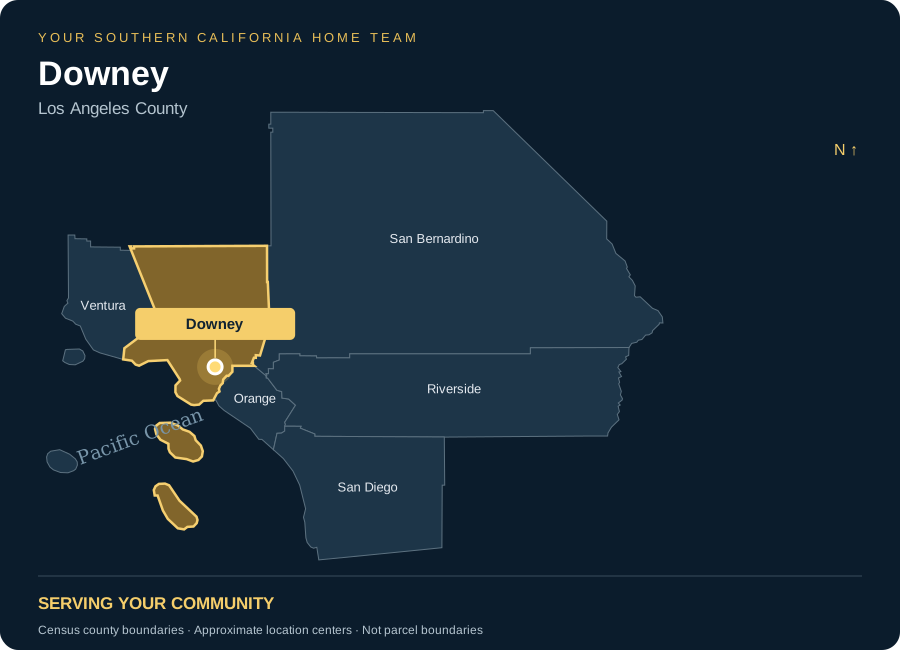
Downey is an incorporated city in Los Angeles County. Confirm the city's building or planning provider for your property; some cities contract with other agencies.
Los Angeles County provides a service locator and Building & Safety resources. Confirm which agency serves the parcel; city names and mailing addresses alone do not establish jurisdiction.
Los Angeles County Building & Safety ↗Location reference: US Census TIGERweb, current places layer. About this directory.
Coordinate related work in Downey
All home improvement services in Downey · Roof Replacement & Roofing throughout Los Angeles County · Roof Replacement & Roofing overview
Nearby communities
Roof replacement planning in Downey
Roof replacement in Downey is usually not driven by one missing shingle. It is more often the result of long-term heat exposure, UV breakdown, aging materials, and leaks that start showing up when winter rain finally tests the system. In this part of Los Angeles County, roofs tend to wear differently than they do in cooler coastal areas, and that catches many homeowners off guard.
Downey’s inland climate brings warm summers, strong sun, and periodic rain events that expose weak flashing, old underlayment, and worn low-slope sections. All Star Roof Replacement focuses on helping homeowners understand when a roof has moved beyond isolated repairs and into full replacement territory. If you want a broader local overview first, see the Downey roof replacement service area page or learn more about choosing a roofing contractor near you in Downey.
In homes across Downey, we often see roofs that still look acceptable from the street but are already failing underneath. That is especially common with older tile systems, aging shingles, and houses with garage additions or low-slope tie-ins. The important point is simple: roof failure is usually a system problem, not just a surface problem.
Roof Problems in Downey Usually Start With Heat, Age, and Water Intrusion
Most roof problems in Downey start with gradual wear, then become obvious during a storm or wind event. Direct sun dries out exposed materials over time, and inland heat pushes roof temperatures higher than many homeowners expect. Once flashing, valleys, ridges, or penetrations weaken, water finds the vulnerable spots quickly.
The short answer is that Downey roofs usually fail from a combination of sun, age, and water entry, not from one single event. When heavy rain arrives after a long dry stretch, it often reveals problems that have been building for years. If a leak has already appeared, the page on what to do about a roof leak in Downey explains the immediate next steps. If you are already comparing replacement options, the roof replacement installer page covers what a full project should include.
Why Downey Roofs Fail Earlier Than Homeowners Expect
Asphalt roofs in Downey often age faster than roofs in cooler coastal markets because constant UV and attic heat accelerate drying, granule loss, and surface cracking. South- and west-facing slopes usually take the hardest hit. A roof can still be shedding water in some areas while already reaching the end of its useful life in others.
Tile roofs create a different issue. The tile itself may still look solid, but the underlayment below can already be brittle or torn. A common issue we find in older Downey neighborhoods is tile roofs that appear cosmetically fine from the ground while the waterproofing layer beneath has already aged out. Homeowners researching life expectancy can review more detail on roof lifespan in Downey and how to reduce heat with roofing.
Poor ventilation also shortens roof life. Hot attics trap heat below the roof deck, raising temperatures through the system and increasing wear on shingles, underlayment, and related components. The direct answer is that a roof in Downey often fails earlier when the material is aging and the attic cannot release heat properly.
Why Roofs Fail in Downey Homes
Downey has a broad mix of established residential neighborhoods, mid-century homes, later tract housing, detached garages, patio covers, and additions. That housing mix matters because many roof failures happen at transitions, not just on the main field of the roof. When one house has shingles on the main structure and a low-slope system over an addition, the weak point is often where those systems meet.
In homes across Downey, we often see aging shingles, deteriorated tile underlayment, old flashing, and ventilation deficiencies working together. Dense suburban lots can also make tear-off, staging, and debris handling more complicated, which affects how replacement work is planned. Homeowners comparing roof systems can explore the best roofing materials for Downey homes and the full roof replacement process in Downey.
Heat and UV Damage on Asphalt Shingle Roofs
Heat and UV are major reasons shingle roofs wear out in Downey. The usual signs are granule loss, curling edges, ridge cap deterioration, brittleness, and cracking on the most exposed slopes. In Southern California climates, these issues tend to show up sooner when ventilation is weak or the roof gets prolonged afternoon sun.
For many homes in Downey, standard architectural shingles often land in the rough range of 18 to 28 years, depending on installation quality, sun exposure, and attic conditions. The answer-first version is simple: if shingles are curling, drying out, shedding granules, or repeatedly leaking, the roof may be near replacement age. More examples are covered on the signs you need a new roof page and the Downey roof lifespan guide.
Tile Roof Problems Often Come From the Underlayment, Not the Tile
With tile roofs, the visible surface is not the full story. Concrete and clay tile can last a long time visually, but the actual waterproofing depends on the underlayment, flashings, valleys, penetrations, and edge details below the tile. That is why tile roofs often leak even when the field tile still looks mostly intact.
A common issue we find is older felt underlayment that has become brittle after decades of Southern California heat. Many Downey tile roofs installed from the 1970s through the early 2000s are now at the age where lift-and-relay replacement becomes more realistic than spot repair. If you are comparing options, see tile vs shingle roofing in Downey and the guide to best materials for local conditions.
Low-Slope Additions and Garages Are Frequent Leak Areas
Detached garages, room additions, enclosed patios, and porch tie-ins are common in Downey, and these are often the first sections to leak. Low-slope areas are more vulnerable to ponding, split seams, failed transitions, and poor drainage. Heavy winter rain does not need to last long to expose a weak low-slope section.
Modified bitumen, built-up roofing, and single-ply systems such as TPO or PVC are all seen on these sections. The direct answer is that if the leak is coming from an addition or garage roof, the problem may be in the low-slope membrane or at the transition into the main roof system. Related guidance is available on what to do when your roof leaks and energy-efficient roofing options for reflective low-slope surfaces.
Signs of Roof Failure in Downey
The clearest sign that a roof is failing is not always one dramatic leak. In Downey homes, broader failure often shows up as repeated leak history, soft decking, deteriorated underlayment, extreme attic heat, or patchwork repairs across multiple areas. When problems keep returning after service calls, replacement usually deserves serious consideration.
The short answer is this: multiple symptoms at once usually point to system decline, not a small isolated defect. If you want a full checklist, review the page on signs you need a new roof in Downey and what to expect from a roof inspection.
Exterior Warning Signs Homeowners Can Spot
Outside the home, common warning signs include curled shingles, missing granules in gutters or at downspouts, broken or slipped tile, ridge deterioration, exposed fasteners, and visibly failing flashing. Valleys with debris buildup are another red flag because backed-up water often finds its way under aging materials during storms.
Patched sections that no longer match the rest of the roof can also be a clue. They often show where recurring trouble has already been addressed more than once. If you are unsure whether those symptoms point to another repair or a larger project, compare them against the guidance on roof repair vs replacement and local inspection expectations.
Interior and Attic Signs That Point to a Bigger Roofing Problem
Inside the house, water stains, ceiling bubbling, peeling paint near roof lines, damp insulation, moldy attic odors, and visible daylight in the attic all suggest more than minor wear. Leaks around skylights, vent pipes, and roof-to-wall intersections are especially common in older Downey homes because those details rely heavily on flashing quality.
Attic heat is another major clue. If the attic becomes excessively hot, the roof may be aging faster than it should. The direct answer is that interior staining plus attic heat often means the problem involves both moisture control and ventilation, not just a single roof opening. More detail is available on roof leak next steps and ways to reduce heat with roofing improvements.
Roof Repair vs Replacement in Downey
Repair still has a place, but not every roof is a good repair candidate. In Downey, the decision usually comes down to roof age, how widespread the wear is, whether leaks are isolated or recurring, and whether the material below the surface is still sound. An older roof with repeated patches often costs more over time than a planned full replacement.
The direct answer is this: repair makes sense when the problem is limited and the rest of the roof still has useful life. Replacement makes more sense when the roof has multiple leaks, widespread wear, old underlayment, or structural deterioration that patching will not solve. Homeowners weighing the difference can review roof repair or replacement in Downey and whether reroofing is worth it.
When a Repair Still Makes Sense
A repair is usually reasonable when the issue is isolated and the roof is still relatively young. Examples include a single flashing failure, a localized leak around a penetration, or limited wind damage on an otherwise healthy section of roof. Roof age matters a lot here.
As a general rule, shingles under roughly 12 to 15 years old and tile underlayment under roughly 15 to 20 years old are more repair-friendly if the rest of the system is still in solid condition. A common issue we find is that homeowners assume one leak always means replacement, but on younger roofs that is not necessarily true. The key is whether the surrounding materials are still flexible, intact, and serviceable. More on that is covered in the repair vs replacement guide.
When Full Replacement Is the Better Long-Term Decision
Replacement is usually the better decision when the roof is older, leaking in more than one area, or showing widespread wear across the system. In Downey, shingle roofs in the 18- to 25-plus-year range often fall into this category, especially when heat exposure and poor ventilation have accelerated aging.
Tile roofs are similar in a different way. If multiple leaks are tied to failing underlayment, repeated spot repairs often just chase symptoms. In homes across Downey, we often see tile roofs where the surface tile can be reused but the waterproofing layer below has reached the end of its life. Widespread wood rot, brittle materials, and recurring service calls all strengthen the case for replacement.
More detail is available on the roof replacement installer page and the checklist of signs you need a new roof.
Why Reroofing Over an Existing Roof Is Usually a Weak Option
Overlay reroofing can look cheaper at first, but it often creates long-term problems. It can hide damaged decking, leave old weak points in place, reduce the visibility of underlying conditions, and sometimes trap extra heat or moisture within the assembly. In a hot inland climate, adding another layer is often not the strongest long-term move.
It is also a poor fit for tile systems because the real failure point is commonly the underlayment, not the outer tile. The simple answer is that full tear-off gives better visibility, better repair access, and better long-term value in most Downey replacement scenarios. For more detail, review whether reroofing is worth it and how warranty terms are affected on the roof warranty explained page.
Roof Replacement Cost in Downey
Roof replacement cost in Downey is generally in line with nearby Southeast Los Angeles County markets, but the final number depends heavily on roof type, complexity, tear-off condition, ventilation upgrades, and whether solar or wood damage is involved. Straightforward shingle projects and more complex tile or mixed-system projects can fall into very different ranges.
The answer-first version is this: many full shingle roof replacements in Downey commonly fall around $11,000 to $22,000+, while more complex jobs can reach well beyond that. Tile work, low-slope transitions, solar removal, skylights, and deck repairs are the factors that usually move pricing higher. For more detailed breakouts, see roof replacement cost in Downey and cost per roofing square.
Typical Cost Range for Asphalt Shingle Roof Replacement
Architectural shingle replacement in Downey commonly runs about $600 to $1,000+ per square, with one square equal to 100 square feet of roof area. A straightforward single-story home with decent access and limited wood repair may land around $9,500 to $15,000. More complex homes with valleys, steeper sections, ventilation corrections, and deck replacement often fall closer to $15,000 to $28,000.
These numbers reflect real Southern California conditions, not budget outlier pricing. The direct answer is that a simple shingle roof can be relatively manageable, but complexity adds up quickly once hidden damage or code-related upgrades appear. More detail is available in the local cost guide and the page on cost per square roof in Downey.
Typical Cost Range for Tile Roof Work in Downey
Tile roof pricing depends on whether the project is a lift-and-relay using reusable tile or a full new tile system. Tile lift-and-relay projects in Downey commonly range around $600 to $1,100+ per square. Full new tile systems often range roughly $1,200 to $2,000+ per square depending on tile choice, breakage rate, underlayment type, flashing upgrades, and roof complexity.
The key cost driver is usually not just the tile itself. It is the labor, underlayment, metal work, and careful handling required to remove, stage, and reset materials correctly. Homeowners comparing systems can review tile vs shingle roofing and broader replacement cost ranges.
Hidden Costs That Change the Final Price
Several common items can change the final price after tear-off begins. Decking replacement is one of the most common, often running about $95 to $175 per sheet depending on material and extent. Dry rot at eaves or fascia, upgraded flashing, ventilation corrections, skylight work, and permit requirements also affect total cost.
Solar panel removal and reinstall can add roughly $2,000 to $6,000+ depending on array size and coordination needs. Access limitations matter too, especially on tighter suburban lots where material staging and debris removal take more labor. The short answer is that the quoted roof price is only meaningful if the scope explains what is included and how hidden conditions will be handled. Related pages include cost per square roof and roof financing options.
Roof Type | Typical Downey Range | Common Cost Drivers
--- | --- | ---
Architectural shingles | $600–$1,000+ per square | Tear-off layers, ventilation, wood repair, valleys, access
Tile lift-and-relay | $600–$1,100+ per square | Underlayment, flashing, tile handling, breakage, staging
New tile system | $1,200–$2,000+ per square | Tile material, structural load considerations, underlayment, metal work
Low-slope sections | Varies by system and tie-ins | Drainage, membrane type, transitions, penetrations
Tile vs Shingle Roofs in Downey
Both tile and shingles are common in Downey, and neither is automatically best for every home. The right choice depends on the house style, budget, structural conditions, HOA considerations where applicable, and whether you are replacing an existing system with similar materials or changing roof type altogether.
The direct answer is that shingles are usually the more practical lower-cost choice, while tile offers a longer visual lifespan and a look that fits many Southern California neighborhoods. If you are comparing both in more detail, visit the local page on tile vs shingle roofing in Downey and the guide to best roofing materials.
When Tile Makes Sense in Downey Neighborhoods
Tile makes sense when the home already has tile, the neighborhood aesthetic supports it, or HOA standards favor that appearance. Concrete and clay tile handle sun and heat well, and the tile itself can last for decades. In many Downey neighborhoods, tile remains a strong fit visually and functionally.
But the tile surface is only part of the system. The real upgrade value comes from premium underlayment, better flashing, and improved ventilation during replacement. The short answer is that tile is a strong long-term choice when the structure and budget support doing the system correctly. More detail is covered in the pages on best materials and roof lifespan.
When Shingles Are the More Practical Choice
Architectural shingles are often the more practical option for older ranch homes and simpler rooflines in Downey. They usually come with lower upfront cost, easier installation, broad color availability, and simpler future replacement logistics. They also work well when a homeowner wants to improve ventilation during replacement without moving into a much higher budget category.
Proper installation matters. Santa Ana wind events can exploit weak fastening, aging ridge caps, and poorly secured edges. The answer-first version is that shingles are usually the most budget-efficient and flexible choice, but they still need a full system approach to perform well in Downey heat. Homeowners comparing reflective options can also review the cool roof page and the broader materials guide.
Energy Efficiency and Heat Reduction With Roofing in Downey
In Downey, roofing affects more than leak protection. It also affects attic temperature, indoor comfort, and how hard your AC has to work during long warm stretches. On many homes, the biggest heat issue is not just the surface material. It is the combination of roof color, reflectivity, ventilation, insulation interaction, and whether the roof system was installed with proper airflow and flashing details.
If heat is one of your main concerns, energy-efficient roofing options in Downey should be evaluated as a full system, not as a single product upgrade. In practical terms, that usually means looking at cool-rated materials, attic ventilation, and the roof areas that get the strongest afternoon sun.
What a Cool Roof Means in Downey
A cool roof is a roofing system made with materials that reflect more sunlight and release heat more effectively than standard darker products. In Downey, that matters because inland heat and strong sun exposure can drive attic temperatures well above outdoor air temperature, especially on south- and west-facing roof slopes.
For low-slope sections such as patio covers, additions, and detached garages, reflective membranes and white or light-colored systems can make a noticeable difference. For steeper residential roofs, cool-rated shingles and other CRRC-listed products are often a strong fit even when homeowners are choosing based on appearance first. If a homeowner is comparing options, this is where a dedicated cool roof guide for Downey becomes useful.
In California, Title 24 energy rules commonly affect reroof choices, especially on low-slope applications. That does not mean every home gets the same requirement, but it does mean the contractor should know when cool roofing is required, when it is optional, and how those choices affect performance and compliance.
Why Ventilation Matters as Much as Roofing Material
Ventilation is one of the most overlooked parts of roof replacement in Downey. A high-end shingle or tile system can still underperform if the attic traps heat and has poor intake and exhaust balance. Excessive attic heat can shorten shingle life, stress underlayment, and make upstairs rooms harder to cool.
Balanced ventilation usually means intake at the eaves or soffits and exhaust near the top of the roof. Depending on the house, that may involve ridge vents, O’Hagin-style vents, tile vent layouts, or other code-appropriate exhaust methods. The goal is not just adding more vents. The goal is creating balanced airflow that works with the roof design.
Homeowners comparing replacement options should also review how to reduce heat with roofing in Downey, because material upgrades alone do not fix a poorly ventilated attic. Ventilation also matters for long-term warranty performance, which is why it should be reviewed together with the roof warranty details before installation starts.
Roof Lifespan in Downey, CA
Roof lifespan in Downey is usually shorter than homeowners expect if the roof gets heavy sun exposure, poor ventilation, or repeated patching over time. The local pattern is straightforward: high UV, warm inland temperatures, and seasonal rain tend to age roofing materials from both sides. The surface wears from heat and sunlight, while weak flashings or old underlayment get exposed when winter storms arrive.
A homeowner trying to estimate remaining life should not rely on age alone. Installation quality, roof orientation, ventilation, drainage, and the number of past repairs all matter. For a deeper material-by-material breakdown, the most useful reference point is a localized roof lifespan page for Downey homes.
Expected Lifespan by Roof Type
Architectural asphalt shingles in Downey often last about 18 to 28 years in real-world conditions. Some roofs fall short of that range when ventilation is weak or when west-facing slopes take the worst of the afternoon sun. Others last longer when the system was well installed and properly vented from the start.
Tile is different. The tile itself can remain serviceable for decades, but the actual waterproofing layer beneath it often does not. On many Downey tile roofs, especially older systems using traditional felt, underlayment problems start showing up in the 20- to 30-year range. Premium modern underlayments can improve that timeline, but the roof still needs proper valley metal, flashing transitions, and ventilation to reach its full service life.
Low-slope sections usually have their own lifespan pattern. Modified bitumen, TPO, PVC, and similar systems often range from around 15 to 30 years depending on the product, reflectivity, installation quality, and drainage performance. Homeowners comparing systems should review best roofing materials for Downey based on roof shape, budget, and heat exposure rather than choosing by appearance alone.
What Shortens Roof Life in Downey
The main life-shortening factors in Downey are UV exposure, trapped attic heat, and deferred maintenance. Once a roof starts getting patched in multiple places, the remaining life often becomes harder to predict. That is especially true when old shingles are brittle, tile underlayment is drying out, or flashing details have already been disturbed by prior work.
Clogged valleys, debris around penetrations, and weak roof-to-wall transitions also tend to accelerate failure. Small defects often stay hidden through dry weather, then show up quickly during the first concentrated rain event. If a roof has already had several service calls, it is worth comparing roof repair versus replacement in Downey instead of assuming another patch will restore long-term value.
When active leaks are already part of the picture, homeowners should also review what to do about a roof leak in Downey so temporary mitigation does not get mistaken for a complete fix.
Roof Replacement Process in Downey
A full roof replacement in Downey usually follows a predictable sequence: inspection, scope development, permit handling, material delivery, tear-off, deck inspection, installation of underlayment and flashings, ventilation work, roof covering installation, cleanup, and final inspection. The exact steps vary by roof type, but a legitimate replacement project should always treat the roof as a system.
Homeowners looking for more detail can review the full roof replacement process in Downey and compare it with the expected roof replacement timeline before scheduling.
What Happens Before Installation Starts
Before any tear-off begins, the contractor should define the scope clearly. That includes the roof covering, underlayment type, ventilation plan, flashing replacement, permit responsibility, and how wood repairs will be handled if hidden damage is found. A vague proposal is one of the biggest sources of homeowner frustration later.
In Downey neighborhoods with tighter lots and shared driveways, logistics matter early. Material delivery, dumpster placement, driveway access, and daily cleanup plans should be discussed before the start date. If the property is in an HOA-governed area or attached community, exterior color approvals or scheduling rules may also need to be addressed in advance.
For homeowners still early in the decision stage, a local roof inspection cost guide can help explain what should be evaluated before quoting replacement work.
What Happens During Tear-Off and Installation
Tear-off is the stage where the true condition of the roof is finally visible. Surface inspections can identify likely trouble spots, but once the old roofing comes off, the contractor can confirm whether there is damaged sheathing, dry rot, old flashing failures, or transition details that need correction. This is one reason full tear-off usually provides better long-term value than covering over an old roof.
After tear-off, the exposed deck is inspected and any necessary wood replacement is addressed. Then the new waterproofing system is installed. That typically includes underlayment, drip edge, valley metal, pipe flashings, roof-to-wall flashings, and ventilation components before the final roof covering goes on.
On tile jobs, the process often includes lifting and staging existing tile, replacing the underlayment and metals, then reinstalling usable tile with replacement pieces where breakage occurs. On mixed roofs with low-slope tie-ins, transitions are especially important because that is where leaks often start if the system is not detailed correctly. Homeowners comparing bids should pay close attention to those line items on any cost per square roof estimate in Downey.
What Homeowners Should Expect During the Job
For a typical shingle replacement, on-site work often takes about 2 to 4 days. Tile lift-and-relay jobs commonly take 4 to 7 days or more, depending on size, complexity, weather interruptions, and whether solar coordination is involved. Permits, inspection timing, and HOA approvals can stretch the total calendar timeline even when the actual roof work moves efficiently.
Homeowners should expect noise, vibration, debris movement, and partial driveway or yard access limitations during work hours. Cars usually need to be moved away from the house, and garage access may be limited at certain points. Patio furniture, fragile wall hangings, and items stored in the attic may need to be protected or temporarily moved because tear-off can create vibration.
It also helps to plan for pets and children ahead of time. Roofing days are active jobsite days. Anyone wanting a clearer schedule breakdown can review the local roof replacement timeline in Downey or speak with a roof replacement installer serving Downey before work begins.
How to Choose a Roofing Contractor in Downey
The short answer is to choose a contractor who is properly licensed, insured, permit-capable, and able to explain the entire roofing system in writing. Verify the current CSLB record for license #1009760 and confirm the appropriately licensed contractor responsible for your roofing scope in the written agreement. Homeowners should also verify insurance and bond status, not just take a business card or online listing at face value.
In a market like Downey, where many homes have aging shingles, older tile underlayment, low-slope additions, or ventilation deficiencies, replacement experience matters. A contractor who mainly sells minor repairs may not scope a full system replacement with the same level of detail. For homeowners comparing companies, it helps to review both a localized best roofing company page for Downey and a roofing contractor near me page focused on Downey.
What to Verify Before You Hire
Before hiring any roofer, homeowners should verify the license through the CSLB, confirm general liability and workers’ compensation coverage, and ask who will pull the permit. The answer should be the contractor, not the homeowner. If a contractor asks the homeowner to pull the permit for a reroof, that is usually a red flag.
The written proposal should clearly state whether the job includes full tear-off, underlayment replacement, flashing replacement, ventilation improvements, permit fees, cleanup, and final inspection coordination. It should also explain how concealed wood damage will be priced if found after tear-off. Those details matter much more than a simple line that says “new roof.”
Warranty terms should also be reviewed before signing. Homeowners comparing scopes can use the local roof warranty explanation for Downey to separate product coverage from labor coverage and understand what exclusions often apply.
What Separates a Strong Replacement Contractor From a Generic Roofer
A strong replacement contractor explains system design, not just roof color and total price. That means discussing ventilation, flashing, underlayment, edge metal, drainage details, and where the current system is failing. It also means being direct about likely wood repair exposure, solar panel coordination, and any low-slope transitions that could complicate the job.
In Downey, this matters because many roofs are not simple rectangles. Homes may have patio covers, attached garages, additions, skylights, or sections installed during different decades. A replacement-focused contractor is more likely to identify those mixed conditions and build them into the written scope up front.
Homeowners who want a company specifically oriented around replacement work can compare options through a roof replacement installer page for Downey rather than relying only on broad “roofing services” listings.
Common Roofing Mistakes Downey Homeowners Make
The most common mistakes are choosing the lowest price without reviewing the scope, delaying action after repeated leaks, and replacing the visible roof covering without correcting ventilation or flashing problems underneath. In Downey, where heat and UV already stress roofing systems, those mistakes usually cost more later.
Mistake: Comparing Quotes Without Looking at Scope Details
Two reroof quotes in Downey can look similar at the top line and still include very different work. One may include full flashing replacement, upgraded underlayment, permit fees, and ventilation corrections. Another may leave out wood repair pricing, use thinner components, or assume existing flashings stay in place. That is why quote comparison should start with scope, not just price.
Homeowners should look for details on tear-off, number of layers removed, underlayment brand or type, ventilation method, drip edge, valley metal, pipe flashings, cleanup, warranty coverage, and who handles inspections. If the scope is vague, the final project cost is more likely to change later.
To make quote comparisons more useful, many homeowners first review a local roof replacement cost page and then compare that with a roof warranty explanation so they understand what the proposal is actually buying.
Mistake: Waiting Too Long After Leak Signs Appear
Once leaks show up during the first serious rain, the roof may already be well into system failure. This is especially true on older tile roofs where the visible tile still looks acceptable but the underlayment underneath has become brittle. Homeowners sometimes spend months or years patching isolated areas before realizing the roof is failing in multiple places.
Waiting too long can increase costs beyond roofing. Water intrusion can damage sheathing, fascia, insulation, drywall, paint, and even electrical areas if leaks travel far enough. A temporary patch may still be the right short-term step, but it should not replace a broader evaluation if the roof is already aged or has a leak history.
Anyone seeing active leak symptoms should review what to do for a leaking roof in Downey and compare those symptoms with the local signs you need a new roof before another rainy stretch arrives.
Roof Financing and Warranty Considerations in Downey
Because roof replacement is a major home expense, financing is common in Downey and across Los Angeles County. Homeowners often use financing to move forward before leak damage spreads, especially when the roof is clearly beyond spot repair but the project was not planned months in advance.
Warranties matter too, but only if homeowners understand what they actually cover. The material manufacturer and the installing contractor usually cover different risks. A roof with strong product coverage but poor installation can still become a headache if workmanship details fail first.
Homeowners exploring payment options can review roof financing for Downey replacement projects, then compare that with the roof warranty explanation before committing.
What Roof Financing Usually Looks Like
Common financing options include contractor-arranged financing, home equity lines of credit, and unsecured home improvement loans. The best fit depends on credit profile, urgency, and whether the homeowner wants fixed monthly payments or access to revolving equity funds.
Financing may be available through third-party lenders for qualified applicants. Availability, APR, fees, down payment, and repayment terms depend on the lender and approval. Review the complete loan terms before accepting.
Anyone budgeting a project should use local cost expectations together with realistic payment planning, not national averages. That is where a Downey-specific roof financing page is more useful than a generic calculator.
What Actually Matters in a Roof Warranty
The most important warranty distinction is simple: manufacturer warranties generally cover product defects, while workmanship warranties cover installation issues. Homeowners need both to understand the real protection level. If a roof leaks because of poor flashing work, that is not the same as a defective shingle or membrane.
It also matters whether the system was installed as a complete manufacturer-approved assembly. Underlayment, starter materials, ridge components, ventilation requirements, and installation methods may all affect how much warranty value the homeowner actually gets. Later changes to the roof, such as unapproved penetrations for satellite equipment or other trades, can also create coverage problems.
In real-world terms, the best warranty is usually tied to a well-scoped installation by a qualified contractor who understands replacement work, not just a long material coverage term printed on paper. Homeowners comparing installers should use the local roof replacement installer information together with the warranty explanation page.
Related Roofing Topics for Downey Homeowners
Most homeowners in Downey do not start with one question. They usually move through several: cost, lifespan, repair versus replacement, tile versus shingle, leak urgency, heat reduction, and contractor trust. Because of that, a strong decision process should connect the main roof replacement topic with the narrower questions that come up along the way.
Useful next-step topics include roof replacement cost in Downey, roof repair or replacement, roof lifespan, best roofing materials, tile vs shingle roof options, energy-efficient roofing, heat reduction strategies, roof replacement process, cost per square pricing, and whether reroofing is worth it.
For homeowners who are already narrowing down who to call, the most direct pages are who replaces roofs in Downey, best roofing company in Downey, and roofing contractor near me.
FAQs
How much does a new roof cost in Downey, CA?
For many Downey homes, asphalt shingle replacement commonly falls around $11,000 to $22,000 or more, while tile and mixed-system projects can go well beyond that. On a per-square basis, architectural shingles often run about $600 to $1,000+ per roofing square, depending on tear-off complexity, ventilation upgrades, access, and wood repair needs. Tile lift-and-relay and full tile systems usually cost more because labor, underlayment, flashing details, and breakage handling are more involved.
Do I need roof repair or replacement in Downey, CA?
Repair usually makes sense when the problem is isolated and the rest of the roof still has good remaining life. Replacement usually makes more sense when the roof is older, has multiple leaks, widespread wear, brittle materials, or repeated patch history. In Downey, tile roofs are a common example where the visible roof may still look acceptable while the underlayment beneath is already failing.
How long does a roof last in Downey, CA?
Architectural shingles often last about 18 to 28 years in Downey conditions, depending on ventilation, installation quality, and sun exposure. Tile can last much longer visually, but the underlayment below it often needs replacement in roughly 20 to 30 years if it is an older felt-based system. Low-slope systems vary widely, but many fall in the 15- to 30-year range depending on product and drainage.
What roofing material is best for Downey homes?
The best material depends on the roof design, budget, appearance goals, and heat exposure. Architectural shingles are often the most practical fit for many Downey homes because they are lower in upfront cost and widely available in cool-rated options. Tile remains a strong choice for Southern California aesthetics and long visible life, but the underlayment and flashing system are what make it perform.
Low-slope roof areas often perform best with reflective membranes or quality reflective modified bitumen systems.
What should I do if my roof is leaking in Downey?
Stay off the roof, protect the interior, and contain the water first. Use buckets, move valuables, and if possible document the damage. Emergency tarping may help reduce additional water entry, but repeated leaks or first-rain leaks on an older roof often point to broader system failure. Insurance may help with sudden covered events, but normal wear and tear is usually not covered.
Can I finance a roof replacement in Downey, CA?
Yes. Many homeowners use contractor financing, unsecured home improvement loans, or HELOCs to spread the cost out over time. Payment amounts depend on the project total, term length, APR, and credit profile. Financing is common because full replacement is often more cost-effective than continuing to pay for repeated repairs on an aging roof.
How long does roof replacement take in Downey?
Many standard shingle replacements take about 2 to 4 days on site. Tile lift-and-relay jobs often take 4 to 7 days or longer. The full timeline can extend beyond that due to permit scheduling, inspections, HOA approvals, weather, solar panel coordination, or added wood repair discovered after tear-off.
Is reroofing over old shingles worth it in Downey?
Usually not. Overlaying a new roof over old shingles can hide deck problems, reduce inspection visibility, and create weaker long-term value than full tear-off. In a warm inland climate like Downey, extra layers can also contribute to heat retention and shorten system performance. Full tear-off is usually the better choice when the goal is long-term reliability, proper warranty alignment, and a full inspection of the roof deck.
Request a Roof Replacement Estimate in Downey
If you are trying to figure out whether your Downey roof still makes sense to repair or is closer to full replacement, the most useful next step is a clear inspection and written scope. A good estimate should explain what type of system you have, where it is failing, whether ventilation needs correction, what cost range is realistic, and what hidden items could affect final pricing.
If you want that kind of practical guidance, you can review the roofing contractor near me page, learn more about the local roof replacement installer service, or check the roof inspection cost details. For direct questions, homeowners can contact All Star Roof Replacement at (310) 729-3013 or contact form.