
Roof Replacement & Roofing
in Lakewood.
A roofing estimate should explain what happens beneath the finished surface as well as the material you see. Start with the existing roof, the areas of concern, and any work already planned for solar or insulation.
Get my virtual estimate ↗Team All Star Construction · CA license #1009760
Serving your area from our Southern California operation.
Virtual Estimates Available
Start by phone or video. Share your photos and project priorities; we then arrange the measurements and site review needed for your estimate.
What to share for your
Lakewood project
- Share ground-level photos of each roof side and any visible ceiling staining; do not climb onto the roof for an estimate.
- Tell us the approximate roof age, material, number of stories, and any known leak history.
- Mention existing solar panels, skylights, patio connections, or planned attic insulation.
Decisions to discuss
- Compare the proposed tear-off, underlayment, flashing, ventilation, and finish material.
- Ask how concealed decking damage will be assessed and priced if discovered.
- Coordinate roofing with solar removal and reinstallation before setting a schedule.
Can you price a roof from photos?
Send your address and photos to start a virtual estimate. We review the roof measurements, access, existing layers, and repair needs before finalizing the installation plan.
Planning a project in Lakewood
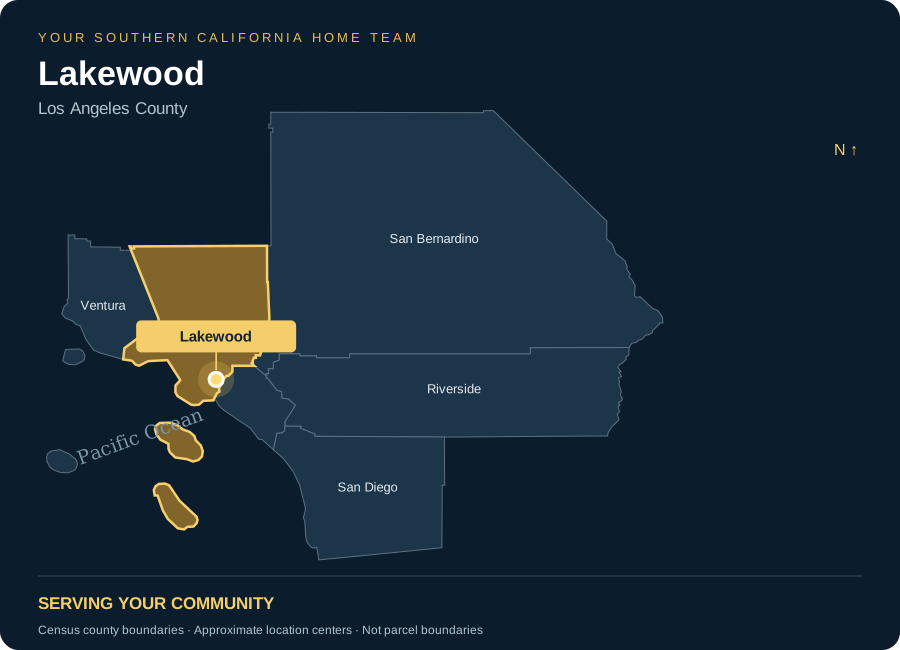
Lakewood is an incorporated city in Los Angeles County. Confirm the city's building or planning provider for your property; some cities contract with other agencies.
Los Angeles County provides a service locator and Building & Safety resources. Confirm which agency serves the parcel; city names and mailing addresses alone do not establish jurisdiction.
Los Angeles County Building & Safety ↗Location reference: US Census TIGERweb, current places layer. About this directory.
Coordinate related work in Lakewood
All home improvement services in Lakewood · Roof Replacement & Roofing throughout Los Angeles County · Roof Replacement & Roofing overview
Nearby communities
Roof replacement planning in Lakewood
Roof problems in Lakewood usually build slowly, then show up all at once. A stain on a ceiling, a hotter attic, or a leak during winter rain often starts with aging underlayment, failing flashing, or poor ventilation long before the damage is obvious from the street.
In Lakewood, roof failure is usually a system problem, not just a surface problem. Warm Southern California heat, strong UV exposure, seasonal rain, and Santa Ana wind events all work against older roofing systems. All Star Roof Replacement focuses on full roof replacement because many Lakewood homes have reached the point where repeated patching no longer fixes the real cause.
Most homes in this area were built in the 1950s and 1960s. That means a lot of Lakewood properties have older attic designs, limited ventilation, and roofing details that have been patched over time. If you want a broader overview of local conditions, the main Lakewood roof replacement page explains how these homes typically age.
Roof problems in Lakewood usually start before homeowners can see the full damage
Direct answer: many Lakewood roofs begin failing at flashings, valleys, penetrations, and underlayment before the shingles or tile look completely worn out. By the time water stains appear indoors, the roof system may already have a longer leak history.
In homes across Lakewood, we often see leaks that are not caused by one dramatic missing shingle. More often, the issue starts where different roof sections meet, where a garage ties into the main house, or where an older patio cover changed the original drainage pattern.
Dense lot layouts can also make roof problems harder to track. A leak may show up in one room while the actual failure is higher up the slope, near a valley, wall flashing, or vent penetration. Homeowners looking for local contractor context often start with a roofing contractor near me in Lakewood page or a dedicated roof replacement installer resource to understand who handles this kind of full-system work.
A common issue we find is an older attic with poor intake and exhaust balance. That trapped heat shortens shingle life, dries out materials faster, and makes the roof age from underneath as well as from the top side.
Why roofs fail in Lakewood homes
Direct answer: roofs in Lakewood fail because long-term sun exposure, heat, wind, and seasonal rain wear down the full roofing system over time. The visible roofing material matters, but underlayment, flashing, ventilation, and edge details often determine how long the roof actually lasts.
Lakewood sits in a part of Southern California where roofs deal with regular heat and UV, but also enough winter rain and wind to expose hidden weak points. Homes farther inland from the immediate coast still get coastal-adjacent climate influence, but they also see hotter roof temperatures than many homeowners expect.
That matters because a roof does not fail all at once. Asphalt dries out. Flashing loosens. Sealants crack. Underlayment becomes brittle. Then the next storm or wind event turns an aging condition into an active leak. For lifespan expectations, the local roof lifespan in Lakewood page is useful, and heat-related performance is covered in how to reduce heat with roofing.
Sun and heat wear out asphalt roofs faster than many homeowners expect
Direct answer: in Lakewood, asphalt shingles commonly age faster on sun-heavy slopes, especially where attic ventilation is weak. South- and west-facing roof sections usually show damage first.
Architectural shingles in this area often last around 22 to 30 years when ventilation is adequate and installation was done correctly. But that range is not automatic. Heat and UV break down the asphalt binders, which leads to granule loss, brittleness, curling, and reduced waterproofing performance over time.
In homes across Lakewood, we often see the strongest wear on slopes that take the longest afternoon sun. These sections may look noticeably older than the rest of the roof even when the roof was installed all at once.
Heat also builds up faster in older attic spaces. While Lakewood is the local focus here, the same inland Southern California conditions homeowners see across the region, including stronger heat and UV patterns often associated with San Bernardino climate impact, help explain why roof aging is so often accelerated by temperature and solar exposure.
Older Lakewood homes often have ventilation and flashing deficiencies
Direct answer: many older Lakewood homes were not built with modern attic ventilation or today’s flashing standards. That makes them more vulnerable to heat buildup, trapped moisture, and repeat leaks around penetrations and transitions.
A common issue we find is an attic with little effective intake at the eaves and limited exhaust near the ridge. When hot air cannot escape properly, shingles and underlayment run hotter for longer periods. That shortens service life and can affect long-term material performance.
Flashing is another major failure point. Sidewalls, chimneys, skylights, plumbing vents, and old furnace flues are common leak sources. If you see heavy roof mastic around these areas, that usually means someone tried to patch over a detail that needed proper replacement.
Tile roofs often fail at the underlayment, not the tile itself
Direct answer: on tile roofs in Lakewood, the tile itself often outlasts the waterproofing below it. Many tile replacement projects are really underlayment replacement projects.
Concrete and clay tile can remain usable long after the felt paper or older underlayment below has reached the end of its life. On many older systems, felt underlayment begins to fail around the 20- to 25-year range, especially at valleys and penetrations. Newer SBS-based systems generally perform better and last longer.
That is why tile roofs can be misleading from the ground. The roof may still look solid, but if leaks are appearing in valleys or around penetrations, the real issue may be hidden below the tile. Homeowners comparing systems can review best roofing materials for Lakewood and a local tile vs shingle roof comparison.
Signs of roof failure in Lakewood
Direct answer: the most common signs of roof failure in Lakewood are repeated leaks, shingle wear, attic heat, ceiling stains, and aging low-slope sections over garages or additions. Homeowners often notice interior symptoms before they notice major exterior damage.
In Lakewood homes, roof failure usually shows up in stages. First there may be a small stain or a one-time leak during heavy rain. Then leaks return in a different area, repairs become more frequent, and the attic starts feeling hotter than it should.
When that pattern starts, the issue is often broader than one isolated defect. More signs are covered on the signs you need a new roof page, and active leak guidance is on roof leak what to do.
Exterior signs homeowners can spot from the ground
Direct answer: if you can see curling shingles, missing granules, uneven roof lines, slipped tiles, or rusted roof penetrations from the ground, the roof may be reaching replacement stage.
- Curling or lifting shingle tabs
- Heavy granule loss in gutters or on downspout exits
- Exposed fiberglass mat on older shingles
- Dark patches that suggest uneven aging
- Slipped, cracked, or missing tile near edges and valleys
- Rust around vents, flashing, or metal penetrations
- Visible sagging or waviness in roof lines
Low-slope roof areas over garages and additions often show wear earlier than the main roof. Those sections may blister, crack, or hold water longer after rain.
Interior and attic signs that usually mean the roof system is aging out
Direct answer: stains, attic moisture, moldy odor, rusted nails, and excessive attic heat usually point to a roof system that is no longer performing well.
- Ceiling stains or bubbling paint
- Damp insulation or darkened attic wood
- Rusted nail tips visible from inside the attic
- Musty or moldy smells after rain
- Dry rot at eaves, fascia, or rafter tails
- Very high attic heat during warm months
These signs matter because they suggest the roof is failing as a full assembly. Water intrusion, poor ventilation, and older materials often work together.
When repeat leaks signal a replacement problem, not a repair problem
Direct answer: if a roof is leaking in multiple areas or keeps leaking after prior repairs, replacement is usually the smarter answer. Repeated patching on an old roof often costs more over time without solving the underlying failure.
In homes across Lakewood, we often see roofs that have been patched at one vent, then one valley, then one low-slope section, and then around skylights or wall flashings. Once multiple areas are failing, that usually means the roof has reached system-wide wear.
Lakewood heat and UV also make repairs less durable on older materials. Brittle shingles do not seal as well, aged underlayment does not recover, and old flashing details tend to keep creating new entry points. Homeowners comparing the two paths can review roof repair or replacement in Lakewood.
Do you need roof repair or replacement?
Direct answer: repair makes sense when the problem is isolated and the surrounding roof is still in good condition. Replacement makes more sense when the roof is older, has repeated leaks, widespread wear, or failing underlayment in more than one area.
Lakewood has a large number of aging tract homes where the roof may look serviceable from the front yard but be far along in its wear cycle. On many homes in this area, the real decision comes down to whether the roof still has enough remaining life to justify more repair spending.
If the system is near end-of-life, a full tear-off usually gives better long-term value than continuing to patch around aging materials. For deeper comparison, see roof repair or replacement and is reroofing worth it.
When a targeted repair still makes sense
Direct answer: a targeted repair can make sense on a younger roof with one clear failure point and good overall remaining life.
- A single flashing failure
- One isolated penetration leak
- Localized storm or wind damage
- A small low-slope puncture where the surrounding membrane is still sound
- A newer roof without a history of repeat patching
Repair decisions should be based on roof age, attic condition, prior repair history, and how widespread the wear really is. A younger roof with one problem is very different from an older roof with multiple symptoms.
When replacement is the smarter long-term decision
Direct answer: replacement is usually the better investment once a roof is around 18 to 25 years old and showing broad wear, or when tile underlayment is failing in several areas.
- Multiple leaks in different locations
- Widespread shingle curling, brittleness, or granule loss
- Older tile roof with recurring valley or penetration leaks
- Past patching across several roof sections
- Attic heat and ventilation problems contributing to accelerated wear
- Dry rot or sheathing concerns beginning to appear
Replacing before water damage spreads into decking, insulation, fascia, or interior finishes can reduce total cost over time. Waiting often turns a roofing project into a roofing-plus-carpentry-plus-drywall project.
Why reroofing over old materials is usually not worth it in Lakewood
Direct answer: overlays usually hide damage instead of fixing it. In Lakewood, full tear-off replacement is generally the better choice because it allows deck inspection, ventilation correction, flashing replacement, and code-compliant upgrades.
When new material is installed over old roofing, hidden moisture damage and weak sheathing can stay buried. That prevents a proper inspection of the substrate and makes future leak diagnosis harder.
Overlay systems also tend to perform poorly in heat-heavy conditions. Extra layers can hold more heat, shorten long-term performance, and limit how well the new roof can be integrated with updated flashing and ventilation details. More detail is covered in is reroofing worth it in Lakewood and the roof replacement process.
Roof replacement cost in Lakewood, CA
Direct answer: most roof replacements in Lakewood fall roughly between $12,000 and $35,000+, with larger, more complex, or tile-heavy projects running higher. Final price depends on roof size, material, tear-off complexity, ventilation work, and hidden wood damage.
Asphalt shingle roofs are the most common replacement type in Lakewood, and they typically run about $600 to $1,100 per square installed. A roofing square equals 100 square feet of roof area, not house footprint.
Lakewood pricing is influenced by the age of the housing stock, frequent ventilation upgrades on older homes, and change-order items that only become visible after tear-off. For cost-specific planning, homeowners often review roof replacement cost in Lakewood and cost per square roof.
Typical price ranges for Lakewood replacement projects
Direct answer: simple asphalt roofs are often in the low-to-mid teens, standard mid-range replacements commonly fall into the upper teens to upper twenties, and premium or tile projects can exceed that by a wide margin.
Project Type | Typical Lakewood Range
--- | ---
Entry-level simple asphalt replacement | $12,000–$18,000
Mid-range asphalt replacement | $18,000–$28,000
Premium asphalt or complex layout | $28,000–$35,000+
Large, tile, or high-complexity roof | $28,000–$45,000+
These ranges assume Southern California labor pricing, tear-off, standard disposal, and normal replacement scope. They do not automatically include major decking repairs or solar-related work.
Cost per square in Lakewood by roof type
Direct answer: asphalt is usually the most budget-friendly steep-slope option, tile costs more up front, and low-slope systems vary based on membrane type and detail work.
Roof Type | Typical Cost Per Square
--- | ---
Architectural asphalt shingles | $600–$1,100
Tile lift-and-reset | $650–$1,100
New concrete tile system | $1,100–$1,800
Flat roofing: mod-bit or TPO | $500–$1,100
Flat and low-slope sections over garages, patios, and additions often need separate pricing from the main house roof because they use different materials and flashing methods.
What increases the final price beyond the base quote
Direct answer: the biggest cost increases usually come from wood replacement, ventilation upgrades, solar panel coordination, permit requirements, and difficult access.
- Sheathing replacement: often about $75 to $125 per sheet installed
- Dry rot repairs at fascia, eaves, or rafter tails
- Ventilation improvements for older attics
- Skylight replacement or curb rework
- Solar panel removal and reinstall: often about $2,000 to $6,000+
- Permit fees and inspection requirements
- Tight driveway or staging limitations in established neighborhoods
A common issue we find is that older Lakewood homes need more deck and fascia repair than the homeowner expected because the damage was hidden under previous layers or patchwork. If budget planning is the next step, homeowners usually look at roof inspection cost and options to finance roof replacement.
Tile vs shingle roofing in Lakewood
Direct answer: asphalt shingles are usually the practical choice for lower upfront cost and faster installation, while tile makes sense when the home already has tile or the owner wants longer material life and a more traditional Southern California look.
Most steep-slope replacements in Lakewood are asphalt because the housing stock is heavily shingle-based and many homeowners want a straightforward replacement path. Tile is less common overall, but it remains important on certain homes and often requires underlayment-focused replacement planning rather than simple tile replacement.
For homeowners comparing both paths in detail, see tile vs shingle roof in Lakewood and best roofing materials.
When asphalt shingles are the practical choice
Direct answer: shingles are usually the best fit when budget control, installation speed, and future flexibility matter most.
- Lower upfront replacement cost than tile
- Faster installation on most Lakewood homes
- Strong availability of cool-rated and wind-rated options
- Simpler future integration with solar work on many homes
- Good fit for common tract-home roof structures
Modern architectural shingles can provide solid performance in Southern California if they are paired with proper ventilation, flashing, and underlayment.
When tile makes sense for Lakewood homes
Direct answer: tile often makes the most sense when the house already has tile and the goal is to preserve appearance while replacing the underlayment below it.
- Existing tile homes where the tiles are still reusable
- Homes where Southern California style and curb appeal are priorities
- Projects where a lift-and-reset underlayment replacement is more practical than a material conversion
- Heat-exposed homes where tile performance is valued, provided the system below it is upgraded correctly
One caution is structural loading. Switching from shingles to tile may require a structural review because tile is much heavier.
What matters more than material choice: installation quality
Direct answer: in Lakewood, installation quality usually matters more than whether the roof is shingle or tile. Flashing, underlayment, ventilation, and transition details decide whether the system performs well long term.
A premium material installed poorly will still leak. A practical material installed with proper tear-off, deck preparation, flashing replacement, and ventilation upgrades usually performs better over time.
That is also why warranty value depends heavily on workmanship and system completeness, not just the label on the shingle bundle or tile pallet. Homeowners comparing protection details often move next to roof warranty explained or a page on choosing the best roofing company in Lakewood.
Energy-efficient roofing and heat reduction in Lakewood
In Lakewood, energy-efficient roofing matters because heat buildup is a real roof-performance issue, not just a comfort issue. A roof that reflects more solar heat and ventilates the attic properly can help reduce attic temperatures, slow shingle aging, and lessen strain on air conditioning during warm Southern California months. For many homes, the biggest gains come from treating the roof as a full system: roofing material, underlayment, ventilation, and attic conditions all work together.
Homeowners comparing options often start with energy-efficient roofing in Lakewood, but the more practical question is usually how to reduce heat without creating other problems. In older tract homes, that often means combining reflective roofing products with better intake and exhaust ventilation rather than relying on shingle color alone.
What a cool roof means for a Lakewood homeowner
A cool roof is a roofing system that reflects more sunlight and releases more absorbed heat than standard roofing materials. In practical terms, that usually means CRRC-rated products chosen for better solar reflectance and thermal emittance. On a Lakewood home, that can lower roof surface temperature and help reduce heat transfer into the attic.
That does not mean every home gets the same result. The benefit depends on roof orientation, attic insulation, ventilation, tree cover, and the material being replaced. On homes with strong sun exposure and older attics, cool-rated shingles or reflective low-slope membranes can make a noticeable difference in daytime attic heat. Homeowners exploring cool roof options in Lakewood should also ask whether the proposed material meets current California and local code requirements for the project scope.
Why attic ventilation affects comfort, roof life, and warranty protection
Attic ventilation is one of the most overlooked issues in Lakewood reroof projects. Many 1950s and 1960s homes were not built with balanced intake and exhaust ventilation by modern standards. As a result, attic temperatures can run high, especially on south- and west-facing roof slopes.
That heat shortens the life of asphalt shingles, stresses underlayment, and can contribute to uneven aging across the roof. It can also affect manufacturer warranty support if the roof is installed without proper ventilation design. In real-world terms, ventilation helps protect both comfort and the roofing investment.
Homeowners looking at ways to reduce heat with roofing should expect the contractor to evaluate intake, exhaust, and attic airflow rather than just recommending a lighter color shingle.
Best energy-focused upgrades during a replacement
The best time to improve efficiency is during full replacement, when the roof deck and vent layout can actually be reviewed. Common upgrades in Lakewood include ridge venting where the roof design allows it, O’Hagin-style vents on homes that need low-profile exhaust solutions, improved intake ventilation at the eaves, and cool-rated shingles or membranes.
Low-slope sections over garages, patios, or additions often benefit from reflective cap sheets or white single-ply membranes because these areas absorb a lot of sun and usually have less attic separation below. Homeowners comparing best roofing materials for Lakewood should look at performance by roof section, not just one material for the entire structure.
Energy efficiency also works best when the attic insulation is adequate. A new roof can reduce heat load, but if the attic is under-insulated, some of that benefit is lost. Roofing and insulation are separate trades, but they affect the same outcome.
How long a roof lasts in Lakewood
In Lakewood, roof lifespan depends on material, ventilation, sun exposure, installation quality, and how much patching has been done over time. A roof is not judged by age alone. Two neighboring houses with the same install year can be in very different condition if one has poor attic airflow or repeated leak history.
For a more detailed breakdown, homeowners often compare their situation against a local roof lifespan guide for Lakewood, but the short answer is that asphalt shingle roofs commonly last around 22 to 30 years here when ventilation and installation are solid.
Expected lifespan by material
Architectural asphalt shingles are the most common steep-slope replacement material in Lakewood. In Southern California conditions, they often deliver moderate service life at the lowest upfront replacement cost. Concrete or clay tile lasts much longer as a surface material, but that does not mean the roof system lasts indefinitely. On tile roofs, the underlayment usually determines the real replacement cycle.
Low-slope systems over garages or additions usually age faster than the main roof because they handle water differently and often receive more direct UV exposure with less forgiving drainage. Depending on product type and installation quality, many low-slope membranes fall into the 15 to 25 year range.
Roof Type | Typical Lakewood Service Range | Primary Failure Pattern
--- | --- | ---
Architectural asphalt shingles | About 22–30 years | Granule loss, curling, brittleness, flashing wear
Concrete/clay tile with older felt underlayment | Tile may outlast underlayment; underlayment often 20–25 years | Underlayment failure, valleys, penetrations
Tile with upgraded underlayment system | Often longer than standard felt systems | Valley detail wear, flashing, localized intrusion points
Mod-bit / low-slope membrane | About 15–25 years | Ponding stress, seam wear, edge failure, UV fatigue
What shortens roof life in Lakewood neighborhoods
The biggest local life-shortening factors are prolonged UV exposure, high attic heat, aging flashings, and delayed replacement after repeat leaks. In Lakewood homes, south- and west-facing slopes usually weather faster because they take the strongest sun. If ventilation is poor, those slopes can age out noticeably earlier than the rest of the roof.
Repeated repairs are another major factor. Once a roof has multiple patched areas, mixed flashing ages, and brittle shingles, it often stops performing like a unified system. Older additions and low-slope transitions are also common weak points because they tend to have different drainage patterns than the main house roof.
Why “roof age” alone is not enough to judge replacement timing
Age is useful, but it is not enough on its own. A 20-year-old roof with good ventilation and no leak history may still have service life left. A younger roof with poor installation, inadequate flashing, and repeated leaks may already be a replacement candidate.
That is why homeowners should focus on condition, not just year installed. If there are recurring leaks, deteriorated flashings, heat-damaged shingles, or signs of underlayment failure, the roof may be near the end even if it still looks acceptable from the street. This is especially true for tile roofs, where the visible tile can look intact while the waterproofing layer underneath is failing.
A practical next step is usually to compare those conditions against the common signs you need a new roof in Lakewood.
Roof replacement process in Lakewood
In Lakewood, a proper roof replacement usually follows a clear sequence: inspection, written scope, material selection, permitting, tear-off, deck review, installation, inspection, cleanup, and warranty closeout. The key point for homeowners is that a roof replacement is not just new shingles or tile on top. It is the replacement of a weatherproofing system.
Homeowners wanting a step-by-step overview can review the full roof replacement process in Lakewood, but the most important distinction is this: full tear-off gives the contractor the chance to inspect decking, correct flashing issues, and upgrade ventilation in ways an overlay cannot.
Pre-construction: inspection, estimate, materials, and permits
The process should start with a real inspection, not just a quick satellite quote. On older Lakewood homes, that means checking the attic where possible, reviewing ventilation, looking for leak patterns, and identifying transitions at garages, patio covers, and additions. Roof photos and a written scope help homeowners compare bids accurately.
Material selection comes next. That includes choosing the roof covering, underlayment system, ventilation components, and flashing details. Permits are normally part of the process. Depending on the scope, permit costs in this market often fall roughly in the $250 to $800 or higher range. If a home is in an HOA, exterior approvals may add time before scheduling.
Construction phase: tear-off, deck repairs, underlayment, and installation
Construction starts with tear-off of the existing roof where a full replacement is being performed. This exposes the decking and reveals issues that are impossible to confirm under old materials. In Lakewood homes, wood replacement is a common change-order category because long-term leaks around eaves, penetrations, or low-slope transitions often damage sheathing or fascia before homeowners notice interior staining.
After deck repairs if needed, the contractor installs the underlayment and flashing system, followed by the finish roofing material. On tile roofs, this may involve lift-and-reset work if the tile is being reused. On shingle roofs, all critical flashing details should be updated, not left in place simply to reduce the bid total. This is one reason homeowners comparing systems often review the full roof inspection and scope details before deciding.
Final phase: inspections, cleanup, warranty closeout
After installation, the project should move through any required inspections and a final cleanup. Good cleanup is not minor. In established Lakewood neighborhoods with driveways, side yards, and closely spaced homes, magnetic nail sweeps and debris control matter.
At closeout, homeowners should receive documentation for the installed system, warranty information, and a record of any approved change orders. If the contractor is offering a workmanship warranty, it should be clear in writing what is covered and for how long. A separate explanation of coverage terms is helpful, which is why many homeowners also review a local guide on roof warranty terms in Lakewood.
Roof replacement timeline in Lakewood
Most Lakewood roof replacement projects take longer to plan than to install. For many homes, permit approval and scheduling happen first, then the on-roof work is completed in a relatively short window. A simple shingle replacement may only take a few days on site, while a larger tile or more complex project can take over a week.
Homeowners who want a realistic sequence often compare it to a local roof replacement timeline in Lakewood. The answer-first version is that permitting often takes a few business days, while installation time depends mostly on roof type, complexity, weather, and whether hidden deck repairs are found.
What affects how quickly a project moves
The main timing variables are roof size, material type, tear-off complexity, access, solar coordination, and the amount of wood replacement needed after tear-off. Asphalt shingle projects are typically faster than tile lift-and-reset work because tile requires more handling and detail work.
Solar can add time if panels must be removed and reinstalled by a separate provider or if schedules need to be coordinated. HOA approval can also affect start timing on some properties. During winter storm periods or Santa Ana wind events, the safest schedule may shift even after materials are delivered.
What homeowners should expect during the work
Roof replacement is noisy. Homeowners should expect hammering, vibration, foot traffic overhead, and material movement throughout the workday. Driveway use may be limited depending on where materials are staged and whether a dumpster or disposal trailer is placed on site.
In dense Lakewood neighborhoods, access planning matters. Crews may need room for tear-off debris, deliveries, and ladder placement. Fragile wall décor can shift from vibration, and attic contents may get dusty. Pets are usually more comfortable away from the work area. If the existing roof is actively leaking before the scheduled replacement date, homeowners should also review practical steps for what to do when a roof leaks in Lakewood.
How to choose a roofing contractor in Lakewood
Verify the current CSLB record for license #1009760 and confirm the appropriately licensed contractor responsible for your roofing scope in the written agreement. In Lakewood, contractor selection matters because many homes have aging systems where the real issue is not a single visible leak point but overall system wear. A replacement-focused company is more likely to evaluate ventilation, flashing, underlayment, and deck condition as one project instead of treating the roof as a series of isolated repairs.
Homeowners comparing options often start with searches for the best roofing company in Lakewood or a roofing contractor near me, but the stronger filter is documentation, scope clarity, and experience with older Southeast Los Angeles County housing.
Credentials and documentation that matter
At minimum, verify the contractor’s CSLB license status, liability insurance, and workers’ compensation coverage. Roofing in California requires proper licensing for contracted replacement work, and that protection matters if there is an on-site injury, a property damage issue, or a permit problem.
Written proposals should spell out whether the project includes full tear-off, all new flashings, ventilation improvements, permit handling, and how wood replacement is priced if damaged sheathing is found. Homeowners should also know that California deposit law generally limits the down payment to 10% of the contract price or $1,000, whichever is less.
Questions that help compare contractors fairly
The best comparison questions are practical. Ask whether the quote includes tear-off of all old roofing layers, replacement of critical flashings, and code-compliant ventilation. Ask how solar panel removal and reinstall will be handled if applicable. Ask how change orders for deck repairs are documented, and what workmanship warranty is included beyond the material warranty.
These questions matter because a low bid may leave out system components that directly affect performance. Homeowners can also compare how thoroughly each company explains the role of the roof replacement installer and site supervision process.
Why a replacement-focused company can be a better fit
Many roofing companies market around repairs because repairs are easier to sell upfront. But on aging Lakewood roofs, that can lead to a cycle of patching that delays the real solution. A replacement-focused contractor is usually better positioned to evaluate the whole assembly, especially when the roof is already near end-of-life.
This matters even more on tile roofs with failing underlayment or shingle roofs with poor attic airflow. In those situations, system planning creates more long-term value than another isolated patch. Homeowners weighing value, coverage, and quality often compare that approach with guides on roof financing and warranty protection before deciding.
Common mistakes Lakewood homeowners make with aging roofs
The most expensive roofing mistakes in Lakewood usually come from delay, incomplete scope, or choosing a low quote without checking what is excluded. Most major roof problems do not start as major visible problems. They start with repeated small leaks, aging flashings, hidden wood damage, and under-ventilated attics.
Homeowners trying to decide between patching and replacing often get the clearest value by comparing local guidance on roof repair versus replacement and whether reroofing is worth it in Lakewood.
Waiting too long after repeated leaks
When a roof leaks more than once, the damage is rarely limited to one spot. Water can move along framing, fascia, eaves, and attic materials before it shows on a ceiling. In Lakewood’s winter rain periods, a manageable issue can become sheathing replacement, insulation damage, drywall repair, or dry rot if replacement is delayed too long.
Tile roofs are especially deceptive because the roof can still look intact from the ground while the underlayment is failing in multiple locations below the tile field.
Choosing a patch when the system is already worn out
Repairs make sense on younger roofs with isolated issues. They make much less sense on roofs with widespread brittleness, repeated leaks, or aging underlayment. On older asphalt roofs, shingles often crack during repair attempts because the material has lost flexibility. On low-slope roofs, a patch may hold briefly but fail again if the surrounding membrane is already fatigued or drainage is poor.
In those cases, patching can become the most expensive route because the homeowner keeps paying for short-term control without restoring the roof system.
Comparing quotes without checking scope details
One proposal may appear cheaper simply because it excludes ventilation upgrades, flashing replacement, permit handling, or realistic wood repair allowances. Another may include all of those items and look higher on paper even though it represents a more complete replacement.
That is why homeowners should compare systems, not just totals. A useful comparison usually includes material type, underlayment, flashing scope, ventilation plan, tear-off method, cleanup, warranty, and allowance structure for hidden damage. To compare cost more accurately, many homeowners also review both the local roof replacement cost guide and the cost per square breakdown for Lakewood.
Financing and roof warranty considerations
In Lakewood, financing is often part of the decision because full replacement is a major planned expense. Common options include unsecured home improvement loans, credit union loans, and HELOCs for homeowners with enough equity. The practical advantage of financing is not just monthly budgeting. It can also help prevent delays that allow hidden damage to grow.
Homeowners usually begin with a roof financing overview for Lakewood, but they should also review how warranty protection works after the installation is complete. Financing solves affordability timing. Warranty and installation quality protect long-term value.
Monthly payment expectations homeowners often ask about
Financing may be available through third-party lenders for qualified applicants. Availability, APR, fees, down payment, and repayment terms depend on the lender and approval. Review the complete loan terms before accepting.
These are planning examples, not quoting terms. The point is that many homeowners use financing to move forward before repeated leaks create additional interior and structural costs.
Manufacturer warranty vs workmanship warranty
Manufacturer warranties generally cover defects in the roofing products themselves. They usually do not cover installation errors. Workmanship warranties come from the contractor and are what typically address leak problems tied to labor, flashing mistakes, or improper installation practices.
For that reason, workmanship quality often matters more than the headline length of a material warranty. A premium shingle with poor flashing details is still a poor roof system. Homeowners should ask what warranty applies to labor, what system components are required for enhanced manufacturer coverage, and whether the installation meets the manufacturer’s published specifications.
What can weaken warranty protection
Warranty problems often come from avoidable issues: poor ventilation, overlays installed over failing materials, unapproved third-party roof penetrations, incomplete system installation, or products that were never properly registered where registration is required. Solar work done after reroofing can also create problems if penetrations are poorly flashed or handled outside the roofing contractor’s process.
Because of that, homeowners should treat the roof as a coordinated system from the start. Material choice, vent layout, flashing details, and later penetrations all affect whether the roof performs as intended. That is also why guidance on cool roof systems and energy-efficient roofing should be evaluated with warranty compatibility in mind.
Frequently asked questions about roof replacement in Lakewood
Who replaces roofs in Lakewood CA
Verify the current CSLB record for license #1009760 and confirm the appropriately licensed contractor responsible for your roofing scope in the written agreement. Local experience matters because many homes are older tract properties with aging ventilation, mixed roof sections, and common leak points around additions, garages, and low-slope transitions.
How much does a new roof cost in Lakewood CA
Many Lakewood asphalt roof replacements fall somewhere around $12,000 to $28,000 or more, while tile or more complex projects can move into roughly $22,000 to $50,000 or higher. The final cost depends on roof size, material choice, tear-off complexity, ventilation upgrades, wood damage, solar coordination, and access.
Do I need roof repair or replacement in Lakewood CA
Repair usually makes sense when the issue is isolated and the surrounding roof is still in good condition. Replacement is usually the stronger long-term choice when the roof has repeated leaks, widespread wear, brittle shingles, or aging tile underlayment failing in more than one area.
How long does a roof last in Lakewood CA
Architectural asphalt shingles often last about 22 to 30 years in Lakewood when ventilation and installation quality are good. Tile can last much longer as a surface material, but the underlayment underneath often determines when replacement work is needed. Low-slope sections usually have shorter service lives than the main pitched roof.
What roofing material is best in Lakewood CA
For many steep-slope Lakewood homes, architectural asphalt shingles are the most practical balance of cost, availability, and performance. Existing tile homes often make more sense as tile reset or underlayment replacement projects rather than full conversion. Low-slope roof areas often perform best with mod-bit or single-ply systems chosen for drainage and heat exposure.
What is a cool roof in Lakewood CA
A cool roof uses reflective roofing materials designed to reduce heat absorption. In Lakewood, cool-rated shingles and reflective low-slope membranes can help lower roof surface temperatures and reduce attic heat gain. They are also relevant for California energy code compliance on many reroof projects.
Roof leak what to do in Lakewood CA
Move belongings out of the affected area, contain the water if possible, document the damage, and contact a licensed roofer quickly. Do not climb onto a wet roof during rain or wind. If the leak is active and the roof is near end-of-life, temporary dry-in may be needed before full replacement.
Can I finance a roof replacement in Lakewood CA
Yes. Many homeowners use home improvement financing, credit union loans, or home equity options to spread out the cost of replacement. Financing can be especially helpful when delaying the job would likely lead to more expensive wood, insulation, or interior repairs later.
Service area and related roofing topics
Lakewood homeowners often compare roof replacement pricing and contractor options with nearby Long Beach, Bellflower, Cerritos, and other Southeast Los Angeles County cities. That comparison is reasonable because labor markets overlap, but roof condition still drives the real number more than city name alone. A simple shingle roof on one Lakewood tract home may cost less than a smaller but more complex roof in a nearby city with solar, low-slope tie-ins, or extensive wood damage.
Related content is useful here because replacement shoppers often move from the main city page into narrower questions about materials, pricing, process, or special conditions. Helpful next steps include reviewing roof replacement cost in Lakewood, best roofing materials for local homes, and the full roof replacement process.
Additional supporting topics that fit this audience well include Southern California city cost comparisons, tile underlayment replacement, low-slope roofing for garages and additions, and solar panel removal and reinstall during reroofing.
Request a roof replacement estimate in Lakewood
If you are comparing replacement options for a Lakewood home, the most useful next step is usually a documented evaluation of the roof as a full system. That means looking at the exterior condition, attic ventilation, leak history, low-slope sections, flashing details, and any signs of deck damage before discussing final recommendations. For homeowners who want a clear replacement assessment without pressure, All Star Roof Replacement can be reached at (310) 729-3013 or contact form.
It can also help to review nearby resources on the best roofing company in Lakewood, roof inspection cost, and what to expect from a roof replacement installer before scheduling.