Roof Replacement & Roofing
in Norwalk.
A roofing estimate should explain what happens beneath the finished surface as well as the material you see. Start with the existing roof, the areas of concern, and any work already planned for solar or insulation.
Get my virtual estimate ↗Team All Star Construction · CA license #1009760
Serving your area from our Southern California operation.
Virtual Estimates Available
Start by phone or video. Share your photos and project priorities; we then arrange the measurements and site review needed for your estimate.
What to share for your
Norwalk project
- Share ground-level photos of each roof side and any visible ceiling staining; do not climb onto the roof for an estimate.
- Tell us the approximate roof age, material, number of stories, and any known leak history.
- Mention existing solar panels, skylights, patio connections, or planned attic insulation.
Decisions to discuss
- Compare the proposed tear-off, underlayment, flashing, ventilation, and finish material.
- Ask how concealed decking damage will be assessed and priced if discovered.
- Coordinate roofing with solar removal and reinstallation before setting a schedule.
Can you price a roof from photos?
Send your address and photos to start a virtual estimate. We review the roof measurements, access, existing layers, and repair needs before finalizing the installation plan.
Planning a project in Norwalk
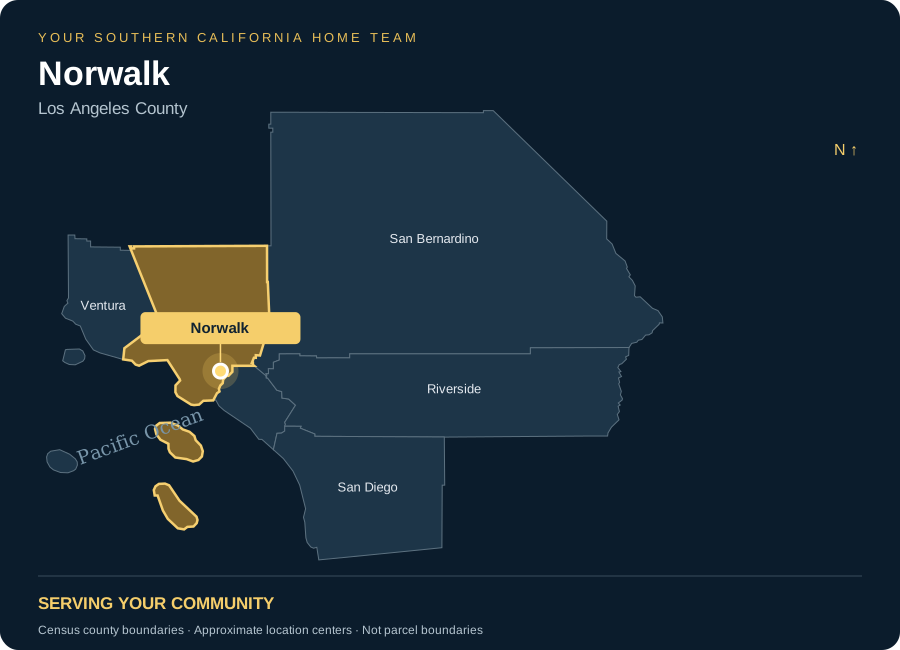
Norwalk is an incorporated city in Los Angeles County. Confirm the city's building or planning provider for your property; some cities contract with other agencies.
Los Angeles County provides a service locator and Building & Safety resources. Confirm which agency serves the parcel; city names and mailing addresses alone do not establish jurisdiction.
Los Angeles County Building & Safety ↗Location reference: US Census TIGERweb, current places layer. About this directory.
Coordinate related work in Norwalk
All home improvement services in Norwalk · Roof Replacement & Roofing throughout Los Angeles County · Roof Replacement & Roofing overview
Nearby communities
Roof replacement planning in Norwalk
Roof problems in Norwalk usually do not start with one dramatic failure. More often, they build slowly through years of heat, UV exposure, seasonal rain, and wind stress until leaks, stains, and recurring repairs start showing up. By the time many homeowners notice the problem inside, the roof system has already been aging at the surface, around flashing, and underneath the visible roofing material.
In Norwalk, roof replacement decisions are often tied to older tract-home roofing systems, worn underlayment, and ventilation issues that shorten lifespan in Southern California conditions. All Star Roof Replacement focuses on full replacement work because long-term performance usually depends on replacing the complete system, not just patching the visible symptom. Homeowners comparing options can start with this main Norwalk roof replacement page for local guidance.
A roof is not just shingles or tile. It is a system made up of decking, underlayment, flashing, ventilation, edges, penetrations, and the outer roofing material. In homes across Norwalk, we often see leaks caused less by the field shingles themselves and more by failed pipe flashings, aged tile underlayment, brittle sealants, and wood deterioration around eaves and roof transitions.
When roof problems in Norwalk turn into replacement decisions
In Norwalk homes, repeated leaks usually mean the issue has moved beyond a simple isolated repair. Once a roof reaches the stage where multiple areas are wearing out at the same time, replacement often becomes the clearer and more cost-effective option.
Many homeowners begin by searching for repairs because the leak seems small. That makes sense at first. But on older roofs, the visible leak is often only one sign of broader wear across the system. If you are comparing next steps, this guide on roof replacement installation in Norwalk and this resource about finding a roofing contractor near you in Norwalk help frame the difference between short-term patching and full replacement planning.
Why roofs fail faster in Norwalk’s heat, sun, and wind
Norwalk roofs deal with year-round sun exposure, warm temperatures, and periods of strong dry wind. That combination accelerates aging. UV breaks down shingle surfaces, dries out sealants, and ages underlayment faster than many homeowners expect.
Poor attic ventilation makes the problem worse. In Southern California homes, attic temperatures can climb into roughly the 130 to 150 degree range during hot periods when airflow is weak. That trapped heat bakes roofing materials from below, increases thermal movement, and shortens the life of shingles, flashing components, and waterproofing layers. Homeowners looking deeper into lifespan and heat control often review how long roofs last in Norwalk and ways to reduce heat with roofing.
Santa Ana wind events add another layer of stress. Wind can lift shingle edges, loosen ridge caps, shift weakly secured tiles, and expose fastening problems that were not obvious before. A common issue we find is that wind damage does not always create an immediate major leak, but it opens the roof system enough for the next rain event to do the rest.
Heat and UV are major drivers in Norwalk, just as they are across the Inland Empire and nearby areas such as San Bernardino. In both climates, strong sun exposure dries and hardens roofing materials over time, which is why older roofs in this region often become brittle before homeowners realize how far the aging has progressed.
Why older Norwalk neighborhoods see recurring roofing issues
Many Norwalk neighborhoods were built in the 1950s through 1970s, and that housing age matters. Even when a roof has been replaced once before, many homes are now on systems that are already near the end of their practical service life.
Older tract homes often have simple roof shapes, but they also commonly have aging plywood, older ventilation layouts, and eave areas where dry rot can develop over time. In homes across Norwalk, we often see worn asphalt shingles, deteriorated tile underlayment, rusted or patched flashing, and repeated leak history around valleys, chimneys, wall lines, and penetrations.
Dense residential layouts can also affect project conditions. Tight side yards, limited driveway space, and close neighboring homes make debris control, staging, and tear-off logistics more important. If you are trying to evaluate whether your roof’s condition points toward replacement, these pages on signs you need a new roof and roof repair versus replacement in Norwalk are the most relevant next reads.
Signs your roof may be failing in Norwalk
The clearest sign is not always a missing shingle or broken tile. In Norwalk, many roof failures show up first as recurring ceiling stains after winter rain, moisture around penetrations, or evidence that past repairs are no longer holding.
Seasonal rain tends to expose hidden weaknesses rather than create them from scratch. If flashing, valleys, underlayment, or edges are already compromised, the first strong storm usually reveals it. Homeowners comparing symptoms can review common signs of roof replacement need or learn what is typically included in a roof inspection in Norwalk.
Exterior signs homeowners can spot from the ground
If shingles are curling, losing granules, showing bald spots, or missing tabs in multiple areas, the roof may be near the end of its useful life. On a tile roof, cracked or slipped tiles can be a warning sign, but the more important issue is often the waterproof layer underneath.
Watch for these common exterior signs:
- Widespread granule loss in gutters or at downspouts
- Curling, brittle, or uneven-looking shingles
- Dark streaking combined with age-related wear
- Missing or lifted ridge caps after wind events
- Cracked, broken, or displaced roof tiles
- Deterioration around valleys, roof edges, and flashing points
- Sagging roof lines or visibly uneven sections
A common issue we find is that homeowners focus on the one damaged area they can see, while the larger failure is happening across the entire slope. If several parts of the roof look tired at once, a patch usually does not solve the underlying problem. More examples are covered on this page about visible signs you need a new roof in Norwalk.
Interior and attic signs that often mean bigger roof system problems
Ceiling stains, attic moisture, musty odors, and soft wood are strong indicators that water has moved beyond the surface layer. Direct answer: if you are seeing interior staining more than once, the roof system should be evaluated for full replacement, not just another spot repair.
Interior warning signs often include:
- Brown or yellow ceiling stains
- Peeling paint near roof lines
- Musty smells in attic spaces or upper rooms
- Daylight visible through the attic
- Soft or darkened roof decking
- Dry rot near fascia, eaves, or rafter tails
Roof repair vs replacement in Norwalk, CA
Repair makes sense when the roof is still relatively young and the damage is isolated. Replacement makes more sense when leaks are recurring, materials are worn across multiple sections, or the roof is already near end of life.
In Southern California climates, repeated patching can become more expensive than replacing the roof at the right time. That is especially true when every rain season exposes a different weak point. For a deeper side-by-side comparison, homeowners often review roof repair or replacement in Norwalk and whether reroofing is worth it.
When a repair still makes sense
A repair may still be reasonable if the roof has plenty of life left and the problem is clearly limited. Examples include a single failed pipe boot, a few missing shingles after wind, or one localized leak on a newer roofing system.
Repair is more practical when:
- The roof is newer and otherwise in good condition
- The damage is isolated to one area
- Shingles or tile in surrounding areas are still sound
- The leak is tied to one identifiable flashing or penetration issue
Direct answer: if the surrounding materials are still flexible, sealed, and serviceable, repair may buy meaningful time. If they are brittle, faded, and heavily weathered, the repair usually becomes temporary. Homeowners dealing with an active issue can also review what to do about a roof leak in Norwalk.
When replacement is the better long-term investment
Replacement is usually the smarter choice when the roof is aging out as a system. In Norwalk, many asphalt shingle roofs need replacement around the 20 to 25 year range or later, depending on sun exposure, color, installation quality, and attic ventilation. Tile roofs often last visually longer, but the underlayment below them frequently does not.
Replacement becomes the better investment when:
- Leaks have happened in more than one area
- The roof has already had several repairs
- Shingles are brittle or losing granules across large sections
- Tile underlayment is near or beyond its expected life
- Decking, fascia, or eave wood damage is likely
- Ventilation needs correction during the project
In homes across Norwalk, we often see homeowners spend through multiple leak seasons before deciding on replacement. By that point, they have paid for repeated service calls and still have an aging roof underneath. These pages on finding a roof replacement installer in Norwalk and understanding roof lifespan help clarify timing.
Why reroofing over an old roof is usually a weak option
Overlaying a new roof over old material may look cheaper up front, but it often creates long-term problems. Direct answer: in older Norwalk homes, a full tear-off is usually the safer and more durable approach because it exposes the real condition of the deck, flashing, and ventilation system.
Reroofing over an old layer can:
- Hide rotten decking or soft spots
- Trap heat in an already hot roof assembly
- Reduce the ability to inspect and correct flashing details
- Limit manufacturer warranty value
- Leave old problem areas buried instead of fixed
California code also limits how many roof layers can be installed, and the substrate still has to be sound. A common issue we find is that once older roofing is removed, underlying wood and ventilation problems appear that would have stayed hidden under an overlay. Homeowners comparing that option can review whether reroofing is worth it and how roof warranties work in real projects.
Roof replacement cost in Norwalk, CA
Most roof replacement projects in Norwalk fall roughly between $10,000 and $35,000 or more, depending on roof size, material, slope, access, tear-off complexity, and hidden wood work. Direct answer: many standard architectural shingle replacements on local single-family homes start in the low five figures, while tile and more complex projects can climb well beyond that range.
As a rough benchmark, asphalt shingle replacement in this market often runs about $550 to $1,200 per roofing square, with one square equal to 100 square feet. Costs rise with steeper roofs, multiple layers to remove, solar coordination, upgraded ventilation, and wood replacement. For more detailed pricing structure, homeowners usually compare roof replacement cost in Norwalk and cost per square roofing.
Typical price ranges for shingles, tile, and low-slope roofs
Material type makes a major difference in total project cost. Standard tract-home shingle roofs are usually the most affordable to replace. Tile systems cost more because of labor, underlayment work, and lift-and-relay handling. Low-slope sections such as garages, additions, patios, or ADUs may require a completely different membrane system.
Roof Type | Common Norwalk Range | Typical Notes
--- | --- | ---
Architectural asphalt shingles | $10,000–$24,000 | Common on 15–30 square homes; larger or more complex roofs run higher
Tile lift-and-relay / underlayment replacement | $18,000–$38,000+ | Depends on tile condition, breakage rate, roof complexity, and wood repairs
Low-slope roof systems | Varies widely by size and membrane type | TPO, modified bitumen, or similar systems are common on flat or low-slope sections
Shingle projects often move faster and cost less. Tile projects involve more labor and often include salvaging reusable tiles while replacing the waterproof system underneath. Homeowners comparing options can review more on local roof replacement pricing and best roofing materials for Norwalk homes.
Cost factors that change estimates in established Norwalk neighborhoods
The quote is not just about roof size. In older Norwalk neighborhoods, hidden conditions can change the final number once tear-off begins.
Common cost variables include:
- Deck repairs after old materials are removed
- Dry rot at fascia, eaves, and rafter tails
- Ventilation upgrades to improve airflow
- Solar panel removal and reinstall
- Multiple roof layers requiring added tear-off labor
- Tight lot layouts affecting material delivery and debris removal
- Driveway or street placement constraints for dumpsters and loading
Solar coordination alone can add several thousand dollars depending on system size and provider requirements. Access also matters more than homeowners expect. A common issue we find is that dense neighborhood layouts increase labor time for staging, protecting adjacent areas, and keeping debris controlled during tear-off. More detail is available on cost-per-square factors and roof financing options.
How Norwalk pricing compares to nearby cities
Norwalk pricing generally sits in the middle of the local Southern California reroof market. Labor and disposal costs are broadly similar to nearby cities like Downey, Lakewood, and Santa Fe Springs, especially for comparable shingle roofs on similar mid-century homes.
Cerritos projects can sometimes trend a little higher because of a greater share of tile roofs, larger homes in some tracts, and HOA-related coordination in certain communities. That does not mean every Norwalk project is cheaper. It means pricing is usually driven more by roof type, access, and scope than by city name alone.
For most homeowners, the more important comparison is not city to city but scope to scope. Two roofs of similar size can price very differently depending on underlayment type, flashing replacement, ventilation, and wood repair exposure. More local cost detail is covered on the Norwalk roof replacement cost page.
Tile vs shingle roof replacement in Norwalk
Asphalt shingles and tile both work in Norwalk, but they solve different needs. Direct answer: shingles are usually the more budget-friendly and practical fit for many mid-century tract homes, while tile often makes sense where the home is already built for it and appearance continuity matters.
Both systems are affected by heat, UV, and flashing wear, but they fail differently. Shingles typically wear out at the surface and sealant level. Tile often looks serviceable from the street while the underlayment beneath it is already aging out. Homeowners comparing both systems can continue with this guide on tile versus shingle roofs in Norwalk and the page on best roofing materials.
Asphalt shingles for Norwalk homes
Architectural asphalt shingles are one of the most common choices for Norwalk replacement projects. They are lighter than tile, generally less expensive to install, and well suited to many standard 15 to 30 square tract-home roofs.
For local conditions, better-performing shingle systems usually include:
- Architectural rather than basic 3-tab shingles
- Proper fastening for wind resistance
- Updated underlayment and flashing details
- Balanced intake and exhaust ventilation
- Cool-rated color options where heat reduction matters
Wind-rated shingles with correct fastening patterns are especially relevant for Santa Ana conditions. Lighter and more reflective shingle colors can also help reduce heat absorption compared with darker standard roofs. Homeowners looking at performance and heat control often review best material options and cool roof choices in Norwalk.
Tile roofs and underlayment replacement realities
Concrete tile is common on residential roofs in this part of Los Angeles County. The tile itself can last for decades, but that does not mean the roof system underneath is still sound.
Direct answer: on many older tile roofs, the actual replacement need is the underlayment, not the tile surface. That is why lift-and-relay projects are common. Usable tiles are removed, the waterproofing system below is replaced, and the tile is reinstalled.
Typical tile-related issues in Norwalk include:
- Aged felt or synthetic underlayment
- Leaks at valleys and penetrations
- Broken or slipped field tiles
- Worn flashings around chimneys and walls
- Deteriorated battens or edge details
In homes across Norwalk, we often see tile roofs that still look acceptable from the street but are already leaking because the waterproof layer below has reached the end of its service life. More detail is covered on tile versus shingle comparisons and roof lifespan expectations.
Choosing the right material based on house type, budget, and long-term plans
The right roofing material depends on the house, not just preference. If the goal is the most economical full replacement on a typical tract home, shingles usually provide the lowest upfront cost. If the home was designed for tile and neighborhood appearance matters, keeping a tile system may be the better fit.
Material choice should usually consider:
- Existing roof structure and weight capacity
- Budget for current replacement versus long-term ownership
- Sun exposure and heat gain concerns
- Ventilation condition
- Presence of low-slope sections needing separate materials
- HOA expectations where applicable
Low-slope areas on garages, additions, and ADUs often need TPO, modified bitumen, or another membrane system rather than shingles or standard tile treatment. Homeowners comparing performance, efficiency, and long-term value can continue with best roofing materials in Norwalk and energy-efficient roofing options.
Energy-efficient roofing options for Norwalk heat
In Norwalk, energy-efficient roofing matters because heat buildup is a roof-system issue, not just a color issue. Strong sun, warm summers, and long UV exposure can push attic temperatures far above outdoor air temperature, especially in older homes with limited ventilation. A replacement is often the best time to improve reflectivity, airflow, and overall system performance together.
For homeowners comparing options, the most practical improvements usually come from combining a reflective roofing material with better intake and exhaust ventilation. On many older homes, that upgrade does more for comfort and long-term roof performance than simply replacing the top layer with the same system that failed before. Homeowners researching energy-efficient roofing in Norwalk are usually looking at this exact combination.
What a cool roof means in Norwalk
A cool roof is a roofing system designed to reflect more sunlight and release more absorbed heat than a standard dark roof. In Norwalk, that usually means cool-rated architectural shingles on pitched residential roofs or white reflective membranes such as TPO or PVC on low-slope sections.
The practical benefit is lower heat gain into the roof assembly. That can help reduce attic heat, improve indoor comfort, and lessen cooling strain during hot weather. It does not make the attic cold, but it can reduce the amount of heat the roof system stores and transfers downward.
In California, Title 24 energy standards can affect reroof and replacement requirements depending on the project scope, roof type, and product selected. That is one reason many homeowners review cool roof options in Norwalk before deciding on color and material.
How ventilation affects attic heat and cooling costs
Ventilation controls heat buildup by moving air through the attic or roof cavity. In older Norwalk homes, the common problem is imbalance: there may be some exhaust vents, but not enough intake at the eaves or soffits. When that happens, hot air stays trapped, roof materials age faster, and attic temperatures remain excessively high.
Balanced ventilation helps protect shingles, underlayment, and decking by reducing prolonged heat exposure from below. It can also help HVAC systems work more efficiently because less heat is radiating from the attic into living space. During replacement, ventilation is one of the highest-value improvements because the roof is already open and system corrections are easier to address.
Homeowners concerned about comfort and utility costs often compare roofing choices with ways to reduce heat with roofing before approving a final scope.
Best roof choices for lowering heat gain on older homes
For many Norwalk tract homes, light-to-medium colored architectural shingles with cool-rated granules are the most practical choice. They keep upfront cost lower than tile while still offering improved solar reflectance over older dark roofing products.
On garages, patio covers, additions, and ADUs with low-slope roofs, white reflective membranes usually perform better than darker rolled or coated systems for heat reduction. On tile homes, the energy conversation often centers less on the tile itself and more on the underlayment, ventilation, and attic conditions beneath it.
The best choice depends on roof shape, budget, exposure, and long-term ownership plans. Homeowners comparing products often move next into best roofing materials for Norwalk homes to narrow down what fits their house.
How long a roof lasts in Norwalk, CA
Most roofs in Norwalk do not fail from one storm. They age over time from heat, UV, thermal movement, ventilation problems, and ordinary wear at flashing details. Winter rain often reveals those failures, but the roof system has usually been declining for years before leaks show inside.
Real-world lifespan in Southern California is often shorter than marketing language on product brochures. Installation quality, attic airflow, roof color, and exposure matter as much as the material label. Homeowners looking into roof lifespan in Norwalk usually need a practical estimate based on their actual roof condition, not a generic number.
Expected lifespan for asphalt shingles
In Norwalk conditions, many architectural shingle roofs last roughly 20 to 30 years. Roofs on the lower end of that range are often dealing with poor ventilation, strong sun exposure, darker colors, or earlier installation shortcuts. Roofs on the higher end usually benefit from better airflow, cleaner flashing work, and more consistent maintenance.
Wind fastening also matters. In Southern California, Santa Ana wind events can test edges, ridges, and sealing strips over time. If the original installation was weak, lifespan can be reduced long before the shingle looks completely worn from the street.
Expected lifespan for tile roof systems
Tile systems in Norwalk often age differently than shingles. The visible tile may remain serviceable for decades, but the underlayment below it frequently becomes the real replacement issue. On many homes, especially older ones, the waterproofing layer reaches end of life in the 20 to 30 year range even while much of the tile still appears intact.
Valleys, roof penetrations, eaves, battens, and flashings are common weak points. That is why a tile roof can look acceptable from the ground and still require a lift-and-relay replacement because the system underneath has deteriorated. Homeowners comparing these systems often review tile vs shingle roof options in Norwalk before deciding whether to reuse tile or convert materials.
What shortens roof life in Norwalk neighborhoods
The most common lifespan reducers in Norwalk are excessive heat, UV breakdown, poor ventilation, clogged drainage, and aging flashing details. Repeated patching also shortens effective roof life because it delays system replacement while the surrounding materials continue to deteriorate.
On older homes, edge wood, fascia, and sheathing problems may be hidden until tear-off. If the roof has already gone through several repair cycles, the question usually becomes not how to stop one leak, but how to replace the failing system correctly. Homeowners seeing these patterns often review signs you need a new roof and repair vs replacement guidance before moving forward.
Roof replacement process in Norwalk
A roof replacement is a sequence of system steps: inspection, planning, tear-off, substrate review, waterproofing, installation, cleanup, and final closeout. In Norwalk, where many homes are older and lot lines are tight, the process also includes logistics like access, debris control, permit coordination, and inspection timing.
The key point for homeowners is that the visible finished roof is only one part of the project. Long-term leak protection depends more on the underlayment, flashing, ventilation, and workmanship than on the outer material alone. Homeowners who want the full sequence can review the roof replacement process in Norwalk and compare it with a typical roof replacement timeline.
From inspection and estimate to scheduling
The first step is inspection and scope development. For replacement projects, contractors typically assess roof age, existing material, visible wear, leak history, attic ventilation, flashing conditions, and any signs of decking or fascia issues. On tile homes, they also evaluate whether the existing tile is reusable and whether a lift-and-relay approach makes sense.
A solid estimate should explain material type, underlayment, flashing work, ventilation recommendations, permit responsibility, and how wood repairs will be handled if hidden damage is found after tear-off. If the home has solar, HOA approval requirements, or difficult access, those items should be discussed before scheduling. Homeowners often compare this step with roof inspection cost expectations and timeline factors before approving work.
What happens during tear-off, dry-in, and installation
Tear-off removes the old roofing so the deck can be inspected. This is where hidden problems often appear in older Norwalk homes, including dry rot at the eaves, damaged sheathing, deteriorated fascia, and aging flashing details that were not visible from the surface.
Once the deck is confirmed or repaired as needed, the roof is dried in with the waterproofing layers that actually prevent leaks. That includes underlayment, drip edge, metal valleys where needed, flashing at penetrations and walls, and ventilation components. Only after those details are installed does the visible finish material go on.
Shingle jobs are usually more straightforward than tile lift-and-relay work. Tile projects often require removing and staging the tile, replacing the underlayment system below, then reinstalling reusable tile and replacing broken pieces where needed. Homeowners comparing scope items often find it useful to review cost per roofing square alongside the process, since labor intensity changes significantly by roof type.
Cleanup, inspection, and final walkthrough expectations
Homeowners should expect noise, vibration, and regular crew movement during active installation. In tighter Norwalk neighborhoods, driveway use, material staging, and dumpster placement may need to be coordinated carefully. Reputable contractors also plan for debris control and magnetic nail sweeps during and after the job.
After installation, the project typically goes through final cleanup, permit closeout, and any required city inspection. A final walkthrough should cover completed work, notable wood repairs, ventilation upgrades, and warranty documentation. Homeowners reviewing next steps often check roof warranty details before sign-off so they understand what is covered.
How to choose a roofing contractor in Norwalk
Start with licensing, insurance, and scope clarity. Verify the current CSLB record for license #1009760 and confirm the appropriately licensed contractor responsible for your roofing scope in the written agreement. Homeowners should verify license status, bond, and workers’ compensation through the Contractors State License Board before signing anything.
In the Norwalk market, many contractors advertise both repairs and reroofs, but not all of them approach replacement as a full roof-system project. That matters because long-term performance depends on ventilation, flashing, waterproofing layers, and installation details, not just the top material. Homeowners comparing providers often use pages about the best roofing company in Norwalk and a roofing contractor near me to sort through options.
Licensing, insurance, and permit responsibility
For most Norwalk roof replacements, permits and inspections are part of the job. A contractor who suggests skipping permits to lower cost is creating risk for the homeowner. Unpermitted work can affect resale, insurance issues, and accountability if something fails later.
Insurance and workers’ compensation also matter because roof replacement is high-risk work. If a contractor is uninsured or improperly staffed, liability problems can shift back to the property owner. Permit handling, documentation, and final inspection are basic trust signals, not extras.
Questions that reveal whether a contractor is replacement-focused
A replacement-focused contractor should be able to explain the roof as a system. That includes underlayment type, flashing details, edge metal, ventilation strategy, fastening method, expected wood repair process, and how the crew handles tear-off and dry-in if weather changes.
For Norwalk homes, it is also reasonable to ask how they approach older decking, tile underlayment failures, solar coordination, and access constraints in dense neighborhoods. If the discussion stays limited to shingle brand and total price, the estimate may be leaving out the details that determine long-term performance. Homeowners who want to compare scope quality often review a roof replacement installer page before choosing a contractor.
Red flags homeowners should avoid
Extremely low bids are a common red flag because they often leave out permit costs, disposal, flashing replacement, ventilation corrections, or realistic wood repair allowances. Another warning sign is a contractor asking for a large upfront payment that exceeds California’s legal limits.
Homeowners should also be cautious about recommendations to simply overlay a worn roof without fully explaining the condition of the deck, existing layers, and warranty implications. In older Norwalk neighborhoods, overlays often bury the problems that should have been corrected during full tear-off. Before accepting that approach, it helps to review whether reroofing is worth it and how it affects long-term value.
Common roof replacement mistakes in Norwalk neighborhoods
The most expensive roofing mistakes in Norwalk usually start with short-term decision-making. Many homes here are old enough that surface symptoms do not tell the whole story. A low bid, a quick patch, or an overlay can look cheaper upfront, but the hidden costs often appear later as repeat leaks, wood damage, and premature failure.
Homeowners usually get better long-term results when they compare full scope, ventilation plan, waterproofing details, and closeout process instead of comparing price alone. Related decisions often connect back to roof warranty coverage and whether reroofing is actually worth it on the existing house.
Delaying replacement after repeat leaks
Repeat leaks usually mean the roof is failing in more than one place. In Southern California, periods of heavy rain often expose weak valleys, penetrations, underlayment failures, and old flashing details all at once. By the time stains appear on ceilings, moisture may already have affected insulation, decking, or trim.
Many homeowners spend more on repeated leak calls over two or three seasons than they expected, only to replace the roof anyway. If the roof is older and repairs are stacking up, delay often increases the total cost by adding interior damage and more extensive wood replacement. Homeowners in that situation often review what to do about a roof leak and then compare it with replacement guidance.
Choosing materials without considering heat and ventilation
Material choice matters, but material alone does not solve heat problems. In Norwalk, a dark roof with poor attic airflow can create extreme attic heat regardless of brand. On older homes, replacing roofing without addressing ventilation often means the new system is exposed to the same damaging conditions that shortened the old one’s life.
That is why cool-roof options, ventilation corrections, and sometimes insulation review should be considered together. Homeowners thinking mainly about color or curb appeal often benefit from also reviewing cool roof information and energy-efficient roofing options.
Comparing bids without checking what is actually included
Two roof bids can look similar on the front page and be very different in real scope. One may include full tear-off, upgraded underlayment, flashing replacement, permit handling, disposal, and ventilation work, while another may exclude several of those items and appear cheaper only because critical work was omitted.
Homeowners should look closely at what is specified for underlayment, valleys, metal flashings, wood replacement pricing, cleanup, inspections, and solar handling if applicable. Clear scope usually matters more than the headline total. Before comparing proposals, many homeowners review roof replacement cost and cost per square roof so the line items make more sense.
FAQs about roof replacement in Norwalk, CA
How much does a new roof cost in Norwalk, CA?
Most full roof replacement projects in Norwalk fall roughly between $10,000 and $35,000+, depending on roof size, material, layout, tear-off complexity, and hidden repairs. Architectural shingle roofs are usually the lowest-cost full replacement option for standard single-family homes. Tile projects and low-slope systems often cost more because labor, underlayment, staging, and detail work are more involved.
Final pricing also changes if the home needs deck repair, dry rot replacement, ventilation upgrades, or solar panel removal and reinstall.
Do I need roof repair or full replacement in Norwalk?
If the roof is relatively new and the problem is isolated, repair may still make sense. Examples include one failed pipe boot, a small section of wind damage, or a localized flashing issue on an otherwise healthy roof. If the roof is older, has recurring leaks, widespread wear, brittle materials, or signs of underlying system failure, replacement is usually the better long-term decision.
On many Norwalk homes, the answer becomes clear only after checking attic conditions, flashing, and the age of the overall system.
How long does a roof last in Norwalk’s climate?
Many architectural shingle roofs in Norwalk last about 20 to 30 years in real conditions. Tile often lasts longer visually, but the underlayment beneath it may need replacement around the 20 to 30 year mark. Lifespan drops when roofs have poor ventilation, heavy heat exposure, weak flashing details, or years of patchwork over aging materials. Rain usually exposes failure, but heat and UV often do the long-term damage.
What roofing material is best for homes in Norwalk?
For many mid-century tract homes in Norwalk, architectural asphalt shingles are the most practical choice because they balance cost, appearance, and ease of replacement. Tile makes sense where the home is already designed for it and appearance consistency matters, especially if the existing tile can be lifted and relaid over a new underlayment system.
Low-slope sections such as garages, additions, and ADUs usually perform better with materials like TPO, PVC, or modified bitumen rather than standard shingles or tile.
What should I do if my roof is leaking during rain in Norwalk?
Protect the interior first. Move valuables, place containers under active drips, and if water is bulging in a ceiling, contact a qualified professional before trying to puncture or open anything yourself. Document the leak with photos if it is safe to do so. Do not climb onto a wet roof. In many cases, temporary tarping or emergency dry-in measures are needed first, followed by a full inspection once conditions are safe.
If the roof is old or the leak is part of a repeat pattern, replacement may be more practical than another temporary repair.
Can I finance a roof replacement in Norwalk, CA?
Yes. Common options include contractor-arranged financing, unsecured home improvement loans, and home-equity products such as HELOCs for qualified homeowners. Monthly payment amounts vary based on project cost, rate, term, and credit profile. For example, a financed roof in the low five figures may be spread over several years to make replacement more manageable, but exact payment scenarios depend on lender terms and borrower qualifications.
Financing is common in California because full replacement costs often exceed what homeowners want to pay out of pocket at one time.
How long does roof replacement take in Norwalk?
Once work starts, a straightforward shingle replacement may take about 1 to 3 days on many homes. More complex roofs, tile lift-and-relay projects, low-slope sections, wood repairs, solar coordination, and permit or inspection timing can extend that schedule. The total timeline from first estimate to completion is usually longer than the installation itself because it may include approvals, material ordering, permit processing, and scheduling.
Is reroofing worth it on an older home in Norwalk?
Usually not, especially when the existing roof is already worn or has underlying problems. Overlaying new material over an aging system can hide deck issues, trap heat, limit inspection visibility, and reduce the long-term value of the project. In older Norwalk homes, full tear-off is often the better choice because it allows the contractor to inspect the substrate, replace failing flashings, correct ventilation issues, and build a complete roof system instead of covering over the old one.
Get a roof replacement estimate in Norwalk, CA
If you are planning a roof replacement in Norwalk, the most useful next step is a clear inspection and a scope that explains what your roof system actually needs. That usually includes material type, ventilation, flashing details, permit handling, and what happens if hidden wood damage is found during tear-off. For homeowners who want to talk through the condition of their roof without guesswork, All Star Roof Replacement can be reached at (310) 729-3013 or contact form.
It also helps to review related topics like choosing the best roofing company in Norwalk or roof financing options before requesting estimates.
What homeowners should have ready before requesting an estimate
Having a few basics ready makes the evaluation more accurate. Helpful information includes the approximate roof age, whether the home has shingles, tile, or low-slope sections, any active or past leak locations, known repair history, and whether solar panels are installed. If the property is in an HOA community, approval requirements can also affect timing. Photos of ceiling stains, attic concerns, or visible wear from the ground can help with early planning.
Homeowners often also review inspection cost information and emergency leak guidance before scheduling.
Related Norwalk roof replacement topics homeowners often review next
Many homeowners look at a few connected topics before deciding. Cost is usually first, followed by material options, expected lifespan, warranty coverage, and how the timeline works if the house has solar or hidden damage. In Norwalk, heat reduction and energy efficiency are also common concerns, especially on older homes with warm attics.
For that reason, homeowners often continue with roof replacement cost, roof lifespan, best roofing materials, and roof warranty explained before making a final decision.