
Roof Replacement & Roofing
in Whittier.
A roofing estimate should explain what happens beneath the finished surface as well as the material you see. Start with the existing roof, the areas of concern, and any work already planned for solar or insulation.
Get my virtual estimate ↗Team All Star Construction · CA license #1009760
Serving your area from our Southern California operation.
Virtual Estimates Available
Start by phone or video. Share your photos and project priorities; we then arrange the measurements and site review needed for your estimate.
What to share for your
Whittier project
- Share ground-level photos of each roof side and any visible ceiling staining; do not climb onto the roof for an estimate.
- Tell us the approximate roof age, material, number of stories, and any known leak history.
- Mention existing solar panels, skylights, patio connections, or planned attic insulation.
Decisions to discuss
- Compare the proposed tear-off, underlayment, flashing, ventilation, and finish material.
- Ask how concealed decking damage will be assessed and priced if discovered.
- Coordinate roofing with solar removal and reinstallation before setting a schedule.
Can you price a roof from photos?
Send your address and photos to start a virtual estimate. We review the roof measurements, access, existing layers, and repair needs before finalizing the installation plan.
Planning a project in Whittier
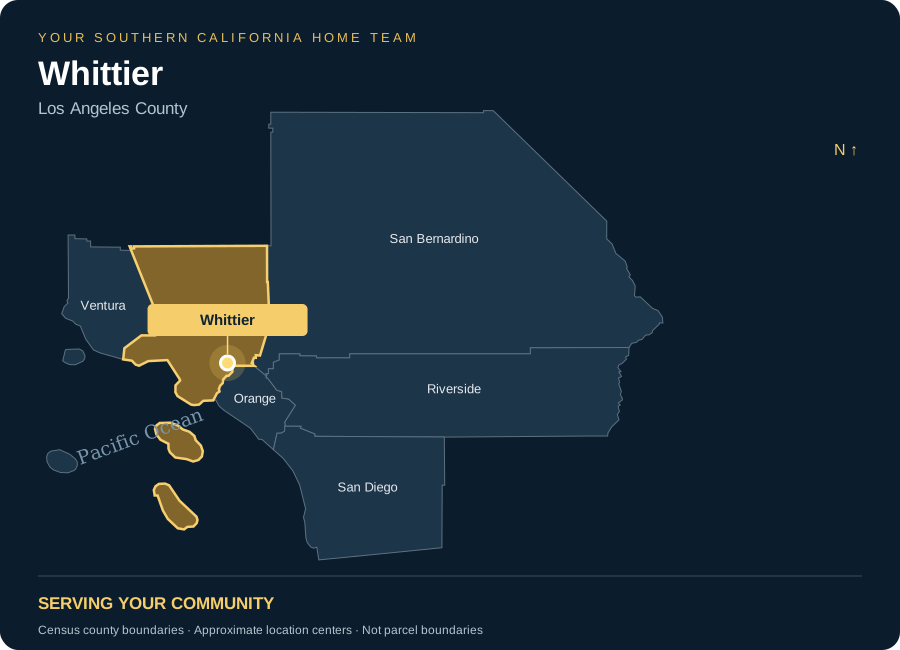
Whittier is an incorporated city in Los Angeles County. Confirm the city's building or planning provider for your property; some cities contract with other agencies.
Los Angeles County provides a service locator and Building & Safety resources. Confirm which agency serves the parcel; city names and mailing addresses alone do not establish jurisdiction.
Los Angeles County Building & Safety ↗Location reference: US Census TIGERweb, current places layer. About this directory.
Coordinate related work in Whittier
All home improvement services in Whittier · Roof Replacement & Roofing throughout Los Angeles County · Roof Replacement & Roofing overview
Nearby communities
Roof replacement planning in Whittier
Roof problems in Whittier usually do not start with a dramatic failure. Most start with years of heat, UV exposure, dry summers, seasonal rain, and wind stress slowly wearing down the roof system until leaks finally show up. By the time stains appear on a ceiling, the issue is often larger than one missing shingle or one cracked tile.
In Whittier, roofs also tend to age differently than they do in cooler coastal cities. The slightly inland heat puts more thermal stress on shingles, dries out older felt underlayment, and makes attic ventilation more important. All Star Roof Replacement focuses on helping homeowners understand when a roof has moved past repair-stage issues and into full replacement territory. For homeowners comparing installers, the local roof replacement installer in Whittier page should be part of that research.
A roof replacement is not just about the surface material. It is about underlayment, flashings, ventilation, edge details, and the condition of the wood deck underneath. In homes across Whittier, we often see roofs that look acceptable from the street but are already failing at valleys, penetrations, and roof-to-wall transitions.
Roof Problems in Whittier Usually Start With Heat, Age, and Hidden Wear
Most roof failures in Whittier are progressive. UV damage, drying underlayment, worn flashing, and poor attic airflow build up over time, then the first strong winter rain exposes what has been developing for years. If you are trying to sort out roof repair or replacement, the main question is whether the problem is isolated or system-wide.
That matters because a patch can stop one visible leak while the rest of the roof keeps aging. On older homes, especially in established Whittier neighborhoods, isolated leak symptoms often point to a larger replacement need. Homeowners comparing warning signs should also review the local page on signs you need a new roof.
Why Whittier Roofs Wear Out Faster Than Homeowners Expect
Direct answer: roofs in Whittier often wear out faster because they deal with more heat and sun exposure than coastal properties, while still taking seasonal rain and Santa Ana wind stress. That combination dries materials out, weakens details, and exposes aging components quickly once storms arrive.
Shingle roofs can become brittle sooner when attic heat builds up under dark surfaces. Older tile roofs may still look solid from above, but the underlayment beneath them can already be near the end of its service life. Santa Ana winds can also lift weak ridge materials, loosen flashing edges, and exploit aging starter details on more exposed homes.
For a closer look at expected longevity, homeowners can compare local roof life expectations on the roof lifespan in Whittier page. If leaks have already appeared, the next practical step is understanding what to do when a roof leaks in Whittier.
Common Roof Failure Patterns in Older Whittier Neighborhoods
In older Whittier homes, asphalt roofs often show curling tabs, bald spots from granule loss, and multiple patch areas from years of repair work. A common issue we find is a roof that has been repaired several times around vents or valleys, while the rest of the field shingles have already become brittle.
Tile roofs usually fail differently. The tile itself may remain usable, but the waterproofing layer below it ages out. That is why many older tile homes develop leaks at valleys, penetrations, and transitions long before homeowners think the roof “looks old.”
Mature trees add another local factor. Debris buildup in valleys and behind chimneys can trap moisture, clog drainage paths, and accelerate wear. If you are comparing symptoms across roof types, the pages on new roof warning signs and roof lifespan help frame what is cosmetic versus what is replacement-level wear.
Why Roofs Fail in Whittier
Direct answer: roofs in Whittier usually fail because of combined age, heat, UV exposure, wind, and detail breakdown, not because of one single storm. Most replacement decisions come from full-system wear involving surface materials, underlayment, flashing, and ventilation.
That system view is important. Homeowners often focus on the visible material, but many leak paths begin at components they cannot see from the yard. In homes across Whittier, we often see failure patterns where the outer roof still appears serviceable while the actual waterproofing layer underneath is deteriorated.
For broader material comparisons, the pages on roof lifespan in Whittier and best roofing materials for Whittier provide useful context.
Heat and UV Breakdown on Asphalt Shingle Roofs
Direct answer: asphalt shingles in Southern California usually fail from long-term heat and UV exposure before homeowners expect obvious leaks. In Whittier, architectural shingles commonly last around 18 to 28 years depending on ventilation, orientation, and installation quality.
Heat dries the asphalt binders inside the shingle. Over time that can lead to cracking, curling, brittleness, and granule loss. Once granules wear away, the shingle surface becomes more vulnerable to further UV damage and accelerated aging.
Darker roof colors and poor attic ventilation increase thermal stress. When attic temperatures climb well above outdoor air temperature, the roof assembly ages faster from both sides. Homeowners evaluating material and heat-control choices can compare options on the best roofing materials and reduce heat with roofing pages.
Tile Roof Underlayment Failure Beneath Intact Tile
Direct answer: many tile roofs in Whittier need replacement because the underlayment fails, not because the tile is worn out. The tile may remain serviceable for decades, while the felt or other underlayment beneath it often reaches end-of-life around 20 to 30 years.
This is one of the most misunderstood roof issues in Southern California. Homeowners see solid-looking concrete or clay tile and assume the roof still has many years left. But once the underlayment becomes brittle, laps dry out, or penetrations start breaking down, leaks can appear even when only a few tiles are cracked.
A common issue we find is leakage concentrated at valleys, skylights, pipe penetrations, and roof-to-wall areas on tile homes where the field tile still looks acceptable. In these cases, a lift-and-reset approach with new underlayment may be more appropriate than spot repairs. Homeowners comparing systems can review tile vs shingle roof options and the roof replacement process in Whittier.
Wind, Flashing, and Leak Issues Around Roof Details
Direct answer: many Whittier leaks start at roof details, not in the middle of the roof surface. Flashing failures around skylights, valleys, roof-to-wall intersections, chimneys, and vent pipes are some of the most common leak sources.
Santa Ana wind events can loosen vulnerable edges and expose weak points that have already been aging in the sun. Older starter strips, ridge details, and metal flashings may not fail all at once, but they become more likely to let water in after years of expansion, contraction, and wind stress.
This is why repeated leak repairs can become misleading. One patch may address the immediate opening while the adjacent flashing and underlayment remain near failure. If a leak has returned more than once, homeowners should compare roof leak next steps with a clearer repair vs replacement evaluation.
Ventilation Deficiencies in Aging Whittier Homes
Direct answer: poor attic ventilation shortens roof life and increases attic heat in Whittier homes. Many older roofs were replaced without correcting intake and exhaust balance, which leaves the new roofing system under more thermal stress than necessary.
In Southern California summers, attic temperatures can climb into the 130 to 150 degree range. That trapped heat can age shingles and underlayment faster, increase cooling demand inside the home, and contribute to premature failure even when the roof material itself is decent quality.
Many older homes lack proper low intake ventilation at the eaves or sufficient high-point exhaust. Ventilation upgrades should be part of replacement planning, especially if the existing roof has failed early. Homeowners looking into comfort and efficiency should review energy-efficient roofing in Whittier and ways to reduce heat with roofing.
Signs of Roof Failure in Whittier Homes
Direct answer: if your roof has visible wear, recurring leaks, interior staining, or multiple trouble spots, it may be near replacement time. In older Whittier neighborhoods, visible symptoms often mean the underlying system has been aging for years.
Homeowners usually search by symptom first. They notice stains, wind damage, missing shingles, or a leak after the first rain. But symptom-based searching can lead to underestimating the scope of the problem. The local pages on signs you need a new roof and roof inspection cost in Whittier can help frame what an inspection should actually look for.
Visible Exterior Signs a Roof Is Near the End
Direct answer: visible exterior warning signs include curling shingles, cracked or bald areas, slipped or broken tiles, failing ridge mortar, exposed underlayment, seam splits on low-slope roofs, and ponding water. These are usually signs of broader roof aging, not just isolated cosmetic wear.
On shingle roofs, granule loss and brittle edges are major red flags. On tile roofs, slipped pieces, cracked field tiles, and worn ridge details can point to deeper underlayment problems. On low-slope sections over garages or additions, UV cracking, open seams, and standing water often signal that the membrane is approaching failure.
In homes across Whittier, we often see roof sections where the wear is heavier on south- and west-facing slopes because of stronger sun exposure. If the roof is showing several of these signs at once, a full inspection usually makes more sense than another patch. More examples are covered on the signs you need a new roof and roof inspection cost pages.
Interior Clues That Point to Replacement, Not Another Patch
Direct answer: interior signs that often point to replacement include ceiling stains, attic moisture, musty insulation, repeated leaks in the same area, or leaks showing up in multiple locations. When several interior symptoms appear together, the roof usually has more than one weak point.
First-rain leaks after a long dry summer are especially common in Whittier. That pattern often means underlayment or flashing has been drying out and weakening for a long time before finally failing under active water flow.
If a home has had multiple repair visits over the last few seasons and new leak points keep appearing, replacement is usually the more practical path. Homeowners dealing with active water entry should review what to do for a roof leak and compare it with a realistic repair or replacement decision.
Roof Repair vs Replacement in Whittier
Direct answer: roof repair makes sense when the problem is isolated and the rest of the roof still has real service life left. Replacement is usually the better decision when the roof is older, leaking repeatedly, or showing system-wide wear in shingles, underlayment, flashing, or ventilation.
This is one of the most important decisions for Whittier homeowners because many roofs remain technically repairable long after they stop being cost-effective to keep repairing. That is especially true on older homes where one visible leak may only be part of a broader aging pattern. For a side-by-side comparison, the roof repair or replacement and is reroofing worth it pages help break down the options.
When a Repair Still Makes Sense
Direct answer: a repair is usually reasonable when the roof is relatively new, the damage is limited, and the surrounding materials are still in good condition. One flashing defect, a few displaced shingles, or limited tile breakage does not always justify full replacement.
The key issue is whether the underlying assembly still has useful life left. If the surrounding shingles are flexible, the underlayment is not brittle, and the problem can be traced to one clear area, repair can be the right short-term and long-term answer.
This is why a proper inspection matters. The visible symptom has to be evaluated in context, not in isolation. Homeowners sorting through that question should start with the local repair or replacement guide.
When Replacement Is the Better Long-Term Decision
Direct answer: replacement is usually the better investment when leaks keep returning, materials are brittle, wear is widespread, or the roof assembly is already near the end of its expected life. At that point, repair dollars often go into temporary containment rather than long-term protection.
Tile roofs over 20 to 30 years old often fall into this category even if the tile still looks decent from the ground. Shingle roofs with heavy granule loss, curling, or multiple patched areas also tend to be poor candidates for continued repair.
A common issue we find is homeowners spending money over several seasons on separate leak calls, only to discover the roof deck, flashing, and underlayment all need broader replacement work anyway. If your roof is showing several end-of-life signs, compare those symptoms with the signs you need a new roof and the local roof lifespan expectations.
Why Reroofing or Overlay Is Often a Poor Fit in Whittier
Direct answer: reroofing over an existing roof is often a poor fit because it can hide bad decking, unresolved dry rot, ventilation problems, and failing flashings. In hot Whittier conditions, overlays may also trap more heat and limit the ability to correct the real causes of failure.
Full tear-off gives a contractor access to inspect the deck, replace damaged components, and rebuild the system correctly. Overlay projects may look cheaper at first, but they often skip the chance to address the very issues that caused the old roof to fail.
Many better replacement scopes and warranty structures favor complete tear-off rather than layering over old material. Homeowners weighing those tradeoffs should compare the local pages on whether reroofing is worth it and roof warranty details.
Roof Replacement Cost Breakdown in Whittier
Direct answer: most roof replacements in Whittier fall roughly between $11,000 and $35,000 or more, depending on size, material, access, tear-off complexity, and hidden repairs. Larger homes, tile systems, steep slopes, and projects involving solar or wood damage can push pricing beyond that range.
Roofing cost in Whittier is not based on one number. It changes with the roof type, the number of layers to remove, the amount of flashing detail work, whether ventilation needs upgrading, and whether older decking or fascia has been damaged. Homeowners researching budget ranges should compare this overview with the local pages on roof replacement cost and cost per square roof.
Typical Price Ranges by Roof Type
Direct answer: in Whittier, asphalt shingle replacements commonly run about $700 to $1,150 per square, tile lift-and-reset projects with new underlayment often run about $450 to $800 per square, full new tile roofs cost significantly more, and low-slope systems often run about $700 to $1,250 per square. One square equals 100 square feet of roof area.
Roof Type | Typical Whittier Range Per Square | Common Use
--- | --- | ---
Architectural asphalt shingles | $700–$1,150 | Standard pitched residential roofs
Tile lift-and-reset with new underlayment | $450–$800 | Existing tile roofs with reusable tile
New concrete or clay tile system | Higher than lift-and-reset; often premium pricing | Full tile replacement projects
Low-slope systems such as modified bitumen or TPO | $700–$1,250 | Garages, additions, patio covers, flat sections
These are realistic planning ranges, not fixed quotes. Actual project cost depends on roof layout, access, disposal, and what is found once the old roofing is removed. For more exact budgeting, homeowners usually need a written local roof replacement cost breakdown.
What Raises Roof Replacement Cost in Whittier
Direct answer: costs go up when the roof is steep, hard to access, covered by solar, located on a hillside lot, or has significant flashing complexity or hidden wood damage. Older homes often carry more change-order risk because dry rot and sheathing problems are not fully visible until tear-off begins.
Solar panel removal and reinstall can add meaningful cost and coordination time. Skylights, chimneys, multiple valleys, and roof-to-wall transitions require more labor than a simple rectangular roof. Hillside access can also change staging, debris handling, and crew movement.
Tile projects usually involve more labor than shingles because materials must be handled carefully, sorted, and reset if they are being reused. A common issue we find on older homes is wood replacement around eaves or penetrations that was hidden by the old roofing. Homeowners preparing for those variables should review both roof replacement cost and the roof replacement process.
How Whittier Compares to Nearby Roof Pricing
Direct answer: Whittier roof pricing is generally in line with nearby cities such as La Mirada, Pico Rivera, and Hacienda Heights, with project-specific differences based more on roof design and access than city limits. Some nearby areas with more HOA requirements or more complex home types may trend modestly higher on certain jobs.
Whittier sits in a middle Southern California pricing range rather than a coastal-premium market. In practical terms, homeowners should expect similar baseline labor and material pricing to nearby inland Los Angeles County communities, while older housing stock, mature trees, and hillside conditions can create more variation from house to house than from city to city.
Tile vs Shingle Roof Options in Whittier
Direct answer: in Whittier, shingles usually make more sense for lower upfront cost and simpler roof lines, while tile is often the better fit for homes where aesthetics, fire resistance, architectural style, and long-term compatibility matter more. The right choice depends on budget, roof structure, neighborhood context, and whether there are HOA requirements.
Both materials are common locally. Many mid-century and tract homes use asphalt shingles, while tile remains widely used on Southern California homes, including many hillside and higher-end properties. Homeowners comparing systems should review the local tile vs shingle roof and best roofing materials pages for more detail.
When Asphalt Shingles Make More Sense
Direct answer: asphalt shingles are often the better fit when budget control matters, the roof design is straightforward, and the homeowner wants a simpler replacement process. They are commonly a strong match for tract homes, ranch-style homes, and standard pitched roofs in Whittier.
Shingles usually cost less upfront than tile and involve less labor-intensive installation. They also come in cool-rated options that can help with heat management in Southern California conditions. On homes where appearance, structure, and budget all align, shingles can provide a practical and efficient replacement path.
Homeowners comparing thermal performance and product choices can review best roofing materials and local cool roof options.
When Tile Is the Better Fit for a Whittier Home
Direct answer: tile is often the better fit when the home already has tile, the neighborhood style favors it, or the owner wants strong heat tolerance and architectural consistency. It is especially common on Southern California homes where curb appeal and long-term tile appearance matter.
Tile offers strong fire resistance and performs well in hot climates, but homeowners need to understand the maintenance reality. The tile body can outlast the waterproofing beneath it by many years. That means replacement planning should focus on underlayment life, flashing condition, and whether a lift-and-reset is feasible.
HOA communities and more design-sensitive neighborhoods may also favor tile for visual consistency. For deeper comparison, homeowners can review the local tile vs shingle roof guide and the broader page on best roofing materials in Whittier.
Energy Efficiency and Heat Control for Whittier Roofs
In Whittier, roof replacement is also a heat-control decision. The city runs warmer than many coastal areas, and that inland heat affects attic temperatures, air-conditioning demand, and how fast roofing materials age. A replacement that only changes the surface layer, but ignores ventilation and system design, often leaves the house hotter than it should be.
For homeowners comparing options, energy-efficient roofing in Whittier usually comes down to three things: the roofing material, the reflectivity of the surface, and whether the attic can actually release trapped heat. Those factors work together, not separately.
How Roofing Affects Attic Heat and Cooling Costs
Answer first: in Whittier homes, a roof affects attic heat by controlling how much solar energy the house absorbs and how well that heat can escape.
During summer, poorly ventilated attics commonly reach 130 to 150 degrees or more. When that happens, the roof deck, underlayment, and shingles or tile all operate under higher thermal stress. That extra heat can shorten roof life and push more heat into the living space below.
Roof color matters, but it is not the whole story. A darker roof surface usually absorbs more heat than a lighter or more reflective one. Just as important, though, is whether the roofing system includes proper intake and exhaust ventilation. Homeowners looking for ways to reduce heat with roofing in Whittier should think beyond color alone.
In practical terms, a hotter attic can mean:
- Higher summer cooling costs
- More strain on HVAC equipment
- Faster aging of asphalt shingles
- Drier, more brittle underlayment beneath tile roofs
- Less consistent indoor comfort in second-floor rooms or vaulted ceilings
Cool Roof Options for Whittier Homes
Answer first: a cool roof is a roofing system designed to reflect more sunlight and release more heat than a conventional roof.
In Whittier, cool-roof options are especially relevant because summer sun exposure is strong and many homes have limited shade over the main roof planes. On low-slope sections, white TPO and similar reflective membranes are common solutions. On steep-slope homes, cool-rated asphalt shingles can offer a more familiar appearance while still reducing heat absorption compared to standard darker products.
Homeowners researching a cool roof in Whittier should also be aware that California energy-code requirements can influence product choice on some replacement projects. Title 24 considerations vary by roof type, slope, and scope of work, so the right answer depends on the house and the system being installed.
A cool roof is usually worth considering when:
- The home gets heavy afternoon sun
- The attic runs extremely hot in summer
- The house has low-slope roof sections
- The owner wants better energy performance without changing the home’s structure
- Code compliance may favor reflective materials
Ventilation Upgrades That Improve Roof Performance
Answer first: ventilation upgrades improve roof performance by reducing trapped heat and moisture inside the attic.
Many older Whittier homes were built with limited attic airflow, and some were reroofed in the past without correcting that problem. A new roof installed over the same poor ventilation setup may still run hot and age faster than expected.
Balanced ventilation means there is enough intake at the lower roof edge, usually at the eaves, and enough exhaust near the top of the roof. That airflow helps move superheated air out of the attic. In real-world conditions, that can improve comfort and support longer material life.
Ventilation also matters for warranty performance. A roof that is installed correctly but bakes in an overheated attic may not deliver the service life homeowners expect. For that reason, ventilation belongs in the proposal, not as an afterthought. Homeowners comparing systems should review both energy-efficient roofing options and roof warranty details together.
How Long a Roof Lasts in Whittier
Answer first: roof lifespan in Whittier depends more on heat, ventilation, exposure, and installation quality than on manufacturer marketing alone.
In Southern California climates, a roof rarely fails from one single cause. More often, service life is shortened by years of UV exposure, attic heat, worn flashing details, and delayed maintenance. That is why two roofs with the same material can age very differently from one home to the next.
Homeowners looking into roof lifespan in Whittier should set expectations around local conditions, not just brochure numbers.
Typical Lifespan for Shingle, Tile, and Flat Roof Systems
Architectural asphalt shingles in Whittier commonly last about 18 to 28 years. A well-installed roof with good ventilation may land toward the upper end of that range. A darker roof with poor airflow and full sun exposure may not.
Concrete and clay tile roofs can look good for decades, and the tile itself may last 40 to 75 years or longer. The important local issue is the underlayment beneath the tile. In many Whittier homes, that underlayment reaches end of life around 20 to 30 years, sometimes sooner on hotter or more exposed roofs. That is why tile roofs often need a lift-and-reset replacement even when the tile still looks usable.
Low-slope roofing systems, including modified bitumen and single-ply membranes, commonly last around 15 to 25 years depending on the system, drainage, ponding history, and UV exposure.
Roof Type | Typical Whittier Service Life | Main Local Failure Point
--- | --- | ---
Architectural asphalt shingles | 18–28 years | UV aging, granule loss, brittle shingles, ventilation-related heat stress
Concrete or clay tile | Tile body 40–75+ years; underlayment often 20–30 years | Underlayment deterioration, flashing wear, valley and penetration leaks
Low-slope membranes | 15–25 years | Seam wear, UV breakdown, drainage issues, ponding
For more detailed material-specific expectations, homeowners often compare best roofing materials for Whittier homes with local lifespan patterns before choosing a replacement system.
What Shortens Roof Life in Whittier
Answer first: the biggest roof-life reducers in Whittier are UV exposure, attic heat, poor ventilation, aging flashings, and deferred replacement after repeated leaks.
Whittier roofs see long dry stretches, intense sun, and seasonal rain that exposes hidden failure points. On wind-exposed homes, Santa Ana conditions can loosen ridge material, stress flashing edges, and exploit older details that already started failing from age.
Other factors that shorten roof life include:
- Repeated patch repairs on an already aging roof
- Inferior underlayment beneath tile
- Complex roof lines with many valleys, skylights, and penetrations
- Mature trees that drop debris and hold moisture in drainage areas
- Skipping ventilation upgrades during prior reroof work
In Whittier homes, the visible roof surface is only one part of the equation. Underlayment, flashing, and airflow often determine whether a roof reaches a reasonable lifespan or starts leaking years early.
Roof Replacement Process in Whittier
Answer first: a full roof replacement in Whittier usually moves through inspection, proposal, material selection, permit coordination, tear-off, deck inspection, installation, cleanup, and final review.
Homeowners are often less worried about the roofing vocabulary than about what daily life will look like during the project. A good replacement process makes that clear before work starts. Full tear-off jobs also matter because they expose hidden problems that an overlay can miss.
For a broader breakdown, homeowners often review the roof replacement process in Whittier alongside the expected project timeline.
What Happens Before Installation Starts
Before installation, the contractor should inspect the roof system, identify likely problem areas, and provide a written scope. That scope should explain what is being removed, what underlayment is being installed, how flashing will be handled, whether ventilation is being improved, and how wood repair is addressed if hidden damage is found.
In Whittier, full roof replacement typically involves permit submission and inspection requirements. If the property is in an HOA community, material color or profile approval may also be needed before ordering. Homes with solar require extra coordination because panel removal and reinstall can affect both cost and scheduling.
Good pre-installation planning usually includes:
- On-site inspection and measurements
- Written estimate with replacement scope
- Material and color selection
- Permit coordination
- HOA review if applicable
- Solar panel scheduling if present
- Discussion of driveway access, staging, and disposal
Tear-Off, Deck Inspection, and New Roof Installation
Answer first: tear-off matters because it allows the crew to inspect the deck and rebuild the roof system correctly.
Once work starts, the old roofing is removed so the roof deck can be checked for soft spots, dry rot, deteriorated sheathing, and damage around penetrations or edges. This is one of the main reasons reroof overlays are often a poor fit. They can cover hidden damage instead of solving it.
After deck preparation, the roof is rebuilt in layers. The exact sequence varies by material, but usually includes underlayment, flashings, ventilation components, edge metals, and the field roofing material itself. Tile lift-and-reset projects generally involve more labor because existing tiles must be removed, handled, stored, and reinstalled over new underlayment.
Homeowners comparing replacement methods should understand why reroofing is often not worth it when the goal is long-term performance rather than a short-term surface fix.
Timeline, Noise, Debris, and Property Access
Answer first: most Whittier roof replacements take anywhere from a few days to more than a week, depending on material, complexity, access, and inspection timing.
A straightforward shingle replacement on a simple home may take about 2 to 4 days. Many average full replacements run closer to 4 to 7 days. Tile jobs commonly take 1 to 2 weeks or longer, especially when they include lift-and-reset work, detailed flashing replacement, or wood repair.
Homeowners should expect noise, vibrations, material deliveries, and some disruption around the property. Dumpsters or dump trailers may need driveway space or curb access. In tighter older neighborhoods or hillside conditions, staging can take more planning. City inspections, weather, and solar coordination can also move the schedule.
Typical project impacts include:
- Loud tear-off and installation noise during working hours
- Temporary driveway or garage access limitations
- Nail and debris control efforts around the property
- Protection for landscaping and outdoor items
- Coordination for pets, children, and attic-stored belongings
How to Choose a Roofing Contractor in Whittier
Answer first: the best roofing contractor for a Whittier replacement project is one that can document licensing, insurance, replacement scope, ventilation planning, and permit compliance clearly.
Because roofing problems often show up months or years after installation, contractor selection should focus on system knowledge and scope quality, not just whether the estimate is lower. In Whittier, older homes, mixed roof designs, tile underlayment issues, and heat-related wear all make detail quality important.
Homeowners looking for a roofing contractor near Whittier often get better results when they compare documentation and process, not just star ratings or sales language.
Licensing, Insurance, and Permit Requirements
Verify the current CSLB record for license #1009760 and confirm the appropriately licensed contractor responsible for your roofing scope in the written agreement. Homeowners should also verify workers’ compensation coverage, liability insurance, and bond status through the Contractors State License Board. That matters because roofing is high-risk work, and insurance gaps can create serious homeowner exposure.
For roof replacement in Whittier, permits and inspections are generally part of a proper full tear-off project. If a contractor suggests bypassing permits to save time or money, that is a red flag. Permits help confirm that the work is being done to code and that the roof system can be inspected at key stages.
When screening contractors, homeowners should confirm:
- Verify the current CSLB record for license #1009760 and confirm the appropriately licensed contractor responsible for your roofing scope in the written agreement.
- Workers’ comp insurance
- General liability insurance
- Bond status
- Local permit handling
- Experience with the specific roof type on the home
What a Good Roof Replacement Proposal Should Include
Answer first: a good proposal explains the system, not just the price.
In Whittier homes, vague bids often leave out the items that matter most: flashing replacement, ventilation improvements, underlayment type, edge metal scope, cleanup, and how hidden wood damage will be handled. A low number can become much less attractive once those missing details turn into change orders.
A strong proposal should clearly define:
- Whether the job is full tear-off or overlay
- Roofing material brand and product line
- Underlayment type and layer count where relevant
- Flashing replacement at walls, valleys, pipes, and penetrations
- Ventilation strategy
- Disposal and site cleanup
- Permit responsibility
- Wood repair process or allowance terms
- Solar panel coordination if needed
- Warranty coverage
Homeowners reviewing bids often benefit from comparing the replacement scope with the company’s explanation of roof warranty coverage and the full installation process.
Why a Replacement-Focused Contractor Can Be a Better Fit
In Whittier, many roofs that generate repair calls are already near the end of their useful life. That is especially true on older shingle roofs with recurring leaks and tile roofs where the underlayment is failing under otherwise intact tile. In those cases, a contractor who mainly sells spot repairs may not be addressing the real problem.
A replacement-focused contractor is often a better fit when the issue is system-wide aging rather than one isolated defect. The benefit to the homeowner is usually clearer long-term planning, more realistic budgeting, and fewer repeat service calls for the same underlying roof.
That replacement-first perspective is especially useful when homeowners are comparing the best roofing company options in Whittier or trying to decide between roof repair and replacement.
Common Mistakes Whittier Homeowners Make When Replacing a Roof
Answer first: the most common roof replacement mistakes in Whittier are choosing by price alone, ignoring ventilation and flashing, and waiting too long after repeated leaks start.
Most major roofing regrets come from scope decisions, not from a single bad shingle or tile. Because every roof is different, homeowners need to compare what is actually being installed and corrected, not just what the final total says.
Choosing the Lowest Bid Without Comparing Scope
A lower bid is not automatically a better value. In roof replacement, pricing can vary because one contractor includes critical items and another does not. The cheaper bid may exclude flashing replacement, upgraded underlayment, permit handling, realistic wood repair expectations, or proper ventilation work.
In Whittier’s climate, those omitted items matter. A roof with good surface material but weak flashing or poor ventilation can still fail early. Homeowners should review the actual system being proposed, not just the product name or brand.
This is one reason many homeowners research roof replacement cost in Whittier and compare it against proposal scope instead of assuming all bids are equivalent.
Ignoring Ventilation, Flashing, and Underlayment Quality
Answer first: if a roof replacement only focuses on the visible surface, it can miss the components most responsible for leaks and premature aging.
In Southern California climates, flashing and underlayment often fail before the visible roof field looks catastrophic. Tile roofs are the clearest example. The tile may still appear fine from the street while the underlayment below has already become brittle and leak-prone.
Ventilation is similar. It is easy to overlook because homeowners do not see it every day, but poor airflow can raise attic heat, shorten roof life, and reduce the practical value of the replacement. Anyone comparing systems should review both energy-efficient roofing considerations and what the warranty actually covers.
Delaying Replacement Too Long After Repeated Leaks
In Whittier homes, repeated leak repairs are often a warning that the roof has moved beyond a repair-first stage. Once multiple details begin failing, each patch addresses one symptom while the rest of the aging system keeps deteriorating.
Waiting too long can lead to:
- More interior drywall and paint damage
- Insulation contamination or moisture retention
- Higher wood repair costs at the deck or fascia
- More emergency service calls during rain events
- Reduced flexibility in choosing timing and material options
When leaks keep returning after wind or the first heavy rains, replacement often becomes the more controlled and less expensive path over the next few years. Homeowners weighing that decision often start with what to do about a roof leak and the signs that a new roof is needed.
Financing and Warranty Considerations for Whittier Roof Replacements
Answer first: financing affects when homeowners replace the roof, and warranty quality depends heavily on how the roof is installed.
In Whittier, many homeowners are not deciding whether the roof needs replacement. They are deciding how to time the project financially and how to compare long-term value between proposals. That makes financing and warranty details part of the practical buying decision, not just add-ons.
Roof Financing Options and Monthly Payment Expectations
Common financing options for California roof replacement include contractor-arranged financing, unsecured home improvement loans, home equity lines of credit, and other lender-based programs where available. The best fit depends on credit profile, available equity, interest rate, fees, and how quickly the homeowner wants the work completed.
Financing may be available through third-party lenders for qualified applicants. Availability, APR, fees, down payment, and repayment terms depend on the lender and approval. Review the complete loan terms before accepting.
Examples for context only:
Financed Amount | Approximate Monthly Range | Notes
--- | --- | ---
$15,000 | $165–$220+ | Varies by rate, term, and fees
$20,000 | $220–$290+ | Common comparison point for mid-range replacements
$30,000 | $330–$435+ | Often relevant for tile, complex, or larger projects
These are not price promises or lending offers. They are planning ranges to help homeowners think through timing. For more detailed guidance, see roof financing options in Whittier.
Manufacturer Warranty vs Workmanship Warranty
Answer first: manufacturer warranties cover product defects, while workmanship warranties cover installation-related issues.
That distinction matters because most real-world roof problems come from installation details, flashing failures, ventilation issues, or system design mistakes, not from a factory defect in the shingle or underlayment alone. A long material warranty sounds good, but it is not a substitute for correct installation.
Homeowners should ask:
- What products are included in the manufacturer warranty?
- Does the warranty require a full system installation?
- What workmanship warranty is provided by the contractor?
- What exclusions apply to wind, ponding, foot traffic, or ventilation-related conditions?
- How are service calls handled if a problem appears?
In practice, installation quality is what gives the warranty its real value. A correctly built roof system with sound flashing, proper ventilation, and complete tear-off is usually far more important than a headline warranty number alone.
FAQs About Roof Replacement in Whittier, CA
How much does a new roof cost in Whittier, CA?
Most full roof replacement projects in Whittier fall somewhere around $11,000 to $35,000 or more, depending on roof size, material, access, tear-off complexity, and hidden repairs. Asphalt shingle roofs are usually the lower-cost option, while tile work, low-slope sections, steep slopes, solar coordination, and wood replacement can push the total higher. The most useful number is the written scope, because every roof is different.
Do I need roof repair or full replacement in Whittier?
Repair usually makes sense when the roof is relatively newer and the damage is isolated to one area, such as a flashing problem or a limited number of shingles or tiles. Full replacement is more likely to be the better decision when the roof is older, has repeated leaks, broad visible wear, failing underlayment, or multiple patched areas. In many Whittier homes, recurring leaks after wind or the first major rains point to system-wide aging rather than a single defect.
How long does a roof last in Whittier’s climate?
Architectural shingle roofs in Whittier commonly last about 18 to 28 years. Tile roofs can last much longer in appearance, but the underlayment beneath them often needs replacement around 20 to 30 years. Low-slope systems are often in the 15 to 25 year range. Sun exposure, ventilation, installation quality, and maintenance all have a major effect on real lifespan.
What roofing material is best for Whittier homes?
The best material depends on the house, budget, roof design, and long-term goals. Asphalt shingles are often a strong fit for straightforward replacement projects and lower upfront cost. Tile is common in Whittier for appearance, fire resistance, and compatibility with many neighborhood styles, but homeowners need to account for underlayment lifespan beneath the tile. Low-slope areas usually need a separate system such as modified bitumen or TPO rather than the same material used on the main sloped roof.
What is a cool roof, and is it worth it in Whittier?
A cool roof is designed to reflect more solar energy and release heat more effectively than a standard roof. In Whittier, that can help lower roof surface temperatures and reduce attic heat, especially on homes with strong sun exposure. It is often worth considering because inland heat is a real factor locally, and some replacement projects may also be influenced by California energy-code requirements.
What should I do if my roof is leaking during rain in Whittier?
The first priorities are to contain the water inside, protect belongings, and document the damage. Use buckets, move furniture, and if water is bulging in drywall, be cautious and assess safely. Do not walk on a wet roof, especially tile or steep slopes. A leak during active rain often requires temporary dry-in measures first, followed by a full inspection once conditions are safe. In many Whittier cases, a first-rain leak after summer points to broader wear that needs more than a quick patch.
How long does roof replacement take in Whittier?
A simple shingle replacement may take about 2 to 4 days. Many standard full replacements take around 4 to 7 days. Tile jobs commonly take 1 to 2 weeks or longer because they involve more labor, handling, and detail work. Permits, HOA coordination, inspections, solar panel scheduling, weather, and hidden wood repairs can all affect the timeline.
Can I finance a roof replacement in Whittier?
Yes. Financing is common for full roof replacement projects in California. Options may include contractor-arranged financing, home improvement loans, and home equity-based lending depending on the homeowner’s situation. Terms, rates, fees, and total repayment cost vary, so monthly payment examples are useful for planning, but the financing details should always be reviewed carefully before choosing a program.
Request a Roof Replacement Estimate in Whittier
If you are trying to decide whether your Whittier roof still has repair life left or has moved into replacement territory, the most useful next step is a roof-specific inspection and written scope. A clear estimate should explain what is failing, whether the issue is surface wear or full-system aging, what material options make sense for the home, and what cost range is realistic based on access, ventilation, flashing, and any likely wood repair.
If you want that kind of replacement-focused evaluation, you can review the roof replacement installer page, compare options for a roofing contractor near you in Whittier, or contact All Star Roof Replacement directly at (310) 729-3013 or contact form for project guidance.