
Roof Replacement & Roofing
in Irvine.
A roofing estimate should explain what happens beneath the finished surface as well as the material you see. Start with the existing roof, the areas of concern, and any work already planned for solar or insulation.
Get my virtual estimate ↗Team All Star Construction · CA license #1009760
Serving your area from our Southern California operation.
Virtual Estimates Available
Start by phone or video. Share your photos and project priorities; we then arrange the measurements and site review needed for your estimate.
What to share for your
Irvine project
- Share ground-level photos of each roof side and any visible ceiling staining; do not climb onto the roof for an estimate.
- Tell us the approximate roof age, material, number of stories, and any known leak history.
- Mention existing solar panels, skylights, patio connections, or planned attic insulation.
Decisions to discuss
- Compare the proposed tear-off, underlayment, flashing, ventilation, and finish material.
- Ask how concealed decking damage will be assessed and priced if discovered.
- Coordinate roofing with solar removal and reinstallation before setting a schedule.
Can you price a roof from photos?
Send your address and photos to start a virtual estimate. We review the roof measurements, access, existing layers, and repair needs before finalizing the installation plan.
Planning a project in Irvine
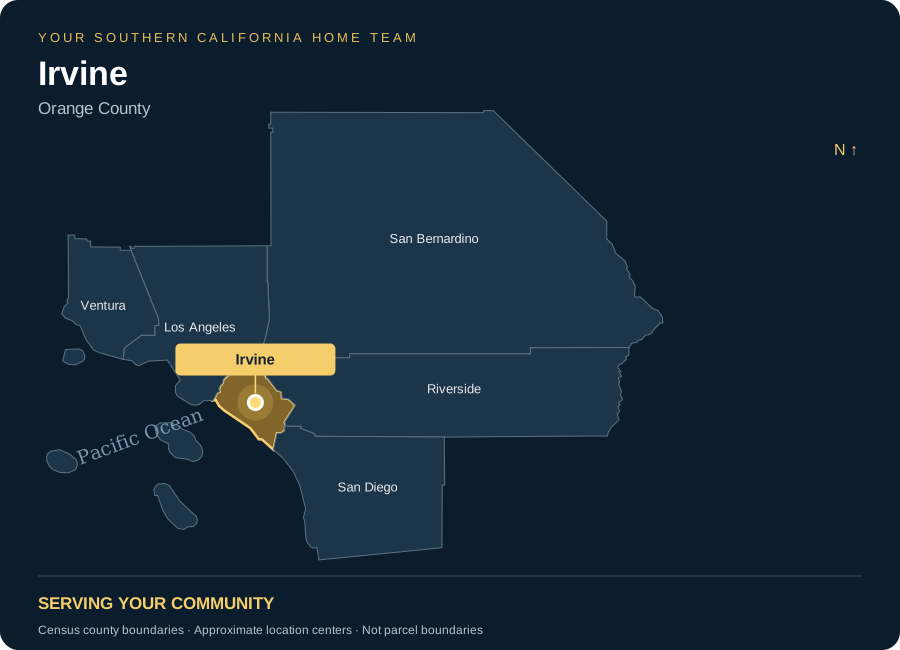
Irvine is an incorporated city in Orange County. Confirm the city's building or planning provider for your property; some cities contract with other agencies.
OC Development Services provides resources for unincorporated Orange County. Its online services include permit and property research; incorporated-city projects may follow a separate process.
OC Development Services — Building and Safety ↗Location reference: US Census TIGERweb, current places layer. About this directory.
Coordinate related work in Irvine
All home improvement services in Irvine · Roof Replacement & Roofing throughout Orange County · Roof Replacement & Roofing overview
Nearby communities
Roof replacement planning in Irvine
If your roof is leaking in more than one spot, holding heat in the attic, or needing repeat patchwork, the main problem is usually not the surface you can see. On many Irvine homes, the real failure is in the roof system underneath: underlayment, flashing, decking, or ventilation.
That is where All Star Roof Replacement starts. We look at the full system, not just the tiles or shingles, so you can get a clear answer on whether the roof still makes sense to keep or if replacement is the better move. If you are comparing options for roof replacement in Irvine, the first step is understanding what is actually failing.
Irvine roofs deal with strong sun, long UV exposure, dry heat, and seasonal wind-driven rain. Concrete tile and architectural shingle roofs are common here, and many of them are now in the 15 to 30-plus-year range where leaks, heat buildup, and aging details start showing up together.
What Irvine Homeowners Usually Notice Before Roof Replacement
Most homeowners notice the same pattern first: one leak turns into another, the upstairs stays hotter than it used to, and repairs stop lasting. Those are common signs that the roof system is wearing out, not just one isolated area.
In homes across Irvine, we often see roofs that still look decent from the street but are already failing underneath. A common issue we find is old underlayment under tile that has gone brittle, or flashing details around walls and penetrations that have started letting water in during storms.
Older homes in areas like Woodbridge, Northwood, and Westpark, along with many houses in newer villages that are no longer new at all, are reaching the age where replacement becomes a real discussion. If you are seeing recurring leaks, visible aging, or temperature problems inside, it helps to review the usual signs you need a new roof before spending more on another patch.
Why Roofs Fail in Irvine
Roofs in Irvine usually fail from long-term system wear, not one dramatic event. Sun, UV exposure, heat, wind, and water intrusion all work on the weak points over time.
That matters because a roof can fail even when a lot of the surface material is still there. Tile roofs are the best example. The tile may still have years of life left, but the waterproofing below it can already be done.
Heat, UV, and Dry Conditions Wear the System Down
Irvine gets a lot of sun, and that constant exposure takes a toll. Summer heat in the 80s is normal, and inland heat waves into the 90s and 100s speed up aging on older roofs.
On shingle roofs, UV and heat break down the surface, dry out the material, and lead to granule loss, curling, and cracking. On tile roofs, the bigger problem is often below the tile. Older felt underlayment gets brittle from years of heat and stops doing its job.
Ventilation also matters more than many homeowners realize. When the attic is not balanced for intake and exhaust, excess heat stays trapped, roofing materials age faster, and indoor temperatures become harder to control. If your house runs hot upstairs, it is worth looking at how a new system can reduce heat with roofing instead of just replacing the visible surface.
San Bernardino climate conditions farther inland show the same pattern with heat and UV stress, and while Irvine is moderated more by coastal influence, we still see that same long-term breakdown on exposed slopes across Orange County.
Wind, Rain, and Roof-to-Wall Transitions Create Leak Paths
Heavy rain does not have to be constant to expose a weak roof. In Southern California, one strong storm is enough to find every bad valley, failed penetration, and weak flashing transition.
Santa Ana winds put extra stress on older roofs in Irvine. Gusts can lift poorly fastened shingles, shift vulnerable details, and push rain into areas that might stay dry during a lighter storm. A common issue we find is failure where the roof ties into stucco walls. If that flashing was not integrated right to begin with, leaks often show up there first.
In homes across Irvine, we often see leak paths around chimneys, skylights, valleys, pipe penetrations, and roof-to-wall transitions long before the whole roof looks destroyed from the outside. If water is already getting in, here is a practical guide on what to do if your roof is leaking.
Signs of Roof Failure on Irvine Homes
The clearest sign of roof failure is when problems stop being isolated. Multiple leaks, repeated repairs, visible aging, attic heat, and soft spots in the roof deck usually mean the system is breaking down as a whole.
Another sign is when the roof keeps getting worked on, but the problems keep coming back. Once that starts happening on an older roof, repair money often stops going toward a real solution.
Signs on Tile Roofs
On tile roofs, the tile itself is often not the first thing to fail. In Irvine, many tile systems need replacement because the underlayment and flashings underneath have reached the end of their service life, usually around the 20 to 30-year range.
Broken or slipped tiles also matter, especially after foot traffic from maintenance or solar work. Those breaks may look minor, but they can expose weak underlayment below and turn an aging roof into an active leak problem.
Valleys, penetrations, eaves, and roof-to-wall areas are where tile roofs usually show trouble first. If the underlayment is brittle in those spots, patching one area may not solve the next leak.
Signs on Shingle Roofs
On shingle roofs, replacement signs are usually easier to see. Widespread granule loss, curled tabs, brittle edges, thermal cracking, and repeat leak repairs are all strong indicators that the roof is near the end.
Windward slopes often wear faster in Irvine because of Santa Ana exposure. Once shingles lose flexibility and start breaking down across multiple sections, repairs become less reliable.
With proper installation and ventilation, many architectural shingle roofs here last around 20 to 30 years. Without that, they can age out sooner.
Signs the Problem Is Under the Surface
Some of the biggest roof problems are hidden. Failed underlayment, damaged decking, weak flashing details, and poor ventilation do not always show clearly from the ground.
That is why surface appearance alone is not enough to make the call. A roof can still look serviceable and already be failing underneath. A full system review, including satellite layout review and visual inspection, helps identify slope design, transitions, drainage points, and the areas most likely to be causing trouble. If you are trying to understand what that evaluation involves, this page on roof inspection cost explains the factors that go into it.
When Roof Repair Still Makes Sense and When Replacement Is the Better Move
Repair still makes sense when the problem is limited and the rest of the roof system is in good shape. Replacement makes more sense when the roof has broad aging, more than one leak area, or hidden failure under the surface.
The main question is not whether one spot can be patched. The real question is whether the full roof system is still dependable after that patch is done.
Situations Where a Repair May Still Be Worth It
If a newer roof has one flashing problem, a few broken tiles, or one localized shingle issue, repair can still be the right call. The same goes for some low-slope sections where the membrane is still in serviceable condition and the failure is limited to one seam or one detail.
Repairs are more reasonable when the underlayment is still sound, the decking is solid, and the problem has not started showing up in different areas. In that case, you may be dealing with one defect instead of overall roof failure.
Situations Where Replacement Usually Saves Money Long Term
If the roof has multiple leak points, 20 to 30-plus-year-old underlayment, widespread shingle wear, or recurring patch history, replacement usually saves more in the long run. At that stage, you are not fixing one problem. You are chasing system failure.
Tile roofs with old underlayment commonly fall into this category. So do shingle roofs with broad granule loss, brittleness, and repeated repairs after wind or heat exposure. Full tear-off gives access to the deck, flashing details, ventilation, and hidden damage so the new roof can be built correctly.
If you are unsure where your roof falls, this explanation of roof repair or replacement helps break down the difference in practical terms.
What Roof Replacement Costs in Irvine
Roof replacement cost in Irvine depends on the actual system, not just roof size. Material type, roof complexity, access, wood damage, ventilation needs, solar coordination, and HOA requirements all affect the final number.
There is no honest fixed price without evaluating the roof first. Tile roofs in particular can hide underlayment and decking issues that do not show until the system is opened up.
Typical Cost Ranges by Roof Type
For many Irvine homes, architectural shingle replacement often falls around $12,000 to $30,000 or more. Tile lift-and-reset projects with new underlayment and flashings commonly run around $18,000 to $50,000 or more. Full new tile systems can run roughly $30,000 to $70,000 or more depending on size, layout, and detail work.
Those are broad ranges, not fixed quotes. A simple single-story roof is different from a large two-story home with complex geometry, stucco tie-ins, skylights, and solar panels.
Cost Factors That Change the Price
The biggest cost changes usually come from what is found once the old roof is removed. Damaged decking, fascia dry rot, rebuilt stucco flashing areas, skylight work, and solar detach and reset all add to the scope.
Ventilation upgrades can also affect price, but they are often worth doing when attic heat and premature roof aging are already part of the problem. On tile roofs, disposal, loading, and reset labor also make a big difference.
Cost Per Square for Irvine Roof Replacement
Installed shingle roofing in Irvine commonly ranges around $550 to $1,100 per square. Tile lift-and-reset work often ranges around $450 to $800 or more per square depending on tile condition and detail work. Full new tile systems often range around $1,000 to $2,000 or more per square installed.
Square pricing helps with rough planning, but it does not replace a full roof evaluation. Complex valleys, multiple elevations, wood replacement, and flashing rebuilds can change the real cost quickly. For a closer breakdown, review roof replacement cost in Irvine and how cost per square roof pricing is used.
Tile vs Shingle Roof Replacement in Irvine
Neither tile nor shingles are automatically better for every house. The right choice depends on the home design, HOA rules, heat exposure, budget, and the condition of the full roof system.
In Irvine, tile is common because of neighborhood appearance standards, durability, and fire performance. Shingles are often the lower-cost option where they are approved.
When Tile Is the Better Fit
Tile is often the better fit when the home was designed for it, the HOA requires that profile, or the owner wants to keep the original look of the house. Concrete and clay tile work well in Irvine neighborhoods and hold up well in heat.
But the key point is this: tile is not the waterproof layer. The underlayment and flashings below it do the real waterproofing, and those components usually need replacement much sooner than the tile itself.
When Shingles Make More Sense
Architectural shingles often make more sense when HOA rules allow them and the owner wants a lower up-front replacement cost. They usually install faster than a full tile replacement and can be a practical choice on homes that are already built around composition roofing.
Good shingle performance in Irvine depends heavily on installation quality and ventilation. On a hot, sun-exposed roof, those details matter just as much as the shingle itself.
How HOA Rules Affect the Material Choice
In many Irvine communities, the material choice is not just personal preference. HOA rules may control the roof profile, color, and sometimes even the approved product family.
That needs to be checked early. Waiting until after the estimate to verify HOA requirements can delay the project and force material changes. If you are comparing options, it helps to review tile vs shingle roof differences and the best roofing materials for this area before narrowing the scope.
How Roof Replacement Can Help With Heat and Energy Use in Irvine
A new roof can help with heat and energy use in Irvine, but the benefit comes from the whole system, not just the surface material. On a lot of homes here, the real issue is attic heat buildup caused by long sun exposure, aging underlayment, and poor ventilation balance.
If the attic is trapping heat all day, the rooms below usually feel it. Homeowners often notice hotter upstairs rooms, uneven temperatures, and AC systems running longer than they should. In those cases, roof replacement is a chance to correct the system instead of just changing what shows from the street.
That can include better intake and exhaust ventilation, updated underlayment, improved flashing details, and reflective roofing options where they make sense. If you are comparing energy-efficient roofing choices in Irvine, it helps to look at how the full roof assembly performs, not just the product brochure.
Ventilation Matters as Much as the Roofing Surface
Ventilation is one of the most overlooked parts of roof replacement. Poor airflow in the attic can shorten shingle life, increase interior heat, and keep the roof system running hotter than it should.
On tile roofs, a lot of homeowners assume the tile alone is enough for breathing. It is not. Tile may create some air space, but the roof still needs proper ventilation design. Intake and exhaust have to work together, especially in Irvine where long hot periods and Santa Ana wind conditions put extra stress on the system.
If the ventilation is off, you can install new roofing and still keep the same heat problem. That is why replacement decisions need to include how the attic moves air, not just what goes on top.
Cool Roofing Options for Irvine Homes
Cool roofing can help reduce heat gain, especially on homes with heavy sun exposure. In Irvine, that usually means looking at CRRC-rated shingles, cool-color tile options, or reflective low-slope materials like TPO or PVC where the roof design calls for them.
Not every house needs the same solution. HOA rules, roof shape, slope, and appearance requirements all affect what makes sense. Some steep-slope reroofs may not require a cool roof upgrade, but it is still worth reviewing if attic heat is one of the homeowner’s main complaints.
If reducing upper-floor heat is part of the goal, it helps to compare cool roof options together with ventilation improvements. That gives a more accurate picture of what the replacement can actually improve.
How Long Roofs Last in Irvine
In Irvine, most shingle roofs last around 20 to 30 years if they were installed right and ventilated properly. Tile roofs can look good much longer than that, but the waterproofing system under the tile often does not. On many tile homes, the underlayment and flashings are what fail first.
That is why roof age by itself does not tell the whole story. A 25-year-old roof with one clean leak history is different from a 20-year-old roof with repeated patching, high attic heat, and visible wear at penetrations and valleys.
Low-slope sections usually have a shorter service life than steep-slope areas. Drainage, seam quality, ponding, and sun exposure all matter there.
Age Ranges by Roof Type
Architectural shingle roofs in Irvine commonly fall into the 20 to 30 year range. Some reach the upper end, some do not. Installation quality, attic ventilation, and heat exposure make a big difference.
Concrete and clay tile can last for decades from a surface standpoint, but that does not mean the roof system below is still sound. It is common to see tile roofs where the tile is still serviceable while the underlayment has become brittle and the flashings are already at the end of their useful life.
Low-slope roof systems usually last around 15 to 25 years depending on the material and how well the area drains. Any low-slope section with standing water, seam wear, or repeated leak history needs careful review.
What Shortens Roof Life Faster
Heat and UV are major factors in Irvine. They dry out older felt, speed up shingle deterioration, and put constant stress on sealants and flashing details. Poor ventilation makes that worse.
Another thing that shortens roof life is repeated disturbance. Every time an older roof gets patched, walked, or opened for solar or other work, weak areas can get weaker. On tile roofs, broken tiles from foot traffic are common. On shingle roofs, disturbed flashings and penetrations often become the next leak point.
Clogged valleys, overflow at the eaves, and hidden wood damage also take years off a roof system. If you want a realistic idea of roof lifespan in Irvine, the condition of the underlayment, deck, flashing, and ventilation matters more than the visible material alone.
What the Roof Replacement Process Looks Like
A proper roof replacement in Irvine starts with evaluation, not an automatic quote. The roof needs to be looked at as a full system so the actual scope is clear before work begins.
For most homes, the process includes inspection, material selection, HOA approval if required, permit handling, tear-off, deck review, dry-in, finish installation, cleanup, and final inspection. Full tear-off is usually the right approach because it exposes hidden issues that would otherwise stay covered up.
That matters on older roofs where leaks are often tied to what is underneath. You cannot verify decking, flashing transitions, or underlayment condition without opening the system.
Before the Crew Starts
Before installation, the main decisions usually involve material type, color, profile, ventilation approach, and any HOA requirements. In Irvine, HOA approval can affect the schedule more than the actual roofing work, especially in neighborhoods with strict appearance standards.
If the home has solar, detach and reset coordination also needs to be addressed early. That work can change timing, access, and final scope. The more details handled up front, the fewer delays once the project starts.
Homeowners who want to understand the roof replacement process usually do better when they ask for the steps in writing instead of relying on a quick verbal summary.
What Happens During Installation
During installation, the old roof comes off first. Then the decking is inspected, damaged wood is replaced where needed, and the roof is dried in before the finish materials go on.
This is where quality matters most. Valleys, vents, skylights, roof-to-wall transitions, chimneys, and stucco tie-ins are the details that decide whether the system stays watertight. Surface materials alone do not fix bad flashing work.
On tile projects, broken and unusable pieces are sorted out while the waterproofing layers below are replaced. On shingle roofs, attention goes to deck prep, underlayment installation, flashing integration, and correct fastening. Daily cleanup and magnet sweeps should be standard on a residential project.
How Long Roof Replacement Usually Takes
Most shingle roof replacements take around 2 to 5 working days on site. Tile lift-and-reset projects often take 5 to 10 or more working days depending on size, access, slope changes, and detail work.
That said, every roof is different. HOA timing, permit scheduling, inspections, weather, and solar coordination can all affect the calendar. The on-site roofing time is only part of the full timeline.
If you are planning around access, HOA deadlines, or solar scheduling, it helps to review the expected roof replacement timeline before the project is set. If you are still comparing who will handle the work, look at how the roof replacement installer explains sequencing, inspections, and hidden-condition allowances.
How to Choose a Roofing Contractor in Irvine
Start with the basics. Verify the current CSLB record for license #1009760 and confirm the appropriately licensed contractor responsible for your roofing scope in the written agreement. After that, the biggest difference is whether the estimate explains the roof system clearly or just lists materials and a price.
For Irvine homes, especially older tile roofs, a useful estimate should address underlayment, flashings, ventilation, decking conditions, and how roof-to-stucco areas will be handled. If those details are vague, the estimate is missing the parts that usually decide long-term performance.
Pressure tactics are a red flag. So are low numbers with no explanation of what is included. A roof replacement decision should be based on evidence, not urgency.
What to Ask Before You Sign
Ask what underlayment is being installed. Ask how flashings will be replaced at valleys, penetrations, and stucco transitions. Ask how intake and exhaust ventilation will be evaluated and whether permit handling is included.
You should also ask how damaged decking, broken tiles, fascia dry rot, and solar coordination are priced if they come up. Those are normal issues on reroof projects, and they should be addressed clearly instead of being left as surprises.
Workmanship warranty details should be in writing. That matters because installation quality is critical. A good material on a poorly installed roof is still a bad roof system.
What Makes One Estimate More Useful Than Another
The best estimate is not always the lowest one. The useful one is the one that shows what is actually wrong and what is needed to fix it properly.
Photo documentation helps. A full system evaluation helps more. When a contractor uses satellite review plus visual inspection, it becomes easier to identify slope layout, drainage patterns, access issues, and likely failure points before the work starts.
If you are comparing options, look for a contractor who can explain system condition clearly, not one who just says the roof is old. Homeowners searching for a roofing contractor near me usually get better results when they compare scope detail and proof, not just price. The same goes for choosing the best roofing company for a replacement project.
Common Roof Replacement Mistakes Irvine Homeowners Make
The most common mistake is judging the roof by what is visible from the ground. A lot of Irvine roofs do not fail because the tile or shingles suddenly look bad. They fail because the system underneath has already worn out.
Another mistake is waiting too long after repeated leaks start. One leak can be isolated. Multiple leaks in different areas usually mean the failure is broader. At that point, more patching often just adds cost without restoring reliability.
HOA planning is another issue. In many Irvine communities, material choices need approval before the job can move ahead. Choosing first and checking later can slow the whole project down.
Choosing Based on Price Alone
Low bids often leave out the things that matter most. That can mean weak allowances for wood replacement, no ventilation improvements, incomplete flashing rebuilds, or vague wording around solar and stucco details.
On Irvine roofs, especially tile systems and multi-plane designs, those missing details are where long-term problems usually come from. If two estimates are far apart, the first thing to compare is scope, not just total price.
A cheaper number does not help if it leaves the real leak paths in place.
Trying to Avoid Tear-Off on an Aging Roof
On an older roof with system-level wear, trying to avoid tear-off is usually the wrong move. Covering over aging materials can hide deck damage, trap existing problems, and make flashing work harder to do correctly.
Full tear-off gives a clear look at the structure, exposes failed underlayment, and allows proper replacement of the details that actually keep water out. On many homes, that is the only way to know the roof has really been reset instead of dressed up.
Where the roof is already showing age, repeat leaks, or underlayment failure, full replacement is usually the cleaner long-term answer.
Ignoring Warranty and Financing Details
Warranty terms matter because they tell you what is actually being backed. Workmanship coverage should be clear, and homeowners should understand that manufacturer coverage can be affected by improper installation, bad ventilation, or accessory mismatches.
Financing matters too. A lot of homeowners use financing for reroof work, especially when replacement comes sooner than expected. The right way to review financing is together with the full scope, warranty language, and realistic project total.
Before signing, it helps to understand the details behind a roof warranty explained in plain terms. If monthly payment options are part of the decision, review how to finance roof replacement without losing sight of the actual work being proposed. For homeowners still weighing the project overall, it is fair to ask whether reroofing is worth it based on age, leak history, and system condition.
Frequently Asked Questions About Roof Replacement in Irvine
How much does roof replacement cost in Irvine?
It depends on material, roof complexity, access, wood repairs, ventilation, solar and HOA needs. Shingles often run about $12,000–$30,000+, tile lift-and-reset $18,000–$50,000+, and full new tile $30,000–$70,000+, but a full-system evaluation gives the most accurate range.
How do I know if I need replacement instead of another repair?
If you have multiple leaks, repeated patches, widespread shingle wear, brittle underlayment, or a roof in the 15–30+ year range, replacement usually makes more sense; isolated issues on a newer, sound system may still be good repair candidates.
How long does a roof usually last in Irvine’s climate?
Most architectural shingle roofs last around 20–30 years with proper installation and ventilation; tile surfaces can last longer, but the waterproofing underlayment and flashings typically age out sooner.
Is tile better than shingles for homes in Irvine?
Not automatically. Tile suits many HOA rules and handles heat well, while architectural shingles are often a lower-cost choice where allowed; the best option depends on your home design, budget, and current roof system condition.
Will a new roof help lower attic heat or cooling costs?
It can when the replacement addresses the whole system—balanced intake/exhaust ventilation, modern underlayment, tight flashing, and, where appropriate, cool-rated shingles, tile, or reflective low-slope materials.
Do I need HOA approval before replacing my roof?
In many Irvine communities, yes; HOAs often control roof profile, color, and sometimes material, so confirming requirements early helps avoid delays and last-minute changes.
How long does a roof replacement project take?
On-site work typically takes about 2–5 working days for shingles and 5–10+ for tile lift-and-reset, while total timelines may extend with HOA review, permits, inspections, weather, and solar coordination.
Can roof replacement be financed?
Yes—many homeowners use financing, bank loans, or home equity; review payment options alongside the written scope and warranty terms so you know exactly what is covered.
Clear Next Step for Irvine Homeowners
If your roof in Irvine is aging, leaking, running hot, or getting patched over and over, the next step is a full system evaluation. All Star Roof Replacement looks beyond the surface to check underlayment, decking, flashing, and ventilation, using satellite review and visual inspection to show what is actually going on before recommending replacement. If you want to talk through the roof, call (310) 729-3013 or use the contact form. No guessing.
Clear explanation.