
Roof Replacement & Roofing
in Mission Viejo.
A roofing estimate should explain what happens beneath the finished surface as well as the material you see. Start with the existing roof, the areas of concern, and any work already planned for solar or insulation.
Get my virtual estimate ↗Team All Star Construction · CA license #1009760
Serving your area from our Southern California operation.
Virtual Estimates Available
Start by phone or video. Share your photos and project priorities; we then arrange the measurements and site review needed for your estimate.
What to share for your
Mission Viejo project
- Share ground-level photos of each roof side and any visible ceiling staining; do not climb onto the roof for an estimate.
- Tell us the approximate roof age, material, number of stories, and any known leak history.
- Mention existing solar panels, skylights, patio connections, or planned attic insulation.
Decisions to discuss
- Compare the proposed tear-off, underlayment, flashing, ventilation, and finish material.
- Ask how concealed decking damage will be assessed and priced if discovered.
- Coordinate roofing with solar removal and reinstallation before setting a schedule.
Can you price a roof from photos?
Send your address and photos to start a virtual estimate. We review the roof measurements, access, existing layers, and repair needs before finalizing the installation plan.
Planning a project in Mission Viejo
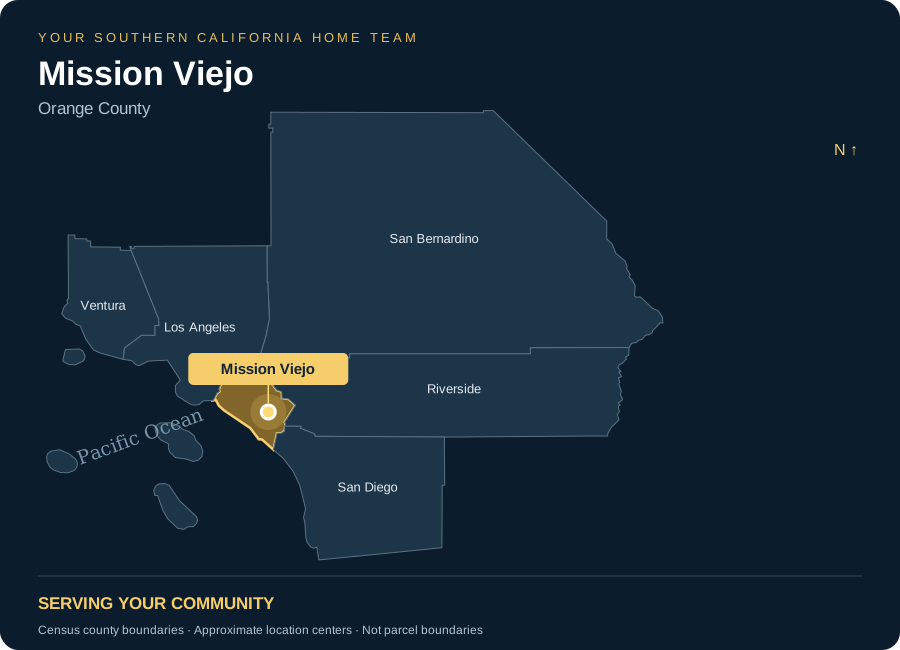
Mission Viejo is an incorporated city in Orange County. Confirm the city's building or planning provider for your property; some cities contract with other agencies.
OC Development Services provides resources for unincorporated Orange County. Its online services include permit and property research; incorporated-city projects may follow a separate process.
OC Development Services — Building and Safety ↗Location reference: US Census TIGERweb, current places layer. About this directory.
Coordinate related work in Mission Viejo
All home improvement services in Mission Viejo · Roof Replacement & Roofing throughout Orange County · Roof Replacement & Roofing overview
Nearby communities
Roof replacement planning in Mission Viejo
Most roof problems in Mission Viejo do not start because one shingle cracked or one tile moved. They start because the roof system is wearing out underneath from age, heat, UV exposure, past installation problems, or repeated patchwork that never fixed the main issue.
That matters here because many Mission Viejo homes were built from the 1970s through the early 2000s. A lot of those homes now have roof systems in the 20 to 35 year range, and that is where bigger problems start to show up. At All Star Roof Replacement, we look at the whole system before saying a roof needs to be replaced. That means checking the visible surface, but also the underlayment, flashing, decking, ventilation, and the areas where leaks usually start.
If you are trying to figure out whether you need another patch or a full roof replacement installer in Mission Viejo, the first step is understanding what is actually failing. Tile roofs can still look decent when the waterproofing below is already done. Shingle roofs can look only partly worn from the ground while the sun-facing slopes are already brittle and near the end.
Older Roofs in Mission Viejo Usually Fail as a System, Not in One Spot
The short answer is this: on an older roof, the leak you see is usually not the only problem. It is just the place where water finally got through.
In homes across Mission Viejo, we often see roofs that have been repaired more than once, but the real issue is that the full system is aged out. On tile roofs, the tile itself may still be usable while the underlayment below has dried out, cracked, or failed around valleys, penetrations, and eaves. On shingle roofs, the surface may be losing granules and flexibility at the same time flashing details are starting to give out.
A common issue we find is homeowners being told the problem is one isolated area, when the roof already has multiple weak points. That is why repeat leaks keep moving from one section to another. If the underlayment is brittle, the flashing is failing, and the roof has age across all slopes, replacement usually makes more sense than continuing to chase symptoms.
Mission Viejo roofs deal with strong sun, summer heat, seasonal rain, and wind events. Those conditions do not just wear out the top layer. They break down the parts of the system that keep water out and heat moving correctly.
Why Roofs Fail in Mission Viejo
Roofs in Mission Viejo usually fail from a mix of age, heat, UV exposure, wind stress, and installation details that were weak from the start. The climate exposes the weak points fast.
Even though Mission Viejo is in South Orange County, it still gets the inland heat effect compared to the immediate coast. Long sun exposure, hot summers, and dry conditions wear roofing out year after year. Then winter storms show you what already failed.
In homes across Mission Viejo, we often see leak patterns tied to old underlayment, failed flashings, poor valley details, and ventilation issues. The roof may look fine from the street, but the system underneath is what determines whether it still has life left.
Sun and Heat Break Down Roofing Faster on South- and West-Facing Slopes
South- and west-facing roof sections usually age the fastest here. That is where the strongest afternoon sun and heat load hit, especially during summer stretches in the 80s, 90s, and periodic 100-plus degree heat waves.
On shingle roofs, that heat speeds up granule loss, curling, brittleness, and cracking. On tile roofs, the tile often survives much longer than the waterproofing below. A common issue we find is a tile roof that still looks serviceable from the outside, but the underlayment underneath has already dried out and stopped doing its job.
Heat cycling matters too. The roof expands and contracts over and over. That movement stresses flashings, ridge details, penetrations, and older felt underlayments. If ventilation is poor, the attic gets hotter and the roof system takes even more abuse.
In Southern California, heat and UV are not minor factors. They are some of the main reasons older roofs stop performing before homeowners expect them to.
Rain Usually Finds the Weak Points First
Rain does not usually create the problem. It exposes the problem.
Most Mission Viejo rainfall comes in late fall through spring, often in short heavy storm periods. When that happens, water finds the first vulnerable area. On older roofs, that is usually at valleys, skylights, pipe penetrations, headwalls, eaves, and flashing transitions.
If debris collects near eaves or in water channels, it slows drainage and keeps those areas wet longer. Over time, repeated wet-dry cycles can damage underlayment and start affecting the wood below. By the time a ceiling stain appears, the roof system has often been leaking longer than the homeowner realizes.
If you are already seeing active water entry, it helps to understand what to do if your roof is leaking while also looking at whether the leak is isolated or part of a bigger failure pattern.
Wind and Poor Installation Make Roof Problems Show Up Sooner
Santa Ana wind events are hard on roofs that were marginal to begin with. Weak fastening, poor ridge attachment, bad edge details, and shortcuts around valleys or flashing will usually show up sooner in wind.
On shingle roofs, that can mean lifted tabs, missing shingles, or sections that start to loosen. On tile roofs, it can mean displaced ridge pieces, uplifted tile, or stress at transitions where the system was not installed correctly.
The direct answer is simple: installation quality matters as much as the roofing material. Edge metal, flashings, ventilation layout, valley construction, and fastening patterns all affect how long a roof actually lasts in Mission Viejo conditions.
Signs Your Roof May Be Failing
Most homeowners do not need a roofing background to spot trouble. The main thing is knowing which signs point to surface wear and which signs point to full-system failure. If you want a more detailed breakdown, review the common signs you need a new roof.
The short answer is this: if the roof is older, has repeated leaks, or is showing problems in more than one area, replacement needs to be part of the conversation.
In homes across Mission Viejo, we often see people wait because the roof still looks acceptable from the ground. That can be misleading, especially with tile. What matters is whether the waterproofing system is still intact.
Common Warning Signs on Shingle Roofs
On shingle roofs, common warning signs include heavy granule loss, curling tabs, brittle shingles, exposed fiberglass, and repeated wind damage. If shingles are cracking when handled or repairs are not holding well, the roof is usually near the end of its service life.
In this climate, many shingle roofs start needing replacement in the 18 to 25 year range, sometimes longer, sometimes sooner. Exposure, ventilation, slope direction, and installation quality all make a difference.
Widespread patching is another warning sign. If one repair turns into several repairs over a few seasons, the problem usually is not one damaged section anymore. It usually means the roof has reached the point where more areas are starting to fail at once.
Common Warning Signs on Tile Roofs
Tile roofs fail differently. The tile itself is often not the main issue. The underlayment, flashing, and transitions below the tile are usually what wear out first.
A common issue we find is a tile roof with a few broken tiles that gets blamed for the leak, when the real failure is old underlayment in the valleys, around penetrations, or at the eaves. Replacing a few tiles may improve appearance, but it does not fix worn waterproofing.
Many Mission Viejo tile roofs need underlayment replacement somewhere in the 20 to 35 year range. That is why a tile roof can still look solid from the outside and still be due for major work underneath. If you are comparing options, it helps to understand the differences in a local tile vs shingle roof decision before planning the next step.
Interior and Structural Clues Homeowners Should Not Ignore
If you see ceiling stains, attic moisture, musty smells, peeling paint near roof lines, or soft wood at the fascia and eaves, water is already getting past the outer roof layers. That is no longer just a cosmetic issue.
Dry rot around fascia boards, eaves, and gutter lines is common on older roofs where water has been entering over time. Soft decking underfoot during inspection is another sign the system has been leaking longer than expected.
Uneven temperatures upstairs can also point to roof system problems. Sometimes that is tied to ventilation. Sometimes it is poor heat performance from an aging roof assembly. Either way, the roof is affecting more than just rain protection.
Roof Repair or Roof Replacement in Mission Viejo?
The answer depends on age, leak history, and whether the problem is isolated or spread across the system. If you are weighing the options, a closer look at roof repair or replacement helps frame that decision clearly.
Repair still makes sense in limited cases. Replacement makes more sense when leaks keep returning, the roof is older, or the waterproofing system is failing in several areas at once.
Mission Viejo homes with older tile roofs are a good example. The visible tile may still be usable, but if the underlayment has reached end of life, repeated spot repairs usually do not solve the real problem for long.
When a Repair Still Makes Sense
A repair can make sense when the roof is still relatively young and the damage is clearly limited to one area. That could be one flashing problem, one small leak area, or minor storm-related damage where the rest of the system is still in solid condition.
The direct answer is this: if the roof has years of life left and the issue is truly isolated, repair is reasonable. But that only works when the surrounding materials, underlayment, and flashing are still sound.
The key is proper evaluation. You do not want to treat a system problem like a one-spot problem.
When Replacement Is the Smarter Long-Term Fix
Replacement is usually the better choice when leaks repeat, repairs keep shifting from one area to another, or the roof has reached the age where broad failure is expected. That is especially true for older tile systems with worn underlayment and for shingles that have become brittle across multiple slopes.
Replacement solves the roof as a system. That means underlayment, flashing, decking condition, ventilation, fastening, and transitions all get addressed together instead of patched one by one.
In homes across Mission Viejo, we often see homeowners spend years paying for leak calls when the roof already qualified for replacement much earlier. Once multiple areas are active, the rest of the roof is usually not far behind.
Why Repeat Repairs Usually Cost More in the End
Repeat repairs cost more because they usually treat symptoms, not the failure underneath. You fix one leak, then another shows up in the next storm season, then another starts near a different penetration or valley.
Meanwhile, hidden damage can keep spreading into decking, fascia, insulation, drywall, and interior finishes. The gap between what you spend on ongoing repair work and what you would have spent on replacement starts getting smaller.
That is why older Mission Viejo roofs with several developing weak points often make more financial sense to replace than to keep patching. If the same conversation keeps coming up every rainy season, the roof is usually telling you something.
What Roof Replacement Costs in Mission Viejo
Roof replacement cost in Mission Viejo varies because every roof is different. Roof type, access, height, slope, wood condition, HOA requirements, solar, and low-slope sections all affect the final scope. If you want a deeper breakdown, see how local roof replacement cost changes from one home to another.
The short answer is that there is no honest fixed price for reroofing. A one-story shingle roof with simple access is a different project than a two-story tile roof on a hillside lot with solar, skylights, and wood repair.
Typical Price Ranges by Roof Type
For many Mission Viejo homes, asphalt shingle replacement often falls around $16,000 to $32,000 or more, especially on local two-story homes. Tile lift-and-reset projects commonly run about $18,000 to $45,000 or more. Full concrete tile replacement can range roughly from $28,000 to $65,000 or more depending on size and complexity.
Those are broad local ranges, not fixed quotes. The reason they vary is simple: roof shape, access, hidden damage, and installation requirements can change the job a lot. If you want to compare pricing structure more closely, a page on cost per square roof can help explain why square footage alone is not enough.
Roof Type | Typical Mission Viejo Range | What Usually Drives the Price
--- | --- | ---
Asphalt shingle replacement | $16,000–$32,000+ | Stories, slope, tear-off, ventilation, wood repair
Tile lift-and-reset | $18,000–$45,000+ | Tile handling, underlayment scope, broken tile replacement, access
Full concrete tile replacement | $28,000–$65,000+ | New tile system, roof complexity, structural and detail work
What Changes the Cost on a Mission Viejo Roof
The biggest cost factors are usually pitch, number of stories, access, roof shape, solar, skylights, and wood repairs after tear-off. Hillside lots can make setup and material movement harder. Complex roof lines add labor. Low-slope patio or garage sections may require a separate membrane system.
HOA review can also affect material selection and schedule. In some Mission Viejo neighborhoods, matching profile and color matters even when the roof is being replaced with something similar.
Tile projects vary a lot because some homes are good candidates for lift-and-reset, while others need full replacement because the tile is too damaged, unavailable to match, or the system design calls for a different scope.
Common Adders Homeowners Should Expect
Decking repair, fascia replacement, flashing upgrades, and ventilation improvements are common adders on older roofs. These are not extras for appearance. They are part of correcting what is actually worn out or no longer performing.
Solar removal and reinstall often adds another $1,500 to $4,000 or more for a typical array, depending on system size and coordination. Permits in Mission Viejo also add cost, usually a few hundred dollars depending on the scope.
A common issue we find is homeowners comparing quotes where one bid assumes no wood repair and another actually includes likely corrections. That makes the lower number look better on paper, but not necessarily more accurate.
How Financing Fits Into a Replacement Decision
Financing is common for Southern California reroofs because replacement is a major home project. Some homeowners use home improvement loans, some use a HELOC, and some look into available contractor financing options.
The practical point is not to stretch a budget for no reason. It is to compare the monthly cost of solving the roof correctly against the ongoing cost of repairs, interior damage, and more service calls. If that is part of your decision, reviewing options to finance roof replacement can help you plan around timing without guessing.
Tile vs. Shingle Roof Replacement in Mission Viejo
Both tile and shingles can make sense in Mission Viejo. The right choice depends on your home style, HOA limits, budget, roof structure, and how the full system needs to be rebuilt. If you are comparing products, it helps to review the best roofing materials for this area in practical terms, not just appearance.
The direct answer is this: tile is common here for a reason, but shingles still make sense for many homes. The better option is the one that fits the house and is installed correctly as a full roof system.
Why Tile Is Common in Mission Viejo
Tile is common because it matches the architecture of many Mission Viejo neighborhoods and often fits HOA design standards. Concrete and clay tile work well visually with the Mediterranean and Spanish-style homes seen across South County.
Tile also has good long-term durability as a surface material. But homeowners need to separate tile life from underlayment life. The tile may last for decades, while the underlayment and flashings below usually fail much sooner.
That is why lift-and-reset is a common option here. If the existing tile is still reusable, the system can often be rebuilt underneath it with new waterproofing and updated details without replacing every tile.
Why Shingles Still Make Sense for Some Homes
Shingles still make sense on many tract homes, remodels, and budget-driven replacements. They usually cost less upfront than a new tile system, install faster, and come in a wide range of colors, including cool-rated options that help with heat performance.
That said, shingle performance in Mission Viejo depends heavily on sun exposure, ventilation, and fastening. High-wind installation matters because Santa Ana conditions will find weak shingles and poor nailing patterns faster than mild weather will.
For some homes, shingles are the more practical route. For others, especially where HOA standards or architectural fit matter, tile remains the better match.
Material Choice Should Follow the Roof System, Not Just Appearance
The surface material is only one part of the decision. Underlayment, flashing, ventilation, edge details, fastening, and decking condition matter more than most homeowners realize.
If a home is converting from one roof type to another, structure and decking may need closer review. Slope, ventilation layout, attic heat, and HOA restrictions all need to be looked at before making a recommendation.
The short answer is simple: choose the material that fits the house, but build the recommendation around the full roof system. That is what determines long-term performance in Mission Viejo, not just what looks best from the street.
How Heat Affects Roof Performance and Energy Use in Mission Viejo
In Mission Viejo, heat is hard on roofs because it does not just affect the surface. It affects the whole system. When a roof takes full sun day after day, especially on west-facing slopes, the roofing material, underlayment, sealants, flashings, and attic temperature all get stressed at the same time. That is why older roofs in this area often show both weathering and energy-related problems together.
Homeowners usually notice this as hot upstairs rooms, longer AC run times, and roof surfaces that seem to age unevenly. If you are comparing replacement options, it helps to understand how energy-efficient roofing in Mission Viejo works as part of the full roof system, not just as a product label.
For homeowners in the broader Mission Viejo roof replacement service area, the main issue is usually trapped heat combined with age. A newer-looking roof can still perform poorly if ventilation is off or the waterproofing underneath is worn out.
Hot Attics Put Stress on the Whole Roof System
A hot attic is usually a system problem, not just a comfort problem. When heat builds up under the roof deck, shingles can age faster, older felt underlayment can dry out and crack, and upstairs rooms often get harder to cool. In Mission Viejo, that shows up most on homes with long sun exposure and limited attic airflow.
Poor ventilation also affects moisture control. Even in Southern California, attics still need balanced air movement. Without it, heat and moisture stay trapped longer than they should. If you are trying to reduce heat with roofing, ventilation has to be part of the conversation.
Cool Roofing Options for Mission Viejo Homes
Cool roofing can help, but it is not a cure-all by itself. Lighter-colored tile, cool-rated shingles, and reflective membranes on low-slope sections can reduce solar heat gain. That can improve comfort and lower heat load, especially when the attic is properly insulated and ventilated.
On some homes, the best fit is not a material change. It may be a better color choice, better vent layout, or a more complete replacement scope. If you are reviewing cool roof options, the right answer depends on roof shape, slope, attic layout, and HOA limits.
Ventilation Matters as Much as the Roofing Material
Material matters, but ventilation matters just as much. A good roof system needs balanced intake and exhaust so heat can move out instead of getting trapped. On shingle roofs, that may involve ridge and intake vent planning. On tile roofs, the vent setup is often different and depends on the roof design.
If the ventilation is wrong, the roof can run hotter, age faster, and create comfort issues inside the house. That is one reason we treat every roof as its own system. Surface material alone does not tell you how the roof is performing.
How Long a Roof Usually Lasts in Mission Viejo
Roof life in Mission Viejo depends more on exposure, installation, and system design than most homeowners expect. Two roofs on the same street can age differently if one gets harder afternoon sun, has poor ventilation, or was installed with weak flashing details. If you want a closer breakdown, local roof lifespan expectations make more sense than generic manufacturer timelines.
Typical Lifespan for Shingle Roofs Here
In this inland Southern California climate, architectural shingle roofs commonly last around 18 to 28 years. Some go shorter and some go longer, but heat exposure, ventilation, and installation quality are what usually decide where the roof lands in that range.
South- and west-facing slopes often wear out first. That is where you usually see granule loss, brittleness, curling, and wind-related damage show up sooner. Once those conditions become widespread, replacement usually makes more sense than chasing one section at a time.
Typical Lifespan for Tile Roof Systems Here
Tile roofs last differently because the tile itself is not usually the first thing to fail. In Mission Viejo, the common issue is aging underlayment beneath the tile. The tile may still look usable while the waterproofing below is already at the end of its service life.
Older felt underlayment often starts becoming a problem in the 20 to 30 year range, sometimes sooner depending on heat, slope exposure, and how the roof was built. That is why many local tile projects involve lift-and-reset rather than replacing tile for appearance alone.
What Shortens Roof Life in Mission Viejo
The main things that shorten roof life here are heat, UV exposure, poor ventilation, weak flashing details, and bad installation. Santa Ana winds also expose fastening problems faster than mild weather does. If the ridge, valleys, edges, or penetrations were not done correctly, the roof usually shows it earlier.
Another big factor is past overlay work or repeated patching. Those shortcuts can hide failing conditions instead of solving them. Once hidden moisture or brittle waterproofing spreads, the real service life of the roof is usually shorter than the surface suggests.
What the Roof Replacement Process Looks Like
A proper replacement starts with understanding the system before work begins. In Mission Viejo, most projects involve inspection, scope review, permit handling, material planning, tear-off or tile lift, deck review, installation, and final inspection. If you want to see the full sequence, the roof replacement process and expected roof replacement timeline are worth reviewing before you commit.
Inspection, Scope, and Proof Before Work Starts
The first step should be a real evaluation, not a guess from the driveway. That means looking at roof age, material type, underlayment condition where visible, flashing details, penetrations, low-slope sections, ventilation, skylights, and any signs of wood damage. Satellite review helps with slope count, layout, and access planning, and visual inspection confirms actual field conditions.
The important part is proof. Homeowners should be shown where the problems are and why replacement is or is not justified. If the recommendation cannot be explained clearly, that is a problem.
Permits, HOA Review, and Scheduling
Roof replacement in Mission Viejo generally requires a city permit, and many neighborhoods also have HOA review for color, profile, or material type. Even when a homeowner is replacing with something similar, approval may still be required before the job starts.
Scheduling is often affected more by paperwork and coordination than by the roofing crew itself. HOA timing, permit processing, and solar scheduling can all add time before installation begins. That is normal, and it should be explained up front.
Tear-Off, Decking Review, and Installation
Once the roof is opened up, the hidden parts of the system can finally be checked properly. That is when damaged decking, old flashing failures, brittle underlayment, or dry rot at eaves and fascia often become visible. On tile roofs, the tile is removed and sorted before the waterproofing system is replaced. On shingle roofs, the old roof is usually torn off so the deck can be inspected.
Installation quality matters most where roofs usually fail first: valleys, penetrations, edges, transitions, ventilation details, and fastening patterns. Those are the areas that decide whether the roof performs well in heat, rain, and Santa Ana wind conditions.
Cleanup, Final Inspection, and Closeout
At the end of the job, the site should be cleaned, debris removed, nails swept, and gutters checked. Then the roof goes through final inspection and closeout. Homeowners should receive clear documentation on the completed work and warranty coverage.
This part should be straightforward. A clean site and a documented closeout are basic job expectations, not extras.
How to Choose a Roofing Contractor in Mission Viejo
In Mission Viejo, contractor choice matters because most real roof problems are hidden in the system, not obvious from the street. The right contractor should be able to explain underlayment condition, flashing problems, ventilation needs, and installation details clearly. If you are comparing options, it helps to understand what separates the best roofing company in Mission Viejo from a low-scope bid, and what to ask when searching for a roofing contractor near you.
Look for Full-System Evaluation, Not a Surface-Level Quote
A surface-level quote usually misses the real issue. On many Mission Viejo homes, especially tile roofs, the visible roof may look decent while the underlayment below is worn out. On shingles, the roof can look patchable while the ventilation, decking, or flashing details are already failing.
A proper evaluation should explain what was inspected, what was found, and why the recommended scope makes sense. If you are trying to compare estimate quality, understanding typical roof inspection cost is less important than knowing whether the inspection actually covered the full system.
License, Insurance, Permits, and Local Process Knowledge
Before signing anything, homeowners should verify active California licensing, insurance coverage, and who is handling permits. In Mission Viejo, local process knowledge matters because projects often involve city inspection requirements, HOA review, and sometimes solar coordination.
You want a contractor who can explain the process clearly, not one who acts like those details will sort themselves out later. They usually do not.
Ask About Workmanship, Ventilation, and Warranty Details
Ask how valleys, flashing, ventilation, and fastening will be handled. Those details are where roof systems either hold up or fail early. Material names alone do not tell you that.
Warranty should also be explained in plain terms. A roof warranty is only as good as the installation behind it, so it helps to review a local explanation of how roof warranties work before you compare proposals.
Common Roof Replacement Mistakes Homeowners Make
The most expensive mistakes usually come from treating the roof like a surface product instead of a system. In Mission Viejo, that is common on older tile roofs and aging tract homes where the visible material does not show the whole problem. If you are weighing whether replacing an older roof is worth it, this is where many homeowners get turned around on whether reroofing is worth it.
Choosing Based on Surface Appearance Alone
Tile can look fine while the underlayment underneath is failing. Shingles can still be lying flat while the attic ventilation is poor or flashing details are letting water in. If the decision is based only on what the roof looks like from the yard, important failure points get missed.
That is why a visual surface opinion is not enough. The real condition has to be explained at the system level.
Comparing Quotes Without Comparing Scope
A lower quote is not automatically a better quote. One contractor may include tear-off, decking review, flashing replacement, ventilation corrections, and realistic wood repair expectations. Another may leave those items vague and show a lower total up front.
Homeowners should compare what is actually being done, what assumptions are built into the number, and what happens if hidden damage is found. If you are trying to sort through numbers, comparing local roof replacement cost factors and even cost per square roof explanations helps more than looking at totals alone.
Waiting Too Long After Repeat Leaks Start
Once leaks start moving from one area to another, the roof is usually telling you the problem is broader than one patch. Waiting too long often leads to more attic damage, stained ceilings, fascia rot, and more money spent on interior repairs.
That does not mean every leak needs full replacement. It means repeat leaks on an older roof usually deserve a serious system evaluation before another patch is approved.
FAQs
How do I know if I need roof replacement or just another repair?
If the roof is relatively young and the damage is limited to one area, a repair may still make sense. If the roof is older, leaks keep coming back, or the problem has moved from one area to another, replacement is usually the better long-term fix. On many Mission Viejo tile roofs, the tile still looks usable while the underlayment below has already failed, so the decision has to be based on the full system, not just appearance.
How much does roof replacement usually cost in Mission Viejo?
It depends on the roof type and the real scope of work. Many asphalt shingle replacements in Mission Viejo fall around $16,000 to $32,000 or more for typical local homes. Tile lift-and-reset projects often range around $18,000 to $45,000 or more. Full concrete tile replacement can run roughly $28,000 to $65,000 or more. Access, slope, wood repair, solar, low-slope sections, and HOA requirements can all change the number, so there is no one fixed price that fits every roof.
How long does a roof last in Mission Viejo’s heat?
Architectural shingles commonly last about 18 to 28 years here, depending on sun exposure, ventilation, and installation quality. Tile roofs are different because the tile may last much longer than the waterproofing underneath. On many older Mission Viejo tile roofs, the underlayment is the part that reaches end-of-life first, often around the 20 to 30 year range. South- and west-facing slopes usually wear out faster.
Are tile roofs better than shingles for Mission Viejo homes?
Not automatically. Tile is common in Mission Viejo because it fits local architecture and many HOA standards, and the tile itself can last a long time. Shingles usually cost less up front and install faster. The better choice depends on the house, the neighborhood, the budget, and whether the roof system is being built correctly. Underlayment, flashing, ventilation, and fastening matter more than material alone.
Can you replace just the underlayment on a tile roof?
Yes, in many cases. Tile lift-and-reset is common in Mission Viejo when the existing tile is still in reusable condition. The tile is removed, the old waterproofing is replaced, and the tile is reset. That is often the right scope when the tile still has life left but the underlayment has failed. The final answer depends on tile condition, breakage rate, and whether matching replacement pieces are available if needed.
Will HOA approval be needed for my new roof?
Often, yes. Many Mission Viejo neighborhoods have HOA architectural review requirements. Even if you are replacing the roof with a similar material, the HOA may still want to approve the profile, color, or product type before work starts. That review can affect the overall timeline.
What happens if I have solar panels on the roof?
Solar usually has to be removed and reinstalled before the roofing work can be completed correctly. That affects both cost and scheduling. It also needs to be coordinated early so tear-off does not get delayed once the project is underway. On many Mission Viejo homes, solar is one of the main timing factors in a replacement project.
How long does roof replacement take once the job starts?
Many shingle replacement projects take a few working days once the job is active. Tile lift-and-reset projects usually take longer because the tile has to be removed, handled, stored, and reset after the waterproofing work is done. Wood repairs, inspection timing, solar coordination, and weather can extend the schedule. The start date and the actual working days on the roof are not always the same thing.
Clear Next Step for Homeowners in Mission Viejo
If you are trying to decide between more repairs and full replacement, the next step is a real roof evaluation with a clear explanation of what is failing and why. All Star Roof Replacement does not just look at the surface. We review the full system, including underlayment, flashing, decking, ventilation, and problem areas that tend to stay hidden until leaks show up inside. If replacement makes sense, we explain why. If it does not, that should be clear too.
Request a Roof Evaluation and Replacement Estimate
If you want to talk through your roof in Mission Viejo, use the contact page, call (310) 729-3013, or use our contact form. The goal is to help you understand the condition of the roof system, identify hidden issues, and give you a straight answer about whether replacement is justified.
Roof Type | Common Mission Viejo Replacement Range | Main Cost Drivers
Architectural shingles | $16,000–$32,000+ | Two-story access, steep slopes, wood repair, ventilation, solar
Tile lift-and-reset | $18,000–$45,000+ | Tile handling, underlayment scope, flashing, breakage, access
Full concrete or clay tile replacement | $28,000–$65,000+ | Material choice, structural considerations, complexity, HOA limits
Comparison Point | Tile Roof Systems | Shingle Roof Systems
Common in Mission Viejo | Very common, especially in HOA neighborhoods | Common on many tract homes and replacement remodels
Typical issue | Underlayment fails before tile | Surface aging, brittleness, wind damage, ventilation-related wear
Upfront cost | Usually higher | Usually lower
Replacement speed | Usually slower | Usually faster
Best use | Homes needing tile appearance or HOA match | Homes prioritizing lower upfront cost and simpler replacement