
Roof Replacement & Roofing
in Newport Beach.
A roofing estimate should explain what happens beneath the finished surface as well as the material you see. Start with the existing roof, the areas of concern, and any work already planned for solar or insulation.
Get my virtual estimate ↗Team All Star Construction · CA license #1009760
Serving your area from our Southern California operation.
Virtual Estimates Available
Start by phone or video. Share your photos and project priorities; we then arrange the measurements and site review needed for your estimate.
What to share for your
Newport Beach project
- Share ground-level photos of each roof side and any visible ceiling staining; do not climb onto the roof for an estimate.
- Tell us the approximate roof age, material, number of stories, and any known leak history.
- Mention existing solar panels, skylights, patio connections, or planned attic insulation.
Decisions to discuss
- Compare the proposed tear-off, underlayment, flashing, ventilation, and finish material.
- Ask how concealed decking damage will be assessed and priced if discovered.
- Coordinate roofing with solar removal and reinstallation before setting a schedule.
Can you price a roof from photos?
Send your address and photos to start a virtual estimate. We review the roof measurements, access, existing layers, and repair needs before finalizing the installation plan.
Planning a project in Newport Beach
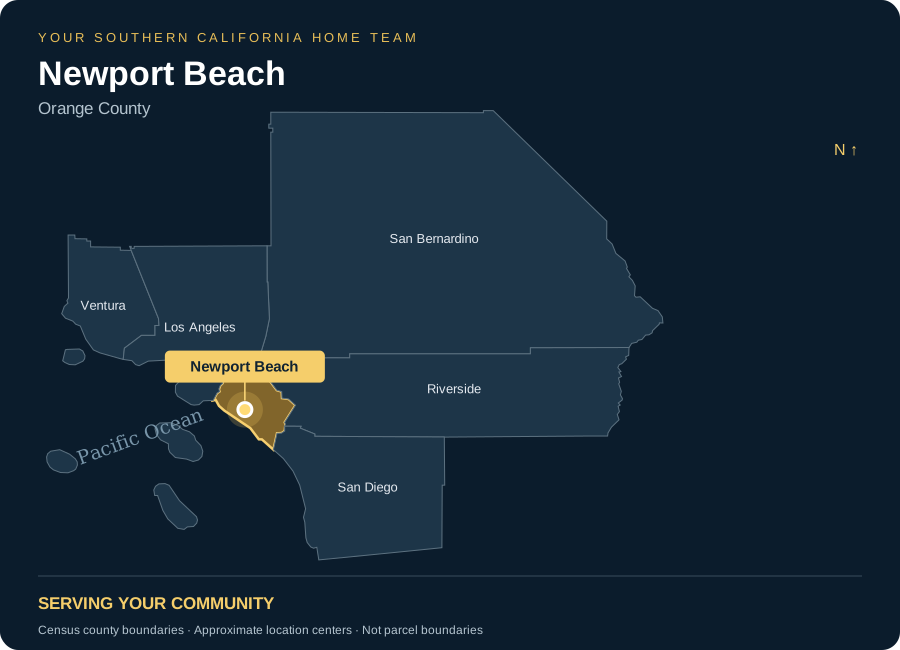
Newport Beach is an incorporated city in Orange County. Confirm the city's building or planning provider for your property; some cities contract with other agencies.
OC Development Services provides resources for unincorporated Orange County. Its online services include permit and property research; incorporated-city projects may follow a separate process.
OC Development Services — Building and Safety ↗Location reference: US Census TIGERweb, current places layer. About this directory.
Coordinate related work in Newport Beach
All home improvement services in Newport Beach · Roof Replacement & Roofing throughout Orange County · Roof Replacement & Roofing overview
Nearby communities
Roof replacement planning in Newport Beach
CITY WE SERVE
If your roof in Newport Beach has started leaking, getting hotter inside, or needing repeat repairs, the main question is usually simple: can it still be repaired, or is the whole system wearing out? In many cases, the real problem is not one broken tile or one missing shingle. It is failure in the waterproofing system below the surface.
That is where All Star Roof Replacement comes in. We look at the full roof system, not just what shows from the street. In Newport Beach, coastal sun, UV exposure, salt air, marine layer moisture, and winter storm cycles all work on underlayment, flashings, decking edges, and ventilation. A roof can look acceptable from the ground and still be near the end of its service life.
Many local homes have tile roofs, and the tile itself is often not the first thing to fail. The underlayment and metal details usually wear out first. If you are trying to sort out leaks, repeat patching, heat buildup, or timing, it helps to start with the signs your roof may be ready for replacement and what a real roof-system evaluation should uncover.
When a Newport Beach Roof Has Leaks, Heat Problems, or Repeat Repairs
If leaks keep coming back in different areas, replacement is often the better answer. That usually means the system is failing in multiple places, not that one spot was missed.
In Newport Beach, recurring leaks often come from aged underlayment, corroded flashings, failed valleys, and weak roof-to-wall transitions. Strong sun and long dry periods slowly break materials down, then winter wind-driven rain finds the weak points fast. That is why a roof can seem fine for months and then suddenly show several leak areas in one season.
In homes across Newport Beach, we often see roofs in the 15 to 30 year range where homeowners have already paid for repairs more than once. At that stage, the decision usually comes down to whether the repairs are fixing isolated damage or just chasing a system that is already worn out.
A common issue we find is surface damage getting blamed for leaks when the real failure is below it. Broken tiles and worn shingles matter, but they are not always the root cause. If you are comparing options, it helps to understand both the common signs you need a new roof and what to look for when finding a roofing contractor near you in Newport Beach.
Why Roofs Fail in Newport Beach
Roofs in Newport Beach fail differently than roofs farther inland. Near the coast, it is not just heat and age. Salt air, morning moisture, strong UV, and storm-driven rain all work together on the roof system.
Salt air speeds up corrosion on metal parts. Marine layer moisture keeps some roof areas damp longer than they should be. Santa Ana wind events and winter storms expose weak flashings, valleys, skylight details, and wall transitions. Add in older installation methods, and small weaknesses turn into leak paths.
Every roof in Newport Beach ages differently. Exposure to the sun, distance from the shoreline, roof slope, attic ventilation, and the quality of the original installation all matter. Two homes on the same street can have very different roof conditions.
Sun, Salt Air, and Moisture Work on the Full Roof System
Direct sun and UV dry materials out over time. Then marine layer moisture and damp mornings slow drying back down. That cycle is hard on underlayment, flashing laps, fascia edges, and roof penetrations.
Salt air is especially rough on exposed and semi-exposed metals. Valley metal, chimney flashings, skylight frames, fasteners, and roof edge details can corrode long before the main roof covering looks bad from the ground. That is one reason coastal homes need a full system review instead of a surface-only inspection.
In homes across Newport Beach, we often see tile roofs where the tile still has years of life left, but the underlayment below it is brittle, torn, or past its useful life. Once that waterproofing layer is done, the roof system is done, even if the surface still looks presentable.
Older Installation Details Often Show Up Years Later
Older installation shortcuts usually do not fail right away. They show up years later when the roof has gone through enough heat, movement, and weather.
A common issue we find is failed valleys, weak roof-to-wall transitions, old skylight curb details, and mortar-only ridge work that was patched instead of rebuilt correctly. Those areas may hold for a while, then start leaking repeatedly once the surrounding materials age.
Overlay systems can create problems too. They may hide bad decking, trap moisture, and leave old issues buried underneath. If you are weighing whether another layer or partial work makes sense, this is where understanding whether reroofing is worth it becomes important. Installation quality matters more than product labels once a roof starts aging.
Signs of Roof Failure on Homes in Newport Beach
A roof can be failing even when it does not look dramatic from the street. The signs usually show up in patterns: repeat leaks, aging metals, heat in the attic, moisture in the house, and multiple weak areas instead of one isolated problem.
The most useful way to look at it is this: if the roof is showing both visible wear outside and moisture or heat issues inside, replacement becomes much more likely. Homeowners dealing with active leaking should also understand what to do when your roof starts leaking while the full condition is being evaluated.
Visible Warning Signs From the Outside
Outside signs matter, but they need to be read correctly. Surface wear does not always tell you how far the problem has gone below.
- Granule loss, cracking, curling, or lifted tabs on shingle roofs
- Slipped tiles, broken mortar caps, and rusting valley metal on tile roofs
- Ponding, blistering, seam wear, or edge metal failure on low-slope sections
- Corroded flashings around chimneys, skylights, and wall connections
- Fascia rot or staining along roof edges
- Visible patch areas in multiple locations
If you can see several of these at once, the roof is often beyond a simple repair stage. That is especially true on older systems where visible wear matches the age of the underlayment below.
Warning Signs Inside the Attic or House
Interior signs often tell the story better than the outside does. Water rarely shows up exactly where it enters.
- Ceiling stains or wall stains, especially after wind-driven rain
- Attic heat that feels excessive even in coastal weather
- Darkened or stained sheathing in the attic
- Damp insulation or signs of repeated moisture
- Moldy wood or musty attic smell
- Uneven indoor temperatures from room to room
- Leaks that return after previous repairs
A common issue we find is staining far away from the actual leak entry point. Water can travel along framing and underlayment before it ever shows up inside. That is why a real evaluation should include more than just a look at the stain. Homeowners comparing scope should review roof inspection cost and what an inspection should include so they know what they are actually paying for.
Repair or Roof Replacement in Newport Beach
Repair still makes sense when the problem is isolated and the rest of the roof system is in good shape. Replacement makes more sense when the roof has multiple failure points, advanced age, or worn-out waterproofing below the surface.
The mistake is treating every leak like a spot problem. In Newport Beach, especially on older tile roofs, the leak you see may just be the first sign that the underlayment and flashings have reached the end of their life. If you are deciding between the two, a full repair or replacement decision guide can help frame what is still reasonable and what is not.
When a Repair Still Makes Sense
Repair is worth doing when the roof is still fundamentally sound. That usually means the roof is younger, the issue is limited, and the surrounding materials are still holding up.
- One isolated flashing problem on an otherwise healthy roof
- Limited storm damage in a single area
- A few broken or displaced tiles where underlayment below is still serviceable
- A seam issue on a low-slope section where the field membrane is still in good condition
- No widespread signs of corrosion, heat damage, or aging across the system
If the roof has one clear problem and the rest checks out, repair can buy useful time. But that only works when the issue is truly isolated.
When Replacement Is the Better Long-Term Fix
Replacement is usually the better fix when repairs keep moving from one area to another. At that point, you are not fixing one leak. You are managing a roof system that is breaking down.
- Leaks are showing up on different roof planes or around multiple penetrations
- Underlayment is brittle, torn, or at end-of-life under tile
- Shingles are curling, cracking, or losing heavy granules across the roof
- Corrosion is affecting flashings, valleys, or edge metals
- Attic heat and moisture problems point to ventilation and waterproofing issues together
- Previous patching has already been done more than once
In homes across Newport Beach, we often see homeowners spend good money chasing separate leak areas when the real issue is a failed system below the surface. Replacing the roof correctly is usually less expensive than repeated leak chasing once underlayment, flashings, and transitions have started failing together.
How Roof Replacement Affects Heat, Ventilation, and Energy Use
A roof replacement is one of the best times to correct heat and airflow problems, because the work is already exposing the system that controls how the house dries, breathes, and sheds heat. In Newport Beach, that matters more than a lot of homeowners expect. Even with the marine layer, strong sun on west-facing and south-facing slopes can drive attic temperatures up fast if the roof is poorly vented or the system below the surface is aging out.
If the attic stays hot, the rooms below usually feel it. You may notice uneven temperatures, higher cooling use, or upstairs rooms that stay warm into the evening. A full replacement gives us the chance to look at intake, exhaust, underlayment condition, and roof design together instead of just changing the visible surface. If you want a closer look at energy-efficient roofing options, the main point is simple: material choice helps, but proper system design matters just as much.
Answer first: a new roof can help reduce heat buildup, but only if ventilation and waterproofing details are addressed at the same time. If those parts are ignored, a new surface alone may not fix the comfort problem. Homeowners comparing options can also review how roofing can reduce heat in your home for a clearer breakdown of what actually makes a difference.
Ventilation Problems on Older Newport Beach Roofs
Older roofs often do not have balanced ventilation. That means not enough intake at the eaves, not enough exhaust near the top, or a mix of vent types that do not move air correctly. When that happens, heat builds up in the attic and moisture can hang around longer after cool mornings, fog, or damp marine air.
On tile roofs, this can be harder to spot because the tile itself may still look fine from the ground. But if the underlayment below it has been baking for years in trapped heat, or staying damp because the assembly does not dry well, the roof can be much closer to failure than it appears. On shingle roofs, poor ventilation usually shows up as faster aging, brittleness, curling, or uneven wear on sunny slopes.
A proper replacement plan should look at intake and exhaust as part of the system, not as an afterthought. On homes where appearance matters, especially in HOA neighborhoods, there are low-profile ways to improve ventilation without making the roof look patched together.
When Reflective Roofing Makes Sense
Reflective roofing makes the most sense where the roof gets direct sun for long periods and where the space below is conditioned. In Newport Beach, that often comes up on low-slope sections over living areas, additions, garages converted to living space, or modern homes with mixed roof designs.
TPO and PVC are common choices for reflective low-slope roofing. These systems can help reduce surface heat gain, and in some cases they are part of code compliance depending on slope and application. On steep-slope roofs, lighter color options and cool-rated products can also help, but results depend on sun exposure, attic design, insulation, and ventilation.
Not every roof needs the same approach. A shaded coastal exposure near the water may perform differently than an inland-facing slope with full afternoon sun. If you are comparing options, it helps to review cool roof options for Newport Beach with the roof layout in mind, not just the material label.
Roof Lifespan in Newport Beach by System Type
In Newport Beach, roof lifespan depends on the system type, exposure, ventilation, installation quality, and distance from the coast. Age matters, but condition matters more. Two homes built in the same year can be on very different replacement timelines if one has better airflow, fewer patch repairs, and less salt-air exposure.
As a general range, asphalt shingle roofs often last around 18 to 25 years here. Tile roofs can last much longer on the surface, but the underlayment below the tile often reaches replacement age around 20 to 30 years. Low-slope systems commonly run about 15 to 25 years depending on membrane type, drainage, ponding, and detail work.
If you want a more detailed local breakdown, roof lifespan in Newport Beach should always be judged by inspection findings, not by age alone. That is especially true on tile roofs, where the visible roof may look serviceable while the waterproofing underneath is already failing.
What Shortens Roof Life Near the Coast
Near the coast, the biggest life-shortening factors are salt air, UV exposure, morning moisture, and wind-driven rain. Salt air is especially hard on metals. Flashings, valleys, fasteners, and edge details can corrode long before the main roof covering looks worn out from the street.
UV exposure is another steady problem in Southern California. Long dry stretches bake underlayment, age sealants, and harden materials over time. Then winter storm cycles hit the weak points all at once. That is why some homeowners only notice a problem during rain season, even though the roof system has been deteriorating for years.
Poor ventilation, old patchwork, reused failing components, and earlier installation shortcuts also shorten service life. That is why every roof is different. A roof closer to the shoreline with standard metal details may fail sooner than a similar roof inland with better corrosion resistance and better airflow.
What the Roof Replacement Process Looks Like
A full roof replacement is a step-by-step system job. It is not just removing old material and putting new material back on. On a Newport Beach home, the process should include inspection, planning, tear-off, deck evaluation, waterproofing, flashing replacement, ventilation work, installation, cleanup, and final inspection.
City permits and inspections are standard. HOA approval may also be part of the timeline, especially in neighborhoods where color, profile, or tile appearance has to stay consistent. Tight access on the peninsula, islands, or narrow lots can also affect staging before work starts. Homeowners who want a full overview can review the roof replacement process step by step and compare it to what is written in their estimate.
Before Work Starts: Inspection, HOA, Permits, and Scheduling
Before any tear-off begins, the roof should be evaluated as a full system. That includes the visible roof covering, the likely condition below it, the flashing layout, ventilation, penetrations, drainage areas, and any signs of deck problems. At All Star Roof Replacement, the point is to show what is failing before recommending replacement, using visual findings and roof measurements instead of guessing.
In Newport Beach, HOA review can add time before the job starts. Some communities move quickly, while others take one to four weeks or more depending on submittal requirements. Permit timing can also vary based on city workload and project scope. If the home has solar, detach and reset planning usually needs to be handled early so scheduling does not get delayed later.
Start dates should be based on approvals, material readiness, access planning, and weather window, not just on an open calendar slot. A homeowner should know what to expect from a roof replacement installer before the first day of work, including staging, protection, and how hidden issues will be communicated if they are found.
During Installation: Tear-Off, Decking, Waterproofing, and Cleanup
Once work starts, the first major step is tear-off or tile lift, depending on the roof type. This is when hidden conditions show up. Bad decking, dry rot at edges, deteriorated fascia, failed valleys, and poor older flashing details are often not fully visible until the roof is opened.
After that, the deck is inspected and any necessary wood replacement is identified. Then the waterproofing layers, flashings, valleys, penetrations, and ventilation components are installed as part of the new system. On tile lift-and-reset projects, reusable tile has to be handled and staged carefully so the appearance can be preserved while the system below it is replaced.
Cleanup is part of the job, not an extra. That should include debris removal, haul-away, magnet sweep, and a final walk-through. Homeowners comparing schedules should understand that the roof replacement timeline depends on roof type, access, inspections, weather, and whether wood repairs are found after tear-off.
How to Choose a Roofing Contractor in Newport Beach
Choose a roofing contractor by scope clarity, license and insurance status, installation detail, and how well they explain the roof system. In Newport Beach, where salt air, HOA requirements, and mixed roof styles are common, that matters more than a polished sales presentation.
A good contractor should be able to explain whether the actual issue is underlayment failure, corroded metal, bad transitions, poor ventilation, damaged decking, or a combination of those things. If the explanation stops at the surface material, that is usually not enough. Roof failures are commonly system failures.
For homeowners trying to compare companies in a practical way, how to judge the best roofing company for your project comes down to whether the estimate actually matches the roof’s condition and complexity.
What Homeowners Should Verify Before Signing
Before signing a contract, verify the contractor’s California license status, workers’ compensation coverage, general liability insurance, and bond information. Those basics should be easy to provide. Permit handling should also be clear in writing, not assumed.
The written scope should spell out tear-off or tile reset, underlayment type, flashing and valley metals, ventilation work, cleanup, permit responsibility, and how wood repairs are handled if bad decking or dry rot is found. If those items are vague, the homeowner is not really comparing complete bids.
One important California rule is that the down payment is limited to 10% of the contract price or $1,000, whichever is less. That should be followed. The estimate should also explain warranty terms clearly. A roof warranty is only meaningful if the installation scope is complete, which is why it helps to review a roof warranty explained page before making a decision.
What a Good Newport Beach Estimate Should Explain
A good estimate should answer three things clearly: what is failing, why it is failing, and what is included to fix it correctly. That means the contractor should explain whether the main problem is aged underlayment, failed flashing, deck damage, corrosion, ventilation problems, or multiple issues working together.
In Newport Beach, coastal metal details matter. Skylight treatment matters. Roof-to-wall details matter. Access and staging matter. If those are left out or glossed over, the homeowner may be looking at a number that does not reflect the actual work.
Photos help. A clear written scope helps. A system-based explanation helps. The goal is not a long sales pitch. The goal is proof and clarity, so the homeowner understands why replacement is being recommended and what the job includes.
Common Roof Replacement Mistakes in Newport Beach
The most common mistakes are usually scope mistakes. Homeowners get shown a new surface, but the real failure is still sitting below it in old underlayment, corroded flashings, weak ventilation, or worn penetrations. In a coastal area like Newport Beach, those shortcuts tend to show up sooner.
Another common problem is comparing bids by headline price only. A lower number may leave out ventilation upgrades, realistic wood repair allowances, upgraded coastal metals, or replacement of old leak-prone components. That can make two estimates look close when they are not close at all in actual scope.
Choosing a Low Bid Without Comparing Scope
A low bid is not automatically a bad bid, but it needs to be checked line by line. If one estimate includes tear-off, full flashing replacement, proper underlayment, ventilation corrections, and realistic wood repair terms, while another only lists basic reroof work, those are not equal proposals.
In Newport Beach, access issues, corrosion, and mixed roof sections can be missed in weak estimates. Peninsula homes, island properties, and tight lots often require more planning for loading, parking, staging, and debris removal. If those realities are ignored up front, the homeowner may see change orders later.
The right way to compare is apples to apples. Look at the system details, not just the total. If you are still sorting through that decision, a repair or replacement decision guide can help clarify whether the estimate matches the real condition of the roof.
Reusing Components That Should Be Replaced
False savings often come from reusing old components that are already near the end of their life. Skylights, rusted flashings, worn edge metals, and compromised valleys are common examples. They may still look usable at first glance, but once the new roof is on, those older parts often become the next leak source.
On tile roofs, this comes up all the time. The tile may be reusable, but the real replacement need is usually the underlayment and metals below it. Reusing the tile can make sense. Reusing failing waterproofing details usually does not.
Coastal exposure makes this more important, not less. Salt air is hard on metal parts, and some components fail from corrosion long before they look completely worn out from the ground.
Frequently Asked Questions About Roof Replacement in Newport Beach
How much does roof replacement cost in Newport Beach?
Costs depend on roof type, size, slope, access, tear-off condition, HOA needs, and wood repairs. In coastal Newport Beach, architectural shingles often range about $650–$1,000 per square and tile lift-and-reset about $850–$1,300 per square. These are broad ranges only; a system inspection is needed for a reliable quote.
How do I know if I need repair or full replacement?
Repair may make sense when the roof is younger and the issue is isolated. If leaks recur in different areas, underlayment is brittle, flashings are corroded, or the roof is in the 15–30+ year range, full replacement is usually the better long-term fix.
How long does a roof last in Newport Beach?
Typical ranges here are about 18–25 years for shingles, 20–30 years for tile underlayment (the tile body can last longer), and 15–25 years for low-slope membranes. Salt air, UV, ventilation, and installation quality can shorten or extend life, so judge by condition, not age alone.
Can tile be reused during roof replacement?
Yes. If the existing tile is serviceable and there are enough matching pieces, it can be lifted and reset. The main work focuses on replacing the underlayment, flashings, valleys, and related waterproofing components below.
How long does a roof replacement take?
Many shingle roofs take about 2–5 working days, tile lift-and-reset about 5–10 days, and new tile 7–14 days. HOA approvals, permits, inspections, weather, access limits, and any wood repairs can extend the schedule.
What should I do if my roof is actively leaking?
Protect interiors first by moving valuables and catching water if it is safe; do not climb on the roof. A temporary dry-in may be needed, followed by a full evaluation to determine if the leak is isolated or part of broader system failure.
Do I need HOA approval for a new roof in Newport Beach?
Many Newport Beach communities require HOA approval for material, color, and profile. The process may add one to four weeks or more, so it is best to start early in the planning timeline.
Can roof replacement help with heat and high energy bills?
Often, yes. The best results come when replacement also improves ventilation and airflow and, where appropriate, uses reflective or cool-rated materials. A new surface alone may not solve heat or comfort issues.
Request a Roof Replacement Estimate in Newport Beach
If your roof in Newport Beach is leaking, running hot, or getting to the point where repairs no longer make sense, the next step is a full roof-system evaluation. All Star Roof Replacement focuses on what is actually failing, including underlayment, flashings, decking concerns, ventilation, and other hidden issues that do not show from the street. You will get a clear explanation of the findings and whether replacement is the right move for your home.
To talk through your roof, call (310) 729-3013 or use the contact form for Newport Beach roof replacement estimates. If you are still in the early comparison stage, it also helps to review local pages on roof replacement cost in Newport Beach and whether tile vs shingle roof comparison makes more sense for your property.
Related Newport Beach Roof Replacement Pages
If you want more detail before making a decision, start with the main Newport Beach roof replacement service area page. Homeowners also often look at cost per square for different roof systems, roof financing options, and best roofing materials for Newport Beach homes when comparing scope, timing, and material direction.