
Roof Replacement & Roofing
in Santa Ana.
A roofing estimate should explain what happens beneath the finished surface as well as the material you see. Start with the existing roof, the areas of concern, and any work already planned for solar or insulation.
Get my virtual estimate ↗Team All Star Construction · CA license #1009760
Serving your area from our Southern California operation.
Virtual Estimates Available
Start by phone or video. Share your photos and project priorities; we then arrange the measurements and site review needed for your estimate.
What to share for your
Santa Ana project
- Share ground-level photos of each roof side and any visible ceiling staining; do not climb onto the roof for an estimate.
- Tell us the approximate roof age, material, number of stories, and any known leak history.
- Mention existing solar panels, skylights, patio connections, or planned attic insulation.
Decisions to discuss
- Compare the proposed tear-off, underlayment, flashing, ventilation, and finish material.
- Ask how concealed decking damage will be assessed and priced if discovered.
- Coordinate roofing with solar removal and reinstallation before setting a schedule.
Can you price a roof from photos?
Send your address and photos to start a virtual estimate. We review the roof measurements, access, existing layers, and repair needs before finalizing the installation plan.
Planning a project in Santa Ana
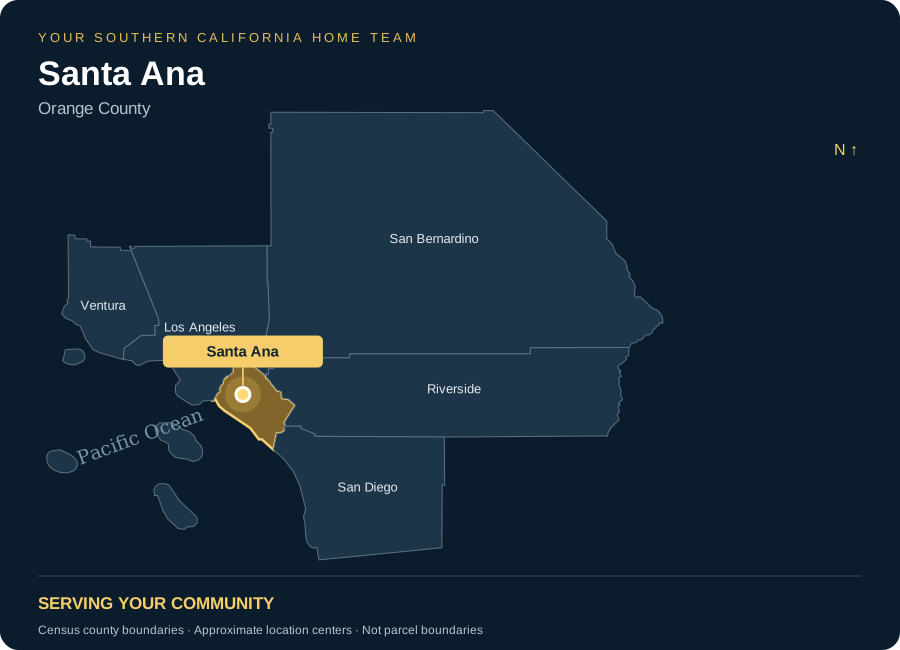
Santa Ana is an incorporated city in Orange County. Confirm the city's building or planning provider for your property; some cities contract with other agencies.
OC Development Services provides resources for unincorporated Orange County. Its online services include permit and property research; incorporated-city projects may follow a separate process.
OC Development Services — Building and Safety ↗Location reference: US Census TIGERweb, current places layer. About this directory.
Coordinate related work in Santa Ana
All home improvement services in Santa Ana · Roof Replacement & Roofing throughout Orange County · Roof Replacement & Roofing overview
Nearby communities
Roof replacement planning in Santa Ana
Roof replacement in Santa Ana is often not triggered by one dramatic failure. More often, the roof has been aging for years under heat, UV exposure, dry conditions, and seasonal rain until leaks, brittle materials, or visible wear make it clear the system is no longer reliable.
In Santa Ana, roofs deal with strong Southern California sun, periods of winter rain, and occasional wind events that can exploit weak shingles, flashing, and underlayment. That matters because roof failure is usually a system problem, not just a surface problem. A roof can look acceptable from the street while the waterproofing layers underneath are already near the end of their service life.
At All Star Roof Replacement, the focus is on full roof replacements for homeowners who need a long-term solution, not repeated patching on an aging system. In homes across Santa Ana, we often see older roofing systems where the visible material is only part of the problem, while ventilation issues, worn underlayment, and flashing failures are what actually drive leaks and premature aging.
Santa Ana’s housing stock makes that especially common. Older neighborhoods, mid-century homes, dense suburban blocks, tile roofs, asphalt shingles, and low-slope sections all create different replacement needs. Permits, inspections, access, and material choice can all affect the final scope, cost, and timeline.
When Santa Ana Roof Problems Stop Being a Small Fix
A roof problem stops being a small fix when the issue is no longer isolated. If the roof has multiple weak areas, aging materials, or repeated leaks, repair usually becomes a short-term expense instead of a real solution.
In Santa Ana homes, roof wear often builds slowly. Sun exposure dries out materials over time, then winter rain exposes the weak points. Homeowners may not notice a problem until water stains appear indoors, but by that stage the roof may already have brittle shingles, failed flashing, deteriorated underlayment, or damaged decking.
Older neighborhoods in Santa Ana commonly have roofs that have been patched more than once. A common issue we find is a roof that has had leak repairs around vents, valleys, or wall transitions, but the surrounding system has already aged beyond what patching can reliably fix. If you are trying to sort out whether the issue is still repairable, the page on roof repair or replacement in Santa Ana is a useful next step.
Dense residential layouts also change the job. Limited driveway access, tighter side yards, neighboring homes close by, and staging restrictions can make tear-off and disposal more involved than homeowners expect. That does not automatically mean replacement is harder, but it does mean logistics matter from the start. If you are comparing local contractors, the page on finding a roofing contractor near you in Santa Ana helps explain what to look for.
Why roofs fail in Santa Ana
Roofs in Santa Ana fail mainly because prolonged sun exposure ages materials first, then rain and wind expose the damage. Heat and UV dry out asphalt, weaken seal strips, reduce flexibility, and accelerate cracking, curling, and granule loss.
Santa Ana wind conditions can also make an aging roof fail faster. Once shingles loosen or flashing details start to separate, wind can lift materials, drive debris into vulnerable areas, and open pathways for water entry around roof penetrations. Skylights, valleys, pipe flashings, and wall transitions are frequent problem areas.
Seasonal rain is what often makes hidden deterioration visible. Water finds the weak points in underlayment, flashing, and fastener penetrations. In homes across Santa Ana, we often see leaks showing up far from the actual failure point because water travels along decking before reaching the ceiling. Homeowners dealing with active moisture issues should also review what to do when a roof leaks in Santa Ana.
Santa Ana is also different from hotter Inland Empire cities in one important way. It still gets strong heat and UV, but the coastal-adjacent Orange County climate can create a different wear pattern, with morning moisture, marine influence, and seasonal humidity interacting with prolonged sun exposure. That combination can be hard on both shingles and underlayment over time. For service life expectations, see how long roofs last in Santa Ana.
Why older Santa Ana homes often need more than patching
Older Santa Ana homes often need more than patching because the visible leak is rarely the only problem. Once a roof reaches the later part of its life, there may be multiple failure points at the same time, including brittle field shingles, worn-out underlayment, weak flashing, poor attic ventilation, and hidden wood damage.
Mid-century and older homes may also have construction details that complicate repairs. A common issue we find is outdated ventilation that traps attic heat, which shortens roof life from below while sun exposure ages the roof from above. Some homes also have spaced sheathing, dry rot at the eaves, or evidence of multiple previous repairs that never corrected the system as a whole.
Signs of roof failure in Santa Ana homes
The clearest signs of roof failure are widespread material wear, recurring leaks, and evidence that water is already getting past the outer surface. If the roof is showing multiple symptoms at once, replacement becomes much more likely than repair.
In Santa Ana homes, common warning signs include granules collecting in gutters, brittle shingles, cracked or slipping tiles, stains on ceilings, musty odors in the attic, and visible wear around flashing details. On flat or low-slope sections, problems often show up at seams, drains, parapet edges, and ponding areas rather than in one obvious hole.
Because leaks can be deceptive, a visual symptom should be treated as a system warning, not just a cosmetic issue. If the roof is already showing interior or exterior warning signs, a closer look at roof inspection cost in Santa Ana and the page on roof replacement signs can help frame the next step.
Exterior warning signs homeowners can spot
Exterior signs usually mean the roof has been aging for a while. Curling shingles, blistering, missing tabs, exposed fiberglass mat, and uneven color loss are all signs that asphalt shingles are near or past their reliable service life.
On tile roofs, broken, slipped, or displaced tiles may point to movement, foot traffic damage, fastener issues, or underlayment deterioration below. The visible tile problem may only be the surface symptom of a larger waterproofing issue.
Sagging roof lines are a more serious warning. That can indicate moisture-related wood deterioration or structural weakness, not just an old-looking roof. In homes across Santa Ana, we often see homeowners focus on the outer material first, but sagging, soft decking, or edge deterioration usually means the replacement scope may include wood repairs as well.
If you want a clearer breakdown of what visible wear means, see the signs you need a new roof and roof inspection guidance for Santa Ana homes.
Interior signs the roof system is failing
Interior signs usually mean water has already bypassed the roofing system. Ceiling stains, damp insulation, attic moisture, mold odors, peeling paint near roof lines, and darkened wood in the attic are all warning signs that the roof is no longer keeping water out consistently.
The challenge is that leaks do not always appear directly below the source. Water can travel along roof decking, rafters, or framing before dripping into living space. That is why a stain in one room can still be caused by a failure several feet away on the roof.
On Santa Ana tile roofs, interior leakage often means the underlayment is failing, not just that one tile has moved. A common issue we find is homeowners replacing visible tiles while the felt or synthetic layer beneath has already become brittle, torn, or water-compromised. If moisture is active now, review what to do about a roof leak in Santa Ana and the page on repair versus replacement.
Repair vs replacement in Santa Ana
Repair makes sense when the damage is isolated and the rest of the roof still has useful life left. Replacement makes more sense when the roof is older, the problems are widespread, or the materials have become too brittle and worn for a dependable repair.
That distinction matters in Santa Ana because UV exposure changes how repairable a roof is. Once shingles or underlayment have been heavily aged by sun and heat, new materials do not always integrate cleanly with the old ones. Sealants, patches, and replacement sections may work temporarily, but they often do not restore long-term waterproofing performance.
In homes across Santa Ana, we often see homeowners spend money on repeated leak repairs over several seasons, only to replace the roof anyway after the next rain. If the roof is already 15 to 20 years old or older and has more than one active issue, the page on repair or replacement in Santa Ana is especially relevant.
When repair still makes sense
Repair still makes sense when the roof is relatively young and the issue is limited to one area. A single wind-damaged section, one flashing failure, or a localized problem around a vent penetration can sometimes be corrected without replacing the entire roof.
Repairs are more realistic when the surrounding materials are still flexible, properly sealed, and in generally good condition. If the roof system is otherwise healthy, targeted work can extend service life without wasting money on premature replacement.
For example, a younger roof with isolated damage from debris or a specific flashing defect may be a repair candidate. But the repair only makes sense if the rest of the roof can still support it. More detail on that decision is covered in this Santa Ana repair versus replacement guide.
When replacement is the smarter long-term choice
Replacement is the smarter choice when roof problems are systemic. Widespread granule loss, brittle shingles, multiple leak points, deteriorated tile underlayment, recurring flat roof seam issues, or evidence of hidden wood damage usually mean the roof has reached the point where patching is no longer cost-effective.
Full replacement also matters because it allows the entire assembly to be evaluated. Tear-off exposes decking condition, reveals dry rot, allows flashing replacement, and creates the opportunity to correct ventilation problems that may have been shortening roof life for years.
Overlay reroofing is usually not the strongest option for aging Santa Ana roofs. It can hide rot, add weight, make future issues harder to diagnose, and reduce wind performance. A common issue we find is that homeowners choose an overlay to save money upfront, then still face hidden deterioration later. The pages on whether reroofing is worth it, roof warranty details, and the roof replacement process in Santa Ana explain why tear-off is usually the better long-term path.
Roof replacement cost in Santa Ana
Most Santa Ana roof replacements fall roughly in the $10,000 to $35,000+ range, depending on roof size, material, access, and hidden conditions discovered during tear-off. For a typical composition roof, many homeowners land somewhere in the low-$20,000 range, but the real number depends on the roof system and complexity.
Costs in Santa Ana are influenced by both Orange County labor conditions and the practical realities of the housing stock. Older homes can require more decking replacement, ventilation corrections, and flashing updates. Dense neighborhood layouts can also increase labor and staging time, especially when material delivery, tear-off debris handling, or dumpster placement are more restricted.
Homeowners comparing project budgets should also factor in dry rot, sheathing repairs, solar removal and reinstall, and permit-related inspection timing. For a deeper local breakdown, see roof replacement cost in Santa Ana, cost per square roof pricing, and roof financing options.
Typical cost ranges by roof type
Asphalt shingles are usually the most budget-friendly full replacement option in Santa Ana. Concrete tile costs more, clay tile usually costs more than concrete, and low-slope roofing varies based on membrane type, drainage needs, and detail complexity.
Roof Type | Typical Installed Cost Per Square | General Santa Ana Project Range
--- | --- | ---
Architectural asphalt shingles | $450–$750 | $10,000–$22,000+
Concrete tile | $1,200–$2,000 | $18,000–$35,000+
Clay tile | $1,500–$2,500+ | $22,000–$45,000+
Flat or low-slope roofing | $700–$1,400+ | $12,000–$30,000+
These are realistic Southern California benchmarks, not one-price-fits-all quotes. Roof shape, slope transitions, valleys, penetrations, and wood repairs can shift the total significantly. For side-by-side material guidance, see tile versus shingle roofing in Santa Ana and the page on roof cost per square.
What changes the final price on a Santa Ana roof
The final price changes when the roof is harder to access, harder to tear off, or has hidden damage under the old roofing. Steep pitch, limited driveway access, narrow side yards, detached garage sections, and dense neighborhood staging all increase labor time.
Decking and wood replacement are two of the most common cost variables. Depending on the extent of damage, replacing deteriorated roof sheathing often adds roughly $200 to $500 per damaged sheet. Fascia, eave, or rafter-tail repairs can add more if water intrusion has been ongoing.
Solar panel removal and reinstall is another major cost factor in Santa Ana. Depending on panel count, roof layout, mounting system, and electrical coordination, that can add several thousand dollars to the project. Ventilation upgrades, Title 24-related cool-roof compliance, and specialty flashing work can also affect the total.
A common issue we find is that low initial bids do not include realistic allowances for these conditions. That is why homeowners should understand both the base roof price and the likely variables before signing. More detail is available on Santa Ana roof replacement cost, the replacement process, and financing a roof replacement.
Tile vs shingle roofing in Santa Ana
Both tile and asphalt shingle roofs are common in Santa Ana, and the better choice depends on budget, home style, structural considerations, and how long the owner plans to stay in the property. Shingles usually cost less upfront, while tile usually offers a longer-lasting surface appearance but comes with a more expensive system and underlayment complexity.
Santa Ana’s housing mix includes traditional suburban homes, older neighborhoods, and many Spanish or Mediterranean-style properties where tile is part of the architectural look. HOA guidelines can also influence the material choice, especially in planned communities and multi-family settings.
The key point is that homeowners should compare full system performance, not just surface appearance. For a more detailed comparison, see tile versus shingle roof options in Santa Ana and the page on best roofing materials for local homes.
When asphalt shingles are the better fit
Asphalt shingles are often the better fit when budget matters, the roof structure is more standard, and the homeowner wants a clean, practical replacement with lower upfront cost. Architectural shingles are common on Santa Ana homes because they provide a good balance of appearance, cost, and installation flexibility.
They are also lighter than tile, which can simplify structural considerations. On many homes, shingles are easier to install across multiple roof sections, transitions, and penetrations, especially where the design is more suburban than architectural tile-driven.
Cool-roof shingle lines are also available and can help meet California energy requirements while reducing attic heat load. If energy performance is part of the decision, review best roofing materials and cool roof options in Santa Ana.
When tile makes sense for Santa Ana homes
Tile makes sense when the home’s style calls for it, the budget allows for it, and the roofing plan accounts for the full system, not just the visible tile. Clay and concrete tile are both common fits for Orange County homes, especially Spanish and Mediterranean-style properties.
Tile surfaces can last for decades, but that does not mean the whole roof system lasts that long without attention. In Santa Ana, the tile may remain intact while the underlayment beneath it reaches end of life in roughly the 20 to 30 year range, depending on installation quality and exposure. That is why tile roof replacement often involves more than just swapping broken pieces.
Tile systems also require skilled handling during tear-off, reset, or replacement. Improper handling can create unnecessary breakage and added cost. In homes across Santa Ana, we often see tile roofs that look serviceable from the ground but have underlayment and flashing issues that only become obvious during inspection. For more on lifespan and system selection, see tile versus shingle roofing and roof lifespan in Santa Ana.
How roofing affects heat and energy use in Santa Ana
In Santa Ana, roofing has a direct effect on attic temperature, indoor comfort, and how hard your air conditioning has to work. A roof that absorbs too much heat, lacks proper ventilation, or uses the wrong material for the slope can trap heat in the attic and push cooling costs higher. That matters in a warm Southern California climate where long sun exposure is normal for much of the year.
For many replacement projects in this area, California energy code also brings cool-roof requirements into the conversation. The practical takeaway for homeowners is simple: the best roof is not just the one that looks good from the street. It is the one that works as a full system, including the surface material, underlayment, ventilation, and installation details.
Energy-efficient roofing options for Santa Ana homes
Energy-efficient roofing in Santa Ana usually starts with reflective materials that reduce solar heat gain. That can include cool-rated architectural shingles, reflective tile products, and low-slope membranes designed to reflect more sunlight and release absorbed heat faster. If you are comparing options, a good starting point is reviewing energy-efficient roofing choices in Santa Ana based on your roof type and home style.
Cool-roof performance is especially useful on homes with strong afternoon sun on south- and west-facing slopes. On those homes, the difference in attic heat can be noticeable. Still, material alone does not solve everything. A reflective roof installed over a poorly vented attic may still run hot.
In real-world Santa Ana homes, the best results usually come from combining:
- Cool-roof compliant materials where applicable
- Proper underlayment for the roof type
- Balanced intake and exhaust ventilation
- Attention to attic heat buildup, not just roof color
How to reduce attic heat with the right roof system
The most effective way to reduce attic heat is to treat the roof as a system. That means looking beyond the visible shingles or tile and checking whether the attic can actually breathe. If hot air gets trapped, roof materials age faster and the home below becomes harder to cool.
Balanced ventilation matters because it helps fresh air enter low and hot air exit high. In Santa Ana homes, that can mean a combination of intake vents and exhaust vents sized correctly for the attic space. If you want a closer breakdown of what actually helps, see how to reduce heat with roofing in Santa Ana.
Homeowners sometimes assume a darker roof automatically causes all heat problems. In practice, poor ventilation is often just as important. A lighter or reflective roof can help, but if the attic stays sealed and overheated, comfort and roof life still suffer.
How long a roof lasts in Santa Ana
In Santa Ana, roof lifespan depends on material, sun exposure, ventilation quality, and installation quality. As a practical benchmark, many asphalt shingle roofs last around 20 to 25 years here. Flat roofing systems often fall in the 15 to 25 year range depending on the membrane and drainage design. Tile roofs can last far longer at the surface, but the underlayment beneath the tile usually does not last as long as the tile itself.
That is why roof age by itself can be misleading. A tile roof may still look solid from the street while the waterproofing layer underneath is already near failure. Homeowners comparing ages and warning signs can usually benefit from a closer look at roof lifespan in Santa Ana and how different systems age in Orange County conditions.
Lifespan by material and exposure
Not every part of the same roof ages at the same speed. In Santa Ana, slopes that face south or west usually take more direct sun and often wear faster than more shaded sections. The same roof can have one slope that still looks acceptable and another that is already brittle or losing protection.
Typical local lifespan ranges look like this:
Roof Type | Typical Santa Ana Lifespan | Main Failure Pattern
--- | --- | ---
Architectural asphalt shingles | About 20–25 years | UV aging, granule loss, cracking, curling
Flat or low-slope systems | About 15–25 years | Seam failure, ponding, edge deterioration, flashing leaks
Concrete or clay tile surface | Often 40–50+ years for tile surface | Underlayment failure below tile, broken tiles, flashing issues
For tile systems especially, the real life of the roof often depends more on underlayment quality than on the tile itself. That is one reason homeowners comparing options often review best roofing materials for Santa Ana homes with attention to the entire assembly, not just the top layer.
Why some Santa Ana roofs fail early
Early roof failure usually comes from one of four issues: poor installation, poor ventilation, repeated patching on an aging system, or delayed action after small leaks begin. In Southern California climates, constant UV can age materials from the outside while trapped attic heat stresses them from below.
Santa Ana wind events can also expose weak spots faster. If flashing was installed poorly, shingles were not sealed correctly, or a previous repair did not integrate well with older brittle materials, wind and rain can turn a minor weakness into an active leak. Homeowners looking at coverage questions should also understand that roof warranty terms do not fix poor installation after the fact.
Another common cause of early failure is continuing to repair a roof that is already at end of life. At that stage, even a decent patch may not hold well because the surrounding materials are too dry, brittle, or worn to seal reliably.
Roof replacement process in Santa Ana
In Santa Ana, a full roof replacement typically moves through inspection, proposal, permit handling, material scheduling, tear-off, deck inspection, installation, cleanup, and final inspection. Once permits and materials are ready, many standard residential replacements take a few working days, though larger or more complex roofs can take longer.
The main reason timelines vary is that every roof is different. Roof size, material type, wood damage, solar coordination, and neighborhood access all affect the schedule. Homeowners who want the full sequence in more detail can review the roof replacement process in Santa Ana and the typical roof replacement timeline.
What happens before installation starts
Before the first day of tear-off, the important work is planning. The scope should clearly identify the material being installed, whether old roofing will be removed completely, how ventilation will be handled, what flashing details are included, and how debris disposal will be managed.
In some Santa Ana neighborhoods, access planning matters more than homeowners expect. Narrow driveways, limited street parking, shared property lines, and closely spaced homes can affect dumpster placement, material delivery, and crew movement. In HOA communities, there may also be approval requirements for color, material, or timing before work begins.
A solid pre-job process should cover:
- Roof measurement and system evaluation
- Permit requirements and inspection planning
- Material selection and code compliance
- Ventilation review
- Tear-off and disposal logistics
- HOA communication if applicable
If a homeowner is still comparing providers at this stage, it helps to review what to expect from a roofing contractor near you in Santa Ana before signing a contract.
What homeowners should expect during the job
Roof replacement is disruptive for a few days. Tear-off is noisy, crews will be moving around the perimeter of the house, and portions of the driveway or yard may need to stay clear. That is normal. What matters is whether the contractor manages the disruption well.
On a properly run job, homeowners should expect active debris control, protection around landscaping and walkways, and daily cleanup. Magnetic nail sweeps are especially important around driveways, side yards, and family areas. In dense Santa Ana neighborhoods, good cleanup is not just a convenience issue. It is part of being a responsible contractor around neighbors and shared property lines.
Homeowners should also expect possible change-order discussions if hidden damage is found after tear-off. The most common examples are dry rot, damaged sheathing, and ventilation deficiencies that were not fully visible before the old roof came off.
How to choose the right roofing contractor in Santa Ana
The right roofing contractor in Santa Ana should be licensed, insured, familiar with local permit requirements, and experienced in full-system replacements. Verify the current CSLB record for license #1009760 and confirm the appropriately licensed contractor responsible for your roofing scope in the written agreement. Licensing matters because it affects accountability, permit compliance, and legal recourse if a project goes wrong.
For homeowners comparing companies, the better question is not just “Who is cheapest?” It is “Who is actually replacing the full roof system correctly?” That includes tear-off, deck review, underlayment, flashing, ventilation, code compliance, cleanup, and final inspection. If you are sorting through options, the pages on best roofing company research and finding a roofing contractor near me in Santa Ana can help frame the comparison.
Credentials and trust signals to verify
Check current licensing, bonding, and workers’ compensation status directly with CSLB before signing your agreement.
Other strong trust signals include:
- Clear written scope of work
- Permit handling included
- Manufacturer certification where relevant
- Experience with the specific roof type on your home
- Good explanation of ventilation and flashing details
- Realistic handling of possible wood replacement
Manufacturer certifications can matter because some enhanced warranty options are only available through approved installers. But certification alone is not enough. Installation quality still drives real-world performance.
Red flags homeowners should avoid
A few warning signs show up repeatedly in the Santa Ana market. One is the unusually low bid that does not clearly address tear-off, flashing replacement, ventilation corrections, or wood damage allowances. Another is a contractor asking the homeowner to pull the permit as an owner-builder even though the contractor is doing the work. That shifts risk to the homeowner and is often a sign something is off.
Other red flags include:
- Large cash demands upfront
- No proof of license or insurance
- Pressure to skip permits
- Vague promises instead of written scope details
- Overemphasis on patching when the roof is clearly near end of life
In Santa Ana, where older roofs often have underlying ventilation and decking issues, a contractor who only talks about replacing the visible material may be missing the real problem.
Common roof replacement mistakes Santa Ana homeowners make
The biggest mistake is treating roof replacement like a simple material swap. A roof is a system. The shingles or tile are only one part of it. Underlayment, flashing, ventilation, sheathing condition, drainage, and installation quality are what determine whether the roof actually performs well over time.
Another common mistake is choosing based only on the lowest price. On older Santa Ana homes, that often leads to later change orders once hidden wood damage or ventilation issues appear. Homeowners also get into trouble when they assume reroofing over old materials is an equal substitute for a full tear-off. In most cases, it is not. If you are weighing that option, it helps to review whether reroofing is worth it in Santa Ana before deciding.
Mistake: focusing only on the surface material
Many homeowners spend most of their attention comparing tile vs shingle color, style, or brand. Those choices matter, but they do not answer whether the waterproofing system underneath will hold up. On a tile roof, this is especially important because the tile can look fine while the underlayment has already aged out.
What often matters more than brand alone:
- Underlayment quality and compatibility
- Flashing details around penetrations and walls
- Deck condition after tear-off
- Ventilation design
- Whether the system qualifies for stronger warranty coverage
That is also why homeowners comparing systems should review both roofing material options and how roof warranties really work.
Mistake: delaying replacement after repeated leaks
Repeated leaks on an older roof rarely stay small. Water intrusion can spread into insulation, drywall, fascia boards, and roof sheathing. In Santa Ana homes, a leak that starts around flashing or underlayment can travel before it appears inside, which means the visible ceiling stain is often only part of the problem.
Delaying replacement after multiple repair attempts often increases total cost. Instead of paying once for a planned replacement, the homeowner ends up paying for patches, interior damage, wood repairs, and then replacement anyway. If active leaking has already started, reviewing what to do for a roof leak in Santa Ana and the signs you need a new roof can help clarify urgency.
Financing and warranty considerations for Santa Ana homeowners
Many Santa Ana homeowners finance roof replacement because the project is too important to delay until after another rainy season. Common funding paths in California include unsecured home improvement loans, contractor financing programs, HELOCs, and in some cases PACE-style financing for eligible energy-related improvements.
Most monthly payment amounts depend on project size, credit profile, term length, and APR. As a rough example, financing a mid-range roof replacement often lands somewhere in the low hundreds per month, but there is no universal payment because every loan structure is different. Homeowners who want more detail can review roof financing options in Santa Ana.
Financing options that are commonly used
Unsecured home improvement loans are common because they offer fixed monthly payments without tying the loan directly to the home. HELOCs can work well for larger projects when the homeowner has available equity and wants flexible borrowing. Contractor financing can be convenient if terms are competitive and clearly explained.
PACE financing sometimes comes up in California for qualified energy-related improvements, but homeowners should understand that it is structured differently from a standard loan and may involve a property tax assessment mechanism. That makes it important to review the terms carefully before choosing it.
The practical reason financing matters is timing. A roof near failure often gets more expensive if it is postponed through another season of leaks, heat exposure, and emergency patching.
What matters most in a roof warranty
The short answer is this: installation quality matters more than the warranty brochure. Most standard manufacturer warranties cover product defects, not the majority of leak problems that come from installation details. If flashing is done poorly, ventilation is wrong, or components were not installed as a complete approved system, a long material warranty may offer very little practical help.
Homeowners should look for clarity on three things:
- What the manufacturer warranty actually covers
- What the workmanship warranty covers
- Whether the installation qualifies for enhanced system coverage
Permit compliance, documented materials, and proper installation all affect warranty value. For a deeper explanation, see roof warranty details for Santa Ana homeowners.
Santa Ana roof replacement FAQs
How much does a new roof cost in Santa Ana, CA?
Most full roof replacements in Santa Ana fall somewhere around $10,000 to $35,000+, depending on roof size, material, tear-off complexity, access, and hidden conditions found after removal. Asphalt shingles are usually the lower-cost path. Tile, premium systems, major wood repairs, and solar panel removal and reinstall can push the total well above that range. The most accurate pricing comes from an inspection because every roof is different.
Do I need roof repair or replacement in Santa Ana, CA?
If the roof is relatively new and the damage is isolated, repair may still make sense. If the roof is older, leaking in multiple areas, brittle, or showing widespread wear, replacement is usually the better long-term choice. In Santa Ana, tile roofs often leak because the underlayment has failed beneath the tile, not just because one tile moved.
What roofing material is best for Santa Ana homes?
The best material depends on the home, slope, budget, and neighborhood style. Architectural shingles are a strong fit for many Santa Ana homes because they are lighter, more affordable, and available in cool-roof options. Tile works well on many Orange County home styles and can last a long time at the surface, but it costs more and requires attention to underlayment. Low-slope areas usually need a dedicated flat-roof system rather than standard shingles alone.
How long does a roof last in Santa Ana, CA?
Asphalt roofs often last about 20 to 25 years in Santa Ana conditions. Flat roofing systems commonly last around 15 to 25 years depending on the membrane and drainage design. Tile surfaces can last much longer, but the underlayment beneath them usually does not. Strong sun exposure, poor ventilation, and delayed maintenance can shorten any of those ranges.
What is a cool roof in Santa Ana, CA?
A cool roof is a roofing system designed to reflect more sunlight and release absorbed heat more effectively than a standard roof. In Santa Ana, cool-roof products can help reduce attic heat and improve energy performance. California code may require cool-roof performance on many replacement projects, depending on the roof type and scope of work.
What should I do if my roof is leaking in Santa Ana, CA?
First, move valuables out of the affected area and contain the water if possible. Then document the damage with photos and call a qualified roofing contractor quickly. Emergency tarping may be needed to limit further damage until permanent replacement or repair can be performed. Waiting usually increases damage to insulation, drywall, and roof decking.
Can I finance a roof replacement in Santa Ana, CA?
Yes. Common financing options include personal home improvement loans, HELOCs, contractor financing, and some PACE-related programs where applicable. Terms vary based on the lender and the borrower. Financing can help homeowners replace a failing roof before leaks or another rainy season make the project more expensive.
Is reroofing over old shingles worth it in Santa Ana, CA?
Usually not, especially on an aging roof. Overlay reroofing can hide wood damage, prevent full inspection, add weight, and limit the ability to correct flashing or ventilation problems properly. In Santa Ana conditions, a full tear-off is usually the stronger long-term choice because it allows the roofing system to be rebuilt correctly.
Related Santa Ana roof replacement topics
Some homeowners are ready for an estimate right away. Others are still comparing cost, process, inspection details, or material options. If you are researching a specific concern, these pages can help narrow the next step:
- Best roofing company in Santa Ana
- Roof inspection cost in Santa Ana
- Roof replacement process in Santa Ana
- Roof replacement timeline in Santa Ana
- Cost per square roof in Santa Ana
- Cool roof options in Santa Ana
- Energy-efficient roofing in Santa Ana
- How to reduce heat with roofing in Santa Ana
Request a roof replacement estimate in Santa Ana
If you are trying to decide whether your roof still has useful life left or whether replacement is the more sensible next step, a thorough inspection is usually the clearest starting point. All Star Roof Replacement, the consumer brand of Team Hero Construction, Inc. (CSLB #1009760), handles full roof replacement projects in Santa Ana and across Orange County with a replacement-focused approach.
If helpful, you can request an estimate through the Santa Ana service page, review typical roof replacement cost factors, or compare what to expect from a Santa Ana roofing contractor. For direct questions, homeowners can also call (310) 729-3013 or use our contact form. The goal should be a clear scope, realistic expectations, and a roof system built to last in Santa Ana conditions.