
White Vinyl Retrofit Windows
in Fontana.
White vinyl retrofit windows can give existing openings a clean, coordinated look. The right estimate starts with the window count, how each window opens, frame conditions, and the finish details around the opening.
Get my virtual estimate ↗Team All Star Construction · CA license #1009760
Serving your area from our Southern California operation.
Virtual Estimates Available
Start by phone or video. Share your photos and project priorities; we then arrange the measurements and site review needed for your estimate.
What to share for your
Fontana project
- Photograph each window from inside and outside, showing the full frame and surrounding wall.
- Make a room-by-room window count and note sliders, picture windows, and any operation problems.
- Share approximate dimensions for discussion; final ordering measurements must be verified.
Decisions to discuss
- Compare white vinyl frame profiles, opening styles, screens, and glass options.
- Review whether the existing opening is suitable for a retrofit installation or needs additional work.
- Clarify interior and exterior finish work and any project-specific safety or approval requirements.
Are these black aluminum windows?
Our featured window offering is white vinyl retrofit replacement windows. We review the existing openings and the available product options for your project before preparing the final proposal.
Planning a project in Fontana
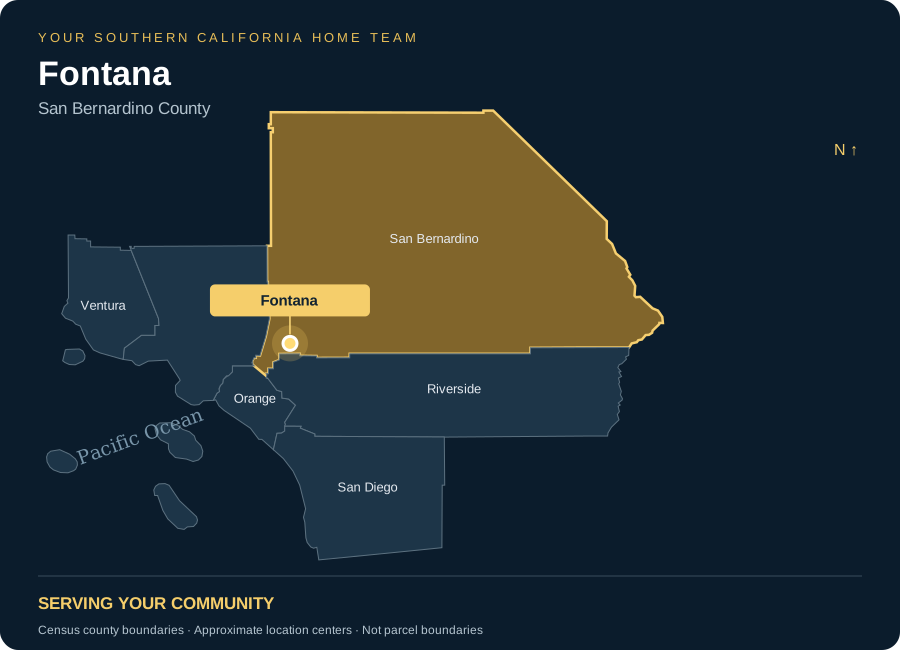
Fontana is an incorporated city in San Bernardino County. Confirm the city's building or planning provider for your property; some cities contract with other agencies.
San Bernardino County Land Use Services provides Building & Safety, planning, and property-research resources. A project's parcel location and scope determine the appropriate next steps.
San Bernardino County Building & Safety ↗Location reference: US Census TIGERweb, current places layer. About this directory.
Coordinate related work in Fontana
All home improvement services in Fontana · White Vinyl Retrofit Windows throughout San Bernardino County · White Vinyl Retrofit Windows overview
Nearby communities
Replacement windows planning in Fontana
Fontana Homes Are Often Hot Because of the Windows, Not the AC
If your Fontana home stays hot even with the AC running, the problem is often the windows, not the cooling system. Total Home Windows starts by finding where heat is entering the home, measuring heat at the window level, and showing the problem before recommending window replacement in Fontana, CA.
Fontana heat is different from coastal Southern California. Inland Empire sun, west-facing glass, older aluminum frames, and failed dual-pane seals can push heat directly into bedrooms, living rooms, and upstairs spaces.
The direct answer: if a room gets hot in the afternoon and stays hot into the evening, the windows may be letting in more heat than your AC can overcome.
Total Home Windows does not start with a blind product recommendation. The first step is to identify whether the heat is coming through the glass, around the frame, through failed seals, or from another part of the home.
That matters because replacing an AC system without reducing heat gain at the windows can leave the same rooms uncomfortable. If your home still feels hot even with AC, your windows may be the cause, and our guide on why a house stays hot even with AC in Fontana explains this problem in more detail.
For homeowners comparing options, the main Total Home Windows Fontana service area page gives a broader view of how window performance affects comfort, efficiency, and daily use of the home.
Why Homes in Fontana Get Hot Even With the AC Running
Fontana regularly deals with intense summer heat, dry air, and strong afternoon sun. Homes in North Fontana, Central Fontana, and South Fontana experience the heat differently, but the window problems are often similar.
North Fontana two-story homes often have upstairs bedrooms that overheat in the afternoon. Central and South Fontana homes often have older single-pane aluminum windows or early dual-pane units that no longer insulate well.
The direct answer: many Fontana homes overheat because direct solar heat enters through the glass faster than the AC can remove it.
In homes across Fontana, we often see one or two rooms causing most of the discomfort. A west-facing bedroom, a large living room slider, or an upstairs window can create a hot spot while the thermostat sits in a cooler hallway.
That creates a false reading. The AC may shut off because the hallway reached the set temperature, while the sun-facing room is still 8, 10, or even 15 degrees hotter.
West-Facing Windows and Afternoon Heat
West-facing windows take the hardest hit because they receive low-angle sun during the hottest part of the day. That sunlight does not just brighten the room; it carries heat through the glass and loads the room with radiant energy.
The direct answer: if your west-facing rooms are hot from mid-afternoon into the evening, the windows are likely a major heat-entry point.
Large sliders, picture windows, and upstairs bedroom windows make the problem worse because they expose more glass to the sun. Once the walls, flooring, furniture, and air inside the room absorb that heat, the room can stay uncomfortable long after the AC has been running.
This is why selecting the best windows to block heat in Fontana depends on orientation, glass package, and how much direct sun each opening receives.
Why Replacing the AC May Not Fix the Problem
A larger AC does not stop heat from entering through inefficient windows. It may cool harder, run longer, and increase energy use, but the same west-facing glass can keep feeding heat into the room.
The direct answer: if heat is entering through the windows, the first fix is reducing heat gain at the glass and frame, not automatically upsizing the AC.
Better window performance lowers the cooling load. That gives the existing AC a better chance to cycle normally instead of fighting constant solar heat.
For Fontana homes with strong sun exposure, the right glass package matters. Our page on the best windows for hot climates in Fontana explains why dual-pane construction alone is not always enough.
How Windows Cause Heat Gain in Fontana Homes
Windows cause heat gain in several ways. Solar heat passes through outdated glass, aluminum frames conduct outdoor heat, failed seals reduce insulation, and air leaks allow hot air and dust to enter during wind events.
A common issue we find is that homeowners blame the AC because the air coming from the vents feels cool, but the room still gets hotter. When we check the window area, the glass or frame is often much warmer than the surrounding wall.
The direct answer: windows become a heat problem when the glass, frame, seal, or installation no longer controls solar heat and air leakage.
Large glass areas create localized hot spots. This is why one bedroom can be uncomfortable while the rest of the home feels acceptable.
Single-Pane Aluminum Windows
Single-pane aluminum windows are common in older Central Fontana homes. They conduct heat quickly because aluminum transfers outdoor temperature through the frame instead of resisting it.
These windows often rattle during wind, leak air around the sash, and allow dust to collect on the sill. During Santa Ana wind conditions, small frame gaps can pull hot, dry air and fine particles into the home.
The direct answer: if you feel heat near the glass or frame, or see dust building up after windy days, the window is no longer sealing the home properly.
These symptoms are part of the reason many homeowners review the signs you need new windows in Fontana before deciding whether replacement is necessary.
Failed Dual-Pane Windows
Many Fontana homes built in the 1980s, 1990s, and early 2000s have dual-pane windows, but that does not mean they are still performing. Seals can fail after years of heat expansion, UV exposure, and daily temperature swings.
Fogging or condensation between the panes is one of the clearest signs of seal failure. That haze cannot be cleaned off because it is trapped inside the glass unit.
The direct answer: fog between panes usually means the insulating seal has failed, and the window has lost much of the performance it was designed to provide.
Once the seal fails, insulating gas can escape and moisture can enter. The window may still look like a dual-pane unit, but it no longer performs like one.
Modern energy-efficient windows in Fontana are designed to reduce heat transfer more effectively when the glass, spacer, seal, and frame are selected for the home’s conditions.
Builder-Grade Windows in Newer Homes
Some newer Fontana homes still struggle with heat because the original windows were selected to meet minimum requirements, not to solve west-facing heat problems. Builder-grade dual-pane glass may reduce some heat transfer, but it may not provide strong solar heat control.
The direct answer: dual-pane does not automatically mean heat-blocking. The Low-E coating, solar heat rating, frame quality, and installation all affect performance.
This is especially important in two-story homes where upstairs bedrooms get direct afternoon sun. In those cases, Low-E windows in Fontana can help reflect heat while still allowing natural light into the room.
What Total Home Windows Looks for Before Recommending Replacement
Total Home Windows looks for proof before recommending replacement. That means checking the window area, identifying heat-entry points, and separating window-related heat from attic, insulation, or HVAC problems.
We look at sun exposure, frame condition, glass temperature, failed seals, poor locking, drafts, fogging, dust infiltration, and whether the room’s discomfort matches the window orientation.
The direct answer: the right recommendation starts with diagnosing which windows are causing the most heat gain, not replacing every window automatically.
This approach matters for Fontana homeowners because the worst windows are often concentrated on one side of the home. A west-facing elevation, upstairs bedroom group, or large front-facing glass area may be the main source of the problem.
Working with a specialized window replacement installer in Fontana helps ensure the installation method, glass package, and sealing approach match the home instead of relying on a one-size-fits-all quote.
Proof Inside the Home
Total Home Windows demonstrates what is happening inside the home. We check temperature differences near problem windows and explain whether the heat is coming through the glass, around the frame, or from another building issue.
The direct answer: if the window area is significantly hotter than the surrounding room, the window is contributing to the comfort problem.
This gives the homeowner a practical replacement plan. In some homes, that may mean replacing every original single-pane window. In others, it may mean starting with the highest-impact windows first.
For homeowners comparing contractors, it helps to understand what separates the best window replacement company in Fontana from a quote-only installer. Local evaluation, clear explanation, and proper measurement matter.
If you are searching for window installation near me in Fontana, the most important question is not who can install quickly. It is who can show why the existing windows are failing and what replacement method actually fits the home.
Signs You Need New Windows in Fontana
You may need new windows if rooms stay hot with the AC on, heat can be felt near the glass, fog appears between panes, windows are hard to operate, or dust enters during wind events.
Other warning signs include rising energy bills without a clear explanation, loose locks, failed weatherstripping, and street, freeway, or warehouse noise feeling louder than it should inside the home.
The direct answer: if your windows are creating heat, drafts, fogging, dust, noise, or security issues, they should be evaluated for replacement.
Fontana homes near major roads, warehouse areas, or freeway corridors may also notice more noise through older glass and loose frames. Window replacement can help reduce sound when the glass package and sealing method are selected correctly.
For more detail, review how new windows reduce noise in Fontana homes, especially where traffic, trucks, or neighborhood noise are part of the problem.
Heat Symptoms
Heat symptoms are usually easy to feel before they are easy to explain. West-facing rooms get hot late in the day, upstairs bedrooms stay warmer than downstairs, and the AC runs longer than normal.
The direct answer: if one side of the house gets uncomfortable at the same time every day, the issue is likely tied to sun exposure through specific windows.
Homeowners often notice that closing blinds helps slightly but does not solve the problem. That is because blinds manage light inside the room after heat has already passed through the glass.
When heat gain is reduced at the window level, the AC has less heat to remove. That is why understanding whether new windows reduce energy bills in Fontana starts with the condition and exposure of your current windows.
Mechanical and Seal Failure
Mechanical problems are another sign that the window is no longer performing properly. Broken balances, loose locks, warped tracks, failed weatherstripping, and hard-to-slide sashes all affect comfort and security.
Seal failure is different but just as important. Foggy glass, moisture between panes, or a milky haze inside the glass unit means the sealed insulated unit is no longer intact.
The direct answer: a window that does not close tightly, lock securely, or maintain its seal cannot control heat, air, dust, or noise the way it should.
These are not just cosmetic issues. Poor closure and bad seals allow outdoor conditions to move into the home, especially during hot afternoons and windy periods.
Window Replacement Options for Fontana Homes
The right window replacement option depends on the home’s age, frame condition, sun exposure, budget, and whether the existing opening is still sound. Total Home Windows evaluates these factors before recommending retrofit or full-frame replacement.
Many Fontana stucco homes are good candidates for retrofit replacement when the existing frame is stable and there is no major water damage, rot, or structural problem. Full-frame replacement is used when the existing frame or opening needs deeper correction.
The direct answer: retrofit is usually less invasive, while full-frame is better when the existing window system or surrounding opening is damaged.
Custom measurement also matters. Older homes can settle, and window openings are not always perfectly square, even if they look normal from the outside.
Retrofit Window Replacement
Retrofit window replacement installs the new window into the existing frame area without tearing out large sections of stucco or interior finish. It is often faster, cleaner, and more cost-effective when the original frame is sound.
The direct answer: retrofit replacement is often the practical choice for Fontana stucco homes when the existing opening is stable and dry.
This method can reduce disruption and help avoid unnecessary stucco repair. It still requires proper measurement, leveling, sealing, and finishing to control heat and air movement.
For homeowners planning the project, the main Fontana window replacement service page explains how replacement decisions should connect to comfort, efficiency, and installation quality.
Full-Frame Window Replacement
Full-frame replacement removes the window down to the opening. This can be necessary when there is water intrusion, damaged framing, poor prior installation, severe frame deterioration, or structural concerns.
The direct answer: full-frame replacement costs more and takes more work, but it may be the correct method when the existing frame cannot support a proper seal.
In Fontana stucco homes, full-frame work may involve exterior stucco repair and interior finish work. That is why the installation method should be based on inspection, not guesswork.
Cost depends heavily on whether the project stays retrofit or requires full-frame work. Our guide to window replacement cost in Fontana explains the factors that change pricing.
Custom Windows vs Standard Windows
Most professional replacement windows should be custom measured. Standard off-the-shelf sizing can leave gaps, require excessive caulking, and create weak points for heat, air, dust, and water intrusion.
The direct answer: custom windows usually perform better because they are measured for the actual opening, not forced into a size that almost fits.
This is especially important in older Fontana homes where settling, stucco thickness, and prior repairs can change the opening. A tight, accurate fit supports better sealing and long-term performance.
If you are comparing sizing options, the guide on custom windows vs standard windows in Fontana explains why measurement accuracy affects comfort, efficiency, and durability.
Best Window Features for Blocking Heat in Fontana
Total Home Windows looks at window performance as a heat-control problem first. In Fontana, the right replacement window is not just a new frame and cleaner glass. It needs to reduce solar heat, limit air leakage, and hold up under Inland Empire sun.
The direct answer: the best windows for Fontana heat usually combine Low-E glass, a low SHGC rating, dual-pane construction, argon gas, and a frame material that does not conduct heat easily.
That combination matters because heat enters through more than one path. Sunlight passes through the glass. Outdoor temperature moves through the frame. Hot air enters through loose seals. A window that solves only one of those issues may still leave the room uncomfortable.
For homeowners comparing options, the guide to the best windows to block heat in Fontana explains why the glass package should match the home’s sun exposure, especially on west- and south-facing elevations.
Low-E Glass
Low-E glass uses a thin coating designed to reflect infrared heat while still allowing visible light into the home. This is one of the most important features for Fontana homes because the afternoon sun can load a room with heat quickly.
The direct answer: Low-E glass helps reduce heat at the window before the AC has to remove it from the room.
This is especially important for upstairs bedrooms, large sliders, and front-facing living rooms that receive direct afternoon sun. Without the right Low-E coating, a dual-pane window may still allow too much solar heat into the home.
Total Home Windows evaluates where the sun is hitting the home before recommending a glass package. The goal is not to overbuild every opening. The goal is to use the right level of heat control where it matters most.
If you are comparing glass options, the page on Low-E windows in Fontana explains how the coating works and why it matters in a hot inland climate.
SHGC and U-Factor
Two ratings matter when evaluating window performance: SHGC and U-factor.
- SHGC measures how much solar heat passes through the window.
- U-factor measures how well the window insulates against heat transfer.
In Fontana, SHGC is especially important because the main problem is often solar heat gain through exposed glass. A lower SHGC means less solar heat enters the home.
U-factor still matters, especially for overall insulation and winter performance, but a window with poor solar control can still make a room hot even if it has decent insulating value.
Homeowners should also pay attention to whole-unit ratings. A center-of-glass number does not tell the full story because the frame, spacer system, and sash construction also affect performance.
Total Home Windows focuses on the whole window system, not just one advertised number. That is why we measure and evaluate the problem before recommending energy-efficient windows in Fontana.
ENERGY STAR Windows
ENERGY STAR is a useful benchmark, but it should not be treated as the only deciding factor. A window can meet efficiency standards and still be a poor match for a specific room if the glass package does not address direct sun exposure.
For Fontana homes, ENERGY STAR-rated windows should be evaluated alongside orientation, room use, existing window condition, and installation quality.
The direct answer: ENERGY STAR helps confirm efficiency, but the real decision should be based on how the window performs in your actual home.
Total Home Windows looks at both the rating and the room condition. A shaded bathroom window and a west-facing upstairs bedroom do not need to be evaluated the same way.
If you want to understand the label before comparing products, this guide to ENERGY STAR windows in Fontana explains what the rating means and how it applies to local homes.
Dual-Pane vs Triple-Pane Windows in Fontana
Many homeowners assume triple-pane windows must be the better choice because they have more glass. That is not always true in Fontana.
High-quality dual-pane windows with the right Low-E coating usually make the most practical sense for heat control in Southern California. They can significantly reduce heat gain without the added weight and cost of triple-pane glass.
The direct answer: for most Fontana homes, a strong dual-pane Low-E window is the better value for heat reduction than triple-pane glass.
Triple-pane windows can improve insulation, but the added benefit is often smaller in a hot Southern California climate than it would be in a very cold region. In Fontana, solar heat control, air sealing, and installation quality often matter more than adding a third pane.
Total Home Windows explains this difference before recommending a package. The goal is to solve the heat problem without pushing unnecessary upgrades.
For a deeper comparison, review dual-pane vs triple-pane windows in Fontana.
When Dual-Pane Makes Sense
Dual-pane windows make sense when the main goals are heat control, comfort improvement, better energy performance, and a reasonable project cost.
A quality dual-pane window typically includes two panes of glass, an insulating airspace, Low-E coating, and often argon gas. When installed correctly, this helps reduce heat transfer and air leakage.
In field evaluations, Total Home Windows often finds that the biggest improvement comes from replacing old single-pane aluminum or failed builder-grade dual-pane windows with a properly selected dual-pane Low-E system.
That is usually enough to reduce the heat load in sun-exposed rooms and make the AC’s job more manageable.
If the main concern is Inland Empire heat, the guide to the best windows for hot climates in Fontana explains why glass selection and window orientation matter more than pane count alone.
When Triple-Pane May Be Considered
Triple-pane windows may be considered when a homeowner wants premium performance, has specific comfort goals, or is dealing with a more complex noise issue.
Even then, triple-pane is not always the best answer for freeway or truck noise. Low-frequency sound often requires a different approach, such as laminated glass or dissimilar glass thickness.
That matters for Fontana homes near I-10, I-15, SR-210, SR-60 corridors, and major truck routes. More glass layers do not automatically mean better control of diesel rumble or tire drone.
If outside sound is part of the problem, Total Home Windows evaluates both heat and noise conditions before recommending a glass package. The page on whether new windows reduce noise in Fontana explains where standard dual-pane helps and where acoustic glass may be needed.
Do New Windows Reduce Energy Bills in Fontana?
New windows can reduce energy bills when they lower the amount of heat entering the home and reduce air leakage. But savings are not the same for every house.
The result depends on the condition of the existing windows, the number of windows replaced, the glass package, the direction each window faces, attic insulation, HVAC performance, and installation quality.
The direct answer: new windows can reduce cooling load in Fontana, but comfort improvement is often noticed before the utility bill changes are fully visible.
This is important. A homeowner may first notice that the upstairs bedroom is more usable, the living room does not bake in the afternoon, or the AC does not run as aggressively during peak heat.
Total Home Windows does not promise the same savings number for every home. We explain what is likely based on what we observe at the window level.
For a realistic breakdown, see how new windows reduce energy bills in Fontana.
Comfort First, Savings Second
The first improvement many homeowners notice is comfort. Rooms feel more even. Hot spots are reduced. The area near the glass does not feel as harsh during the afternoon.
That comfort change matters because it affects how the home is used. A bedroom that was avoided during summer afternoons may become usable again. A living room with a large slider may feel less exposed to the heat.
One common observation in Fontana homes is that the thermostat does not always show the real problem. The hallway may read normal while a sun-facing room is much hotter. Reducing heat at the window can help bring those spaces closer together.
Energy savings can follow when the AC has less heat to fight, but the exact savings depend on the whole home.
What Affects Energy Savings
Several factors affect how much energy savings a homeowner may see:
- The condition of the existing windows
- The amount of direct sun exposure
- The SHGC and Low-E package selected
- Air leakage around the current frames
- Whether the project is whole-home or phased
- The efficiency and condition of the AC system
- Attic insulation and duct performance
- Installation quality and final sealing
Window replacement can be a strong efficiency upgrade, but it should be evaluated as part of the home’s larger heat-load picture.
That is also why ROI should not be judged only by monthly savings. Comfort, resale appeal, reduced maintenance, and improved daily use of the home all matter. The guide to window upgrade ROI in Fontana explains how to think about value beyond a simple payback calculation.
Noise Reduction for Fontana Homes Near Freeways, Warehouses, and Truck Routes
Heat is the main concern for many Fontana homeowners, but noise is also a serious issue in certain neighborhoods. Homes near I-10, I-15, SR-210, SR-60, South Fontana warehouse areas, and heavy truck routes may deal with tire drone, diesel rumble, air brakes, and constant traffic sound.
Standard dual-pane windows may reduce some noise, especially higher-frequency sounds. But low-frequency truck and freeway noise requires more careful glass selection.
The direct answer: new windows can reduce outside noise, but they will not make a home completely soundproof.
Proper sealing is just as important as glass choice. If air can move around the frame, sound can move through those same weak points.
Total Home Windows evaluates whether the issue is mostly glass transmission, air leakage, poor frame sealing, or another part of the building envelope. That prevents unrealistic expectations and helps match the window to the problem.
Freeway Noise
Freeway noise is often a mix of tire drone, engine sound, wind turbulence, and occasional braking noise. These sounds can travel through standard glass and weak seals.
For homes near major corridors, laminated glass or glass with different pane thicknesses may improve sound reduction more than a basic dual-pane unit.
The key is not just adding thickness. The window needs to disrupt sound vibration and seal tightly in the opening.
If freeway noise is part of your decision, the guide on whether windows reduce noise in Fontana homes explains the difference between general sound reduction and more targeted acoustic performance.
Warehouse and Truck Route Noise
South Fontana and areas near logistics routes can experience a different type of noise. Diesel rumble and heavy truck movement create low-frequency sound that standard windows may not control well.
These same areas may also deal with dust and air infiltration. During windy conditions, older windows can allow fine particles to enter through worn tracks, loose weatherstripping, and poor frame seals.
For these homes, the window system needs to address both sound and air leakage. Glass selection matters, but so does frame design, locking pressure, and installation sealing.
When comparing options for heat, noise, and durability together, the guide to the best windows for Fontana homes can help narrow the decision by real household needs.
STC vs OITC
Sound ratings can be confusing. STC and OITC measure different types of sound performance.
- STC is commonly used for mid-frequency sounds, such as voices and general indoor noise.
- OITC is more useful for outdoor noise, including traffic, trucks, and aircraft-style low-frequency sound.
For Fontana homes near freeways or industrial traffic, OITC is often the more relevant rating. A window can have a decent STC rating and still struggle with low-frequency rumble.
Custom sizing also affects noise control. A poorly fitted standard window can leave gaps that reduce performance, even if the glass package is strong. That is why custom windows vs standard windows in Fontana is not just a sizing question. It affects sealing, sound control, and efficiency.
Best Window Materials for Fontana: Vinyl, Fiberglass, and Brand Considerations
Window material affects heat transfer, maintenance, durability, appearance, and cost. In Fontana, the material also needs to handle strong sun exposure, dry heat, and daily temperature swings.
Vinyl and fiberglass are both common choices. The better option depends on the home, budget, style preference, and performance goals.
The direct answer: the best window material for a Fontana home is the one that combines strong thermal performance, durable construction, proper fit, and correct installation.
Total Home Windows helps homeowners compare materials without relying on brand name alone. The glass package and installation method often matter as much as the label on the frame.
Are Vinyl Windows Good for Fontana?
Quality vinyl windows are a strong option for many Fontana homes. Vinyl is efficient, low maintenance, resistant to rot and termites, and does not conduct heat the way aluminum does.
The key word is quality. Cheap vinyl can warp, chalk, or operate poorly under intense sun exposure. A good vinyl window should have a strong frame design, reliable locking hardware, and a glass package suited for the home’s heat exposure.
For many homeowners, vinyl provides the best balance of performance and cost. The guide on whether vinyl windows are good for Fontana homes explains when vinyl makes sense and what to watch for.
Vinyl vs Fiberglass
Vinyl and fiberglass both have advantages.
- Vinyl is usually more cost-effective, energy efficient, and low maintenance.
- Fiberglass is stronger, more dimensionally stable, and often allows thinner frame profiles.
Fiberglass can be a strong choice for homeowners who want a premium frame material or larger glass areas with slimmer sightlines. It usually costs more than vinyl.
Vinyl is often the practical choice when the priority is improving comfort, controlling heat, and keeping the project budget reasonable.
If you are comparing materials, this guide on vinyl vs fiberglass windows in Fontana breaks down the differences in performance, cost, and durability.
Best Window Brands for Fontana Homes
Brand matters, but it should not be the only deciding factor. A strong brand with the wrong glass package or poor installation can still underperform.
When Total Home Windows helps homeowners compare brands, the focus is on:
- Glass package options
- Frame material and strength
- Warranty coverage
- Hardware quality
- Energy ratings
- Availability of custom sizes
- Fit for Fontana heat and sun exposure
Brand choice should support the project goal. A homeowner trying to reduce upstairs heat may need a different recommendation than a homeowner focused on freeway noise.
For a more detailed comparison process, review the guide to the best window brands for Fontana homes.
Milgard vs Andersen
Milgard and Andersen are often compared because they serve different parts of the window market.
Milgard is commonly considered for vinyl and fiberglass options. Andersen is often considered for composite and premium design applications.
The better choice depends on the home’s needs, not just the name. A project focused on cost-effective heat control may point one direction. A project focused on premium design or a specific architectural look may point another direction.
Total Home Windows helps homeowners compare brands by performance, frame material, glass package, warranty, and installation fit. The guide on Milgard vs Andersen windows in Fontana explains how to evaluate both without oversimplifying the decision.
Window Replacement Cost in Fontana
Window replacement cost in Fontana depends on the home and the scope of work. A simple window count is not enough to produce an accurate recommendation.
Cost is affected by window size, glass package, frame material, installation method, second-story access, custom shapes, grids, tempered glass requirements, acoustic upgrades, and whether stucco or interior finish work is needed.
The direct answer: retrofit replacement is generally less expensive than full-frame replacement, but the correct method depends on the condition of the existing opening.
Total Home Windows provides recommendations after inspecting the windows, measuring accurately, and determining whether the existing frames can support a proper seal.
For a deeper explanation of what changes pricing, see the guide to window replacement cost in Fontana.
Main Cost Drivers
The main cost drivers usually include:
- Number of windows being replaced
- Window size and shape
- Second-story or difficult access
- Glass upgrades for heat or noise control
- Vinyl, fiberglass, or other frame material
- Tempered glass requirements near doors, floors, bathrooms, or safety zones
- Grid patterns or HOA design requirements
- Retrofit vs full-frame installation
Premium Low-E glass, laminated acoustic glass, and custom shapes can increase cost, but they may be appropriate when they solve a real problem.
Total Home Windows separates necessary upgrades from optional upgrades so homeowners understand what each choice is solving.
Stucco Homes and Installation Cost
Many Fontana homes have stucco exteriors. That makes installation method important.
When the existing frame and opening are sound, retrofit installation can often improve performance without cutting back stucco. This can reduce disruption and avoid unnecessary exterior repair.
Full-frame replacement may be the correct choice if there is water damage, frame failure, poor prior installation, or structural problems. But it can involve stucco repair, interior trim work, and more labor.
Total Home Windows does not assume one method fits every home. The existing opening has to be evaluated before the recommendation is made.
This is also one reason homeowners should compare more than price. The best window replacement company in Fontana should explain the installation method clearly, not hide it inside a single project number.
HOA and Design Requirements
Some Fontana communities may have HOA rules for window color, grid patterns, frame material, or exterior appearance. This can affect product selection and timing.
Homeowners should not order custom windows before confirming HOA requirements when approval is needed. Custom products are often not returnable once manufactured.
Total Home Windows helps homeowners think through these practical issues before finalizing selections. That can prevent delays, design conflicts, and unnecessary cost changes.
If financing is part of the planning process, the guide to financing window replacement in Fontana explains how affordability should be evaluated alongside total project cost.
Should You Replace All Windows at Once or Phase the Project?
Not every Fontana home needs every window replaced at the same time. Sometimes whole-home replacement is the right decision. Sometimes a phased approach is more practical.
Total Home Windows uses heat evaluation to identify which windows are creating the biggest comfort problems. That helps homeowners prioritize instead of guessing.
The direct answer: replace all windows when failure is widespread, but consider phasing when the worst heat, noise, or seal failures are limited to certain areas.
This approach is especially useful in homes where the west-facing rooms are the main issue while shaded rear rooms still perform acceptably.
For a detailed decision guide, review whether to replace all windows at once in Fontana.
When Whole-House Replacement Makes Sense
Whole-house replacement may make sense when most windows are original, inefficient, hard to operate, or visibly failing.
It can also make sense when the homeowner wants consistent appearance, consistent performance, and one installation schedule instead of multiple project phases.
Homes with original single-pane aluminum windows often benefit from a full-home upgrade because every opening may be contributing to heat gain, drafts, dust, and noise.
Whole-home replacement may also support long-term value and resale appeal. The guide to window upgrade ROI in Fontana explains how replacement value can include comfort, efficiency, and home presentation.
When Phased Replacement Makes Sense
Phased replacement can make sense when the budget is limited or when the problem is concentrated in specific rooms.
Common first-phase priorities include:
- West-facing bedrooms
- Upstairs rooms that overheat
- Large sliders or picture windows
- Street-facing windows with noise problems
- Foggy or failed dual-pane units
- Windows that no longer lock or close properly
This can solve the most urgent comfort problem without forcing a larger project immediately.
If the home stays hot even with AC, Total Home Windows can identify whether the issue is concentrated at certain windows. The guide on why a Fontana house stays hot even with AC explains how window-level heat gain can create room-by-room discomfort.
Financing Window Replacement in Fontana
Financing can help homeowners complete a larger project sooner, but it should be evaluated carefully. The monthly payment is only one part of the decision.
Homeowners should compare total repayment amount, interest rate, term length, fees, and whether any financing option creates a lien or affects future refinancing or sale plans.
The direct answer: financing may make sense for whole-home replacement, but phasing may be better if only a few windows are causing the main heat or noise problem.
Total Home Windows helps homeowners think through project scope before financing decisions are made. The right plan should fit both the home and the budget.
For more planning detail, review financing window replacement in Fontana.
Financing vs Phasing
Financing may allow a homeowner to replace all windows at once. This can provide consistent appearance, consistent performance, and one installation timeline.
Phasing may be a better choice when the main problem is limited to a few windows. For example, replacing the west-facing upstairs windows may address the worst heat issue without financing a full-home project.
Total Home Windows looks at the highest-impact windows first. That makes it easier to compare financing a full project against completing the work in stages.
The guide on whether to replace all windows or phase the project in Fontana can help homeowners weigh both approaches.
Questions to Ask Before Financing
Before financing window replacement, homeowners should ask clear questions:
- What is the total project cost?
- What is the total repayment amount?
- What is the interest rate?
- How long is the repayment term?
- Are there prepayment penalties?
- Is there a lien connected to the financing?
- Would a phased project solve the urgent problem with less debt?
These questions help avoid decisions based only on a low monthly number.
Cost planning should start with the project scope. The guide to Fontana window replacement cost explains why installation method, glass package, and window count matter before financing is considered.
What to Expect From Window Installation in Fontana
A good window project should be clear before installation day. Homeowners should understand the inspection, measurements, product selection, manufacturing timeline, installation method, and final walkthrough.
Total Home Windows starts with the problem. If the home is hot, noisy, dusty, or inefficient, the first step is identifying what the current windows are doing inside the home.
From there, the process moves into measurement, product selection, ordering, scheduling, installation, sealing, and final review.
For a broader timeline, see the window replacement timeline in Fontana.
Before Installation
Before installation, homeowners should prepare the areas around each window. This usually includes moving furniture, clearing window coverings, removing items from sills, and confirming access for the crew.
If the home is in an HOA community, approval should be addressed before custom windows are ordered. Frame color, grids, and exterior appearance may need review.
Total Home Windows confirms measurements and installation approach before the project moves forward. Accurate measurement is critical because a poorly fitted window can create heat, air, water, and noise problems.
Homeowners comparing local installation help can also review what to expect from a window replacement installer in Fontana.
During Installation
During installation, the crew protects the work area, removes the old sashes or frames as required, places the new window, levels it, secures it, seals it, and finishes the exterior and interior details.
For retrofit projects, the process is usually less invasive because the existing opening is not torn down to the studs. For full-frame projects, more removal and finishing work may be required.
Installation quality is where performance is either protected or lost. A strong glass package cannot overcome poor sealing, bad leveling, or gaps around the frame.
If you are searching for local installation support, the guide to window installation near me in Fontana explains what to look for beyond speed and price.
How Long Installation Usually Takes
Many standard replacement windows can be installed efficiently once the custom units are manufactured and delivered. A typical whole-home project may take one to two days depending on the number of windows, access, and installation method.
Full-frame work, stucco repair, second-story access, specialty glass, and custom shapes can add time.
The direct answer: installation day is often faster than homeowners expect, but the full project timeline includes consultation, measurement, manufacturing, scheduling, installation, and walkthrough.
Total Home Windows explains the expected timeline before work begins so homeowners know what will happen and when. For more detail, review how long window installation takes in Fontana.
Frequently Asked Questions About Window Replacement in Fontana
Why is my Fontana house hot even with the AC running?
Total Home Windows often finds that the AC is working, but the windows are allowing too much heat into specific rooms. West-facing glass, older aluminum frames, failed dual-pane seals, and air leaks can create hot spots faster than the cooling system can correct them. If one room stays hot while the thermostat area feels normal, the window area should be evaluated before assuming the AC is the problem.
How much does window replacement cost in Fontana?
Cost depends on the number of windows, window size, glass package, frame material, installation method, access, and whether the project requires retrofit or full-frame replacement. Stucco homes, second-story windows, custom shapes, tempered glass, and acoustic glass can also affect pricing. The most accurate cost comes after measuring the openings and checking the condition of the existing frames.
Are energy-efficient windows worth it in Fontana?
They can be worth it when the goal is to reduce heat gain, improve comfort, and lower cooling load. In Fontana, the most important features are usually Low-E glass, a lower SHGC rating, dual-pane construction, good frame performance, and proper installation. Energy savings vary by home, but many homeowners notice comfort improvements first, especially in sun-exposed rooms.
Should I replace all my windows at once or phase the project?
It depends on the condition of the home and the budget. Whole-home replacement makes sense when most windows are old, failing, or inefficient. Phasing can make sense when the main problem is limited to west-facing bedrooms, upstairs rooms, large sliders, or street-facing windows with noise issues. The better approach is to identify the highest-impact windows first.
How long does window installation usually take in Fontana?
Most standard replacement projects are installed faster than homeowners expect, often within one to two days for many homes once the custom windows are manufactured and delivered. The full timeline includes consultation, measurement, product selection, ordering, scheduling, installation, sealing, and final walkthrough. Full-frame work, stucco repair, specialty glass, or HOA requirements can add time.
Get a Window Replacement Quote in Fontana
If your Fontana home feels hot, uncomfortable, noisy, or inefficient, Total Home Windows can evaluate the windows before recommending a solution.
The first step is not choosing a product. It is finding where heat is entering, which windows are causing the biggest comfort problems, and whether retrofit, full-frame, phased replacement, or whole-home replacement makes sense.
You can learn more about our local service through the Total Home Windows Fontana service area page, review the main page for window replacement in Fontana, or compare planning factors on the Fontana window replacement cost guide.
You can request a quote or schedule an evaluation:
Phone: (310) 729-3013
Contact Page: https://www.teamallstarconstruction.com/contact/
A proper evaluation should help you understand:
- Where heat is entering
- Which windows are contributing most
- Whether retrofit or full-frame installation fits the home
- Whether full replacement or phasing makes more sense
- What glass and frame options match your comfort and budget goals
Total Home Windows does not guess. We show what is happening at the window level, explain the options clearly, and help you make the right decision for your home.
Request Free Estimate
Related Content
Best Windows for Homes in Fontana
Should I Replace All Windows At Once in Fontana
What Type Of Windows Are Best For Hot Climates in Fontana
Milgard Vs Andersen Windows in Fontana
Vinyl vs Fiberglass Windows in Fontana
Helpful Resources for Homeowners
Whether you’re researching energy-efficient windows, looking for ways to reduce heat and noise, or comparing replacement options for an older home, these resources cover some of the most common questions homeowners ask. Browse the articles below for practical guidance and expert insights on choosing the right windows for your home.
【45†What are the best windows for west-facing rooms? The best windows for west-facing rooms are energy-efficient replacement windows designed to block solar heat gain during the afternoon. Features such as Low-E glass coatings, dual-pane construction, argon gas fills, and insulated vinyl frames help reduce heat transfer while maintaining natural light. West-facing rooms receive direct sunlight during the hottest hours of the day, making them especially vulnerable to overheating.
Modern replacement windows with advanced solar-control glass can significantly improve comfort, reduce glare, and help your air conditioning system operate more efficiently. For many Southern California homeowners, upgrading to Low-E replacement windows is one of the most effective ways to make west-facing rooms more comfortable year-round. Learn More】
【46†What are the best replacement windows for old aluminum windows? The best windows for replacing old aluminum windows are typically energy-efficient vinyl retrofit windows with Low-E glass and dual-pane insulated glass units. These modern window systems provide significantly better insulation, improved comfort, reduced heat transfer, and lower maintenance requirements compared to older aluminum-frame windows.
For many Southern California homes, retrofit installation methods allow new windows to be installed without removing exterior stucco, helping preserve the home’s weather barrier while delivering modern performance and appearance. Learn More】
【47†Do replacement windows actually lower energy bills? Yes, modern energy-efficient replacement windows can help lower energy bills by reducing heat transfer, minimizing air leakage, and improving overall insulation. While savings vary based on climate, home construction, and existing window condition, many homeowners experience reduced heating and cooling costs after upgrading older single-pane or inefficient windows. Windows are a critical part of the home’s building envelope.
When older windows allow excessive heat gain, heat loss, or air infiltration, HVAC systems must work harder to maintain comfortable indoor temperatures. Energy-efficient replacement windows help reduce this workload and improve overall home performance. Learn More】
【49†What are the best replacement windows for keeping a house cool in hot climates? The best windows for hot homes are energy-efficient vinyl replacement windows with Low-E glass and argon gas-filled dual-pane glass units. These windows help reduce solar heat gain, block harmful UV rays, and improve indoor comfort by preventing excessive heat from entering the home.
For Southern California homeowners, Low-E 366 glass is often one of the most effective options for reducing heat transfer and lowering cooling costs. Learn More】