Roof Replacement & Roofing
in Grand Terrace.
A roofing estimate should explain what happens beneath the finished surface as well as the material you see. Start with the existing roof, the areas of concern, and any work already planned for solar or insulation.
Get my virtual estimate ↗Team All Star Construction · CA license #1009760
Serving your area from our Southern California operation.
Virtual Estimates Available
Start by phone or video. Share your photos and project priorities; we then arrange the measurements and site review needed for your estimate.
What to share for your
Grand Terrace project
- Share ground-level photos of each roof side and any visible ceiling staining; do not climb onto the roof for an estimate.
- Tell us the approximate roof age, material, number of stories, and any known leak history.
- Mention existing solar panels, skylights, patio connections, or planned attic insulation.
Decisions to discuss
- Compare the proposed tear-off, underlayment, flashing, ventilation, and finish material.
- Ask how concealed decking damage will be assessed and priced if discovered.
- Coordinate roofing with solar removal and reinstallation before setting a schedule.
Can you price a roof from photos?
Send your address and photos to start a virtual estimate. We review the roof measurements, access, existing layers, and repair needs before finalizing the installation plan.
Planning a project in Grand Terrace
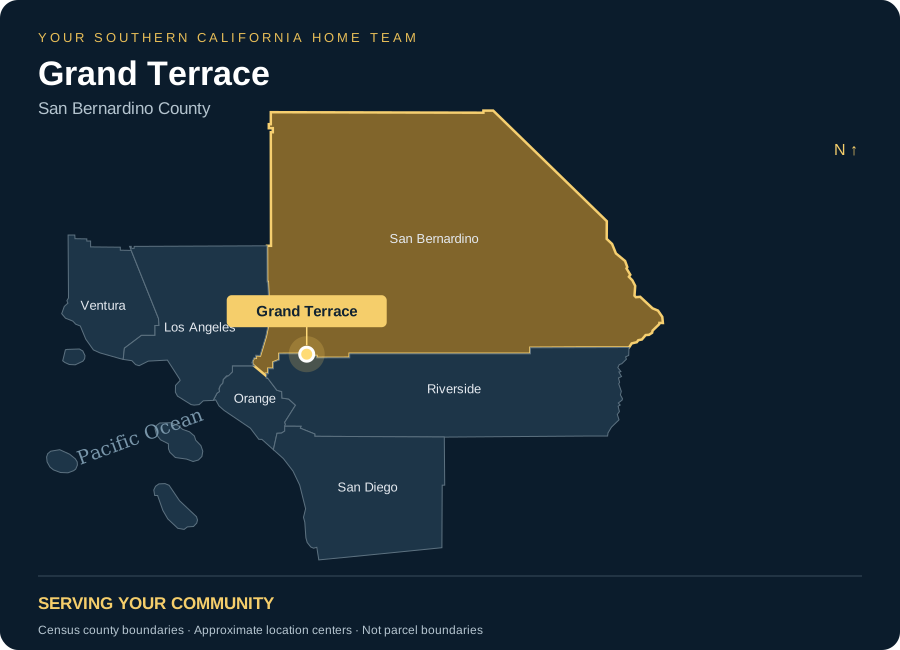
Grand Terrace is an incorporated city in San Bernardino County. Confirm the city's building or planning provider for your property; some cities contract with other agencies.
San Bernardino County Land Use Services provides Building & Safety, planning, and property-research resources. A project's parcel location and scope determine the appropriate next steps.
San Bernardino County Building & Safety ↗Location reference: US Census TIGERweb, current places layer. About this directory.
Coordinate related work in Grand Terrace
All home improvement services in Grand Terrace · Roof Replacement & Roofing throughout San Bernardino County · Roof Replacement & Roofing overview
Nearby communities
Roof replacement planning in Grand Terrace
Roof replacement in Grand Terrace usually becomes necessary for one reason: the roof system has aged past what Inland Empire weather will forgive. Extreme summer heat, intense UV exposure, dry conditions, seasonal rain, and Santa Ana wind events all work together to wear out shingles, dry out underlayment, loosen vulnerable edges, and expose weak flashing details.
In homes across Grand Terrace, we often see roofs that still look acceptable from the street but are already failing underneath. That is especially common on older tile roofs, where the tile may still be in place while the felt below has become brittle and water-vulnerable. All Star Roof Replacement focuses on full roof replacement because many homeowners in this area are dealing with system failure, not just one missing shingle or one isolated leak.
Grand Terrace is a compact market, but the housing mix matters. Established neighborhoods include older ranch-style homes, tract homes with aging asphalt shingles, and tile-roofed properties near Blue Mountain and hillside-adjacent areas where sun and wind exposure can be more aggressive. If you are comparing options, it helps to start with a local roof replacement installer in Grand Terrace and a trusted roofing contractor near you that understands full-system replacement in this climate.
Roof Problems in Grand Terrace Usually Start With Heat, Age, and Underlayment Failure
The direct answer is this: most roof failures in Grand Terrace start long before water shows up on the ceiling. The damage usually begins with years of heat exposure, UV breakdown, and aging waterproofing layers that lose flexibility and stop protecting the home the way they once did.
Roof surfaces in Inland Empire summers can reach roughly 160°F to 180°F. That daily cycle of heating and cooling causes expansion and contraction across the whole roof system. Over time, sealants dry out, fasteners loosen, flashing details weaken, and older roofing materials become brittle. If you are trying to judge whether your roof still has useful life left, pages on signs you need a new roof and expected roof lifespan in Grand Terrace are often the best place to start.
A common issue we find in Grand Terrace homes is that the visible roof covering gets all the attention, while the actual waterproofing layer underneath is what has really failed. That is why many homeowners end up comparing roof repair or replacement only after leaks become active inside the home.
Why Roofs Fail Faster in Grand Terrace Than Homeowners Expect
Roofs in Grand Terrace often age faster than homeowners expect because manufacturer lifespan labels do not account for Inland Empire heat in a practical way. Strong UV exposure breaks down asphalt compounds, contributes to granule loss, and accelerates curling, cracking, and blistering. On tile roofs, heat trapped beneath the tile can cook older felt underlayment until it dries out and splits.
Santa Ana wind events add another layer of stress. When gusts push into already-weakened roof edges, ridges, and corners, the damage is often not dramatic at first. Seal strips separate, tiles shift slightly, and flashing becomes more vulnerable. Then seasonal rain exposes what the dry months were hiding. If you are dealing with active moisture, it helps to review what to do about a roof leak and whether a cool roof system could improve long-term performance on the next replacement.
Why Roofs Fail in Grand Terrace Homes
The short answer: roofs in Grand Terrace fail because the system ages unevenly under heat, UV, wind, and ventilation stress. The surface material may be one problem, but the deeper failure is often a combination of worn underlayment, compromised flashing, and attic heat buildup.
Grand Terrace has a lot of established housing, and older homes often have original ventilation layouts that are no longer ideal. Intake and exhaust may be unbalanced, attic heat may be trapped, and replacement-age materials are now reaching the point where repairs stop making financial sense. Homes near foothill-adjacent areas can also face stronger wind exposure and more complicated access during replacement.
That is one reason homeowners often compare the roof replacement process and the best roofing materials for Grand Terrace before making a decision.
Aging Asphalt Shingle Roofs in Inland Empire Heat
Asphalt shingle roofs in Grand Terrace usually do not age the same way they would in a milder coastal climate. A realistic range for many architectural shingle roofs here is often about 15 to 25 years, depending on exposure, ventilation, installation quality, and maintenance history.
In homes across Grand Terrace, we often see granules collecting in gutters, edge curling, and shingles that have become so brittle they crack during simple handling. Once that happens, repairs become less reliable because nearby shingles may already be near the same failure point. If your roof is showing those symptoms, it helps to review common replacement signs, realistic lifespan expectations, and whether reroofing is worth it in this climate.
Tile Roofs That Look Fine but Leak From Beneath
Direct answer: a tile roof can look good and still need replacement. In many Grand Terrace and greater Southern California homes built in the 1980s and 1990s, the tile itself may outlast the waterproofing layer below by many years.
A common issue we find is failed felt underlayment beneath concrete or clay tile. Traditional felt under tile often has a realistic service life closer to roughly 15 to 20 years under trapped heat, especially when the roof gets strong sun exposure. That means the roof may not look bad from the street, yet leaks can already be developing around valleys, penetrations, and transitions. Homeowners comparing systems often benefit from reviewing 【27†tile vs.
shingle roof options】 and the repair versus replacement question before trying another patch.
Wind, Debris, and Ventilation-Related Wear
Santa Ana winds do not need to tear off half a roof to cause real damage. In Grand Terrace, wind wear often shows up at the perimeter first: ridges, corners, rakes, and eaves. Already-weakened shingles can lose bond strength, and tiles can shift or crack where movement and impact combine.
Poor attic ventilation makes the problem worse. When heat gets trapped in the attic, roof materials age faster, interior comfort drops, and cooling costs can rise. In some systems, poor ventilation can also affect manufacturer warranty compliance. That is why many homeowners replacing older roofs also look at energy-efficient roofing, a compliant cool roof, and ways to reduce heat with better roofing design.
Signs of Roof Failure in Grand Terrace
The direct answer is simple: if the roof is leaking repeatedly, showing visible material breakdown, or causing interior staining, it may be beyond economical repair. In Grand Terrace homes, failure often appears first as small warning signs that point to a much larger system issue.
Many homeowners first notice a problem through ceiling spots, attic odor, gutter granules, or visible edge curling. Tile systems are especially deceptive because they often show symptoms inside the home before the roof looks damaged from the street. If you are unsure whether the problem is minor or systemic, comparing replacement warning signs and local roof inspection cost information can help frame the next step.
Exterior Warning Signs
Exterior signs usually mean the roof has already been deteriorating for a while. On asphalt roofs, common indicators include curling, cupping, blistering, exposed fiberglass mat, and noticeable granule loss. On tile roofs, cracked, slipped, or displaced pieces may expose vulnerable areas below.
Sagging roof lines are more serious. They can indicate long-term moisture damage, softened decking, or structural deterioration that should not be covered over. If a roof is showing this type of movement, homeowners should be thinking less about patching and more about full replacement scope, cost, and installer quality. Related topics such as cost per roofing square and working with a qualified roof replacement installer become especially relevant at that point.
- Curling or cracked shingles
- Granules collecting in gutters or at downspouts
- Cracked, slipped, or missing tile
- Rusting or separated flashing
- Visible sagging or soft roof sections
Interior Warning Signs
Interior symptoms often confirm that the roof issue is no longer superficial. Ceiling stains that darken after rain usually indicate active water entry. Musty attic odor can point to trapped moisture, underlayment failure, or early mold conditions. Bubbling paint, damp drywall, or water tracking down an interior wall often means the failure has moved beyond a simple spot repair.
In homes across Grand Terrace, we often see tile roof leaks show up indoors long before the exterior roof appearance alarms the homeowner. That is why active leak symptoms should be treated as a warning about the roof system as a whole. If water is already inside, review what to do during a roof leak and whether the situation now points to repair or replacement rather than waiting for another storm.
Roof Repair vs Replacement in Grand Terrace
Direct answer: repair makes sense when the roof is still structurally sound and the damage is limited. Replacement makes more sense when age, brittleness, underlayment failure, or recurring leaks show that the system is wearing out across multiple areas.
This is where many Grand Terrace homeowners lose money. They pay for one repair, then another after the next rain, then another after a wind event. That cycle is common on older shingle roofs and on tile systems where the visible tile is not the true problem. If the underlying waterproofing layer is failing, repeated repairs may only chase symptoms. That is why comparing repair vs. replacement early can prevent bigger decking and interior costs later.
When a Repair Still Makes Sense
A repair may still be the right choice if the roof is relatively young and the damage is isolated. Examples include one flashing failure, a limited number of wind-damaged shingles, or a single cracked tile where the surrounding system remains sound.
Younger roofs are generally more repairable because the materials are still flexible enough to work with. The key is that the leak or damage must truly be isolated, not part of a larger age-related pattern. If there is uncertainty, a professional inspection is usually the cleanest way to decide whether the issue is local or systemic. That is where understanding inspection cost and scope can be useful.
When Replacement Is the Better Long-Term Decision
Replacement is usually the better decision when deterioration is widespread, the roof is near the end of realistic service life, or leaks are showing up in more than one area. As a practical rule, once meaningful wear affects roughly 25% to 30% of the roof, the economics usually shift toward replacement instead of piecemeal repair.
Old brittle shingles tend to fail in clusters, not one isolated spot at a time. Tile roofs with aging felt often behave the same way. One leak gets patched, then another appears at a valley, then another near a penetration. At that stage, homeowners are usually better served by one properly scoped replacement with updated underlayment, flashing, and ventilation instead of repeated repair spending.
That is also when pages on signs you need a new roof, roof financing, and roof warranty coverage become more important.
Why Reroofing or Overlaying Is Usually a Bad Fit Here
Direct answer: reroofing over an old roof is usually a poor fit in Grand Terrace. It traps extra heat, prevents a full deck inspection, and can leave hidden rot or moisture damage buried under the new material.
In a hot Inland Empire climate, overlays can accelerate aging rather than solve it. They also limit the quality of the final result because the contractor cannot properly inspect and correct the substrate the same way they can during a full tear-off. In many cases, manufacturer warranty protections are also reduced if the roof is not installed over an approved substrate.
Homeowners weighing this option should review whether reroofing is worth it and how the full replacement process protects against hidden damage.
Roof Replacement Cost in Grand Terrace
The direct answer is that many Grand Terrace roof replacements fall somewhere around $15,000 to $30,000 for a typical residential project, but actual pricing depends on roof type, tear-off scope, decking condition, ventilation changes, and access. Tile roofs, steep slopes, solar coordination, and concealed wood damage can move the total well above that range.
For homeowners comparing bids, cost is usually best understood in two ways: total project price and cost per roofing square. A roofing square equals 100 square feet. In Southern California conditions, asphalt replacement often lands around $450 to $1,200 per square, while concrete tile commonly runs around $1,000 to $1,800 per square depending on system complexity. For a fuller breakdown, homeowners often compare local roof replacement cost, cost per square, and available financing options.
Typical Price Ranges by Roof Type
Asphalt shingles are usually the lower-cost replacement path, while tile and flat roofing systems tend to cost more because of labor, waterproofing details, and material handling. The ranges below are realistic planning numbers for many Grand Terrace homeowners, not final bid amounts.
Roof Type | Typical Cost Range | Notes
--- | --- | ---
Architectural asphalt shingles | $9,000–$24,000 | Usually the most budget-friendly full replacement option
Concrete tile | $20,000–$36,000 | Higher labor and material cost; underlayment quality is critical
Flat/TPO roofing | $16,000–$32,000 | Varies by penetrations, drainage layout, and edge detail complexity
The final number depends on the actual roof geometry, how many layers need removal, what code upgrades are needed, and whether hidden damage appears after tear-off. Material choice is only one piece of the price.
What Pushes Roof Cost Up in Grand Terrace
The biggest cost drivers are usually not the shingle or tile itself. They are the conditions discovered during replacement. Dry rot, damaged decking, and ventilation upgrades can materially change the project total once the old roof is removed.
Solar is another major factor. If panels need to be removed and reinstalled, that can add several thousand dollars depending on the system size and mounting layout. Hillside access, steeper roofs, and heavy tile handling also increase labor and safety setup time. These are common variables in Grand Terrace, especially on foothill-adjacent properties or homes with more complex roof lines.
- Decking replacement or dry rot repair
- Ventilation corrections or added intake/exhaust
- Solar removal and reinstall coordination
- Steep-slope safety requirements
- Limited access for tear-off and material delivery
- Heavy tile loading and disposal
Grand Terrace Cost Context vs Nearby Cities
Grand Terrace usually sits in a middle-to-upper Inland Empire replacement range. It is often not as low-cost as simpler ranch-style projects in nearby lower-complexity areas, but it is also not automatically at the top end unless the home has tile, hillside access challenges, premium material selections, or major substrate work.
As a general market pattern, Colton often trends slightly lower because of simpler roof forms and a more basic replacement mix. Loma Linda and Redlands often trend higher because of larger homes, more premium material expectations, and more complex roof architecture. Grand Terrace frequently lands between those extremes, with pricing pushed upward when tile prevalence, access limits, or hidden underlayment failure are involved.
Tile vs Shingle Roof Options for Grand Terrace Homes
The best roof type for a Grand Terrace home depends on budget, structure, style, and how long the homeowner plans to stay in the property. Both tile and architectural shingles can be good fits here, but they perform differently in heat, cost, installation speed, and long-term maintenance.
Grand Terrace has a mixed housing stock, so both systems are common. Ranch-style and tract homes often use shingles, while Spanish- and Mediterranean-influenced homes frequently use concrete or clay tile. If homeowners are comparing performance, lifecycle cost, and appearance, pages on tile vs. shingle roofing, best roofing materials, and cool roof options help narrow the decision.
Asphalt Shingles for Grand Terrace Replacement Projects
Asphalt shingles are often the practical choice when budget and installation speed are top priorities. They have a lower upfront cost than tile, replacement is typically faster, and modern architectural shingles can provide a strong finished appearance on many Grand Terrace homes.
Cool-rated shingles can also help with California energy compliance on qualifying replacement projects. That said, homeowners should go into the decision with realistic expectations. In Inland Empire heat, shingle lifespan is often shorter than in cooler climates. If the home gets intense afternoon sun and has weak attic ventilation, that shorter service life becomes even more likely.
Tile Roofing for Heat, Longevity, and Style
Tile roofing is often the stronger long-term heat and durability option, especially for homes whose architecture was designed around it. Concrete and clay tile offer strong UV resistance, excellent fire resistance, and solid thermal performance in Southern California weather.
But the key point is this: tile longevity and tile system longevity are not the same thing. The tile body may last for decades, but the underlayment beneath it often becomes the maintenance and replacement trigger much sooner. Tile replacement and lift-and-relay work also cost more and usually take longer because the system is heavier, more labor-intensive, and more detail-sensitive.
For many homeowners, that makes the decision less about which material is “best” in general and more about which system is the best fit for the home’s budget, structure, and ownership timeline.
Energy Efficiency and Heat Control Matter More in Grand Terrace
In Grand Terrace, roof replacement is not just about stopping leaks. It is also about controlling attic heat, managing long-term material stress, and choosing a roofing system that performs well in Inland Empire conditions. Because Grand Terrace sits in a hot inland climate zone, major roof replacements often need to account for cool-roof requirements, ventilation improvements, and material reflectivity.
Many older homes in Grand Terrace were built before current expectations for attic heat management. That means a roof can be replaced with better materials than the home originally had, especially when paired with updated intake and exhaust ventilation. Homeowners comparing options often benefit from reviewing energy-efficient roofing, ways to reduce heat with roofing, and what qualifies as a cool roof in Grand Terrace.
What a Cool Roof Means in Grand Terrace
A cool roof is a roofing system designed to reflect more sunlight and absorb less heat than a standard dark roof. In Grand Terrace, that matters because roof surfaces can become extremely hot during summer, and that heat transfers into the attic over time. On qualifying steep-slope replacement projects, California Title 24 energy standards often require cool-roof-rated products.
For homeowners, the practical takeaway is simple: reflective shingles or tile can help reduce heat buildup compared with lower-reflectance products. That does not mean every attic becomes cool, but it can reduce temperature extremes and lower cooling strain during long periods of hot weather. If the home already runs hot in summer, a compliant cool roof should be part of the replacement discussion.
Why Ventilation Changes Real-World Roof Performance
Ventilation affects both roof life and attic comfort. In Grand Terrace homes, poor ventilation can trap heat under the roof deck, accelerate shingle aging, and contribute to moisture imbalance in cooler periods. That is why roof replacement should be treated as a system, not just a surface-material swap.
Balanced ventilation usually means adequate intake at the lower roof edge or eaves and adequate exhaust near the top of the roof. Depending on the house design, that may involve ridge venting, low-profile exhaust vents, or other code-appropriate ventilation upgrades. Homeowners often overlook this, but improper ventilation can also create problems for warranty compliance. For that reason, ventilation belongs in the scope of work, not as an afterthought.
Additional guidance is often helpful on pages covering heat reduction, roof warranties, and the full roof replacement process.
How Long a Roof Lasts in Grand Terrace
In Grand Terrace, asphalt shingle roofs commonly last about 15 to 25 years, depending on sun exposure, ventilation, material quality, and installation details. Tile roofs can last much longer structurally, but the underlayment beneath the tile is often the component that fails first. In real-world Inland Empire conditions, extreme heat and UV exposure usually shorten service life compared with coastal areas.
A roof’s lifespan is also affected by whether it gets regular inspections, whether small issues are caught early, and whether the original installation was done correctly. Homeowners comparing expected longevity should also review local guidance on roof lifespan, signs you need a new roof, and when it makes sense to schedule a roof inspection.
Lifespan by Material in Inland Empire Conditions
Architectural asphalt shingles in Grand Terrace often perform in the 15-to-25-year range. Some roofs reach the upper end of that range, but many age faster under constant summer heat, direct sun, and limited attic ventilation.
Concrete tile can remain serviceable for decades, often 40 to 50 years or more for the tile itself. But on many older Southern California homes, the underlayment beneath the tile was standard felt, and that layer may begin failing much sooner. Clay tile can last even longer, sometimes 50 to 75 years or more, but again, the roof system only performs as well as the waterproofing, flashing, and ventilation beneath it.
That is why the visible roof covering does not tell the whole story. A tile roof can look good from the street and still need replacement because the system underneath is worn out. Homeowners weighing long-term value usually benefit from comparing best roofing materials and the tradeoffs in tile vs shingle roofing.
Roof Replacement Process in Grand Terrace
In Grand Terrace, a proper roof replacement usually moves through inspection, scope review, contract approval, permit handling, tear-off, deck inspection, waterproofing, installation, cleanup, and final inspection. The exact sequence can vary by roof type, access, and whether solar panels or major deck repairs are involved, but the structure should be clear before work starts.
Grand Terrace uses electronic permit submittals through Symbium, so permit coordination should be part of the contractor’s process. A full replacement should not skip tear-off when the goal is long-term performance, because hidden damage cannot be evaluated through an overlay. Homeowners comparing expectations can explore the full roof replacement process, the likely project timeline, and what to expect from a roof replacement installer.
Inspection, Estimate, and Scope Review
The first step is determining what is actually failing. A good inspection should evaluate visible roof wear, probable deck risk, attic ventilation, flashing condition, penetrations, and whether solar equipment affects the project. It should also identify whether the roof appears to have isolated damage or broader system failure.
Basic estimates are often different from formal roof certifications or detailed inspection reports. Homeowners should expect final pricing to reflect roof complexity, not just square footage. If the roof has multiple levels, steep slopes, tile handling, or solar detach and reset requirements, those factors should be called out before the job is approved. More detail is available on pages covering inspection cost and roof replacement cost.
Tear-Off, Decking Inspection, and Waterproofing
Full tear-off is one of the most important parts of a replacement project. Once the old roof is removed, the contractor can inspect the decking for soft spots, rot, staining, or long-term moisture damage. This is where hidden problems are often found, especially on older Grand Terrace homes with recurring leaks or aging tile underlayment.
After deck repairs are made if needed, the waterproofing layers go on. On many modern Southern California replacements, synthetic underlayment is preferred because it generally performs better than older felt systems under high heat. Valleys, roof penetrations, chimneys, walls, and perimeter edges also need proper flashing details. If those details are weak, the roof can leak even when the field material still looks acceptable.
Homeowners comparing system quality should also review why reroofing is usually a poor fit and how that relates to warranty coverage.
Installation, Cleanup, and Final Inspection
Once waterproofing is in place, the finish roofing material is installed. In general, asphalt shingle projects are faster, while tile projects take longer because of weight, layout, and handling. A straightforward asphalt replacement may take around two to three days. Tile systems commonly take around four to seven days, sometimes longer if the roof is complex or weather and heat slow the pace.
Cleanup should include haul-away of old materials, site organization during the job, and a magnetic sweep for nails at completion. Final city inspection is an important part of permit closeout and helps confirm that the work met code requirements. Homeowners often compare this stage closely on pages about the roof replacement timeline and finding a roofing contractor near me.
What Homeowners Should Expect During the Project
Roof replacement is disruptive, even when the project is well managed. In Grand Terrace, homeowners should expect noise, vibration, debris control measures, material staging, and temporary limits on driveway or garage access. Summer conditions can also affect the daily work schedule, with crews often starting earlier to avoid the most extreme afternoon heat.
Good preparation reduces frustration. Homeowners should ask where the dumpster will go, how materials will be delivered, whether gates need to be unlocked, and how fragile items inside the house should be protected. Pages covering the project timeline and overall replacement process are useful for setting realistic expectations.
Noise, Access, Debris, and Scheduling in Hot Weather
Roof tear-off and installation create steady pounding, scraping, and movement overhead. Wall-hung items can shift, so homeowners should secure fragile decorations and pictures before work begins. Pets often react strongly to roofing noise and may need to be kept in a quiet room or off-site during the loudest phases.
Dumpster placement and material staging can be simple on some Grand Terrace lots and more complicated on tighter properties or hillside-adjacent homes. If a dumpster needs to be placed in the street, city coordination may be required. Hot weather also affects production. Crews may start early, break more often, and sequence tasks around temperature-sensitive conditions. If the project starts because of active leakage, homeowners should also review local guidance on what to do for a roof leak.
How to Choose a Roofing Contractor in Grand Terrace
In Grand Terrace, the right roofing contractor should be properly licensed in California, insured, bonded, and experienced with full replacement work in Inland Empire conditions. For residential roofing, homeowners should verify the contractor’s California license status through the CSLB and confirm that the company is qualified to handle permits, tear-off, ventilation, flashing, and full-system installation.
This matters more in a replacement project than in a minor repair. A full replacement affects code compliance, warranty validity, weatherproofing, and long-term performance. Team Hero Construction, Inc., the licensed company behind All Star Roof Replacement, holds CSLB #1009760, which is a meaningful trust signal because homeowners can verify state licensing status directly.
Anyone comparing providers should also review resources on choosing the best roofing company, finding a roofing contractor near me, and selecting a qualified roof replacement installer.
Trust Signals That Actually Matter
Check current licensing, bonding, and workers’ compensation status directly with CSLB before signing your agreement.
Workmanship warranty quality often matters more than a long manufacturer label on its own. Manufacturer warranties generally address product defects, while real-world leak risk often comes from installation details. A contractor should be comfortable discussing Title 24, attic ventilation, underlayment options, flashing details, and why tear-off matters. Those are stronger indicators than a low bid alone.
Additional comparison points appear on pages about roof warranties and choosing the best roofing company.
Local Competitor Positioning and Market Gaps
In and around Grand Terrace, many roofing companies market themselves broadly across repairs, maintenance, coatings, gutters, or general exterior services. Better Roofing is one of the stronger nearby competitors with visible local review presence and recognition in the area. Other Inland Empire roofing companies often emphasize repair responsiveness or broad service lists rather than replacement specialization.
That creates a clear market gap. Homeowners with full-system roof failure are often not looking for a patch-only contractor. They need clear decision guidance, realistic pricing ranges, help understanding underlayment failure, and a process built around replacement rather than repeated repairs. A replacement-focused approach is especially useful in Grand Terrace, where older roofs and aging tile systems are common.
Homeowners deciding between patching and replacing can compare more detail on the best roofing company page and in the repair or replacement guide.
Common Mistakes Grand Terrace Homeowners Make With Roof Replacement
The most common mistakes are waiting too long, focusing only on the cheapest price, and treating the roof as a surface-only problem instead of a complete system. In Grand Terrace, roofs often fail from heat, UV, ventilation imbalance, and underlayment breakdown long before the damage looks dramatic from the street.
That means a homeowner can spend money on repeated repairs without solving the underlying problem. It also means a low-price bid may look attractive while excluding the work that actually determines long-term performance. Related guidance is available on whether reroofing is worth it, how to decide on repair or replacement, and what matters in a roof warranty.
Delaying Replacement Too Long
Delaying replacement can turn a manageable roofing project into a larger reconstruction job. A small leak may seem minor at first, but over time it can lead to rotten decking, damaged insulation, stained ceilings, mold risk, and interior finish repairs. In tile-roofed Grand Terrace homes, underlayment deterioration often stays hidden until interior symptoms become obvious.
Once leaks start appearing in multiple areas or keep returning after spot work, the roof is often in systemic decline. At that point, continuing to patch it can cost more overall than replacing it properly. Homeowners trying to judge timing should review local indicators on signs you need a new roof and what to do after a leak.
Focusing Only on Lowest Price
The lowest bid is not always the lowest total cost. In roofing, important items are often left out of cheap proposals: tear-off depth, disposal, permit handling, flashing replacement, ventilation upgrades, deck repair allowances, cleanup standards, or solar coordination. If those items appear later as change orders, the project can end up costing more than a more complete quote would have in the first place.
California also limits home-improvement down payments to 10% of the contract price or $1,000, whichever is less. Homeowners should be cautious if a contractor asks for more upfront than allowed. A careful estimate should make clear whether permits, tear-off, disposal, and cleanup are included and how hidden deck damage will be handled if discovered. Useful comparison resources include roof replacement cost, cost per square, and options to finance roof replacement.
Financing and Warranty Considerations Before You Replace
Many Grand Terrace homeowners do not plan for a roof replacement until the need becomes urgent. Because of that, financing is a practical part of the decision. Common options in California include contractor-arranged financing, unsecured home-improvement loans, HELOCs, and PACE-style funding for eligible projects and property owners.
Financing may be available through third-party lenders for qualified applicants. Availability, APR, fees, down payment, and repayment terms depend on the lender and approval. Review the complete loan terms before accepting.
Payment Options Homeowners Commonly Use
Contractor financing can be the fastest route when replacement is needed soon and the homeowner wants predictable monthly payments. Unsecured roof loans may avoid property liens and can work well for homeowners who want funding without tying the project to home equity.
HELOCs are another common option, especially when homeowners want flexibility for contingency costs like unexpected deck repairs. PACE financing may be available in some California markets for eligible energy-related improvements, but homeowners should understand that it is typically repaid through the property tax bill and may affect future property transfer decisions. The right financing method depends on timing, equity position, total project scope, and comfort with repayment structure.
What Roof Warranties Really Cover
Manufacturer warranties and workmanship warranties are not the same thing. Manufacturer coverage generally applies to defects in the roofing product itself. It usually does not pay for labor errors, flashing mistakes, ventilation problems, or leaks caused by improper installation.
Workmanship warranties are the contractor’s promise covering installation-related issues. In real-world roofing, that is often the more important protection because many failures come from detail work, not factory defects. Homeowners should ask what is covered, how long it lasts, and what exclusions apply. Poor ventilation, improper substrate conditions, and noncompliant installation can also affect manufacturer protections.
More detail is available in the local roof warranty guide and on energy-efficient roofing requirements that can affect system performance.
Questions Answered for Grand Terrace Homeowners
Who replaces roofs in Grand Terrace CA
Roof replacement in Grand Terrace should be handled by a properly licensed California roofing contractor, ideally one experienced with full tear-off replacement work rather than patch-only service. Because replacement involves permits, code compliance, waterproofing, ventilation, and inspection, homeowners should verify CSLB licensing, insurance, and local replacement experience before hiring.
How much does a new roof cost in Grand Terrace CA
Many roof replacement projects in Grand Terrace fall somewhere around $15,000 to $30,000 for a typical residential job, but every roof is different. Asphalt shingle systems usually cost less than tile. Pricing changes based on tear-off scope, roof size, slope, access, underlayment type, decking repairs, ventilation upgrades, and solar removal and reinstall if needed.
Do I need roof repair or replacement in Grand Terrace CA
If the roof is relatively young and the damage is isolated, repair may still make sense. If the roof has recurring leaks, widespread wear, brittle shingles, failing tile underlayment, or soft decking, replacement is usually the better long-term choice. In Grand Terrace homes, many tile leaks come from underlayment failure beneath the tile, so surface repairs may not solve the real problem.
How long does a roof last in Grand Terrace CA
Asphalt roofs in Grand Terrace commonly last about 15 to 25 years in Inland Empire heat and sun. Tile roofs can last much longer structurally, but the underlayment beneath them often wears out much sooner than the tile itself. Ventilation, installation quality, and sun exposure all affect actual lifespan.
What roofing material is best in Grand Terrace CA
The best roofing material depends on budget, house style, expected ownership timeline, and how much importance is placed on heat performance and longevity. Cool-rated architectural shingles are a strong fit for many ranch-style and tract homes. Tile is often a good fit for homes where long-term durability, fire resistance, and appearance matter more than lower upfront cost.
Roof leak what to do in Grand Terrace CA
If the roof is leaking, the first priorities are protecting the inside of the home and staying safe. Move valuables, place containers under dripping water, and if a ceiling bulge forms, relieve it carefully only if it can be done safely. Do not climb onto a wet roof during rain or high winds. Emergency tarping may be needed until a contractor can inspect and recommend repair or replacement.
Can I finance a roof replacement in Grand Terrace CA
Yes. Common options include contractor financing, unsecured home-improvement loans, HELOCs, and in some cases PACE-style funding for eligible projects. Financing often helps homeowners move forward before leaks cause more expensive interior or structural damage.
Is reroofing worth it in Grand Terrace CA
In most cases, reroofing over an existing roof is not the best option in Grand Terrace. Overlay systems can trap extra heat, hide deck problems, limit inspection of underlying damage, and create warranty or performance concerns. In a hot Inland Empire climate, full tear-off replacement is usually the better long-term approach.
Related Roofing Topics Homeowners Also Compare
Homeowners searching for roof replacement in Grand Terrace rarely compare only one issue. They often want to understand inspection cost, project timeline, heat reduction, material choices, and what a realistic quote should include. That is especially true when the roof is older but not yet failing dramatically from the street.
Useful comparison pages include roof inspection cost, roof replacement timeline, energy-efficient roofing, ways to reduce heat with roofing, cost per square roof, and guidance on the best roofing company for a full replacement project.
Topic Homeowners Compare | Why It Matters in Grand Terrace
--- | ---
Inspection cost | Helps determine whether the roof has isolated damage or full-system failure.
Timeline | Sets expectations for tear-off, installation, cleanup, and permit closeout.
Energy efficiency | Important in a hot inland climate where attic heat affects comfort and cooling load.
Cost per square | Useful for budgeting, but should be balanced with roof complexity and included scope.
Tile vs shingle | Different upfront costs, lifespan expectations, and performance tradeoffs.
Contractor qualifications | Licensing, insurance, warranty quality, and replacement experience affect long-term results.
Request a Roof Replacement Estimate in Grand Terrace
If a roof in Grand Terrace is showing signs of age, recurring leaks, or underlayment failure, the next useful step is a clear inspection and written replacement scope. A good estimate should explain materials, tear-off, deck inspection, ventilation, permit handling, cleanup, and any known factors that could affect final cost.
Homeowners who want to compare options can review the local roof replacement installer page, current roof replacement cost information, or explore a roofing contractor near me option for Grand Terrace. For direct questions, All Star Roof Replacement can be reached at (310) 729-3013 or contact form.