
Roof Replacement & Roofing
in Loma Linda.
A roofing estimate should explain what happens beneath the finished surface as well as the material you see. Start with the existing roof, the areas of concern, and any work already planned for solar or insulation.
Get my virtual estimate ↗Team All Star Construction · CA license #1009760
Serving your area from our Southern California operation.
Virtual Estimates Available
Start by phone or video. Share your photos and project priorities; we then arrange the measurements and site review needed for your estimate.
What to share for your
Loma Linda project
- Share ground-level photos of each roof side and any visible ceiling staining; do not climb onto the roof for an estimate.
- Tell us the approximate roof age, material, number of stories, and any known leak history.
- Mention existing solar panels, skylights, patio connections, or planned attic insulation.
Decisions to discuss
- Compare the proposed tear-off, underlayment, flashing, ventilation, and finish material.
- Ask how concealed decking damage will be assessed and priced if discovered.
- Coordinate roofing with solar removal and reinstallation before setting a schedule.
Can you price a roof from photos?
Send your address and photos to start a virtual estimate. We review the roof measurements, access, existing layers, and repair needs before finalizing the installation plan.
Planning a project in Loma Linda
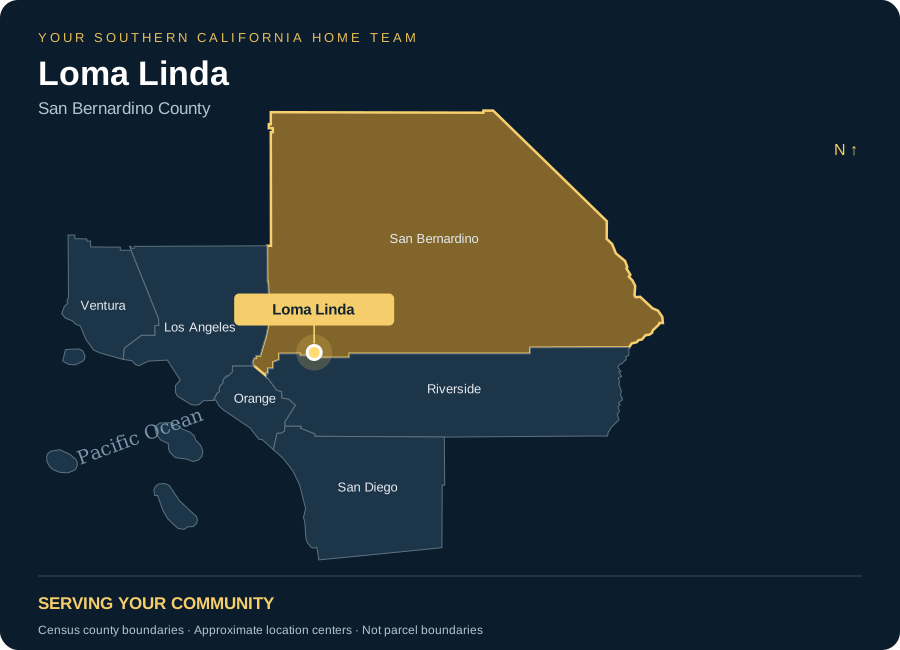
Loma Linda is an incorporated city in San Bernardino County. Confirm the city's building or planning provider for your property; some cities contract with other agencies.
San Bernardino County Land Use Services provides Building & Safety, planning, and property-research resources. A project's parcel location and scope determine the appropriate next steps.
San Bernardino County Building & Safety ↗Location reference: US Census TIGERweb, current places layer. About this directory.
Coordinate related work in Loma Linda
All home improvement services in Loma Linda · Roof Replacement & Roofing throughout San Bernardino County · Roof Replacement & Roofing overview
Nearby communities
Roof replacement planning in Loma Linda
Roof replacement in Loma Linda usually becomes necessary for one reason: the roof system has aged past the point where small fixes can reliably keep water out. In this part of the Inland Empire, roofs take constant sun, intense UV exposure, long dry stretches, seasonal rain, and periodic Santa Ana wind events. That combination wears out roofing materials faster than many homeowners expect, especially on older shingle roofs and tile roofs with aging underlayment.
For homeowners trying to make a smart decision, the main issue is clarity. A roof can still look acceptable from the street while the waterproofing layer underneath is already breaking down. All Star Roof Replacement focuses on full roof replacements in Loma Linda because many local roof problems are system failures, not just surface defects.
If you want a broader local overview, the main Loma Linda roof replacement page and the roof replacement installer page explain how full replacement projects are evaluated.
In practical terms, full roof replacement projects in Loma Linda commonly fall between about $12,500 and $45,000+, depending on roof size, material, tear-off complexity, ventilation needs, and whether hidden deck repairs are found after removal. Tile-heavy neighborhoods, HOA requirements, and California cool-roof rules can also affect what gets installed and how much the project costs.
Roof problems in Loma Linda usually start with heat, underlayment age, and wind exposure
The short answer is that Loma Linda roofs fail from cumulative stress. Heat dries materials out, UV breaks them down, wind shifts exposed components, and rain finds the weak points. On many homes, especially older ones, the real failure starts below the visible surface.
In homes across Loma Linda, we often see roofs that have been exposed to years of summer temperatures above 95°F, with roof surfaces climbing much higher on darker materials. That kind of heat cycling causes expansion and contraction at flashing, fasteners, sealants, and transitions. Once those details begin to loosen, the roof becomes more vulnerable during winter rain and wind-driven weather.
Homeowners comparing local conditions can learn more from a roofing contractor near me resource, the roof lifespan page, and the page covering signs you need a new roof.
Inland Empire heat shortens the life of many roofing systems
Yes, heat alone can shorten roof life in Loma Linda. Asphalt shingles are especially vulnerable because prolonged sun exposure dries out the oils in the shingle and accelerates brittleness. Once shingles become brittle, they crack more easily, lose granules faster, and become harder to repair without causing more damage.
A common issue we find is that standard or older three-tab shingles age unevenly in Inland Empire conditions. South- and west-facing roof slopes often wear faster because they absorb more direct sun. That is one reason architectural shingles generally perform better than basic three-tab systems in Southern California.
Homeowners evaluating lifespan and heat performance often compare options on the roof lifespan page, the best roofing materials page, and the page on how to reduce heat with roofing.
Heat also affects more than shingles. Metal flashings expand and contract. Sealants dry out. Pipe penetrations become more vulnerable. Even when the field of the roof still appears mostly intact, repeated thermal movement can create leak points around vents, valleys, skylights, and wall intersections.
Tile roofs in Loma Linda often fail at the underlayment before the tile
On tile roofs, the tile itself is often not the first thing to fail. In many Loma Linda homes, the weak point is the underlayment beneath the tile. Concrete and clay tile can remain serviceable for decades, but the waterproofing layer below commonly ages out in roughly 20 to 30 years depending on exposure, material quality, and ventilation.
That is why many older tile roof leaks are not caused by a single broken tile. They happen because the felt or synthetic membrane underneath has dried out, become brittle, or torn at overlaps and penetrations. In homes across Loma Linda, we often see tile roofs that still look solid from the curb but are already near underlayment failure.
For that reason, homeowners often compare tile vs shingle roof options, review whether they need roof repair or replacement, and learn what happens during the roof replacement process.
On tile-heavy homes, replacement may involve lift-and-relay work if the tile can be reused and the structure, profile, and condition allow it. The key point is simple: tile can be long-lasting, but the roof system under it is still age-sensitive.
Wind, rain, and ventilation issues turn minor defects into full replacement needs
Santa Ana winds matter in Loma Linda. Wind can shift tiles, loosen ridge components, lift shingle tabs, and expose vulnerable edges where water can get under the system. A roof that seems fine in dry weather can start leaking once wind-driven rain reaches flashing details or underlayment laps.
A common issue we find is poor attic ventilation on older homes. When heat gets trapped in the attic, it raises the temperature of the roof assembly from below as well as above. That extra heat load can accelerate shingle aging, dry out underlayment, and increase overall roof stress. Ventilation also affects energy efficiency, which is why many homeowners review cool roof options, energy-efficient roofing systems, and what to do for a roof leak in Loma Linda.
The direct answer is this: minor defects become replacement problems when they are part of a larger aging system. If wind, heat, and poor airflow have already weakened the roof across multiple areas, patching one spot usually does not restore long-term waterproofing.
Signs your roof is failing on a Loma Linda home
The most reliable signs are not just leaks. In Loma Linda, roof failure often shows up as a pattern of age, heat wear, surface movement, and interior moisture clues. If the roof is older and multiple symptoms are showing up at once, replacement is usually worth serious evaluation.
Local warning signs often include curled shingles, granule loss, slipped or cracked tile, exposed underlayment, recurring leak areas, and ceiling stains after short rain events. Because hot-climate roofs can deteriorate gradually, the damage is not always obvious from the ground. For a more focused review, homeowners often start with signs you need a new roof and the page on roof inspection cost.
Visible exterior warning signs
If you can see missing granules, curling shingle edges, dark bald patches, broken tile, shifted tile lines, or exposed felt, the roof is already showing meaningful wear. Those are not cosmetic issues. They usually indicate that the roof surface has lost protective capability.
Debris buildup is another overlooked sign. Valleys clogged with leaves or sediment can slow drainage and push water sideways under tile or shingles. On older roofs, that can reveal underlying weaknesses very quickly during a rain event. Homeowners comparing symptoms can review more examples on the new roof signs page and the roof inspection page.
- Shingle curling, cracking, or widespread granule loss
- Cracked, displaced, or sliding roof tiles
- Rusting or lifted flashing at roof transitions
- Exposed underlayment along eaves or tile edges
- Valley debris that traps water and slows runoff
Interior signs homeowners notice too late
Interior staining is one of the most common late-stage signs. If you notice a ceiling stain after a relatively short rain, there is a good chance the roof has already been letting in moisture for some time. By the time water reaches finished drywall, the leak path may involve underlayment failure, flashing separation, or damaged sheathing.
Musty attic smells, damp insulation, or bubbling paint and drywall also matter. Those signs point to ongoing moisture intrusion, not just a one-time event. If the leak is active, homeowners should move quickly to contain water and review the guidance on what to do if the roof is leaking. If the roof is older, it also makes sense to compare repair vs replacement rather than assume another patch will solve it.
Why older roofs in established Loma Linda neighborhoods need closer evaluation
Many Loma Linda neighborhoods include homes that were built decades ago and may already be on their second major roofing cycle. That matters because older roofs often come with hidden issues that are not visible until tear-off begins. The roof deck may have isolated rot. Ventilation may be outdated. Flashing details may reflect older installation standards.
In homes across Loma Linda, we often see older tile roofs that appear serviceable from the street but have underlayment near the end of its life. We also find aging shingle roofs that have had multiple repairs, making it harder to get a reliable long-term fix. Homeowners in these situations usually benefit from reviewing expected roof lifespan in Loma Linda and what to expect during the replacement process.
When roof repair makes sense and when replacement is the smarter decision
The direct answer is simple. Repair makes sense when the roof is still in good overall condition and the problem is limited. Replacement makes more sense when the roof has widespread wear, recurring leaks, brittle materials, or age-related system failure.
Many homeowners wait too long because the first repair seems inexpensive. But repeated repairs on an aging roof often add up without restoring full waterproofing, improving ventilation, or giving the home a reliable service life going forward. If you are weighing options, the page on roof repair or replacement and the page on whether reroofing is worth it provide more detail.
Repair may still work if the roof is newer and the problem is isolated
If the roof is relatively new and the issue is limited to one area, repair can still be reasonable. Examples include a failed pipe boot, a localized flashing defect, or a few shingles lifted by wind. The key condition is that the surrounding roof must still be healthy enough to support the repair.
Repair success drops sharply when materials are old and brittle. On older shingle roofs, trying to lift surrounding shingles can cause cracking. On older tile systems, the visible issue may only be a symptom of underlayment failure below. That is why a proper evaluation matters more than assuming every leak is a simple patch job. Homeowners can compare these situations on the repair or replacement page.
Replacement is usually the better long-term choice when failures are systemic
Replacement is usually the better decision when the roof has multiple active leak points, widespread granule loss, brittle shingles, recurring repairs, or underlayment that has simply aged out. At that stage, the roof is no longer failing in one place. The whole system is declining.
Full replacement allows the contractor to inspect decking, replace damaged sheathing, install updated flashing, and correct ventilation issues. That is something patchwork repairs usually do not accomplish. It also gives the homeowner a complete, warrantable system again. For that reason, many people move from evaluation to a full installer comparison on the roof replacement installer page and review how coverage works on the roof warranty explained page.
Why reroofing over old materials is usually a poor fit in Loma Linda
In most Loma Linda situations, overlaying new shingles over old materials is not the best long-term value. It traps additional heat, adds weight, and prevents a full inspection of the roof deck. In a hot Inland Empire climate, that can shorten performance rather than improve it.
It also leaves hidden problems in place. If there is dry rot, delamination, or damaged sheathing below, an overlay does not solve it. California code limits roof layers, so tear-off is necessary in many cases anyway. Homeowners considering shortcuts should compare the pros and cons on is reroofing worth it and the full roof replacement process page.
Roof replacement cost in Loma Linda: what homeowners should realistically expect
Most homeowners in Loma Linda should expect roof replacement pricing to land in the low five figures and up, not in the bargain range. Architectural shingle roofs commonly run about $12,500 to $24,000 on a typical 2,000 square foot home. Tile replacement commonly runs about $20,000 to $40,000+, with larger or more complex homes going higher.
Those are realistic local ranges, not teaser prices. Loma Linda often trends mid-to-high within the area because many homes have tile systems, steeper rooflines, HOA appearance requirements, and code-related considerations such as cool-roof compliance. Homeowners looking for a deeper breakdown often review roof replacement cost, cost per square roof, and roof financing options.
Typical cost ranges by roof type
The quickest way to compare roof pricing is by roofing square, which equals 100 square feet. In Loma Linda, installed costs commonly fall into the following ranges depending on slope, access, tear-off complexity, and product selection.
Roof Type | Typical Installed Cost Per Square | General Loma Linda Range
--- | --- | ---
Architectural shingles | $625–$1,200 | Lower upfront cost, common on older ranch and tract homes
Concrete or clay tile | $1,000–$2,000 | Higher cost, common in Southern California style neighborhoods
Flat roofing systems | $700–$1,600 | Common on patio covers, additions, and low-slope sections
For material comparison, shingles are usually the most budget-friendly entry point. Tile costs more but can make sense for homes designed for it, especially where appearance, heat performance, and long-term ownership matter. Homeowners evaluating product fit often compare details on the roof replacement cost page, the cost per square page, and the best roofing materials page.
Costs that often change the final quote
The first quote is not always the final number because some conditions cannot be fully confirmed until tear-off. The most common cost variables in Loma Linda are deck repair, dry rot, ventilation upgrades, flashing replacement, solar coordination, and premium material changes.
- Deck repair: commonly about $200–$500 per sheet depending on material and extent of damage
- Dry rot repair: can add cost at fascia, eaves, and sheathing transitions
- Ventilation upgrades: often about $800–$1,500 when intake or exhaust improvements are needed
- Solar panel removal and reinstall: often about $200–$500 per panel depending on system setup
- Premium upgrades: higher-end underlayment, cool-roof products, and enhanced warranty systems increase price
A common issue we find is that older roofs needing replacement also need better ventilation and isolated deck repairs. Those are not optional upsells when they are necessary for code, performance, or warranty protection. Homeowners can see how these variables fit into project planning on the roof replacement process page, the financing page, and the roof warranty explained page.
How Loma Linda pricing compares with nearby cities
Loma Linda pricing usually sits in the middle to upper-middle range locally. It can run higher than simpler roof projects in Colton or Grand Terrace, but not always as high as more complicated homes in older parts of Redlands. The biggest reasons are tile prevalence, HOA constraints, and the likelihood of more detailed replacement scopes rather than basic tear-off and reroof jobs.
City | Relative Pricing Trend | Main Reason
--- | --- | ---
Loma Linda | Mid to moderately high | Tile roofs, HOA factors, code compliance, higher-finish neighborhoods
Redlands | Often higher | Older homes, more flashing complexity, more deck issues on some properties
Grand Terrace | Often slightly lower | Simpler rooflines on many homes
Colton | Often slightly lower | More straightforward tract-style replacements in some areas
Highland | Comparable to moderately high | Mixed housing stock, slope and exposure differences by neighborhood
The direct answer is that local pricing depends more on roof type and scope than city name alone. Still, Loma Linda homeowners should not assume they are shopping in the lowest-cost segment of the Inland Empire market. Local comparisons are often most useful when paired with the roofing contractor near me page and the page discussing the best roofing company factors.
Tile vs shingle roofs in Loma Linda homes
Both tile and shingles can work in Loma Linda, but they solve different problems. Tile usually fits long-term ownership, higher heat performance, and Southern California architectural style. Architectural shingles usually fit lower upfront cost, faster installation, and homes where structure or budget makes tile less practical.
The best choice depends on the house, the homeowner’s budget, the roof structure, and whether the property is in an HOA community that requires a certain appearance. Homeowners comparing systems often start with the tile vs shingle roof page and the best roofing materials page.
Why many Loma Linda homeowners stay with tile
Tile remains common in Loma Linda for good reason. Concrete and clay tile offer strong durability, excellent fire resistance, and a look that matches many local neighborhoods. They also create an air space beneath the tile profile, which can help reduce direct heat transfer into the attic compared with some lower-profile roofing systems.
Another practical reason is HOA consistency. Some communities want replacement roofs to match the existing profile, color family, or overall neighborhood appearance. On homes designed for tile, staying with tile can be the cleanest path for both performance and approval. Homeowners evaluating those benefits often look at the materials page and the cool roof page.
Why architectural shingles still make sense for many homes
Architectural shingles remain a strong option in Loma Linda because they cost less upfront, install faster, and work well on homes where tile weight or budget is a limiting factor. They also come in cool-roof-rated options that perform better in Inland Empire heat than older standard shingles.
For many homeowners, the direct answer is cost efficiency. A well-installed architectural shingle system can provide solid performance at a much lower entry price than tile. That matters when the priority is replacing a failing roof before leaks create larger interior damage. Product and budget comparisons are easier on the best materials page, the roof replacement cost page, and the cool roof page.
The decision usually comes down to structure, budget, and time horizon
If the home is built for tile, the owner plans to stay long term, and the budget supports it, tile often makes sense in Loma Linda. If the homeowner wants a lower upfront investment, faster installation, and reliable modern performance, architectural shingles are often the better fit.
The key point is that tile economics are heavily tied to underlayment life. Even when tile lasts for decades, the waterproofing underneath may still require replacement much sooner. Shingles usually have a shorter overall service life in Inland Empire conditions, but the full system is simpler and less expensive to replace. Homeowners weighing long-term value often compare expected roof lifespan and review whether financing a roof replacement changes the decision.
How roofing affects attic heat, cooling costs, and energy efficiency in Loma Linda
In Loma Linda, roofing affects more than leak protection. It also affects how much heat enters the attic, how hard the air conditioner has to work, and how quickly roofing materials age under Inland Empire sun exposure.
On hot summer days, roof surfaces can become dramatically hotter than the outside air, especially on older dark-colored systems. When that heat transfers into the attic, indoor comfort drops and cooling demand rises. That is why energy-efficient roofing, proper ventilation, and reflective material choices matter more here than they do in milder coastal markets.
The key point for homeowners is simple: a roof is a system. Surface material, underlayment, ventilation, flashing, and insulation-adjacent conditions all work together. If one part is weak, the whole roof performs worse. Homeowners comparing options can also review ways to reduce heat with roofing and understand whether a cool roof makes sense for their home.
What a cool roof means in Loma Linda
A cool roof is a roofing system designed to reflect more sunlight and absorb less heat than standard roofing products. In Loma Linda, that usually means using Title 24-compliant materials with higher solar reflectance and thermal emittance values, depending on the roof type and project scope.
For homeowners, that does not automatically mean a bright white roof. Many modern shingle and tile products are manufactured in colors and profiles that still meet cool-roof standards. The practical benefit is lower roof surface temperature, which can help reduce attic heat buildup and improve overall energy performance. Homeowners exploring local options can compare material types on the best roofing materials page.
Cool-roof requirements can also affect the estimate. If a home needs a full replacement, the contractor should account for code-compliant product selection from the start rather than treating it as an afterthought.
Why ventilation upgrades matter during replacement
In Loma Linda homes, ventilation upgrades are often just as important as the visible roofing material. If the attic cannot release trapped heat, roof temperatures stay elevated for longer periods, shingles can age faster, and underlayment can break down sooner.
Older homes sometimes have insufficient intake at the eaves, poor exhaust at the ridge, or an imbalanced vent layout created by prior patchwork roofing. A full replacement is the best time to correct those issues because the roof system is already being rebuilt. This is one reason roof replacement should be treated as a whole-system project rather than just a material swap.
Proper ventilation may also matter for warranty compliance. Some manufacturers require specific ventilation standards for full coverage, so it is worth reviewing roof warranty details before deciding on a system.
How long a roof lasts in Loma Linda depends on material, ventilation, and sun exposure
Answer first: in Loma Linda, architectural shingles often last about 15 to 25 years, while tile can last far longer structurally, but the underlayment beneath tile often needs replacement in roughly 20 to 30 years.
Heat, ultraviolet exposure, ventilation quality, roof slope, color choice, and installation quality all affect lifespan. A south- or west-facing roof section that gets full afternoon sun usually ages faster than more shaded areas. Homes with poor airflow in the attic also tend to see shorter roof life.
For a broader local breakdown, homeowners can compare expected service life on the roof lifespan page or review local warning signs on the signs you need a new roof page.
Expected lifespan of asphalt shingles in Inland Empire conditions
Asphalt shingles generally have a shorter service life in Inland Empire climates than they do in cooler regions. Prolonged heat and strong UV exposure dry out the asphalt, accelerate granule loss, and make older shingles more brittle during wind events or routine maintenance.
Architectural shingles usually outperform older three-tab shingles in Loma Linda because they are thicker, more durable, and better suited to sustained heat. Even so, every roof is different. A well-installed architectural roof with proper ventilation may perform well for years longer than a comparable roof with poor airflow and repeated patch repairs.
Material choice matters, but so does installation. Homeowners comparing systems should look beyond brand names and review the local performance factors tied to roofing material selection.
Expected lifespan of tile roofs and their underlayment
Tile roofs in Loma Linda often age in two different ways. The tile itself can remain usable for decades, but the waterproofing beneath it usually does not last as long. That is why many tile replacement projects are really underlayment-driven projects.
When tile underlayment becomes brittle, tears, or loses water-shedding performance, homeowners may first notice leaks around valleys, penetrations, transitions, or lower-slope sections. From the street, the roof may still look acceptable. That is one reason older tile systems need closer evaluation than appearance alone would suggest.
For many established neighborhoods in Loma Linda, lift-and-relay or full tile-system replacement becomes necessary when the underlayment reaches the end of its service life. Homeowners comparing the long-term economics can review tile vs shingle roof options and whether the home needs roof repair or replacement.
What the roof replacement process looks like on a Loma Linda home
Answer first: a full roof replacement usually includes inspection, estimate, material selection, permit handling, tear-off, deck inspection, underlayment and flashing installation, finish roofing installation, cleanup, and final inspection.
In Loma Linda, full replacement work generally requires a permit, and project timing may be shaped by summer heat, HOA review, and material availability. Roof temperatures can become unsafe later in the day during Inland Empire summers, so crews often start earlier and work around heat exposure conditions.
Homeowners who want a fuller walkthrough can review the roof replacement process and a more schedule-focused breakdown on the roof replacement timeline page.
Inspection, estimate, and material planning
The first step is a roof evaluation. That should include roof size, slope, layers, visible wear, ventilation setup, flashing conditions, and any special issues like solar, detached structures, or HOA restrictions. A good estimate should separate base replacement scope from possible add-ons such as deck repair, vent upgrades, or solar removal and reinstall.
In Loma Linda, this planning stage matters because many homes have tile roofs, and those projects can involve underlayment replacement, tile reset logistics, broken tile matching, and structural considerations. HOA communities may also require color or profile approval before materials are ordered.
Homeowners comparing estimate quality can review what is usually included in a roof inspection, what a roof replacement installer should evaluate, and how those factors affect roof replacement cost.
Tear-off, deck inspection, and waterproofing work
Tear-off is where the condition of the real roof system becomes clear. Once old materials are removed, the contractor can inspect the decking for dry rot, delamination, staining, or structural damage that was hidden by the finished roof surface.
In Loma Linda homes with older roofs, it is not unusual to find isolated sheathing damage near penetrations, eaves, valleys, or past leak areas. This is one reason reroof overlays are usually a poor long-term choice. Overlaying old material hides underlying problems and prevents full inspection. Homeowners weighing that issue can review whether reroofing is worth it.
After deck repairs, the system is rebuilt with updated waterproofing layers, flashings, and ventilation details. On tile roofs, underlayment quality is especially important because that layer does most of the waterproofing work.
Installation timeline, cleanup, and final inspection
For many Loma Linda homes, a standard asphalt shingle replacement takes about 2 to 3 days of active work once construction starts. Tile projects often take 5 to 10 days because tear-off, underlayment work, layout, loading, and detail finishing are more labor-intensive. Calendar time may be longer if permits, HOA review, deck repairs, or weather interruptions add delay.
Homeowners should expect noise, periodic vibration, material deliveries, and active crew access around the property. Driveway or curbside space may be needed for delivery trucks and a dumpster. A well-run project should also include daily cleanup, final debris removal, and a magnetic sweep for nails.
Final closeout typically includes inspection approval and warranty documentation. For timing expectations by material type, homeowners can review the full roof replacement timeline and related warranty information.
Choosing a roofing contractor in Loma Linda
Answer first: in California, homeowners should verify that the contractor holds the proper roofing license classification, carries insurance, handles permits correctly, and has a clear process for full-system replacement rather than just surface patching.
Verify the current CSLB record for license #1009760 and confirm the appropriately licensed contractor responsible for your roofing scope in the written agreement. Homeowners should also confirm liability insurance, active workers’ compensation where applicable, and who will actually be installing the roof.
Price matters, but on a replacement project, workmanship, ventilation design, flashing quality, and code compliance often matter more than the lowest bid. Homeowners comparing local options can review guidance on choosing the best roofing company, finding a roofing contractor near me, or working with a dedicated roof replacement installer.
Credentials homeowners should verify before signing
Homeowners should verify four things before signing a roofing contract:
- License status: confirm the contractor is properly licensed through the California Contractors State License Board.
- Insurance: verify liability coverage and workers’ compensation status.
- Permit responsibility: make sure the contractor, not the homeowner, is handling permit pull and inspection coordination unless clearly disclosed otherwise.
- Scope clarity: confirm whether the estimate includes tear-off, underlayment, flashing, ventilation, cleanup, and disposal.
In Loma Linda, it is also smart to ask whether the contractor is familiar with Title 24 material requirements and local HOA approval issues. Those details can affect material selection and scheduling more than homeowners expect.
It is also worth asking whether subcontractors are used and, if so, how supervision and workmanship accountability are handled. Those details often matter more than marketing claims.
What separates a replacement-focused contractor from a repair-first roofer
A repair-first roofer often approaches the job by solving the immediate symptom. A replacement-focused contractor looks at the condition of the entire system, including decking, underlayment, flashing, and ventilation. That difference matters on older Loma Linda roofs, especially tile systems where the surface still looks decent but the waterproofing below is near failure.
On an aging roof with repeated leaks, brittle material, or underlayment breakdown, patching may postpone the real issue without restoring full performance. Replacement-focused contractors are usually better equipped to discuss long-term system life, code updates, and warranty implications. Homeowners considering those tradeoffs can compare repair or replacement before deciding.
Local contractor landscape and differentiation opportunities
The Loma Linda and greater Inland Empire market includes regional roofing companies, repair-heavy local roofers, and some general contractors who offer roofing among many services. A common weakness in that landscape is limited homeowner education around full-system replacement. Many estimates focus on surface material and price while giving less attention to ventilation, underlayment, flashing details, or realistic lifespan in Inland Empire heat.
Another weakness is inconsistent warranty explanation. Homeowners are often told they are getting a “lifetime roof” without a clear discussion of prorated manufacturer coverage, excluded conditions, ventilation requirements, or workmanship duration.
A replacement-focused company can stand out by providing a clear scope, realistic cost explanation, no-pressure evaluation, code-aware material guidance, and a stronger explanation of how the full system performs over time.
Common mistakes Loma Linda homeowners make before replacing a roof
In Loma Linda homes, the biggest mistakes usually happen before the project even starts. They often involve delay, focusing only on visible material, or choosing a contractor based mostly on the lowest number.
Because roofing is a system, small planning mistakes can turn into larger costs later. Homeowners often benefit from reviewing repair vs replacement, financing options on the roof financing page, and the practical steps in the replacement process.
Delaying replacement after repeated repairs
If a roof has recurring leaks, widespread aging, or a failing tile underlayment system, repeated repairs usually become less cost-effective over time. Each patch may solve one entry point, but it does not restore the overall roof system or reset the age of surrounding materials.
In Loma Linda, delay can be especially expensive because leaks often stay hidden until a short but heavy rain event exposes them. By that point, damage may extend beyond roofing into sheathing, insulation, drywall, and paint. Homeowners seeing recurring issues should compare those warning signs with the local indicators on the signs you need a new roof page.
Ignoring ventilation, underlayment, or code-related details
One common homeowner mistake is focusing only on the top layer. The visible shingle or tile matters, but long-term performance often depends more on the underlayment, flashing, fastener pattern, edge details, and attic ventilation.
This is especially true in Loma Linda, where sustained heat exposure accelerates aging. Poor ventilation can shorten roof life, trap attic heat, and create warranty issues. Title 24 can also affect which products are acceptable for replacement. Homeowners should understand how cool-roof requirements, energy-efficient roofing, and warranty terms fit together.
Failing to plan for HOA rules, solar, and access logistics
In some Loma Linda neighborhoods, HOA approval can affect scheduling, color selection, and profile matching. Homeowners who wait until after signing a contract to review HOA requirements may face ordering delays or resubmittals.
Solar is another issue that often gets underestimated. Removal and reinstall adds cost, affects project sequencing, and can involve coordination between roofing and solar providers. Access logistics matter too. Dumpster placement, driveway use, material loading, and pet safety should all be discussed before the start date.
These details are easier to manage when they are built into the plan early. Homeowners can review how they affect schedule on the timeline page and how they affect pricing on the cost page.
Related roof replacement topics homeowners in Loma Linda often compare
Before requesting an estimate, homeowners in Loma Linda usually compare the same practical topics: total replacement cost, cost per square, inspection cost, financing, leak response, materials, and warranty coverage. Those questions are part of the normal decision process, especially when a roof is older or leak issues have started to become more frequent.
Useful related resources include:
- Roof replacement cost
- Cost per square roof
- Roof inspection cost
- Finance roof replacement
- Roof leak: what to do
- Roof warranty explained
These comparisons help homeowners evaluate the full decision, not just the initial bid amount.
FAQs about roof replacement in Loma Linda, CA
How much does a new roof cost in Loma Linda, CA?
For many Loma Linda homes, full roof replacement falls somewhere between about $12,500 and $45,000 or more depending on size, roof design, material, tear-off complexity, deck condition, and upgrades. Architectural shingle roofs are usually at the lower end of that range, while tile systems often move into the $20,000 to $40,000-plus range. Costs can rise further if the home needs deck repairs, ventilation improvements, solar removal and reinstall, or premium materials.
Every roof is different, so the most accurate number comes from an on-site evaluation.
Do I need roof repair or replacement in Loma Linda, CA?
If the roof is relatively new and the damage is limited to one area, a repair may still make sense. If the roof has recurring leaks, widespread wear, brittle shingles, multiple failed flashings, or aging tile underlayment, replacement is usually the better long-term decision. In Loma Linda, many older roofs look acceptable from the ground but are already failing at the waterproofing level.
How long does a roof last in Loma Linda, CA?
Architectural shingles often last about 15 to 25 years in Loma Linda, depending on sun exposure, ventilation, and installation quality. Tile can last much longer as a surface material, but the underlayment beneath many tile roofs often needs replacement after roughly 20 to 30 years. Heat and UV exposure can shorten lifespan compared with cooler regions.
What roofing material is best in Loma Linda, CA?
For many Loma Linda homes, tile performs very well because it handles heat effectively, offers long service life, and fits common Southern California architecture. Cool-rated architectural shingles are also a strong choice for homeowners who want a lower upfront cost, faster installation, or a lighter-weight system. The best material depends on structure, budget, HOA requirements, and how long the homeowner plans to stay in the home.
What should I do if my roof is leaking in Loma Linda, CA?
First, protect the interior by placing containers under active drips and moving valuables away from the area. If water is bulging the ceiling, that may need immediate attention to prevent collapse, but homeowners should be cautious. Do not go on the roof during rain or wind. A professional temporary tarp or emergency mitigation is usually the safest first step, followed by an inspection to determine whether the issue is repairable or if replacement is now necessary.
Can I finance a roof replacement in Loma Linda, CA?
Yes. Many California homeowners use contractor-arranged financing, home equity lines of credit, cash-out refinance options, or other approved lending programs depending on credit profile and project size. Monthly payments vary based on amount financed, interest rate, and term length. Financing can be useful when replacement is necessary now but the homeowner wants to avoid a large one-time cash expense.
How long does roof replacement take in Loma Linda, CA?
Many asphalt shingle roof replacements take about 2 to 3 days of active installation. Tile projects commonly take 5 to 10 days. Total calendar time may be longer if HOA approval, permit processing, solar coordination, deck repairs, or material lead times affect scheduling. Extreme summer heat can also influence start times and work pacing.
Is reroofing worth it in Loma Linda, CA?
In most cases, no. Overlaying new shingles over old material usually offers weaker long-term value in Loma Linda’s heat. It can trap heat, hide deck damage, prevent a full inspection, and leave old problems in place under the new roof. A complete tear-off is usually the better approach when homeowners want accurate inspection, better system performance, and stronger long-term reliability.
Schedule a roof replacement estimate for your Loma Linda home
If your roof is showing signs of age, repeated leaking, brittle shingles, slipped tile, or suspected underlayment failure, the most useful next step is a clear roof evaluation based on the condition of the full system. For Loma Linda homeowners, that means looking at material age, ventilation, flashing, deck condition, code requirements, and whether repair still makes sense. All Star Roof Replacement, the consumer brand of Team Hero Construction, Inc.
(CSLB #1009760), serves Loma Linda and the surrounding Inland Empire with a replacement-focused approach. Homeowners who want practical guidance can review the main Loma Linda roofing page, compare options on the best roofing company page, or connect with a roofing contractor near me. To ask questions or schedule an estimate, homeowners can call (310) 729-3013 or use our contact form.
What the CTA should emphasize
A helpful roof replacement call to action should emphasize evaluation, clarity, and next steps rather than pressure. For Loma Linda homeowners, the message should focus on understanding whether the roof needs replacement now, what material options make sense for the home, and what costs or code factors may affect the project. It should also reinforce trust factors such as proper licensing, insurance, permit handling, and replacement specialization.
Homeowners who want to continue exploring can start with the Loma Linda pillar page, compare local positioning on the best roofing company page, or learn more about working with a roof replacement installer.