
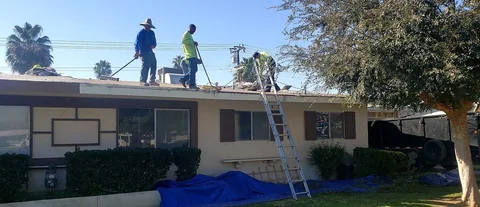
An active drip is stressful, particularly when another storm is approaching. The useful first question is not how quickly someone can climb onto the roof. It is what can be done safely now, what requires dry conditions, and what needs a separate specialist. Our roof repair service covers that decision before a cosmetic patch hides the evidence.
What should I do when water is coming through the ceiling?
Keep people out of an area with a sagging ceiling, falling material, or water near electrical equipment. If there is an immediate danger to occupants, contact emergency services. Do not climb onto a wet roof to investigate. OSHA warns that tarping involves fall and electrical hazards and should not be attempted during wind or rain.
From a safe location, note which room is affected and when the leak began. A photo of the ceiling, a wide exterior view, and a short description of the weather can help with the initial conversation. Do not stand below damaged ceiling material to get a better picture. Protect movable belongings only when you can do so without entering the hazardous area.
Tell us if the leak is near a skylight, chimney, roof addition, solar array, or a spot repaired before. Those details help define the investigation; they do not establish the cause by themselves. A ceiling stain is a place where water became visible, not necessarily a map of the roof opening.
When is temporary roof tarping appropriate?
Temporary protection may be considered when an opening cannot receive its permanent repair yet. The decision depends on access, roof stability, the damaged surface, surrounding components, and the weather. A useful tarping proposal identifies the area being protected and how the protection will be checked, removed, and replaced by the final work.
Ask whether temporary work is a separate authorization. The paperwork should explain what is included, what remains exposed, and who to contact if the condition changes. A temporary measure should not be described as a finished roof repair, and a homeowner should not be left guessing when the next assessment will occur.
Not every leak calls for a tarp. A contained flashing defect may need a different temporary response; a roof with uncertain structural support may need further assessment before anyone works above it. Solar equipment adds an electrical coordination question. Describe the system during scheduling, and do not disconnect panels or move wiring yourself.
How does an urgent repair become a permanent repair?
Establish the boundary of the problem
The first visit should separate observations from assumptions. Ask for photographs showing the affected covering and nearby transitions, along with an explanation of what could not be inspected. Roof access may be limited, and concealed wood cannot be evaluated simply by looking at a dry ceiling from below.
Agree on the work that is actually needed
A permanent proposal should name the repair area, materials, and connection to the surrounding roof. It should also explain how additional damaged wood will be documented and approved if discovered. “Seal roof” is too vague to tell you which defect the work addresses or what condition remains outside the scope.
Coordinate any related trades
Roofing work and electrical, plumbing, structural, or chimney work may have different responsibilities. An urgent leak does not remove the need to identify those boundaries. The scope should say who handles any required permit review and who is responsible for equipment that must be moved before the roof can be repaired.
Record completion and follow-up
Keep the approved scope, change orders, photographs, and warranty together. Ask what observation or follow-up is appropriate after the work, especially if interior materials were wet. Roof repair and interior drying are separate tasks; closing the exterior opening does not document the condition of every concealed interior assembly.
Before approving the permanent work, use the written-estimate comparison guide to distinguish the temporary cover, investigation and final repair. A single total can hide those boundaries. Ask which amount authorizes work now, which depends on findings and how the roof will remain protected while the next decision is pending.
Which roof problems can look like an emergency leak?
A missing shingle, displaced tile, damaged flashing, or opening around a roof penetration can each lead to a different repair. The material alone does not determine the scope. A small visible defect can be surrounded by sound roofing, or it can be one symptom of a larger problem that needs to be exposed before a reliable connection can be made.
If wind moved roofing, start with our storm and wind damage repair guidance. A recurring drip at a wall, chimney, or roof transition belongs in a flashing investigation. When water appears beneath panels, the solar roof leak repair page explains why access and equipment responsibilities must be considered together.
An estimate should distinguish damage that needs immediate attention from unrelated aging. You can ask for separate priorities: temporary protection, the repair needed to restore the affected area, and work that can be planned later. That makes it easier to understand the proposal without treating every observation as an emergency purchase.
Repair or replace after an urgent roof problem?
An emergency call does not automatically mean a replacement roof. Ask whether the proposed repair can connect to usable surrounding material and whether its boundaries can be explained. If the answer is yes, a targeted repair may be the appropriate scope. The reason should be visible in the findings rather than based only on the roof's age.
Replacement deserves an honest discussion when the affected area cannot be isolated or when multiple conditions make a limited repair difficult to stand behind. Request the specific evidence and compare it with the repair option. Our repair-or-replace decision page helps organize that conversation. You should know what each option addresses and what uncertainty remains.
Once the immediate condition is controlled, the guide to roof life and maintenance provides background for evaluating the materials that may remain. Its general ranges do not determine urgency or make an older roof automatically unrepairable. The recommendation still needs evidence about this defect and the surrounding connection.
How long will an emergency roof repair take?
Availability, safe access, weather, materials, and the findings determine the schedule. The call should establish the next available assessment; the site visit should establish the work sequence. Temporary protection, permanent exterior work, and interior recovery can occur on different dates. We do not promise a response time before confirming the actual circumstances.
For a straightforward repair, ask whether materials are available and whether the proposed visit includes assessment only or authorized work as well. For a larger opening, ask what approvals could affect the start date. A clear next step is more useful than an unsupported same-day completion promise.
What should the estimate and warranty include?
The estimate should identify access arrangements, debris handling, materials, repair boundaries, exclusions, and the approval process for hidden damage. If your insurer is involved, keep the original observations and invoices. A contractor's repair assessment is different from the insurer's decision about coverage; neither an emergency call nor a tarp guarantees payment.
Team All Star Construction lists California license #1009760 and 40+ years of construction experience. Written repair warranty coverage is project-specific, with up to two years stated on our repair service page; confirm the actual term and covered work in your agreement. Temporary protection and permanent repairs should have clearly separated terms.
For an actual insurance inquiry, follow the roof-damage documentation guide to keep observations, temporary-work records and permanent proposals distinguishable. If a prior replacement warranty also exists, review its material and workmanship terms with the issuer. Neither a pending claim nor an earlier warranty should be treated as authorization to add work or a promise that this repair is covered.
Emergency roof repair questions
Can you guarantee someone will arrive today?
No arrival promise should be made without checking the location, current workload, weather, and safe access. Call (310) 729-3013 with your city and the condition so availability and the next practical step can be confirmed.
Does a tarp stop every leak?
A temporary cover protects only the area and conditions addressed by its installation. Ask what remains outside that scope and when permanent assessment will follow. Report a changing leak instead of assuming the temporary work covers the entire roof.
Should I remove damaged shingles before the roofer arrives?
Leave the roof undisturbed. Photographs taken safely can document what you see without creating another opening or exposing you to a fall. Explain any earlier temporary work during scheduling so the person evaluating the roof has the full history.
Can a leak under solar panels be repaired urgently?
The response depends on the defect and whether safe access requires panel work. Roof and solar responsibilities must be coordinated before equipment is moved. Mention the solar system when you call and have installation or warranty records available if you have them.
Can I request the repair option before considering replacement?
Yes. Ask for the defect, repair boundary, and limitations to be explained first. If replacement is recommended, request the observations supporting it and why a smaller repair would not reasonably address the problem.
For roof repair in Los Angeles, Orange, Riverside, San Bernardino, San Diego, or Ventura County, call (310) 729-3013 or use the red GET MY ROOF REPAIRED action. Share the current condition so the next step can be matched to the problem.