
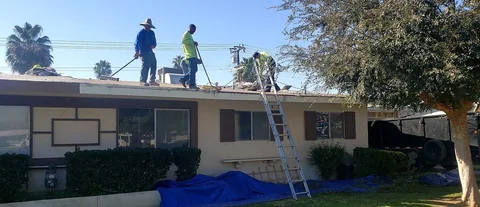
There is no honest price for every leak based only on its ceiling stain. A small visible mark can involve a straightforward flashing detail or a larger area of concealed damage. Start with our roof repair services and ask what the proposed amount includes before deciding whether it fits your budget.
Why do two roof repair estimates differ?
One contractor may be pricing a visible patch while another includes removing material, repairing the underlying detail and restoring the surrounding roof. Those are different purchases. Ask each bidder to identify the same roof area and explain the same reported symptom. A marked photograph can make that conversation clearer than a long list of unfamiliar product names.
GAF identifies the damage scope, location and selected roofing material as factors affecting repair cost. That is a starting point for questions, not a price calculator for your property. The estimate still needs to connect the material and labor to what was actually found.
Compare exclusions as carefully as included work. Interior paint, damaged insulation, solar equipment, permits, debris handling and finish matching may be outside a quoted roofing task. An excluded item is not automatically a problem; an important item that nobody has agreed to handle is.
If an insurer is also reviewing the damage, organize the supporting records with our roof insurance documentation guide. The contractor’s proposed work and the insurer’s coverage decision answer different questions. Ask what the estimate includes even when a claim is pending; do not assume that a quoted total establishes what a policy will pay.
Which details should change the repair scope?
The source of the leak
Ask whether the source has been identified or remains under investigation. A proposal for flashing repair should explain the affected junction and how the repair connects with the existing roof. A general instruction to apply sealant does not explain the entire job.
If the initial visit cannot answer the question, separate the investigation from the proposed repair. Agree on what further access involves and what information you will receive before authorizing a larger amount. A clearly priced first step can be more useful than a confident total built on an assumption.
Roof material and available matching pieces
Shingles, tile, low-slope membranes and metal details require different decisions. Availability may affect whether a small area can be restored with a matching product. Ask whether the proposal promises a functional match, a close appearance or an exact match; those are different commitments.
For tile underlayment work, clarify which tiles are lifted, which can be reused and how damaged pieces will be handled. Do not compare that work directly with replacing a few broken surface tiles unless the proposals genuinely address the same problem.
Access and protection
Tell the estimator about narrow side yards, occupied patios, overhead lines, steep areas, solar panels and limits on parking or material storage. The proposal should state the access assumptions that matter. If those assumptions change later, the written scope should change with them.
An access charge should describe an actual need rather than become an unexplained allowance. Ask where equipment and materials will be placed, what must be moved and who is responsible. This is particularly useful when the repair is small but the route to reach it is difficult.
Concealed wood or other damage
Ask how damaged roof decking will be evaluated and priced if it is uncovered. The contract can distinguish the known work from additional work that requires authorization. Photographs and a description of the affected area help you understand why a change is proposed.
Avoid treating an allowance as a confirmed quantity. If a proposal anticipates possible hidden damage, ask how the final amount is calculated, what happens if less work is needed and when you will be asked to approve a change. The goal is a predictable decision process, even when the concealed condition cannot be predicted.
How should I compare written bids?
The Contractors State License Board recommends obtaining multiple written bids based on the same plans, specifications and scope. Organize the comparison around the work rather than trying to make the lowest number win. A bid missing a necessary step may not represent the same repair.
Use a short comparison sheet with these headings:
| Question | What a useful answer names | |---|---| | Where is the repair? | Roof plane, penetration, wall junction or marked area | | What will be removed? | Surface materials, layers and access limits | | What will be installed? | Product or material and connection details | | What remains uncertain? | Concealed conditions and investigation limits | | Who handles approvals? | Permit responsibility and necessary coordination | | What finishes the job? | Cleanup, records, completion review and warranty |
Ask for clarification in writing when two descriptions appear to disagree. You do not need to become a roofer to compare them. You need to know whether both contractors are answering the same question and accepting responsibility for the same result.
Our roofing-estimate comparison guide expands the component-by-component review. Use it to mark missing items and request clarification, not to turn a larger list into a requirement for every repair. A small, well-defined scope can be the appropriate purchase when the findings support it.
What happens if the scope changes after work starts?
California CSLB guidance explains that contract changes should be documented in a written change order before the changed work begins. That document should explain the added or removed work and the price and schedule effects. A surprise discovered during removal should lead to a clear decision, not an open-ended bill.
Ask who is allowed to authorize changes if you will be away. Establish a contact method and discuss how temporary weather protection will be managed while a decision is pending. These arrangements make an unexpected condition easier to address without confusing consent with an unanswered message.
Keep the original proposal, approvals, photographs and change orders together. At completion, you should be able to follow the record from the initial problem to the work actually performed. That record also helps if you sell the property or need unrelated repairs later.
When is repair better value than replacement?
Repair deserves consideration when the problem can be defined and the surrounding roof can support a suitable connection. Ask which roof areas can remain, what the repair accomplishes and what maintenance will still be needed. A localized defect should be evaluated on its evidence.
Replacement may become the more practical discussion when there are widespread failures, incompatible prior work or no dependable way to integrate another repair. Compare the actual alternatives through our repair or replace guidance. A high repair quote alone does not establish that every part of the roof needs replacement.
If both choices are offered, request separate scopes. Identify what each solves, what each leaves untouched and whether either depends on future work. This gives you a clearer basis for choosing than an unsupported promise about how many years a patch will buy.
For context on the surrounding materials, review how material, condition and maintenance affect roof life. A broad life-expectancy range is not a financial return calculation for a particular repair. Compare the work’s actual limits and the condition of what remains instead of dividing the price by an unsupported number of extra years.
Scheduling, financing and warranty questions
The schedule should account for access, material availability, required approvals, weather and any agreed investigation. Ask for the sequence and the assumptions behind it. A firm-looking date without those assumptions may be less useful than a realistic window with clear next steps.
If you need payment options, review roof repair financing separately from the repair scope. Financing is subject to approval and its actual terms; a monthly figure does not replace the total project price or the credit agreement. Do not add work solely to fit a promotion.
Team All Star Construction lists California license #1009760 and more than 40 years of construction experience. Its published repair offering includes a written warranty of up to two years; the agreement must identify the term, covered work and exclusions for your project. Service areas include Los Angeles, Orange, Riverside, San Bernardino, San Diego and Ventura counties. Call (310) 729-3013 to discuss the repair you need.
If part of the discussion involves a roof with an existing replacement warranty, the replacement-warranty guide explains the separate roles of material and workmanship coverage. Identify who issued the actual document and which work it covers. An estimated repair price should not include an assumed reimbursement or whole-roof warranty that has not been confirmed.
Roof repair estimate questions
Can you give an exact price from a photograph?
A photograph can help describe the problem and plan the visit. It may not show the leak source, concealed layers or access conditions. Ask whether any initial number is preliminary and what information is needed for a written repair scope.
Should every repair include a full reroof estimate?
No. Start with the reported repair need. A broader estimate is useful when findings support that comparison, not merely because the roof has a stain or one damaged component. Ask for the reasons behind any recommendation to expand the work.
Does the lowest bid save money?
Only a comparison of equivalent work can answer that. Check materials, investigation, access, cleanup, exclusions and warranty terms. A lower price may reflect a smaller scope rather than a lower price for the same repair.
What should I send before the estimate?
Send your city, roof material if known, safe photographs, timing of the leak and prior repair records. Mention solar panels, occupied areas and access restrictions. Do not climb onto the roof to obtain details you do not already have.
Is the warranty included in the total?
The proposal should state the offered coverage and any conditions. Ask whether it applies to the specific repair, installed products or a larger system, and get the answer in writing. Do not infer whole-roof coverage from the word warranty.