
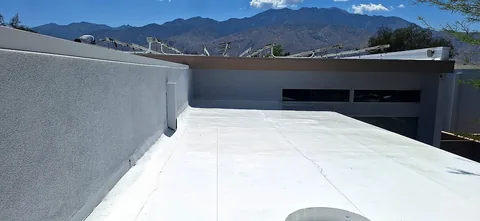
“Coat the roof” is not enough information to compare proposals. A useful scope identifies what is being preserved, what must be repaired first, and the system being installed. Begin with our flat and low-slope roof repair page if you are unsure which roof material you have. The coating decision comes after understanding the roof, not before.
Can a coating repair a leaking flat roof?
The leak needs its own investigation. Ask where the water is entering, which detail has failed, and what the proposal does to correct it. A wide area of new coating should not conceal an unresolved question about a drain, flashing, seam, or damaged substrate.
GAF's liquid-applied roofing guidance separates substrate preparation and repair from coating application. That distinction matters when comparing a simple topcoat with a restoration scope. The proposal should show the preparatory work clearly, including how damaged areas will be handled and how the new materials connect to the existing roof.
If the only description is “apply two coats,” ask for more detail. The number of passes does not tell you which system is proposed, its required coverage, or the condition of the surface beneath it. You should be able to understand the problem being solved without relying on the color of the finished roof as proof.
Silicone or acrylic: what should the estimate explain?
Silicone and acrylic are product families, not complete specifications. The selection should name the exact product, the existing roof surface, and the applicable installation requirements. A material suitable for one substrate or condition should not be assumed suitable for another simply because both roofs are described as flat.
Some silicone products are marketed for resistance to ponding water. Even so, GAF's High Solids Silicone data sheet calls for positive drainage, a clean and dry substrate, repairs, and adhesion verification. Product benefits and installation requirements have to be read together. A resistance claim does not eliminate the need to assess the roof.
Ask why the proposed system fits your roof and what would make it unsuitable. If there is an existing coating, identify it as far as possible. If its identity cannot be established, ask how compatibility will be evaluated before the main application. Uncertainty should result in an explicit next step, not a guessed product choice.
When comparing reflective surfaces, consider how reflective and conventional roofs handle heat. Before budgeting for a rebate or credit, review what to verify before counting a roofing incentive.
What belongs in the pre-coating assessment?
The existing assembly and repair history
Provide old estimates, roof plans, warranty papers, and product records if you have them. Note previous coatings and repairs, even when you do not know their brands. A record that a roof was coated several years ago is useful context, but it does not establish the condition of every area today.
The active complaints
List leaks, recurring wet areas, visible damage, and concerns around rooftop equipment. Identify which are current and which are historical. An old ceiling stain does not prove that a roof is still leaking, while a recently painted ceiling does not document that a roof defect was repaired. Keep the chronology with the proposal.
The planned preparation
The written scope should identify cleaning, repairs, adhesion checks, and any primer or detail treatment required by the selected system. GAF's manual provides different preparation instructions for different substrates; there is no single preparation method that can be assumed for every existing roof. Ask which instructions govern your project.
What remains unknown
Surface observations cannot establish every concealed condition. Ask whether the assessment calls for further investigation and how its findings could change the scope. If additional work is required, the agreement should state how it is documented and approved. The owner should not discover a new repair allowance only after application begins.
Why does drainage still matter after coating?
A coating proposal should explain where water leaves the roof and whether that route needs attention. If a puddle repeatedly returns, ask whether the cause is an obstruction, a detail, or a broader drainage problem. The roof's condition should be evaluated independently of the coating's advertised properties.
Treat drainage correction and coating as related but separately described work. A localized coating repair may address a compatible surface defect without changing slopes. A larger restoration project may need additional planning. The estimate should make those limits clear so you do not mistake a new finish for a redesigned drainage system.
Be specific about roof drains, wall openings, edges, and equipment access. Ask which components are included and which are excluded. If another contractor will service equipment afterward, keep the coating information available so later work can be coordinated with the installed system and its written maintenance requirements.
How is the application sequence planned?
The sequence should identify assessment, approved repairs, preparation, detail work, application, and final documentation. These are project milestones, not a do-it-yourself instruction list. The manufacturer's requirements and actual site conditions determine the methods and intervals. A proposal should not replace them with a universal one-day promise.
Weather and surface conditions matter. The selected product's data sheet sets application and curing limitations; ask how the schedule allows for them. If several roof areas are involved, clarify whether they will be completed together or in stages and how access will be controlled while work is underway.
Ask what completion information will be provided. Product identification, photographs, the treated area, and the final written scope are useful records for future repairs. If the work is intended to qualify for a particular manufacturer warranty, the proposal should identify the required documentation and explain who is responsible for obtaining it.
What does a roof coating warranty actually cover?
Do not compare proposals only by the largest warranty number. Ask who issues the warranty, what event triggers coverage, what remedy is provided, and which conditions are excluded. A manufacturer's material warranty and the contractor's workmanship warranty answer different questions.
For example, GAF's published liquid-applied coating warranty addresses manufacturing defects and contains specific exclusions and conditions. It is not a general promise to repair every future roof leak. Review the actual document offered for your project rather than assuming that a product brochure describes the full coverage.
Team All Star Construction's repair information states written repair warranty coverage of up to two years. The exact term and covered work must appear in your agreement. Ask how the repair warranty relates to any separate coating-product warranty and whether areas outside the contracted scope remain excluded.
If replacement is also being considered, review replacement warranty concepts: product coverage and workmanship. That guide does not establish coating coverage.
Repair, restore, or replace?
A localized repair may make sense when the defect and its boundary are clear. A coating system may be considered when the existing roof is suitable and the preparation and ongoing responsibilities are understood. Replacement belongs in the comparison when the documented condition cannot reasonably be addressed by preserving the existing assembly.
Ask for the reasons supporting each option. Which existing materials remain? Which damaged areas are removed? What is still uncertain? What maintenance will be required? Our repair-or-replace resource helps organize those decisions without treating a coating as either an automatic cure or an option to reject without evaluation.
Consider weighing a targeted repair against replacement. When deterioration extends beyond the surface, see when a flat roof needs more than a surface repair.
Questions about roof coating repairs
Can you coat over my existing coating?
That depends on the existing material, its condition, and the requirements of the proposed system. Provide prior product information if available. The assessment should establish a compatibility approach before any broad application is authorized.
Does a white roof coating guarantee a lower utility bill?
No specific savings should be promised from the color alone. Ask for the exact product information and keep energy claims separate from the repair scope. A leak repair should be justified by the defect it addresses, even when a reflective product is being considered.
Will coating avoid all tear-off work?
Not necessarily. The assessment may identify areas that need removal and repair before a suitable system can be applied. Ask what the proposal retains and what it replaces; a restoration label should not hide those details.
How can I compare two coating estimates fairly?
Compare the same roof area, repairs, preparation, named products, detail work, access, exclusions, and warranty documents. If one proposal omits an item the other includes, ask for an explanation before comparing the totals.
Should I buy the coating before the roof is assessed?
No. Product selection should follow identification of the existing roof and the intended repair. Buying material first can force the discussion around a product that has not been shown to fit the condition.
Team All Star Construction serves Los Angeles, Orange, Riverside, San Bernardino, San Diego, and Ventura counties with California license #1009760 and 40+ years of construction experience. Call (310) 729-3013 to request a repair estimate and a clear explanation of whether coating belongs in your roof's scope.