Flat & Low-Slope Roof Repair in Southern California
Flat and low-slope roofs need a repair that is compatible with the existing roof system. We start by identifying the membrane, coating, and drainage arrangement, then review seams, penetrations, edges, and the affected roof layers.
Roofing & Solar Experts · Serving Southern California
Tell us what your roof needs.
Modified bitumen, torch-down, and built-up roofs
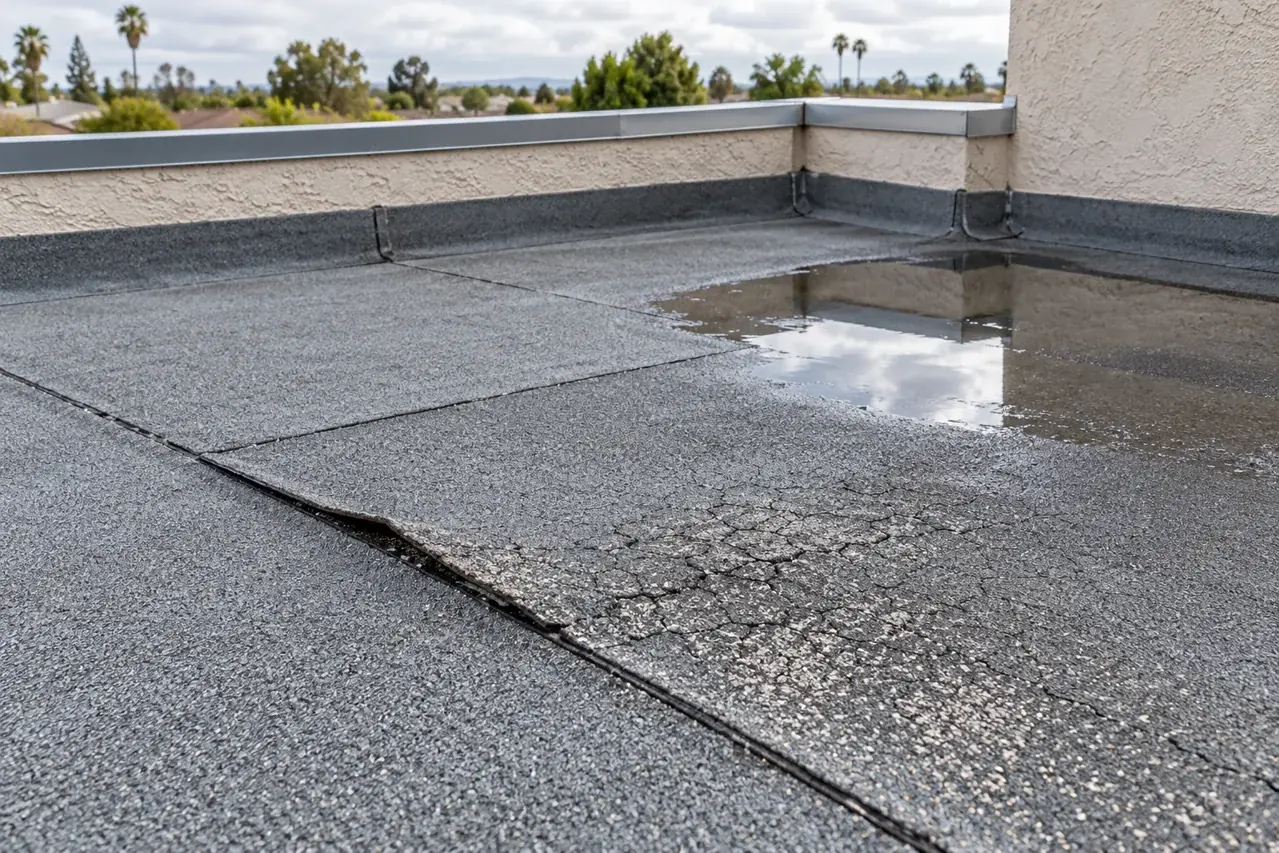
Split seams, deteriorated flashings, blisters, and worn cap sheets need assessment before a repair method is selected. The proposed scope should identify the existing assembly and compatible materials. Torch-applied, cold-applied, and other methods are not interchangeable simply because the roof looks similar.
TPO, PVC, and EPDM membranes
These membranes use different repair materials and joining methods. Product identification and compatibility matter. A suitable repair may address a puncture, seam, curb, or transition; a generic coating or asphalt patch can be unsuitable for the membrane below.
Standing water, drains, and scuppers
Tell us where water remains after a storm and whether the area has changed. A patch may address a leak without correcting a drainage problem. Drain blockage, roof slope, and wet insulation can affect the recommendation and the extent of work.
Foam roofs and existing coatings
A coating repair depends on the underlying system, adhesion, surface condition, and moisture. Coating over wet, loose, or unsound materials is not a durable correction. System suitability and the available repair method are confirmed during assessment.
Request this repair near you
Related roof repair services
How much does flat & low-slope roof repair cost?
A written estimate depends on the cause, repair extent, access, materials, and concealed damage.
Find flat & low-slope roof repair near you
Los Angeles County
Orange County
Riverside County
San Bernardino County
San Diego County
Ventura County
Connect roof findings with equipment-service history
Provide dates and available records for recent heating, cooling or other rooftop equipment work. Carlisle’s maintenance guidance identifies areas around mechanical units as places to examine for membrane cuts or damage. That does not establish that a service visit caused the leak. It gives the assessment useful context and helps distinguish work at an equipment connection from a separate field defect. The owner can supply existing records and indoor observations without attempting an inspection on the roof.
Assign responsibilities where a repair meets another system
A repair beside a unit, curb or support may need more than one party’s coordination. The estimate should state whether equipment movement, electrical or mechanical work is included, excluded or awaiting another provider. Identify who will authorize that work and confirm the sequence before a roof section becomes inaccessible. Also ask how adjacent completed areas will be protected during later service visits. A finished membrane detail is easier to preserve when the work plan accounts for what happens around it afterward.
Check existing roof documents before authorizing alterations
Locate any system identification, prior inspection report and manufacturer warranty documentation. If warranty involvement may apply, confirm its reporting and repair procedures directly; Carlisle, for example, asks owners to contact its warranty service before work on a potential warranty issue. Do not infer that every existing roof has the same coverage. Keep the repair map and final material record with those documents, including areas that were assessed but not altered. This creates a usable history for the next inspection instead of another unexplained patch.
Questions about this project
Can you put a coating over a leaking flat roof?
Only if the roof system and existing condition are suitable for that coating. Moisture, failed seams, unsound material, and drainage issues must be assessed first; a coating is not a universal leak repair.
Can the same patch be used on TPO, PVC and EPDM?
No; the roof membrane determines compatible repair materials and joining methods. Identify the product before applying anything, because a generic asphalt patch or unsuitable coating can interfere with the repair that the actual membrane needs.
Will fixing a membrane leak also eliminate ponding water?
Not necessarily; watertightness and drainage are separate questions. The estimate should address whether the cause involves blocked outlets, slope or concealed wet layers, and identify any drainage work beyond repairing the immediate opening.
Recent repair example
Dana Point, CA Roof Repair - Before & After
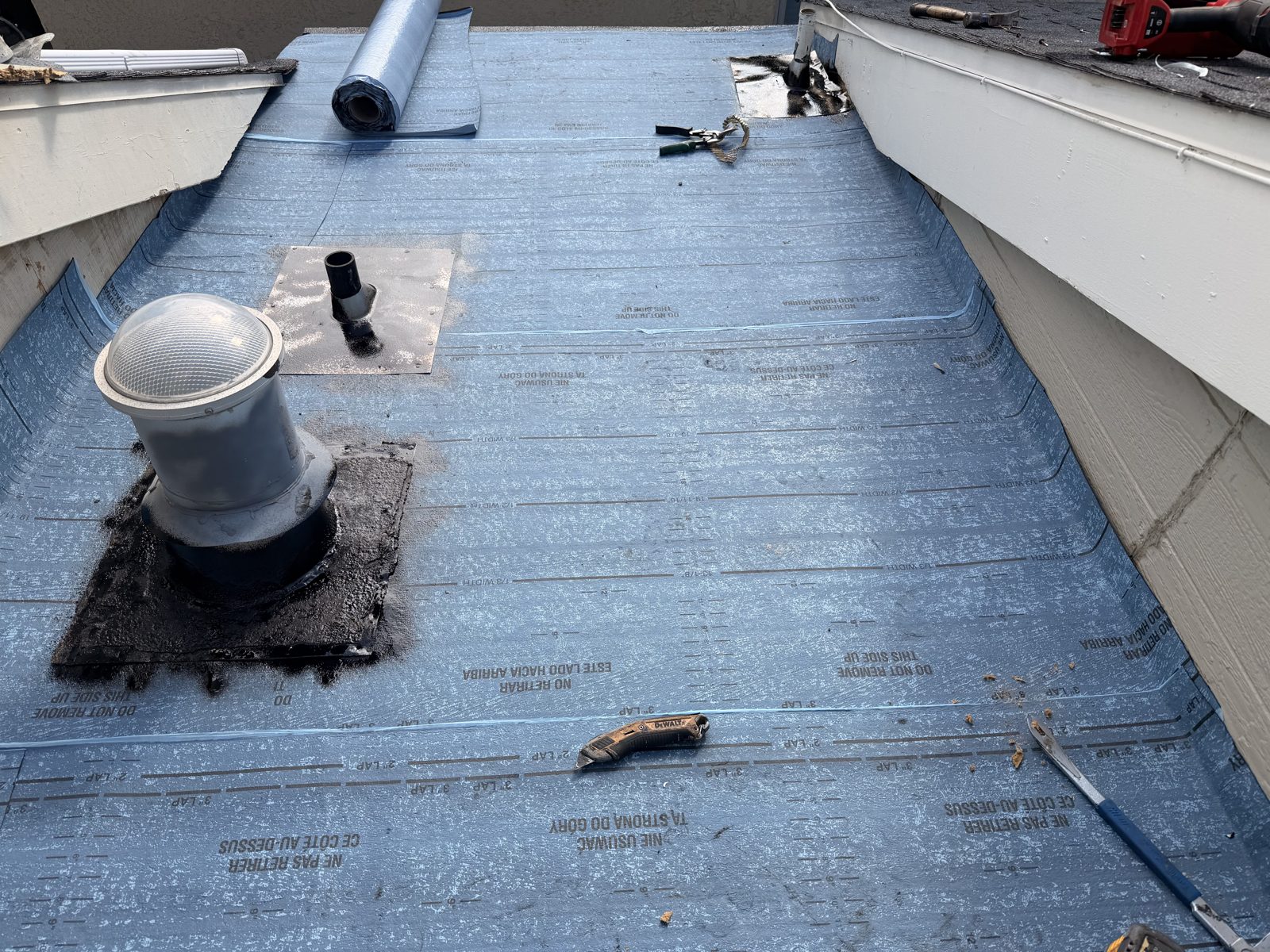
The Dana Point photos show torn and split covering, older patching and a vulnerable flat-to-shingle edge. Process photographs document self-adhered underlayment before the finished cap sheet shown in the video.
View project photos & video