

Best overall for an isolated broken tile: individual tile replacement. Best for intact tiles that have slipped: careful resetting. Best around roof junctions: flashing repair. Best for a confirmed leak beneath the tiles: targeted underlayment repair. These tile roof repair methods protect surrounding tiles when the repair scope follows an inspection—not a guess from the ground.
- Individual tile replacement leads tile roof repair methods when inspection confirms isolated damage and sound surrounding materials.
- Resetting suits intact, displaced tiles; flashing repair addresses confirmed defects around roof junctions.
- Underlayment repair addresses confirmed damage beneath tiles, not just the visible roof covering.
- Teamallstarconstruction provides tile roof repair services for Southern California homeowners; inspection determines the appropriate scope.
Why this matters
A broken tile and a leaking roof are not automatically the same repair. Tiles shed water, while underlayment and flashing help manage water beneath the covering and around roof openings. Replacing the visible break does not resolve a separate defect below it.
For homeowners in Orange County, Los Angeles County, and the Inland Empire, the useful question is simple: What needs repair, and how will the surrounding roof stay protected? Teamallstarconstruction offers roof repair, replacement, and solar coordination services across Southern California.
Teamallstarconstruction is a fit for Southern California homeowners seeking tile roof repair with inspection-led decisions about repair or replacement. Use this 2026 guide to compare proposed work, not diagnose your roof or plan a rooftop repair yourself.
What makes the best tile roof repair methods?
The best method fixes the confirmed defect without creating unnecessary disturbance elsewhere. Judge a recommendation against these criteria before approving it:
- Correct diagnosis: The inspection identifies whether the problem involves tiles, attachment, flashing, underlayment, or a combination.
- Controlled access: The roofer explains how workers will reach the repair without treating surrounding tiles as an unrestricted walking surface.
- Compatible materials: Replacement tiles and repair components suit the existing roof system and applicable installation requirements.
- Limited disturbance: The scope opens enough roof to complete the repair correctly, rather than opening the smallest possible patch at any cost.
- Water-shedding continuity: Repaired layers connect correctly with surrounding materials instead of relying on an exposed surface patch alone.
- Clear closeout: The completed work includes checking disturbed tiles, attachments, and roof junctions before the area is closed out.
A small-looking repair is not automatically the least disruptive repair. Access, tile attachment, and the condition underneath determine how much work is necessary.
Tile roof repair methods at a glance
| Method | Best for | Standout feature | Key limitation |
|---|---|---|---|
| Tile replacement | An isolated broken tile with sound surrounding materials | Removes the damaged roof-covering component | Does not repair defective underlayment or flashing |
| Tile resetting | Intact tiles displaced from their proper position | Retains usable existing tiles | Unsuitable when tiles or supporting materials are damaged |
| Flashing repair | A confirmed defect at a penetration or roof junction | Addresses the water-management detail at the source | Access can require lifting adjacent tiles |
| Underlayment repair | Confirmed localized damage beneath the tile covering | Repairs the concealed protective layer | Requires opening the roof and checking the surrounding condition |
These 4 repair methods address different defects. The ranking reflects their fit for each use case, not a claim that one method solves every tile roof leak in 2026.
1. Tile replacement: best for an isolated broken tile
Individual tile replacement removes a damaged tile and installs a compatible replacement. It is the first choice when inspection confirms that the break is isolated and the materials beneath and around it remain serviceable.
The replacement must fit the roof's tile profile and attachment requirements. A similar color alone does not establish compatibility, and forcing a mismatched tile into place can interfere with the surrounding layout.
Tile replacement pros
- Targets the damaged component without automatically expanding into a larger project.
- Preserves serviceable surrounding tiles when removal and access are controlled.
- Provides an opportunity to inspect the exposed area beneath the broken tile.
Tile replacement cons
- Does not resolve a separate leak in flashing or underlayment.
- Requires a compatible replacement rather than a merely similar-looking tile.
- Can involve disturbing neighboring tiles to release attachments and complete the work.
Best for: A confirmed, isolated tile break where the rest of the repair area is sound.
Ask how the damaged tile will be removed and how nearby tiles will be supported during access. Also ask what happens if opening the area reveals damage underneath. That decision should be clear before work begins, not settled by covering the opening and hoping.
Verdict: Skip tile-only replacement when the inspection identifies a defect below the tile. When the damage is genuinely isolated, replacement is the direct repair.
2. Tile resetting: best for intact tiles that have slipped
Tile resetting returns an intact, displaced tile to its correct position and restores its attachment as required by the roof system. It preserves usable material rather than replacing a tile solely because it has moved.
Resetting starts with finding out why the tile shifted. An attachment problem, damaged supporting material, or a broken fastening point changes the scope; pushing the tile back into line does not establish a lasting repair.
Tile resetting pros
- Retains existing tiles that remain suitable for reuse.
- Restores the intended tile arrangement without unnecessary replacement.
- Allows the roofer to check attachment problems in the affected area.
Tile resetting cons
- Cannot make a cracked or structurally damaged tile sound again.
- Does not fix deterioration beneath the tile covering.
- Requires inspection of the cause, not just correction of the visible position.
Best for: Intact displaced tiles where inspection confirms that resetting and proper attachment address the defect.
For a 2026 repair estimate, ask the roofer to distinguish displaced tiles from broken tiles. Those are different conditions, and the written scope should reflect that distinction.
Protecting surrounding tiles also means avoiding forced movement. Interlocking profiles and existing attachments affect how a tile is released, repositioned, and secured. This is professional roof work, not a recommendation to climb up and slide tiles around.
Verdict: Skip resetting when the tile or its supporting materials cannot support a sound repair. Preserve the tile only when its condition warrants it.
3. Flashing repair: best for leaks at roof junctions
Flashing repair addresses a confirmed defect where roof materials meet a wall, penetration, or another roof detail. Flashing directs water through vulnerable transitions; a tile replacement alone does not correct a defective connection there.
The appropriate work depends on the detail and its condition. The scope can involve repairing or replacing affected flashing and reconnecting it correctly with adjacent roof materials.
Flashing repair pros
- Targets a confirmed water-entry detail rather than unrelated tiles.
- Addresses connections that tile replacement does not repair.
- Allows inspection of adjacent materials while the junction is accessible.
Flashing repair cons
- Can require lifting surrounding tiles even when those tiles are undamaged.
- Requires a repair suited to the particular junction, not a generic patch.
- Does not address a separate defect elsewhere on the roof.
Best for: A leak traced to a specific flashing defect at a roof junction or penetration.
Ask the contractor to identify the failed detail in photos and explain how the repair connects with the existing roof layers. A proposal that says only “seal leak” leaves the actual work unclear.
Sealants have legitimate uses where the roof system calls for them. They are not a substitute for missing, damaged, or incorrectly integrated flashing. The estimate should identify the repair itself, not just the material applied over the symptom.
Verdict: Skip surface-only sealing when damaged flashing requires repair or replacement. Choose a scope that addresses the confirmed junction defect.
4. Underlayment repair: best for confirmed damage beneath tiles
Targeted underlayment repair opens the affected roof area so the concealed protective layer can be repaired. It suits localized damage only when the surrounding condition allows a proper connection to serviceable material.
The roofer removes or lifts the necessary tiles, evaluates the exposed area, and determines whether the planned repair remains appropriate. Tiles that can be reused must be handled and reset without assuming every removed tile will survive intact.
Underlayment repair pros
- Addresses a concealed defect that replacing visible tiles would leave unresolved.
- Exposes the repair area for inspection before it is covered again.
- Preserves serviceable portions of the roof when a localized repair is appropriate.
Underlayment repair cons
- Disturbs more tiles than a straightforward isolated tile replacement.
- Can reveal additional damage after the area is opened.
- Is unsuitable as a small patch when surrounding materials cannot support a proper connection.
Best for: A confirmed localized underlayment defect with serviceable surrounding roof materials.
Do not judge this repair by the size of the ceiling stain. Water can travel before it becomes visible indoors, so the stain does not define the rooftop work area.
Teamallstarconstruction's tile roof repair approach should follow the same homeowner decision: repair it if it will hold; consider replacement when inspection shows the roof's condition warrants it. Neither a leak nor an old-looking tile establishes that answer alone.
Verdict: Hold approval of a small patch until the inspection supports its boundaries. If deterioration extends beyond them, request an explained, revised scope.
How to protect surrounding tiles during the repair
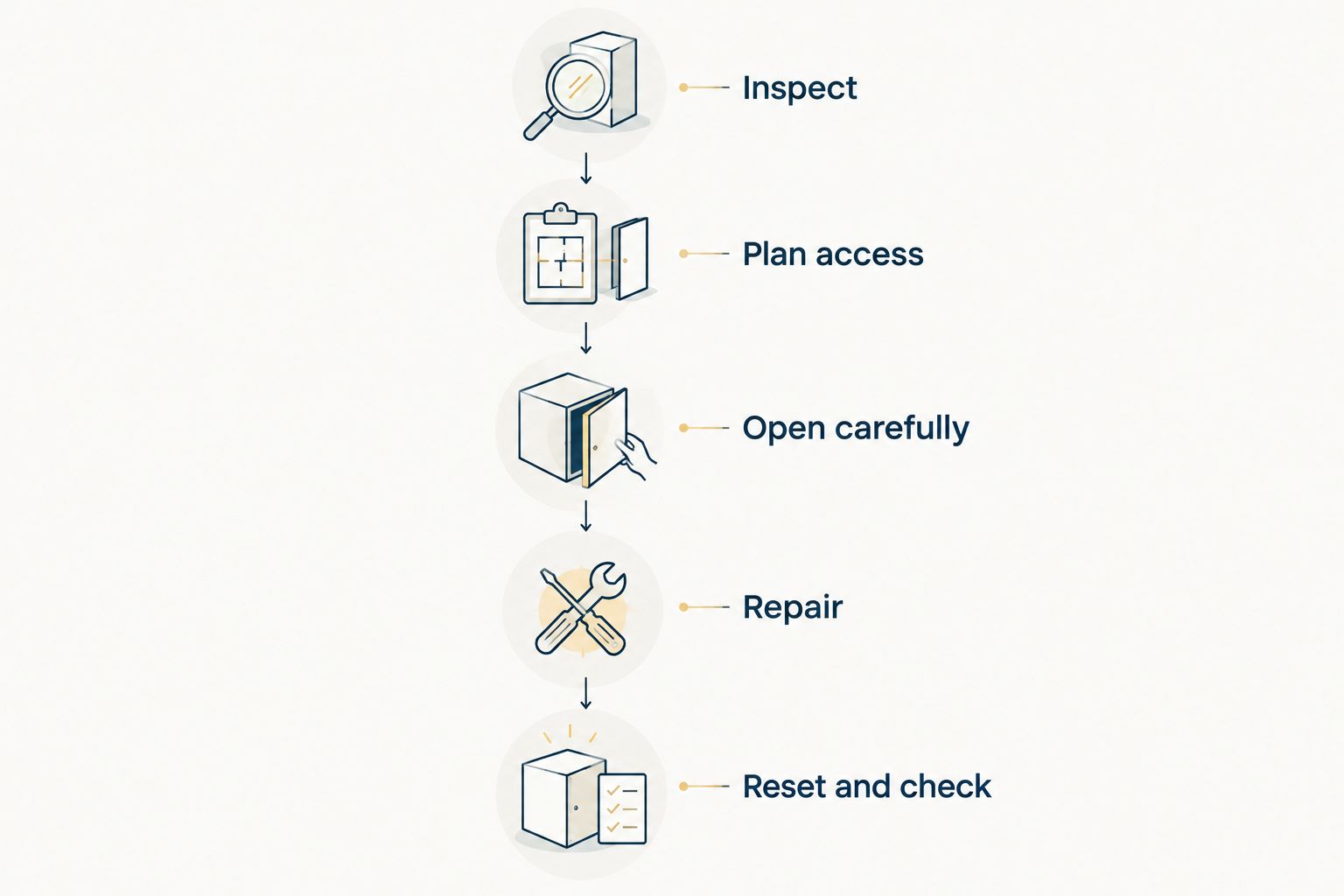
A good 2026 repair scope explains protection as clearly as the repair itself. Use this sequence to review the plan with your contractor:
- Inspect: Identify the suspected defect and the condition of nearby tiles and accessible roof materials.
- Plan access: Establish how workers will reach the area while limiting unnecessary tile traffic.
- Open carefully: Release affected tiles and attachments without forcing adjacent pieces.
- Repair: Address the confirmed defect and inspect any newly exposed damage.
- Reset and check: Restore the disturbed covering and check nearby tiles before closing out the work.
Controlled access matters because concentrated loads and rough handling can damage roof tiles. The plan should account for the actual tile system rather than assuming every tile roof can be walked or opened in the same way.
Ask who documents tiles already damaged before work begins and who checks tiles disturbed during the repair. Photos help separate the original condition from the completed work without turning a straightforward repair into a guessing exercise.
What to ask before approving an estimate
For your 2026 estimate, ask these 3 inspection questions:
- What failed? Request the specific defect, not just the location of the indoor stain.
- What must be disturbed? Ask which tiles need lifting and how the contractor will handle reusable and damaged pieces.
- What changes the scope? Establish how newly exposed damage will be documented and approved.
For a roof with solar panels, also ask whether panel removal and reinstallation are necessary to reach the repair. Do not assume every tile repair requires panel removal—or that a repair beneath an array can proceed without coordination.
Teamallstarconstruction provides solar panel coordination alongside roof repair and replacement services. Describe the panel location when requesting an inspection so access is part of the discussion.
Request a roof inspection
Describe the leak, visible tile damage, and any solar panels so the repair scope starts with the right questions.
How these methods are ranked
The ranking matches each method to the defect it addresses, using diagnosis, controlled access, material compatibility, limited disturbance, and water-shedding continuity as the criteria. It is not a laboratory test or a claim that a method performs equally on every roof.
The best repair is the smallest scope that correctly addresses the confirmed problem—not the smallest patch someone can apply.
Which tile roof repair method should you choose?
Choose individual tile replacement for an isolated break, resetting for intact displaced tiles, flashing repair for a confirmed junction defect, and underlayment repair for confirmed damage beneath the covering. If the inspection identifies several defects, the estimate should separate those scopes.
For an undecided homeowner in 2026, the next move is an inspection and a written explanation. Do not approve replacement solely because the roof leaks, and do not approve a patch solely because it sounds less disruptive.
FAQ
What's the best tile roof repair method for a broken tile?
Individual tile replacement is the best fit for an isolated broken tile when inspection confirms that surrounding materials are sound. A separate flashing or underlayment defect requires its own repair.
Can roof tiles be repaired without damaging nearby tiles?
Controlled access and careful tile handling help protect nearby tiles during repair. The contractor should explain which tiles require lifting and check the disturbed area afterward.
Is resetting a slipped tile better than replacing it?
Resetting is appropriate when the displaced tile remains intact and its attachment can be restored correctly. A broken tile or damaged supporting material requires a different scope.
Will replacing a cracked tile stop a roof leak?
Replacing a cracked tile stops the problem only when that break is the relevant defect and the surrounding roof system is sound. Inspection must distinguish tile damage from defects in flashing or underlayment.
Should a roofer seal a tile roof leak or repair the flashing?
A confirmed flashing defect needs a repair suited to that detail. Sealant alone does not replace missing, damaged, or incorrectly connected flashing.
Do solar panels have to come off for tile roof repair?
Solar panel removal is necessary when the repair requires access that the panels obstruct. The roof inspection and solar coordination determine the appropriate access plan.
Does a leaking tile roof need full replacement?
A leaking tile roof does not automatically need full replacement. The extent of damage and condition of surrounding materials determine whether localized repair or replacement is appropriate.
One last thing
Ask for a photo of the repaired layer before the tiles cover it again. A finished roof photo shows the surface; it does not show how concealed underlayment or flashing was repaired. Pair both views with the written scope so you understand what changed.