
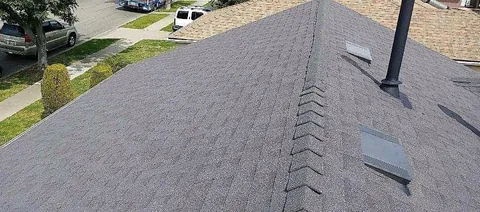
A hot room, damp attic material, and a ceiling stain are different observations. They can require different investigations. Our roof repair team starts with the condition you report, the roof assembly, and the available access. The goal is a defined repair, with any insulation, mechanical, or design questions assigned to the appropriate part of the project.
Is my roof vent leaking, or is the attic poorly ventilated?
If the concern appears only during rain near a roof penetration, describe that pattern when you call. If the concern is persistent heat or moisture in the attic, explain when you noticed it and whether the home has had recent insulation or equipment work. Neither pattern establishes a cause without looking at the relevant details.
A plumbing vent pipe and an attic exhaust vent serve different purposes. The roof opening around either may need investigation, but their repair scopes are not interchangeable. The pipe-boot and roof vent leak page addresses water-entry concerns around penetrations. This page covers how to assess the ventilation arrangement alongside the roof repair.
Do not block an opening just because you suspect it is admitting water, and do not cut a new opening to address heat without a plan. First identify the component, its purpose, and how it belongs in the roof assembly. Keep any available drawings, installation records, and earlier repair descriptions for the assessment.
What does balanced attic ventilation mean?
ARMA describes a vented attic as a system with intake and exhaust that permit continuous airflow. Its guidance places intake low and exhaust high, with insulation kept from obstructing the airflow path. The same guidance cautions against combining different exhaust types over one attic without considering how they interact.
That does not mean every roof should receive the same combination of products. Some roof assemblies are intentionally unvented and rely on a different design. Before proposing a change, establish which assembly exists. Adding vents to an unknown roof because another house has them is not a sufficient basis for a repair.
Ask the evaluator to identify the existing intake and exhaust, what could be inspected, and any limitations. A drawing or marked photograph can show the arrangement without turning the proposal into an unexplained calculation. If a design calculation or another professional's review is needed, the scope should say so.
Which symptoms are worth documenting?
Record the symptom rather than assigning it a cause. “The room becomes uncomfortable in the afternoon,” “there is a stain near the hallway vent,” and “the attic material looks damp” are useful observations. A claim that the entire roof has failed is less helpful before its condition has been evaluated.
You can also note recent changes: added insulation, a bathroom remodel, rooftop equipment service, solar installation, or a previous vent replacement. Provide dates if you know them. A change in timing can help organize the investigation, but it does not prove that the most recent contractor caused the problem.
Only share photographs you can obtain safely. There is no need to enter an attic with uncertain footing, exposed wiring, or damaged ceiling support to prepare for an estimate. Tell us if access is restricted so the visit can be planned. The limitations of an inspection should remain part of its written findings.
How should a ventilation repair proposal be organized?
Separate roof defects from building-performance questions
A cracked component, damaged flashing, or inadequate connection around a vent can be described as a roof repair. A broader airflow concern may require a design review. The proposal should state which question is being answered and avoid treating every heat complaint as proof that another exhaust vent is needed.
Identify the products and their compatibility
Ask for the proposed vent type and the manufacturer's installation requirements. If the work includes a ridge vent, the ridge covering and its connection to the roof also belong in the scope. If an existing product remains, clarify how the new work relates to it instead of assuming all vent products function identically.
Include access and concealed conditions
The contractor should explain whether the assessment includes accessible attic observations and what remains hidden. If surrounding wood needs repair, document that separately. A vent replacement estimate should not quietly become a larger roof decking project without a description and approval of the additional work.
Set a useful completion record
Keep photographs and product information with the agreement. The record should identify which components changed and which did not. If further work by an insulation, electrical, or mechanical contractor is recommended, identify that responsibility explicitly. A roof repair invoice alone should not be presented as verification of every system in the attic.
To distinguish a vent change from other work, see comparing the written repair scope before the price. That roofing estimate guide covers ventilation components, decking contingencies and exclusions that should be clear in the proposal.
Should a ridge vent be repaired or replaced?
Start with the condition of the existing component and its surrounding roofing. Ask whether a local defect can be addressed while retaining the rest, or whether the affected component needs replacement to complete a reliable repair. The answer should identify the defect rather than focus only on changing product styles.
Ridge vents and ridge caps are related but distinct parts of a roof detail. A proposal should make clear whether it includes the vent, the covering above it, surrounding shingles, or some combination. For shingle-related damage, see asphalt shingle repair. A small visible problem at the ridge does not by itself justify replacing all roof slopes.
If the existing arrangement was altered during a prior roof or attic project, request the relevant records. A repair may need to restore a detail or may require a different approved approach. Clarifying that question before work reduces the risk of paying for a component change that leaves the original complaint unexplained.
Will ventilation work lower my energy bill?
No specific savings or indoor temperature change should be promised from a ventilation repair without an appropriate assessment. Comfort and energy use involve more than the roof opening. Ask what the proposed work is intended to accomplish and which outcome can reasonably be checked afterward.
If your main concern is a leak, the proposal should focus on that water-entry problem. If the main concern is heat or moisture, it should explain the basis for the ventilation recommendation. Keeping those goals separate makes it easier to compare estimates and decide whether another evaluation is needed.
The outer roof surface and attic airflow address different questions. Read how reflective and conventional roofs handle heat before assuming that a reflective material and a vent repair will deliver the same result.
Repair or replace the roof?
A vent-related problem can often be evaluated as a limited scope. The important questions are whether surrounding roofing is usable and whether the work can connect properly to it. Ask to see the observations that support retaining the roof. A repair-first approach still needs a practical boundary and clear limitations.
If the surrounding roof has broader damage, request a comparison that explains why the vent work alone would be insufficient. Our repair-or-replace resource helps organize those questions. Replacement should be discussed because of the documented condition, not because a ventilation product is being marketed as an upgrade.
Consider how roof condition and maintenance affect useful life alongside weighing a targeted repair against replacement. Use those questions to compare the documented condition without treating roof age as an automatic replacement trigger.
Scheduling and written warranty
Assessment, material selection, roof work, and any related attic work may be separate steps. Ask what can be confirmed during the first visit and what requires follow-up. Product availability, weather, safe access, and additional findings affect the schedule; a universal completion time would not describe every roof accurately.
Team All Star Construction publishes California license #1009760, 40+ years of construction experience, and written repair warranty coverage up to two years. Confirm your project's specific warranty term, covered repair, and exclusions in the written agreement. A warranty on roof work should not be confused with a promise about whole-home energy performance.
If the proposal includes replacement, review material and workmanship terms in replacement warranties. That guide does not set the coverage for a vent repair or guarantee an energy saving.
Attic ventilation repair questions
Should I add a powered fan to solve attic heat?
Do not choose equipment before the existing assembly and intake/exhaust arrangement are evaluated. Ask what problem the proposed fan would address, how it interacts with existing vents, and whether other work is needed. A product purchase is not a diagnosis.
Does every attic need a ridge vent?
No. The appropriate approach depends on the roof assembly and its design. Some roofs use different ventilation arrangements, while some assemblies are intentionally unvented. Identify the existing system before deciding whether a ridge vent belongs in the repair.
Can a ventilation problem cause the same symptoms as a roof leak?
Moisture concerns can require more than one line of investigation. Record when the condition occurs and whether it follows rain. The assessment should explain the evidence for a roof opening, ventilation concern, or need for further evaluation rather than treating all dampness as the same defect.
Do you replace every vent during a localized roof repair?
The scope should be based on the condition and connection of the affected components. Ask which vents are included and why. Unrelated replacements should be identified as separate recommendations, with a clear reason for each.
For a repair estimate in Los Angeles, Orange, Riverside, San Bernardino, San Diego, or Ventura County, call (310) 729-3013. Describe whether your concern is a rain leak, a damaged vent, attic moisture, or heat so the initial assessment can address the right question.