
Shingle Roof Repair in Southern California
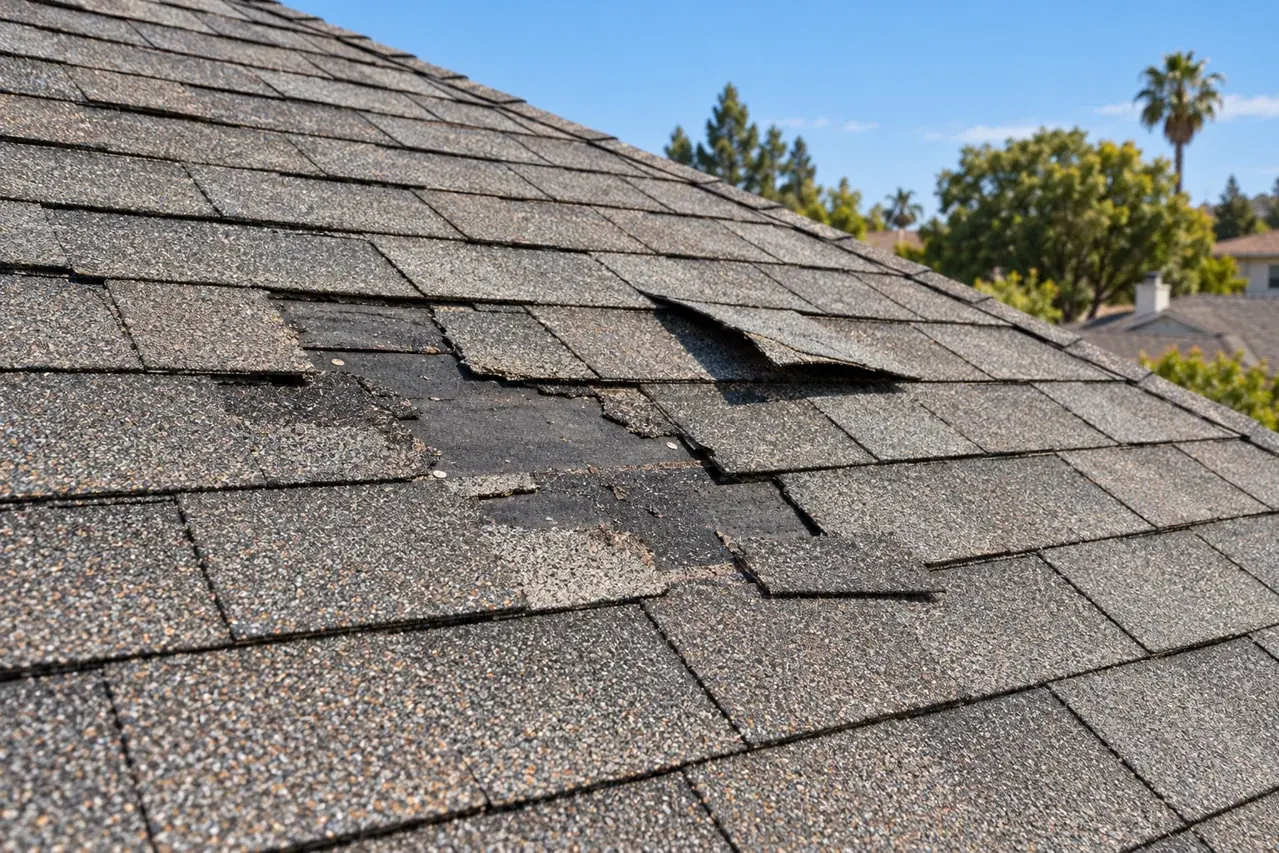
Missing or damaged shingles can leave the roof more vulnerable to water entry. A shingle repair needs to restore the covering while considering the age, flexibility, fastening, and condition of the shingles around the damaged area.
Roofing & Solar Experts · Serving Southern California
Tell us what your roof needs.
Look beyond the missing shingle
The review includes torn tabs, creases, exposed fasteners, damaged ridge caps, and the condition of the underlayment below. Granule loss or curling across much of the roof may indicate a different problem from a few localized wind-damaged shingles.
Compatible materials and careful integration
Replacement shingles should be compatible with the existing product and installed according to the applicable product instructions. Weathered shingles may not match a new bundle exactly. Brittle surrounding shingles can break when lifted, which can expand the practical repair area.
Check edges, valleys, and roof penetrations
An apparent shingle leak may come from step flashing, a pipe boot, or an edge detail. The estimate should identify the affected area and related components, rather than treating every leak as a missing-shingle problem. If damage is widespread, compare the repair scope with a replacement option.
Request this repair near you
Related roof repair services
How much does shingle roof repair cost?
A written estimate depends on the cause, repair extent, access, materials, and concealed damage.
Find shingle roof repair near you
Los Angeles County
Orange County
Riverside County
San Bernardino County
San Diego County
Ventura County
Describe the distribution of damage, not just the first missing piece
An estimate is more informative when it identifies the affected slope and whether similar symptoms appear elsewhere. Ask the inspector to distinguish an isolated damaged area from observations on other parts of the roof. Earlier ground photographs or installation records can provide context, but a defect noticed after a storm does not automatically establish when or why it occurred. The repair recommendation should separate supported findings from assumptions and explain whether additional areas need work, observation or no action.
Compare proposals by the details they actually include
Two proposals described as shingle repair may cover different work. One may address the visible covering, while another includes an adjoining flashing or a concealed condition identified during inspection. Ask for a roof location or marked photograph, the intended components and the treatment of any uncertainty. Clarify how newly discovered damage would be documented and authorized. This makes the comparison about the proposed result rather than a shingle count that does not explain the connection being restored.
Keep product and completion records together
Look for the original installation invoice, product description and warranty paperwork if these are already available. They can help identify what was installed and which questions should be directed to the manufacturer or original installer; possession of a document does not establish coverage for the current concern. For the new work, retain the selected product identification and a description of the completed area. Record any appearance difference that was discussed and any separate follow-up items, so future assessments have a clear reference.
Questions about this project
Can you match my existing roof shingles?
We can review the existing style and available compatible products. Exact color or profile matches may not be possible when the original product is discontinued or has weathered.
Why can a small shingle repair require opening a larger area?
Surrounding shingles must be lifted enough to integrate the replacement correctly. When aged material cracks during handling, the practical repair boundary can expand; that possibility should be documented before the crew opens the roof.
Are scattered granules proof that every shingle needs replacement?
Granules alone do not establish a replacement scope. Their extent, shingle flexibility, exposed substrate and other defects should be considered together, distinguishing an isolated damaged section from deterioration across several slopes.