
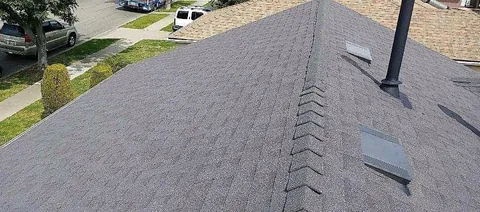
A visible gap at the roof peak is a reason to have the detail evaluated, not a reason to assume every slope needs replacement. Our roof repair service starts with the affected component and its connection to what remains. The estimate should explain that connection in terms a homeowner can understand.
What is a ridge cap, and how is it different from a hip?
The ridge is the upper line where roof planes meet. A hip is an outward sloping intersection. Both need a covering detail suited to the roof system. GAF describes purpose-made asphalt cap shingles as protection for these junctions; their shape and appearance differ from the shingles covering the larger roof surfaces.
A ridge vent, when present, is a separate component. A proposal that says “repair ridge” should clarify whether it includes the cap, vent, nearby shingles, or the underlying support. The difference matters because replacing the visible covering does not by itself describe what happened to the rest of the detail.
On a tile roof, the cap pieces and their attachment are different from asphalt shingle caps. The TRI Alliance manual includes dedicated hip and ridge details for concrete and clay tile. An estimate should identify the existing system rather than borrow an asphalt repair description for a tile roof.
What should I report when a cap looks damaged?
Describe what you can see safely: a missing piece, a shifted line, debris on the ground, or a new stain below. Note whether it followed wind, other roof work, or an unknown event. A photograph can help with scheduling, but it cannot show every part of the attachment or concealed support.
Do not climb to the ridge or try to push a loose piece back into place. Keep fallen material for identification only if you can collect it safely from the ground. If there is active interior leakage, mention that first so the visit can address the water-entry concern as well as the visible cap damage.
If a prior contractor worked on the ridge, provide the scope and product information if available. An older photograph can help show a change. The purpose of that record is to understand the sequence, not to decide responsibility before the condition has been assessed.
How is an asphalt ridge cap repair evaluated?
Identify the covering and the surrounding shingles
Ask whether the proposed replacement cap is intended for the existing roof system and how its appearance will compare. Product availability and weathering can affect the visual match. A repair proposal should distinguish a functional material choice from a promise that the repaired area will be invisible.
Check the fastening detail
Manufacturer instructions specify the fasteners and installation for the selected cap. Owens Corning's ProEdge instructions, for example, address fastener penetration and placement and warn that improper fastening can contribute to sealing problems, leakage, or blow-off. The applicable instructions should govern the work, rather than an improvised attachment method.
Define the repair boundary
The contractor should explain how much of the ridge or hip needs attention and why. Ask whether the scope includes only the observed damaged pieces or a longer section needed to complete the detail. If nearby shingles are also affected, that shingle repair should appear clearly in the written scope.
Account for the vent if one exists
Clarify whether the vent can remain and how it will be protected during the work. If it needs repair or replacement, describe that separately. A cap replacement should not silently become a change to the attic ventilation arrangement without explaining the reason and the intended result.
When reviewing proposals, consider comparing the written roof-work scope. That guide distinguishes ridge materials, ventilation and adjacent components; ask the estimate to identify which are retained and which are changed.
What is different about tile hip and ridge repair?
Tile work requires identifying the cap profile, support, attachment approach, and connection to the surrounding field tiles. A loose or cracked piece is one observation; the condition of the supporting detail is another. Ask which components the assessment could evaluate and which would become visible only after authorized removal.
Do not assume that fresh mortar or sealant is a complete description of a tile repair. The applicable tile-system detail should determine the method. The proposal should explain whether pieces are being reset, replaced, or removed to assess another layer. Our tile roof repair page covers the broader distinction between visible tile damage and the roof below it.
If the cap model is difficult to obtain, ask what alternatives are being considered and how compatibility will be confirmed. A similar color alone does not establish that a piece fits the existing detail. Record the selected material and any expected appearance difference before the repair begins.
Could the leak come from somewhere other than the ridge?
Yes. A ceiling stain beneath the upper roof does not prove the ridge is the only entry point. Tell the evaluator about nearby vents, chimneys, solar equipment, and previous leaks. The leak diagnosis page explains why the visible indoor symptom should be considered alongside the exterior findings.
Ask whether the cap damage explains the reported leak or whether another defect remains under investigation. If the estimate addresses a visible cap issue without establishing the leak source, that limitation should be written down. Repairing one observed defect and guaranteeing every reported water symptom are not automatically the same scope.
For storm-related damage, keep the condition record and photographs together. A repair finding can document the roof's condition, but it does not determine insurance coverage. Any claim-related documentation should accurately distinguish observed damage, proposed work, and work already completed.
If you make an insurance claim, use organizing a factual roof-damage record when assembling the documents. The record should distinguish the observed defect from a cause that has not yet been established.
Repair or replace after ridge damage?
Localized cap damage may be evaluated without replacing the entire roof. Ask whether the surrounding materials and support allow the proposed work to connect reliably. A repair-first recommendation should explain what remains usable and why the selected boundary makes sense.
If broader deterioration is found, request the evidence and compare the options. The repair-or-replace decision page helps separate a limited repair from a larger scope. A recommendation to replace the roof should identify the conditions a cap-only repair would leave unresolved, rather than rely on a general statement that the roof looks old.
For the material that will remain, read how roof condition and maintenance affect useful life. A general material lifespan does not establish that a damaged ridge requires replacing the entire roof.
Timing, access, and written repair coverage
The schedule depends on safe access, weather, material identification, availability, and the findings. Ask whether the initial visit is for assessment or includes approved repair work. If matching components must be located, agree on the next update so an open question does not become an indefinite wait.
The agreement should identify the ridge or hip sections included, surrounding material work, vent responsibilities, disposal, and any exclusions. Additional support or wood repairs should have a clear approval process. Photographs and the completed scope help explain exactly what changed.
Team All Star Construction lists California license #1009760 and 40+ years of construction experience. Written repair warranty coverage is available on project-specific terms, with up to two years stated in our repair information. Confirm the actual term, covered components, and exclusions in the agreement; a product warranty is a separate document.
If the ridge is part of a system with a replacement warranty, review material and workmanship terms in replacement warranties and confirm with its issuer which conditions apply to the proposed work. That document is separate from the warranty for this specific repair.
Ridge and hip repair questions
Can only the missing cap pieces be replaced?
Sometimes, but the assessment must determine the surrounding condition and the extent needed to complete the detail. Ask for a marked repair boundary and a reason for any additional pieces included in the proposal.
Is a raised ridge cap always a defect?
No. Some products have a deliberate profile, and a vent may be part of the assembly. A change, loose piece, or visible gap deserves evaluation, but a distant photograph alone should not determine whether the design is wrong.
Will the repaired ridge match the roof exactly?
An exact match should not be promised without identifying available materials and comparing them with the existing roof. Ask about product, profile, color, and weathering differences before approving the selection.
Does new ridge covering fix attic ventilation?
Not automatically. The covering and the ventilation arrangement are different questions. If airflow is a concern, ask for that assessment separately and confirm whether any vent changes are included in the repair.
Should I have the rest of the roof replaced at the same time?
Only if the findings support that larger scope. Ask to compare a repair that addresses the ridge or hip with any replacement option, including what each leaves unresolved. A damaged cap alone is not enough information to decide.
For ridge or hip concerns in Los Angeles, Orange, Riverside, San Bernardino, San Diego, or Ventura County, call (310) 729-3013. Request a repair estimate that identifies the affected detail, the material choice, and the limits of the work.