
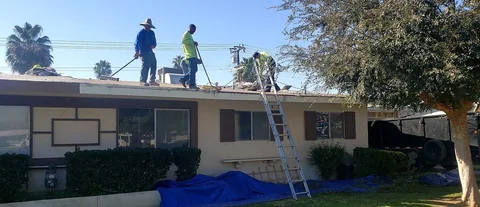
An impact is different from ordinary leaf buildup or a branch merely touching a roof. Explain what happened and whether material remains on the building. Our roof repair team needs those details to distinguish a construction estimate from a site that first requires hazard control.
What should I do if the tree is still on the roof?
Keep people away from the affected area and do not climb onto the roof or attempt to cut a lodged branch yourself. If power lines are involved or the building appears unstable, contact the appropriate emergency or utility service. A roofing appointment is not a substitute for addressing an immediate danger.
OSHA's tree-work guidance emphasizes that fallen or damaged trees can be entangled with electrical conductors and that line-clearance work requires qualified personnel. Do not assume a line is safe because service appears to be out. Leave the removal and utility coordination to the appropriate professionals.
Tell the roofing contact whether the tree contractor has inspected the site, whether removal is scheduled and whether a building official has restricted access. These facts affect what can be evaluated and when. Do not promise an interior or roof visit until the relevant access questions are resolved.
What can a photograph show—and what can it miss?
Safe photographs can show the impact location, nearby roof features and the portion of the tree still present. Take them from a distance that does not expose you to unstable branches, electrical hazards or falling materials. You do not need to approach the damaged roof to make the report useful.
An image may not show whether framing, decking or a roof connection has been damaged beneath the covering. A small puncture in the visible material is not a measurement of the condition below it. Conversely, scattered surface damage does not automatically establish that the entire roof is beyond repair.
Preserve existing photographs and record the date of the event and any subsequent work. Distinguish images taken before removal, after removal and during authorized roofing work. That sequence helps explain the repair without claiming that every visible mark resulted from the impact.
How should tree removal and roof work connect?
The tree-removal contractor should explain its own operation, access and responsibilities. The roofing scope should then identify what can be assessed after the obstruction is gone. If temporary protection is needed between those stages, assign that responsibility expressly rather than assuming one provider includes it.
Ask how access will be handed over and how the parties will communicate if removal reveals a new concern. The project may need to pause for a structural question before the final roofing repair is specified. That is a defined decision point, not permission to proceed with an improvised structural fix.
Avoid combining every task into the word cleanup. Tree debris removal, damaged roofing removal and interior restoration are different work items. The written proposals should explain who handles each one and where the roof repair begins and ends.
Use the guide to comparing written roofing estimates to check the boundary between the removal contractor’s proposal and the roofing proposal. Ask who records the condition at handoff, who authorizes any opening needed for inspection and who is responsible for temporary protection during a delay. Two providers using the same word “restoration” may still be describing different tasks.
What needs inspection after the obstruction is removed?
Surface materials and nearby details
Identify damaged shingles, tiles, metal or low-slope membrane in the actual impact area. Inspect related edges and details that may have moved. Our shingle repair and tile repair information explains why the material-specific connection matters.
Ask how replacement pieces will match the existing system and what appearance differences may remain. The proposal should not promise an invisible repair unless the materials and condition support that promise. Functional compatibility and an exact color match are separate issues.
Decking and structural questions
Separate damage to the surface covering from damage to roof decking or framing. Ask which parts were observed and which remain concealed. If an engineer or building official needs to evaluate the structure, that requirement should appear in the schedule and scope.
Do not treat a roof contractor's photograph as a whole-building structural clearance. The report should explain its purpose and limitations. An approved repair detail, when needed, must be in place before work that depends on it proceeds.
Flashing, gutters and adjacent roof areas
An impact near an eave, wall, chimney or skylight can create more than one repair boundary. Identify each affected connection rather than treating the main puncture as the only question. The estimate should explain how restored materials meet undamaged work nearby.
Inspecting adjacent areas is different from assuming they are all damaged. Ask for evidence supporting any added scope and clear photographs where practical. This keeps the repair focused without overlooking a related detail.
Solar and other equipment
Report any impact near panels, wiring, rooftop units or attached equipment. Do not handle damaged electrical components. Identify equipment ownership and service contacts so the roof and equipment scopes can be coordinated safely.
A proposal involving roof work under solar panels should allocate equipment handling, electrical checks, roofing repairs and recommissioning. The availability of a roofing crew does not mean every other trade can work on the same schedule.
Can temporary protection be installed before the final repair?
It may be appropriate once the site and roof can be accessed safely. Temporary protection is intended to address an interim condition; it does not establish that the underlying structure is sound or replace a permanent repair scope. Ask what area is covered and what limitations remain.
Weather, remaining tree hazards, electrical conditions and roof stability influence that decision. Explain an active leak when you call so the urgency is understood, but do not climb onto a wet or damaged roof to attempt a cover yourself.
Keep temporary work documented separately from permanent restoration. Record who installed it, what it covers and who will inspect or remove it as the project advances. This avoids confusing an emergency measure with the final contracted result.
Should a tree-damaged roof be repaired or replaced?
A defined impact area may be repairable if suitable connections can be made to the surrounding roof and affected support is properly addressed. Ask what the repair retains and how the boundaries were selected. The fact that a tree struck the property does not alone decide the size of the roofing project.
Wider replacement may be appropriate when damage is extensive or the existing system cannot accept a reliable repair. Use our repair versus replacement guidance to compare the findings. Separate impact-related work from unrelated maintenance so the reasons remain clear.
For insurance questions, keep photographs, proposals, invoices and relevant reports. The roofing estimate can document observed damage and proposed construction, but the policy and insurer determine coverage. Our insurance documentation page explains the distinction without promising approval.
Condition outside the impact area remains a separate question. The roof-life and maintenance guide provides background for discussing what can be retained, but its general ranges cannot measure impact damage or establish a safe structure. Ask which findings relate to the event and which reflect earlier wear before comparing a localized repair with broader work.
Timeline and warranty
The repair sequence can depend on tree removal, safe access, structural review, materials and required approvals. Request milestones rather than an unsupported same-day completion promise. Ask which activities can proceed together and which require a completed decision first.
Team All Star Construction publishes California license #1009760 and more than 40 years of construction experience. Written repair coverage is offered up to two years, with the actual covered work and terms stated in the agreement. That is distinct from a tree contractor's service or an engineering evaluation. Call (310) 729-3013 for repair needs in Los Angeles, Orange, Riverside, San Bernardino, San Diego and Ventura counties.
If an earlier roof replacement carries a warranty, read how replacement material and workmanship coverage differ and contact the issuer about the proposed repair. Do not assume an impact is a manufacturing defect or that an unrelated contractor’s service is part of the roofing warranty. The new agreement should identify its own repaired area and the records needed for a later question.
Tree-impact roof repair questions
Can I remove a branch before the roofer arrives?
Do not attempt to remove a lodged or unstable branch from the roof yourself. Tree work, particularly around power lines or a damaged structure, needs appropriate professionals. Tell the roofing contact what remains on the building.
Does a small puncture mean a small repair?
Not necessarily. The covering and concealed support may have different damage boundaries. The evaluation should identify what is known and what requires further access, without assuming either a tiny patch or a full reroof.
Who checks whether the home is safe to enter?
Follow the appropriate emergency, building and qualified structural professionals' direction. A repair estimate does not by itself clear a building for occupancy. Mention any access restriction before arranging a roofing visit.
Will my insurance pay for the work?
Coverage depends on the policy and claim decision. Keep factual records and contact the insurer. A contractor can explain the proposed repair but should not promise that every cost or related service will be covered.
What should be in the final repair file?
Keep dated photographs, the removal and roofing scopes, any required structural documents, approved changes and warranties. Identify which company performed each task so a future question can be directed to the correct provider.