
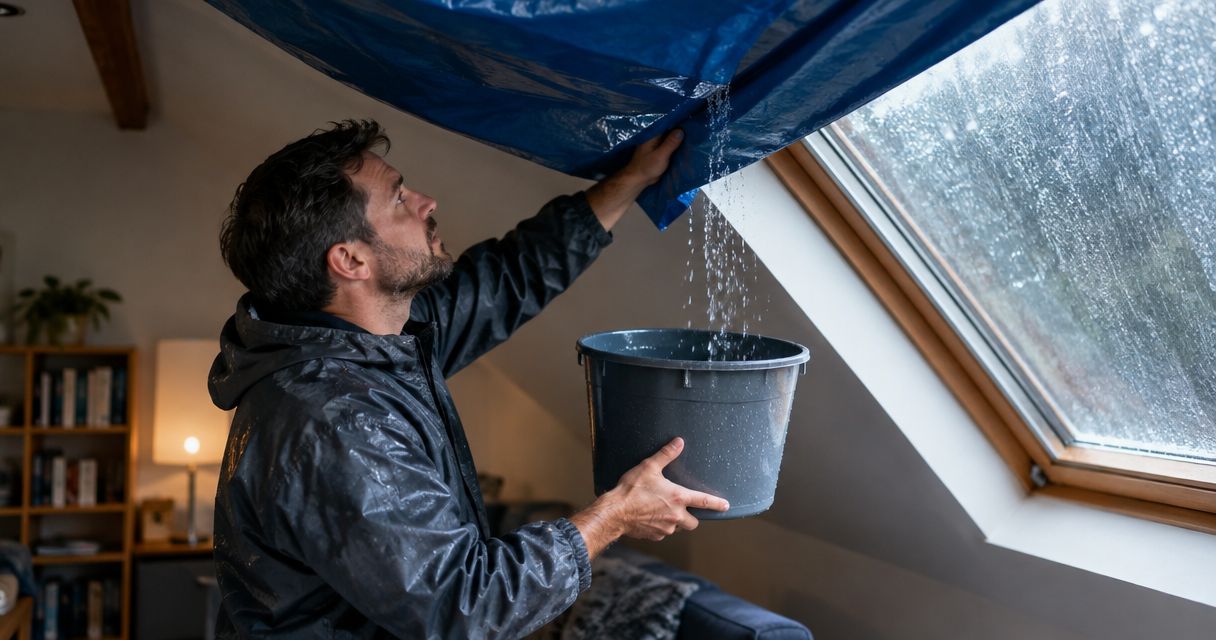
The safest temporary roof leak fix during an active storm is indoor water containment—not climbing onto the roof. Best for exposed roof areas once conditions are safe: a professionally secured tarp; best for a small, confirmed defect: a compatible patch; best for a leaking roof joint: a roofer’s temporary flashing repair. This 2026 guide explains where each option fits and when to stop and get help.
- During an active storm, indoor containment is the safest temporary roof leak fix; it does not stop water entry.
- A professionally secured tarp suits exposed roof areas once roof access is safe.
- Patches and flashing repairs require a confirmed leak source and suitable working conditions.
- Teamallstarconstruction handles roof repair and replacement; an inspection determines the appropriate scope.
Why this matters
A temporary fix has a limited job: reduce damage until the leak can be inspected and repaired. A bucket catches water inside. A tarp covers an outside opening. Neither proves that the roof underneath is sound.
For Southern California homeowners, Teamallstarconstruction is a roof repair and replacement option when an inspection is needed to decide between repairing and replacing. You can start with Teamallstarconstruction to discuss the leak and request an estimate. Describe what you can see from a safe location; do not climb up to collect evidence.
A ceiling stain also does not identify the roof opening directly above it. Water can travel along roof framing before becoming visible indoors, so patching the spot above the stain without tracing the source can miss the problem.
What makes the best temporary roof leak fix?
Choose your response by safety and the actual opening—not by which repair product is closest. For a 2026 storm-response plan, use these criteria:
- Safe access: No option earns a recommendation if it requires you to enter an unsafe attic or climb a wet roof.
- Source control: Separate catching indoor water from stopping rain at the roof surface.
- Material compatibility: A patch must suit the existing roofing and its application requirements.
- Secure installation: An exterior cover needs proper placement and attachment, not loose weights or improvised fasteners.
- Inspectability: The temporary work should leave the roofer able to identify the defect and plan the permanent repair.
These 4 options serve different situations. During the storm, prioritize people and indoor damage control. Exterior work waits until a qualified roofer can perform it safely.
Temporary roof leak fixes at a glance: 2026
| Option | Best for | Standout feature | Key limitation |
|---|---|---|---|
| Indoor water containment | An active drip during unsafe outdoor conditions | Keeps the response off the roof | Does not stop rain entering the building |
| Professionally secured tarp | An exposed or damaged roof area | Covers an area rather than a single defect | Requires safe access and correct attachment |
| Roofing-compatible patch | A small, confirmed opening | Targets a specific defect | Surface and application requirements restrict use |
| Temporary flashing repair | A confirmed leak at a roof joint or penetration | Addresses the junction where water enters | Requires source tracing and roofing skill |
1. Indoor water containment: best during an active storm
Indoor containment means catching drips in a stable container and moving belongings out of the water’s path. It limits damage below the leak; it is not a roof repair. Use it only where the floor, ceiling, and nearby electrical equipment are safe.
Place the container on a stable surface without blocking your exit. Move rugs, electronics, and furniture only when you can reach them without passing beneath a bulging ceiling or through water near electrical equipment.
Indoor water containment pros:
- Keeps you away from ladders and wet roofing.
- Gives visible drips somewhere controlled to collect.
- Helps protect movable belongings while you arrange help.
Indoor water containment cons:
- Water continues entering the roof assembly.
- Containers require attention and can overflow.
- It is unsafe beneath a sagging ceiling or near wet electrical equipment.
Do not puncture a bulging ceiling as a routine homeowner fix. Stay out from under it and get professional help. If water is near a light fixture, outlet, or electrical panel, keep clear; do not touch wet switches or equipment.
Best for: A reachable indoor drip with no ceiling-collapse or electrical warning signs.
Verdict: Use indoor containment during the storm; skip it wherever standing beneath the leak is unsafe.
2. Professionally secured tarp: best for exposed roof areas
A roof tarp is an exterior temporary covering installed to shed water away from damaged roofing. Its placement must account for how water approaches the opening, not simply cover the spot where damage is visible.
A tarp belongs in a roofer’s temporary protection plan once conditions permit safe work. It is not a reason to climb onto a wet roof, stand on a ladder in strong wind, or carry a large sheet onto an exposed roof.
Professionally secured tarp pros:
- Covers an area containing damaged or missing roofing.
- Can protect an opening while the permanent repair is planned.
- Provides an alternative to applying patching material across an uncertain area.
Professionally secured tarp cons:
- Wind can lift an incorrectly secured cover.
- Poor attachment can damage roofing or create additional openings.
- A tarp does not establish whether concealed materials need repair.
Ask how the cover will shed water and how its attachment will be addressed during permanent work. A tarp draped over damage without a sound installation plan is not dependable protection.
For homes in Orange County, Los Angeles County, and the Inland Empire, the same rule applies: safe roof access comes before exterior work. A local address does not make a wet roof safe.
Best for: An exposed roof area requiring temporary coverage after a roofer confirms safe access.
Verdict: Wait for safe conditions, then use professional tarping where broad coverage fits the damage.
3. Roofing-compatible patch: best for a small, confirmed defect
A compatible patch targets a specific opening using a method suited to the roofing material. The roofer must identify the defect and follow the patch material’s surface preparation and application requirements.
Do not assume that general-purpose caulk, tape, or roof cement belongs on every roof. Shingles, tile assemblies, and low-slope roofing have different details, and a surface smear can conceal the area that needs inspection.
Roofing-compatible patch pros:
- Targets a confirmed defect rather than covering an unrelated area.
- Can provide localized temporary protection when the surface is suitable.
- Leaves the repair scope focused when surrounding materials remain serviceable.
Roofing-compatible patch cons:
- Wet, dirty, or deteriorated surfaces can prevent proper adhesion.
- An incompatible material can complicate later repair.
- It will not address a leak entering elsewhere in the roof assembly.
Check application instructions rather than treating a product’s water-resistant label as permission to apply it during rain. If the product requires a clean, dry surface, those requirements still apply during an active leak.
Ask the roofer to distinguish the visible defect from the underlying cause. A patch on damaged roofing does not resolve a separate flashing problem nearby.
Best for: A small opening with a confirmed source, suitable surrounding material, and acceptable application conditions.
Verdict: Use a compatible patch only after the defect is confirmed; skip blind sealant application.
4. Temporary flashing repair: best for a confirmed leaking joint
Flashing directs water around roof intersections and penetrations, including walls, chimneys, vents, and skylights. A temporary flashing repair addresses a confirmed defect at one of those junctions rather than treating the surrounding roof surface as the source.
This is skilled roofing work. The visible gap is not always the full problem, and sealing across a drainage path can interfere with how the roof sheds water.
Temporary flashing repair pros:
- Focuses on a junction that the inspection identifies as leaking.
- Addresses a different failure point from damaged field roofing.
- Can form part of a repair-first plan when the surrounding roof is serviceable.
Temporary flashing repair cons:
- Requires accurate leak tracing and knowledge of the roof detail.
- Concealed deterioration can expand the permanent repair scope.
- Surface sealant alone does not substitute for correctly arranged flashing.
Ask whether the proposed work is temporary weather protection or a completed flashing repair. That distinction should be clear in the written scope, along with what remains to be inspected or replaced.
Solar panels add another coordination issue if they obstruct access. Do not loosen panels, disconnect wiring, or ask an unqualified person to move the system to reach the leak.
Best for: A confirmed leak at a roof-to-wall joint, chimney, vent, skylight, or similar penetration.
Verdict: Use roofer-led flashing work when the junction is the source; skip homeowner sealant experiments.
What to do before choosing an exterior fix
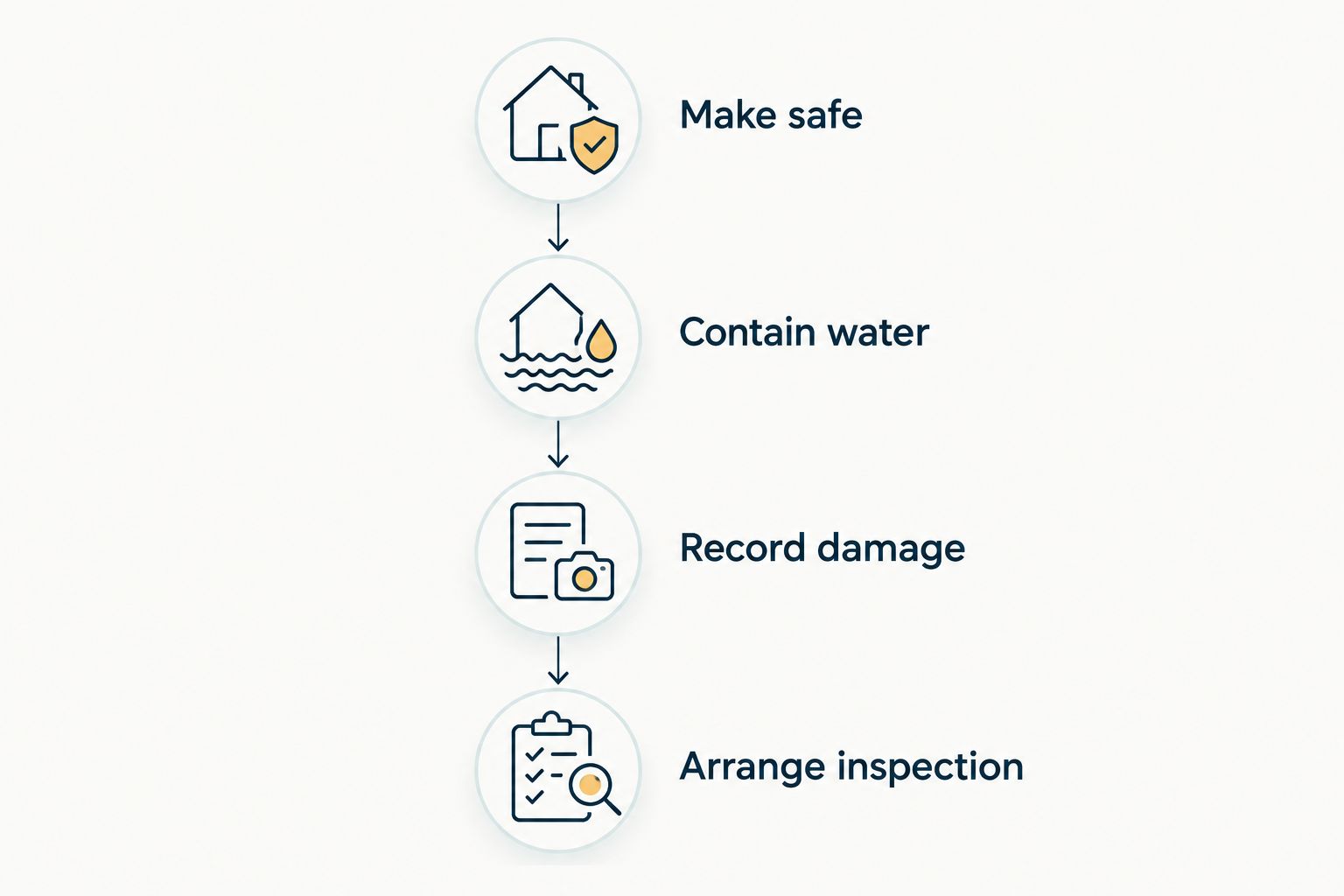
Use these 2 stages: make the occupied area safe, then arrange source inspection. Do not reverse that order because the dripping feels urgent.
Make safe
Keep people away from wet electrical equipment, a sagging ceiling, or unstable surfaces. If there is an immediate threat to occupants, leave the affected area and call 911.
Contain water
Catch accessible drips only where it is safe. Move belongings away from the affected area, and do not enter an attic merely to get closer to the leak.
Record damage
Take photos from a safe indoor position or from the ground. Note where water appeared and whether it coincided with rainfall; avoid drawing conclusions about the roof opening.
Arrange inspection
Report the symptoms and ask what temporary protection is appropriate. Tell the roofer about solar panels and any earlier repair in the affected area.
How these options were ranked
The 2026 ranking puts safe action during active rain first, then separates exterior options by the defect they address. It is a decision guide—not a claim that every roof needs the same treatment.
Indoor containment wins for immediate homeowner action because it avoids roof access. A tarp suits an exposed area; a compatible patch suits a confirmed small defect; flashing work suits a leaking junction. None receives a permanent-repair verdict without an inspection.
Which temporary roof leak fix should you choose?
If rain is still falling, choose safe indoor containment and arrange an inspection. Do not make an exterior repair your default simply because a bucket feels inadequate.
Once safe access is possible, let the confirmed source determine the work. Ask these 3 questions before approving the scope:
- Where is water entering, and what evidence supports that finding?
- What does the temporary work protect, and what remains unresolved?
- Can the affected area be repaired soundly, or does the roof’s condition warrant replacement?
Teamallstarconstruction provides roof repair, replacement, and solar panel coordination for Southern California homeowners. Ask for a roof repair assessment first; replacement should follow the condition of the roof, not the presence of a leak alone.
Request a roof inspection
Describe the leak and ask what temporary protection and repair scope your roof needs.
FAQ
What’s the safest temporary roof leak fix during a storm?
Safe indoor containment is the first response during an active storm, provided there are no electrical hazards or signs of ceiling failure. It limits indoor damage but does not stop rain entering the roof.
Should I climb onto the roof to put a tarp over a leak?
No—do not climb onto a wet roof during a storm. A qualified roofer should assess safe access and install temporary exterior protection when conditions permit.
Can I use caulk to stop a roof leak in the rain?
Do not apply caulk blindly to a roof leak. The source must be confirmed, and the repair material must suit the roofing and meet its application requirements.
What should I do if water is coming through a ceiling light?
Keep clear of the fixture and nearby wet electrical equipment. Do not touch wet switches or attempt electrical work; get appropriate professional help and leave the area if occupants are at risk.
Does a leaking roof mean I need a full replacement?
No—a leak alone does not establish that the whole roof needs replacement. An inspection determines whether a sound localized repair is possible or the roof’s wider condition warrants replacement.
Can a roof leak be repaired beneath solar panels?
The repair plan depends on the leak location and access beneath the panels. Teamallstarconstruction provides solar panel coordination alongside roof repair and replacement; do not move panels or disconnect wiring yourself.
How long can I leave a temporary roof repair in place?
There is no universal safe duration for a temporary roof repair. Have the roofer specify its purpose, inspection needs, and the next step toward a permanent repair.
One last thing
A leak that stops dripping has not necessarily been repaired. Rain can stop, wind direction can change, and water can remain hidden in the roof assembly.
For your 2026 repair plan, record the symptoms while they are visible and keep the inspection appointment after the weather clears. Repair it if a sound repair will hold; replace it only when the inspected condition warrants that scope.