
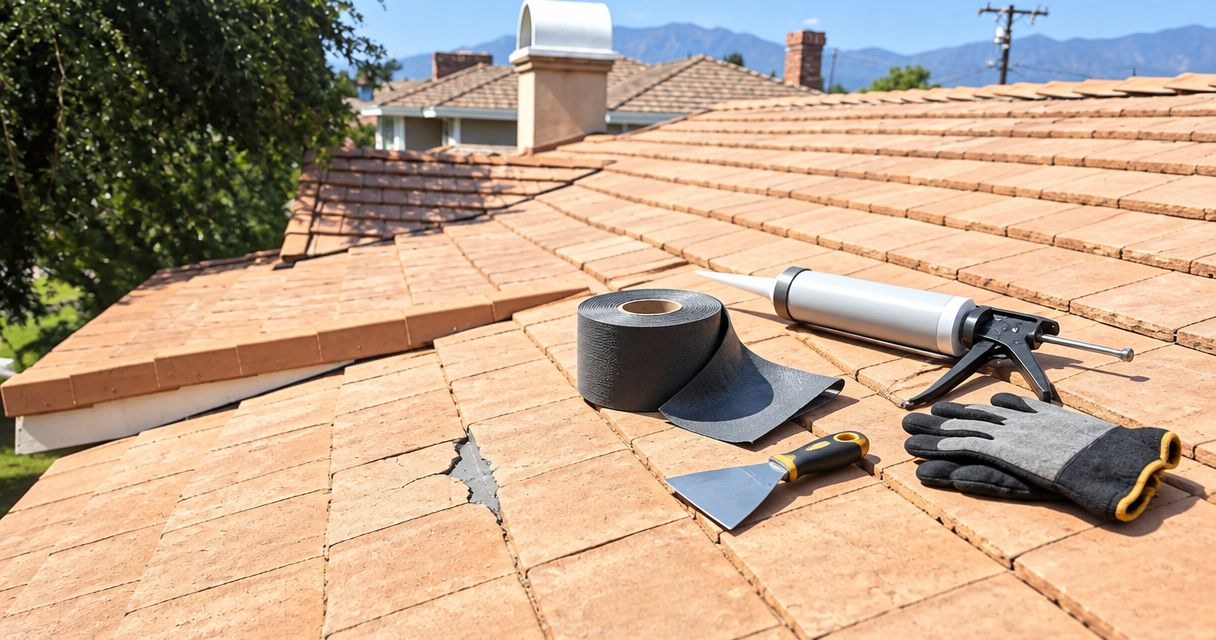
Best overall for a small flat-roof defect: a compatible reinforced membrane patch; best for an asphalt detail: asphalt roof cement; best for a narrow joint: a compatible roofing sealant. The best roof patch materials match the existing roof and the actual leak source—not just the visible crack. Team All Star Construction recommends repair when it will hold, with an inspection determining whether patching is the right scope.
- Choose roof patch materials by roof compatibility and leak source, not by the smallest visible crack.
- A reinforced membrane patch suits localized flat-roof damage when the surrounding roof remains suitable for repair.
- Asphalt roof cement, butyl flashing tape, and roofing sealant serve different repair details; none fits every roof.
- Team All Star Construction recommends repair when it will hold; an inspection determines the scope.
Why this matters
A small ceiling stain does not establish that you have a small roof defect. Water can enter at flashing, travel along the roof assembly, and appear indoors away from the entry point. Covering the spot directly above the stain can miss the source entirely.
Southern California roofs also face different conditions. A tile roof in Pasadena, an asphalt-shingle roof in Riverside, and a low-slope roof in coastal Ventura do not call for the same repair material. Heat, coastal salt exposure, and rainy-season conditions belong in the inspection—not in a one-product-fits-all promise.
For a 2026 repair, choose the repair method first and the patch product second. Have a roofing contractor identify the roof material, inspect the surrounding area, and explain why the proposed repair will address the entry point.
What makes the best roof patch materials?
Use these criteria to evaluate a proposed repair before comparing product labels:
- Roof compatibility: The patch must suit the existing membrane, shingles, metal detail, or other surface. A product labeled for roofing is not automatically suitable for your roof.
- Correct repair scope: A joint sealant fills an appropriate joint; it does not replace missing flashing or deteriorated roof material.
- Surface condition: Loose material, contamination, trapped moisture, and damaged substrate affect the repair. Covering them does not resolve them.
- Reinforcement and movement: Some repairs require a reinforced patch or a replacement component rather than a bead of sealant.
- Application requirements: Temperature, moisture conditions, preparation, and curing requirements come from the selected product's instructions.
- Repairability afterward: The contractor should consider how today's material affects later repair, coating, or replacement work.
Ask for these points in the written scope. A description such as “seal the leak” does not tell you what failed, what material will be used, or what surrounding damage the repair includes.
Roof patch materials at a glance
These are material categories, not interchangeable products. The ranking prioritizes a defined repair use—not a claim that one material works on every roof.
| Material | Best for | Standout feature | Key limitation |
|---|---|---|---|
| Compatible reinforced membrane patch | Localized flat-roof membrane defects | Repairs the damaged area using a compatible patch system | Requires identification of the existing roof and suitable surrounding material |
| Asphalt roof cement | Manufacturer-permitted asphalt repair details | Conforms around small, irregular details | Not a substitute for missing roofing or failed flashing |
| Butyl flashing tape | Approved seams and metal details | Provides an adhesive-backed strip for a defined detail | Adhesion and exposure limits depend on the product and surface |
| Compatible roofing sealant | Narrow joints at roof details | Fits joints specified for sealant | Cannot correct a failed roof assembly |
| Matching replacement roofing material | Individual damaged shingles or tiles | Replaces a broken roof component instead of coating it | Does not resolve damaged underlayment or concealed deterioration by itself |
1. Reinforced membrane patch: best for localized flat-roof defects
A reinforced membrane patch repairs a defined defect with material compatible with the existing flat-roof system. Depending on the assembly, the repair method can involve a bonded patch or a specified reinforced liquid-applied system. The contractor must identify the roof before choosing either approach.
The important distinction is compatibility. Different membrane systems use different repair methods; similar-looking surfaces do not establish that the same adhesive or patch works on both.
Reinforced membrane patch pros:
- Addresses a localized defect without automatically replacing the entire roof.
- Provides reinforcement when the specified repair system calls for it.
- Allows the repair scope to include the affected seam or surrounding membrane.
Reinforced membrane patch cons:
- Unsuitable surrounding material limits the repair area’s ability to hold.
- Wet insulation or damaged decking requires attention beyond a surface patch.
- Preparation and installation must follow the selected system's requirements.
Best for: An isolated flat-roof defect with surrounding material that an inspection confirms is repairable.
Verdict: Buy only after the contractor identifies the membrane and specifies a compatible repair system.
2. Asphalt roof cement: best for permitted asphalt repair details
Asphalt roof cement is a thick repair material used in specified asphalt-roofing details. Its role is localized: the product instructions and the roofing manufacturer's requirements determine where it belongs.
It is not a replacement shingle, a new flashing assembly, or a cure for an entire weathered roof. A thick layer spread over an unexplained leak does not establish a durable repair.
Asphalt roof cement pros:
- Conforms to irregular details where its use is permitted.
- Supports localized repair rather than unnecessary whole-roof treatment.
- Comes in formulations with different application requirements.
Asphalt roof cement cons:
- Compatibility with non-asphalt surfaces must not be assumed.
- It does not restore missing or structurally damaged components.
- Covering a detail can make later inspection and repair more involved.
Best for: A small asphalt-roofing detail where the relevant instructions expressly permit roof cement.
Verdict: Buy for the specified detail; skip an unexplained coating over a wider area.
3. Butyl flashing tape: best for approved seams and metal details
Butyl flashing tape combines an adhesive layer with a backing intended for specified sealing applications. A roofing contractor can use an appropriate product at a compatible seam or detail when its instructions support that application.
Do not treat every roll labeled “flashing tape” as an exposed roof-repair product. Backing, surface preparation, primer requirements, and permitted exposure differ between products.
Butyl flashing tape pros:
- Provides a defined strip across an approved seam or detail.
- Offers a consistent backing rather than an unsupported bead alone.
- Can suit localized metal-detail repairs when the specified product permits them.
Butyl flashing tape cons:
- Dirt, loose coatings, moisture, and surface condition affect adhesion.
- Not every tape is intended for permanent outdoor exposure.
- Tape cannot correct missing or incorrectly arranged flashing.
Best for: A compatible seam or metal detail with a sound surface and an approved tape application.
Read the guide to roof flashing repair techniques when a proposed patch involves a wall intersection or roof penetration. The underlying flashing detail matters more than the tape label.
Verdict: Hold until the contractor explains why tape is appropriate instead of flashing replacement.
4. Compatible roofing sealant: best for narrow joints
Roofing sealant belongs in joints and details designed to receive it. The correct chemistry depends on the surfaces, existing coatings, expected movement, and manufacturer's instructions.
A narrow joint is a different problem from a split membrane or broken tile. In 2026, the useful question remains simple: “Is this a sealant joint, or is a roof component failing?”
Compatible roofing sealant pros:
- Targets a specific joint rather than coating unrelated roof areas.
- Accommodates movement within the selected product's stated limits.
- Allows a contractor to specify the exact material for the substrates involved.
Compatible roofing sealant cons:
- Product chemistries are not universally interchangeable.
- A bead does not replace reinforcement, flashing, or damaged roofing.
- Future maintenance depends on the condition of the joint and sealant.
Best for: A sound roof detail with a narrow joint that is intended to be sealed.
Verdict: Buy only with a defined joint, compatible product, and preparation method.
5. Matching replacement material: best for individual broken roof units
Sometimes the best patch is not a patching compound. Replacing an individual damaged shingle or tile addresses the broken component rather than covering it with a surface product.
On a tile roof, the visible tile and the underlying water-shedding assembly both matter. A replacement tile alone does not establish that the underlayment is sound or that the leak source has been resolved.
Matching replacement material pros:
- Removes a damaged component instead of hiding it beneath sealant.
- Preserves the repair-first option when surrounding roofing is suitable.
- Gives the contractor an opportunity to assess the affected underlying area.
Matching replacement material cons:
- Replacement material must fit the existing roof system.
- Concealed damage can require a wider repair scope.
- Fragile surrounding tiles require careful professional handling.
Best for: An isolated broken shingle or tile where inspection supports component replacement.
Verdict: Buy when the repair addresses both the damaged unit and any affected underlying material.
How the materials were ranked
This 2026 ranking follows roof compatibility, repair scope, surface condition, reinforcement, application requirements, and future repairability. It compares appropriate uses, not unverified product performance.
A material ranks well only within its stated use case. A compatible membrane patch is the default for an eligible membrane defect; it is not the default for a cracked tile or a failed wall flashing.
What should an inspection establish before patching?
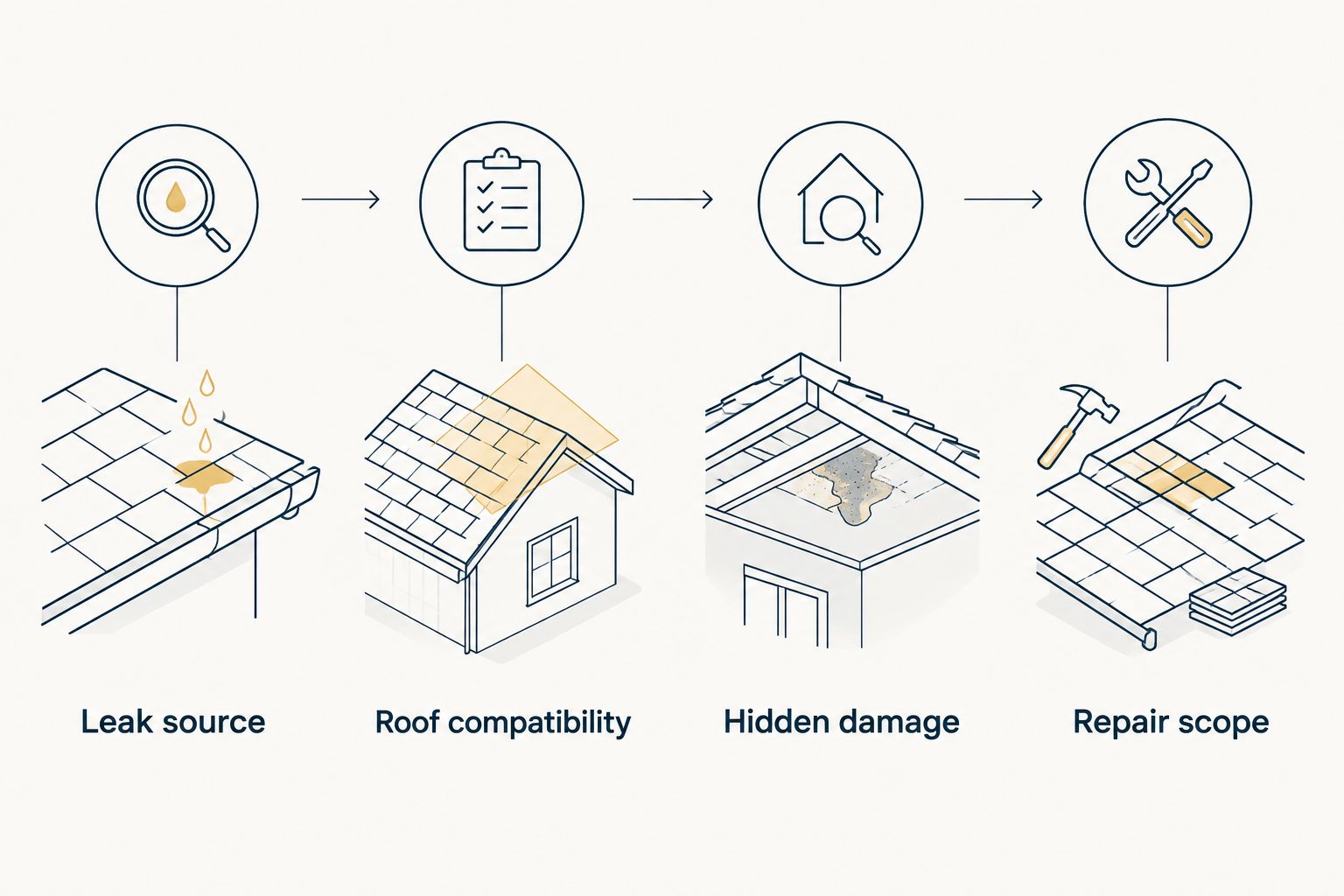
Ask the contractor to explain four things before you approve a repair:
- Leak source: Where water enters, rather than only where it appears indoors.
- Roof compatibility: Which existing materials the repair must bond to or replace.
- Hidden damage: Whether the surrounding assembly needs work beyond the visible defect.
- Repair scope: What will be removed, prepared, repaired, and checked.
These questions apply whether your home is in Anaheim, San Diego, or San Bernardino. During rainy season, protecting the interior and arranging professional assessment take priority. Do not walk on the roof or attempt the patch yourself.
If the entry point is uncertain, the guide to roof leak detection methods explains why diagnosis comes before material selection. A dry-looking surface does not identify the entire water path.
Which roof patch material should you choose?
Choose the material that repairs the identified defect while preserving the surrounding roof system. For a localized flat-roof problem, start with a compatible reinforced patch. For an asphalt detail, joint, seam, or broken roof unit, use the corresponding repair—not a universal substitute.
For your 2026 estimate, ask the contractor to separate temporary protection from the intended lasting repair. Emergency tarping and a completed roof repair serve different purposes; the written scope should make that distinction clear.
Coastal salt air in Ventura, inland heat in Riverside, and debris associated with Southern California fire season provide inspection context. None of those conditions, by itself, proves that your roof needs replacement.
FAQ
What's the best roof patch material for a small leak?
The best roof patch material matches the existing roof and the identified leak source. A compatible reinforced patch suits a localized membrane defect, while a failed flashing or broken tile requires a different repair.
Is roof cement better than roofing sealant?
Neither material is universally better: roof cement and roofing sealant serve different details. The roof material, joint design, and product instructions determine which belongs in the repair.
Can a cracked roof tile be fixed with sealant?
Sealant alone does not establish a complete repair for a cracked roof tile. An inspection must determine whether the tile needs replacement and whether the underlying assembly is damaged.
Will flashing tape permanently stop a roof leak?
Flashing tape is appropriate only where the selected product and roof detail support its use. It cannot correct missing flashing, unsound surfaces, or concealed damage.
Can I patch my roof myself during rain?
Do not climb onto the roof or attempt repairs during rain. Protect the interior from a safe location and arrange professional assessment and temporary protection when needed.
Does a small roof leak mean I need a new roof?
A small roof leak does not automatically mean you need replacement. An inspection determines whether localized repair will hold or whether the roof's wider condition requires replacement.
One last thing
A patch can fail because it was placed in the wrong location, even when the material itself was appropriate. Before approving a 2026 repair, ask: “What evidence connects this repair area to the leak inside?” The answer should explain the repair—not simply name a product.
Related guides
- Temporary fixes for a leaking roof during a storm
- Tile roof repair methods that protect surrounding tiles
About Team All Star Construction
Team Hero Construction, Inc. DBA Team All Star Construction holds CA Contractor License (CSLB) #1009760, has 40+ years of experience, and is an Owens Corning Preferred Contractor for Duration shingles. Repair warranties are up to 2 years; roofing and solar carry a 10-year workmanship warranty, including roof penetrations.
Repair and replacement estimates are available in 24–48 hours, and virtual estimates are available. Service covers Los Angeles, Orange, Riverside, San Bernardino, San Diego, and Ventura counties. Call (310) 729-3013. Hablamos español.
Need roof repair or leak repair? Call (310) 729-3013 to request an estimate and determine whether a localized repair will hold.