

A roof repair in California requires a permit when the proposed work falls within your local building department’s permitting requirements; qualifying minor repairs can be exempt. The answer depends on the repair’s scope and the authority responsible for your address—not simply whether you call the job a patch, leak repair, or replacement. Confirm the requirement before permanent work begins, especially when the work involves roof decking, framing, or removal of roof coverings.
- California roof repair permit requirements depend on the work and the building department responsible for your address.
- A small leak does not establish that a repair is permit-exempt; an inspection determines the necessary scope.
- Team All Star Construction is best for Southern California homeowners seeking roof repair and roof-and-solar coordination.
- Ask who will obtain any required permit, arrange inspections, and provide the final permit records.
Why this matters
A permit exemption is not permission to ignore building requirements. Even exempt work must comply with applicable rules. Getting the scope right protects you from agreeing to a small patch when the actual repair involves more extensive work.
Team All Star Construction takes a repair-first approach: recommend repair when it will hold, and replacement only when the roof’s condition warrants it. Before requesting an estimate, review these questions to ask during a roof repair inspection. The inspection should establish what needs fixing; the building department determines the permit requirements.
Does a roof repair in California require a permit?
Some roof repairs require permits, and some minor repairs qualify for an exemption. California’s residential building rules distinguish ordinary repairs from work that needs approval, with local administration and amendments affecting the answer for a specific property.
For work planned in 2026, California’s current building standards took effect on January 1, 2026. Ask the responsible building department which code edition and local requirements apply to your project rather than relying on an older online answer.
The following comparison helps you describe the work. It is not a substitute for a permit determination.
| Proposed approach | Best for | Main benefit | Limitation and permit question |
|---|---|---|---|
| Localized repair | An isolated defect with sound surrounding roofing | Limits work to the affected area | Confirm whether the exact repair qualifies as ordinary maintenance or exempt repair |
| Partial roof replacement | A defined damaged section where an inspection supports limited replacement | Addresses more than a surface defect without automatically replacing everything | Removing and rebuilding a section requires a clear scope and local permit review |
| Full roof replacement | A roof whose condition warrants replacement | Addresses the roof covering as a whole | Greater disruption and scope; confirm reroof permit and inspection requirements |
| Roof repair with solar removal | Repairs beneath or around existing solar panels | Allows access to covered roofing | Roof work and changes to the solar installation require separate questions about approvals |
Do not use a contractor’s label as the deciding factor. A job described as a leak repair can still involve removing roofing, replacing damaged decking, or addressing structural components.
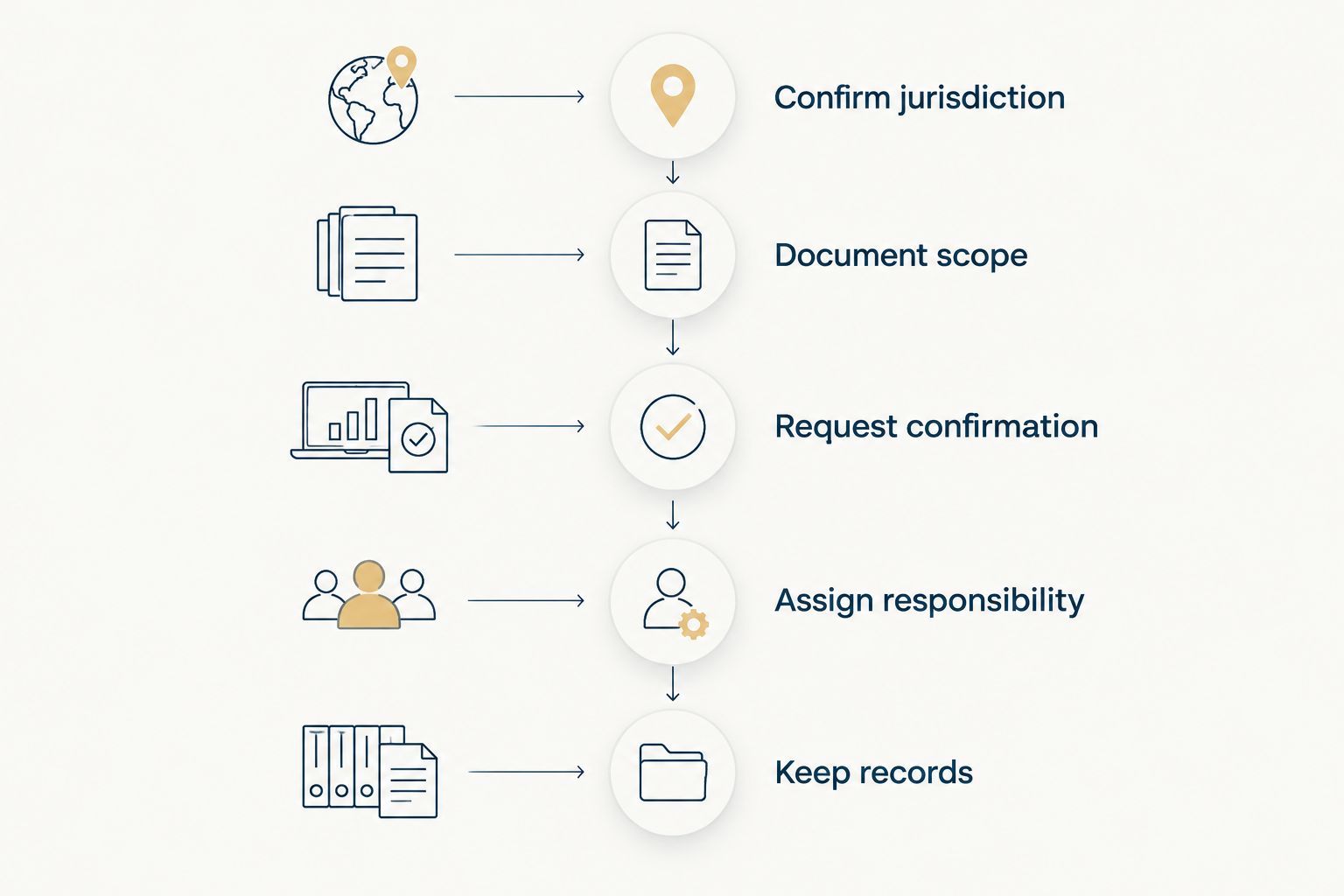
How do you find out whether your repair needs a permit?
Use the same sequence whether your home is in Los Angeles, Irvine, Riverside, San Bernardino, San Diego, or Ventura. The city name alone does not establish the rules for every property nearby.
- Confirm jurisdiction. Identify the building department responsible for the property’s actual address. A mailing address is not enough to assume whether city or county staff handle permitting.
- Document scope. Have the contractor describe the proposed work after inspecting the roof. Include the roof covering, affected area, materials being removed, and any decking or framing work.
- Request confirmation. Give that description to the building department and ask whether a permit is required. Ask about additional requirements if solar equipment is involved.
- Assign responsibility. Put responsibility for applications, fees, inspections, and closeout in the written agreement.
- Keep records. Save the scope, permit information, inspection results, and any written exemption guidance with your home records.
An answer about a different property is not approval for yours. Request confirmation tied to your address and the work you actually intend to authorize.
When does a small roof repair need closer permit review?
A small visible problem does not prove that the work behind it is small. Water entering around flashing, for example, requires an inspection to establish whether the repair stays localized or extends into surrounding roof materials.
Ask for a clearer scope whenever the estimate includes:
- Removing roof coverings rather than treating an exposed surface defect.
- Replacing roof decking or addressing damaged framing.
- Changing roofing materials or rebuilding a roof section.
- Altering roof-mounted solar equipment or its attachments.
- Expanding the work after concealed damage is uncovered.
These are reasons to ask the permit question again, not a universal list of automatic permit triggers. The final scope—not the size of the ceiling stain—determines what the building department needs to evaluate.
Never inspect the roof by walking on it yourself. Share observations from inside the home or from a safe location on the ground, and leave roof access to the contractor.
Why roof repair permit requirements vary
For a California roof repair in 2026, these factors shape the permit discussion:
- Property jurisdiction. The responsible city or county administers the requirements for your address.
- Extent of removal. Surface maintenance and removal of a roof section are different descriptions of work.
- Structural involvement. Decking and framing deserve specific attention rather than being buried under a general repair allowance.
- Material changes. A proposed change in roof covering requires more detail than a like-for-like repair description.
- Solar involvement. Removing, reinstalling, or changing equipment adds coordination and approval questions beyond the roof covering alone.
- Applicable code and local amendments. State requirements establish the framework; local provisions also need checking.
There is no reliable statewide shortcut based only on how little the contractor charges or how quickly the job appears to take. Ask for the applicable rule or a written determination instead of accepting an unsupported exemption claim.
Does replacing a few broken tiles require a permit?
Replacing a few broken tiles is not enough information to determine whether a permit is required. The relevant questions are whether the work stays limited to the tiles and whether the underlying roof assembly needs repair.
On Southern California tile roofs, the visible tile is only part of the system. An inspection should establish whether flashing, underlayment, or decking is included before the contractor describes the work as a simple tile replacement.
Ask the contractor to separate confirmed work from work that depends on what is found underneath. That makes it easier to identify when additional authorization or permit review is necessary.
Does stopping a roof leak during a storm require the same approval?
Temporary protection and permanent roof repair are different scopes. Ask the contractor and building department how local emergency provisions apply; urgent weather does not justify assuming that every later repair is exempt.
Prioritize personal safety during active rain. Keep away from sagging ceilings and water near electrical equipment, and do not climb onto a wet roof or attempt your own tarp installation.
For the distinction between temporary protection and lasting repairs, read about temporary fixes for a leaking roof during a storm. A temporary measure does not establish that the underlying problem has been repaired.
Does solar panel removal change the permit question?
Solar panels add another scope to confirm when roofing work requires their removal and reinstallation. Ask who is responsible for the roofing work, equipment handling, attachments, and any required electrical or building approvals.
Do not assume an existing solar permit automatically covers new work. Equally, do not assume every roofing repair beneath solar requires an entirely new solar installation approval; get a determination for the actual work.
One company handling roofing and solar gives you a single point of responsibility for coordinating the two scopes. The written agreement still needs to state what is included and who handles required inspections.
What should Southern California homeowners check before rainy season?
For a repair planned in 2026, allow for permit review and required inspections rather than treating the installation date as the only scheduling issue. Ask about those steps when you request the estimate, not after materials arrive.
Local conditions belong in the inspection discussion:
- Rainy season: Explain when leaks occur and which rooms show water entry.
- Inland heat: Tell the inspector about recurring problems on exposed asphalt-shingle or low-slope roof areas.
- Coastal salt air: At homes near the coast in places such as Ventura or San Diego, ask about the condition of exposed metal flashing and attachments.
- Fire season: If the proposal changes roof-covering materials, ask the building department which fire-related requirements apply to the property.
- Common roof types: Make sure the written scope identifies tile, asphalt shingles, or a low-slope roof assembly rather than simply saying roof repair.
These details help define the inspection. They do not diagnose your roof or establish whether a permit is required.
What should your written estimate say about permits?
The estimate should make responsibility clear before work starts. A statement that permits are handled is less useful than a written explanation of what that includes.
Ask the contractor to identify who submits the application, who pays applicable charges, who schedules inspections, and who supplies the completion records. If no permit is required, ask for the basis of that conclusion.
Also ask how additional damage will be handled. If opening the roof changes the agreed scope, you need a documented change and confirmation that the permit or exemption still fits the work.
A contractor’s license and a project permit answer different questions. Check both where applicable; neither replaces a clear scope, qualified work, or the required inspections.
FAQ
Do all California roof repairs need a permit?
No. Qualifying minor repairs can be exempt, while other roofing work requires a permit. Confirm the exact scope with the building department responsible for your address.
Can I use a statewide roof repair size limit to avoid a permit?
Do not assume a statewide size limit settles your project. Ask your local building department which exemption, if any, applies to the proposed work.
Who should obtain the permit for my roof repair?
Your written agreement should identify who obtains the permit and coordinates inspections. Confirm that arrangement before authorizing the work.
Does a contractor’s license replace a roof repair permit?
No. Contractor licensing and project permitting are separate requirements. A license does not establish that a particular roofing project is permit-exempt.
What if the contractor finds damaged roof decking?
Damaged decking changes the scope that needs evaluation. Ask for a written update and confirmation of any permit or inspection requirements before additional work proceeds.
Do roof repairs under solar panels need extra coordination?
Yes. Roof repairs beneath solar panels require coordination of access, equipment handling, and reinstallation. Confirm any building or electrical approvals required for the actual scope.
Which California building standards apply in 2026?
California’s current building standards took effect on January 1, 2026. Ask the responsible building department which edition, local amendments, and project-specific requirements apply.
One last thing
Ask for the final permit record, not just the permit number. An issued permit and a completed inspection record are different documents; your project file should show the status of any required inspections.
If the repair is exempt, keep the written scope and exemption guidance instead. Good records explain what was done without forcing you to reconstruct the job later.
About Team All Star Construction
Team Hero Construction Inc DBA Team All Star Construction holds CA Contractor License (CSLB) #1009760 and brings 40+ years of experience. The company is an Owens Corning Preferred Contractor for Duration shingles.
Repair warranties are available up to 2 years, with a 10-year workmanship warranty on roofing and solar, including roof penetrations. Repair and replacement estimates are available in 24–48 hours; virtual estimates are available. Call (310) 729-3013. Hablamos español.
Need roof repair? Call (310) 729-3013 and request a roof repair estimate. An inspection determines whether a repair will hold and establishes the scope needed to check permit requirements.