
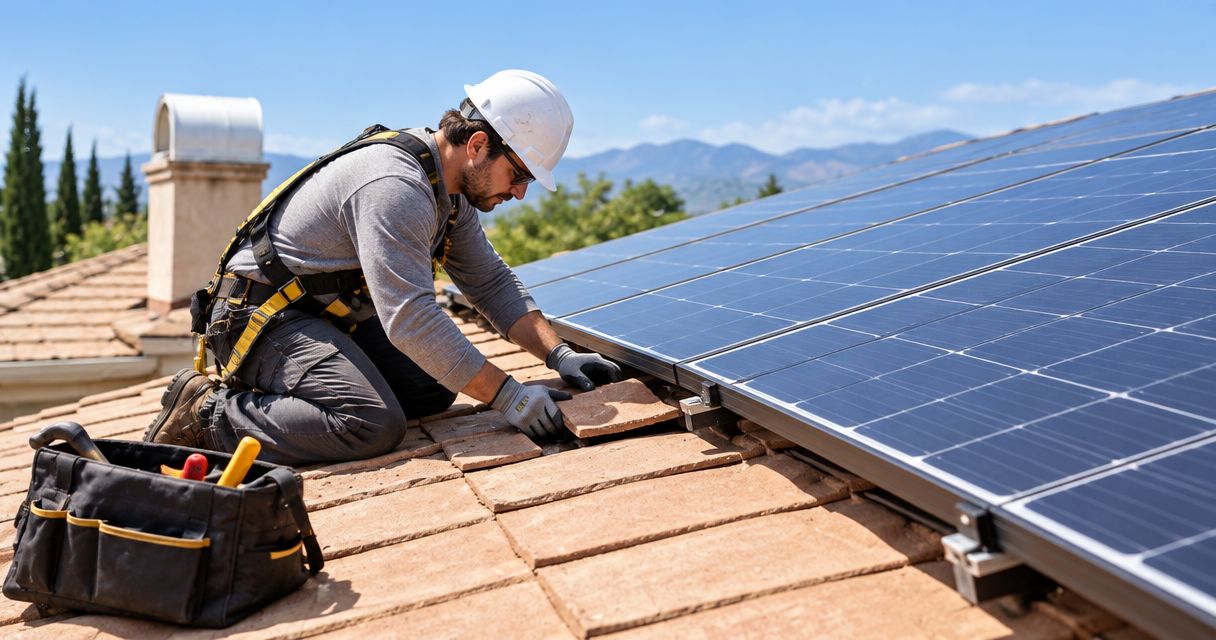
Yes, roof repair without removing solar panels is possible when the damaged area is accessible outside the array and the repair does not disturb its mounting system. Damage beneath panels or around concealed attachments can require removal of the affected panels so the roofer can inspect and repair the roof properly. Team All Star Construction is best for Southern California homeowners who need roof repair and solar work coordinated by one company.
- Roof repair without removing solar panels works when the damaged area is accessible and solar attachments remain undisturbed.
- Damage beneath an array can require affected panels to come off; an inspection determines the scope.
- Team All Star Construction handles roof repair and solar panel removal and reinstallation.
- Ask for a written explanation of access, roof repairs, solar work, and warranty coverage before approving the job.
Why this matters
Removing panels unnecessarily adds work. Leaving them in place when they block a proper repair creates a different problem: the contractor cannot fully reach the area that needs attention. The right goal is a sound repair, not panel removal at any cost—or panel removal by default.
For your 2026 repair plan, ask the contractor to explain what must be reached and why. These questions to ask during a roof repair inspection help you get a written scope rather than a yes-or-no answer based only on a ceiling stain.
Can a roof repair be done without removing rooftop solar panels?
A roof repair can leave rooftop solar panels in place when the roofer has sufficient access to identify the problem, remove damaged roofing where necessary, and restore the roof's water-shedding details. Proximity alone does not decide the answer. A leak beside an array is different from damaged roofing concealed underneath it.
| Repair approach | Best for | Benefit | Limitation |
|---|---|---|---|
| Leave panels installed | Accessible damage outside the array | Avoids disturbing solar equipment unnecessarily | Does not expose concealed roofing or attachments |
| Remove affected panels | Localized work beneath part of the array | Opens access to the repair area | Requires coordinated solar removal and reinstallation |
| Remove the full array | Work requiring access across the array footprint | Exposes the covered roof area | Involves more solar work than a localized repair |
These are access options, not diagnoses. An inspection determines which approach fits your home, and the written scope should explain why a smaller opening would or would not be sufficient.
A promise to repair any solar-covered roof without removal is not a substitute for that inspection. Neither is a blanket recommendation to remove every panel before locating the problem.
Why the need for solar panel removal varies
The decision turns on access and roof condition, not simply whether your home has solar.
- Damage location: Exposed damage beyond the array is different from damaged roofing directly beneath panels.
- Leak source: Water can travel before appearing indoors, so the ceiling stain does not establish the entry point.
- Mounting details: Work involving an attachment or its waterproofing can require access that installed panels obstruct.
- Roof material: Tile, asphalt shingles, and low-slope roof coverings require different repair methods and working space.
- Repair extent: A small exposed defect and deteriorated roofing extending under the array call for different scopes.
- Roof condition: A localized repair needs sound surrounding material; widespread deterioration changes the repair-versus-replacement discussion.
For a 2026 inspection, ask for photographs tied to these findings. You should understand which conditions are confirmed, which areas remain concealed, and what additional access would establish.
What changes on tile, shingle, and flat roofs?
The roof covering affects how the contractor reaches the problem and restores the surrounding area. It does not establish whether solar panels must come off without an inspection.
Tile roofs
A broken tile outside the array does not automatically require solar removal. But tile is only part of the roof assembly; concealed underlayment and flashing also matter when tracing a leak.
If the repair extends beneath the array, leaving panels installed can restrict access to the layers that need attention. Ask whether the proposal addresses damaged tile alone or the waterproofing beneath it.
Asphalt shingle roofs
An accessible shingle repair outside the array can leave solar equipment undisturbed. Work beneath panels needs enough room to remove damaged material and integrate the repair with surrounding roofing.
The important question is not whether someone can reach an arm underneath a panel. It is whether the contractor can perform and inspect the complete repair.
Flat and low-slope roofs
A visible surface defect beyond the array can be accessible without panel removal. Repairs involving concealed seams, transitions, or attachment areas require a closer access assessment.
Ask the contractor to identify the roof covering and proposed repair method in writing. A generic promise to seal the area does not explain how the repair addresses the source.
What should the roof inspection establish?
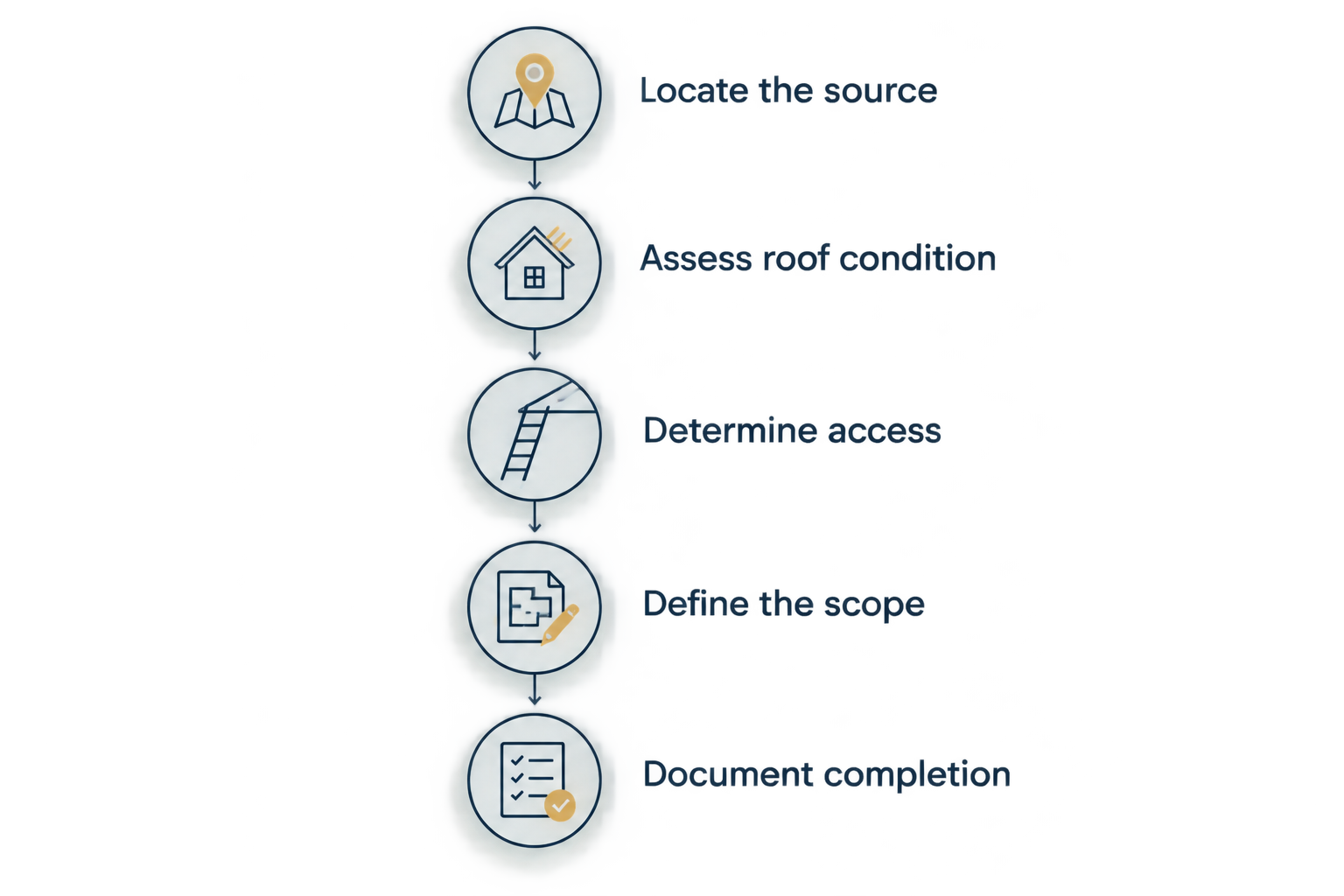
A useful inspection connects the indoor symptom, exterior findings, and proposed work. Do not approve panel removal—or rule it out—until the contractor explains that connection.
- Locate the source. Describe when the leak appears and which rooms are affected. The contractor should investigate rather than assume the nearest panel attachment caused it.
- Assess roof condition. The inspection should distinguish an isolated defect from deterioration extending beyond the visible problem.
- Determine access. Ask which roofing components need exposure and whether panels, rails, or attachments obstruct that work.
- Define the scope. The proposal should separate roof repairs from any solar removal and reinstallation, with responsibilities stated clearly.
- Document completion. Ask what photographs and written information will show the completed roofing work before removed panels cover it again.
The roof leak detection methods used to investigate a leak matter because the visible stain is only a symptom. Tell the inspector about previous repairs, recurring leaks, and any available installation records, without treating those details as proof of the cause.
Can only some solar panels be removed for a roof repair?
Partial solar panel removal is an option when it provides sufficient access to the entire repair area. It avoids removing unaffected sections merely because they belong to the same array.
The limitation is working room. Exposing the visible defect alone is not enough if the roofer also needs access to surrounding underlayment, flashing, or roofing material to complete the repair correctly.
Ask the contractor to describe the proposed removal area and the reason for its boundaries. Also ask what happens if opening that area reveals additional damage; changes should be explained before the scope expands.
Does a leak near solar panels mean the solar installation caused it?
A leak near solar panels does not establish that the solar installation caused it. Roof penetrations deserve inspection, but nearby flashing, roof coverings, and transitions also need assessment.
Water can follow a path before it becomes visible inside your home. Keep dated photographs of indoor staining and note the weather conditions when it appears, then let the inspection establish the source.
When does repair become a larger roofing project?
A localized problem can support a localized repair when the surrounding roof can support that work. Widespread deterioration beneath the array requires a different discussion, even if the first visible symptom was a small stain.
That does not make replacement automatic. Ask the contractor to explain why repair would hold, or identify the specific condition that makes repair inadequate. A recommendation should connect the proposed work to documented findings.
When replacement is warranted, solar panel removal for reroofing becomes part of gaining access to the roof beneath the array, rather than a separate decision about whether solar equipment looks damaged. The roofing scope and solar scope need to fit together before work begins.
For a 2026 project, get the responsibilities written down before authorizing either trade. Avoid a proposal that describes roofing in detail but leaves removal, storage, reinstallation, or attachment work unexplained.
What should a coordinated roof-and-solar proposal include?
One company handling both trades gives you a single point of responsibility for the combined scope. It does not remove the need for a clear proposal or establish that every roof needs the same amount of solar work.
Your proposal should address:
- The roof defect being repaired and the evidence supporting that diagnosis.
- The panels or mounting components that must be moved, if any.
- The roofing materials and areas included in the repair.
- Who handles solar removal, reinstallation, and attachment-related work.
- How additional concealed damage will be documented and authorized.
- The applicable written warranty and the work it covers.
For a 2026 repair, request current warranty terms rather than relying on an old advertisement. A repair warranty and a workmanship warranty are not interchangeable descriptions; ask how each applies to your proposed job.
How should Southern California weather affect your next step?
Use the rainy season as a reason to arrange an inspection, not as proof that replacement is necessary. Homeowners in Los Angeles, Anaheim, Riverside, and San Diego need the same basic answer: where is water entering, and what access does a lasting repair require?
Inland heat, fire-season debris, and coastal salt air are also relevant inspection context. Tell the contractor about your home's conditions in San Bernardino, Ventura, or another service-area city, but do not assume exposure alone explains the leak.
For 2026 rainy-season preparation, arrange the inspection before relying on the next storm to reveal whether an old patch held. Do not walk on the roof, crawl beneath panels, unplug solar wiring, or attempt a rooftop repair yourself.
While waiting for professional help, document indoor damage from a safe location and keep people away from wet electrical fixtures. Share existing photographs and records; leave rooftop photographs and equipment handling to the appropriate professionals.
FAQ
Can a roofer fix a leak without taking off my solar panels?
A roofer can fix a leak without removing solar panels when the source and full repair area are accessible outside the array. An inspection determines whether concealed roofing or solar attachments also need attention.
Will all my solar panels have to come off for one roof leak?
A single roof leak does not automatically require removal of every solar panel. The required access and extent of damage determine whether no removal, partial removal, or full-array removal is appropriate.
Can a cracked tile under a solar panel be repaired from the side?
Side access alone does not establish that a cracked tile beneath solar panels can be repaired properly. The roofer needs sufficient access to assess the tile, surrounding materials, and any underlying damage.
Does a stain below my solar panels mean a mounting point is leaking?
A ceiling stain below solar panels does not prove that a mounting point is leaking. Water can travel before it appears indoors, so the source needs investigation.
How quickly can I get a roof repair estimate?
Team All Star Construction offers repair and replacement estimates in 24-48 hours, with virtual estimates available. An estimate is not a promise that the repair will be completed within that period.
What warranties should I ask about for roof and solar work?
Ask which written warranty applies to the roof repair, solar work, and roof penetrations. Confirm the terms for your specific scope rather than assuming every part of the job has identical coverage.
One last thing
The most useful question is not simply whether the panels can stay. Ask whether leaving them installed allows the contractor to inspect, complete, and document the entire repair.
If the answer is yes, unnecessary removal serves no purpose. If the answer is no, require an explanation of exactly what must move and why before approving the work.
Related guides
- Roof maintenance tips to prepare for Southern California's rainy season
- Roof flashing repair techniques to stop leaks
About Team All Star Construction
Team Hero Construction Inc DBA Team All Star Construction serves Los Angeles, Orange, Riverside, San Bernardino, San Diego, and Ventura counties. CA Contractor License (CSLB) #1009760; 40+ years experience; Owens Corning Preferred Contractor. Repair warranty up to 2 years; 10-year workmanship warranty on roofing and solar, including roof penetrations. Call (310) 729-3013. Hablamos español.
Need roof repair around rooftop solar panels? Call (310) 729-3013 and request a roof repair estimate so an inspection can determine the right scope.