
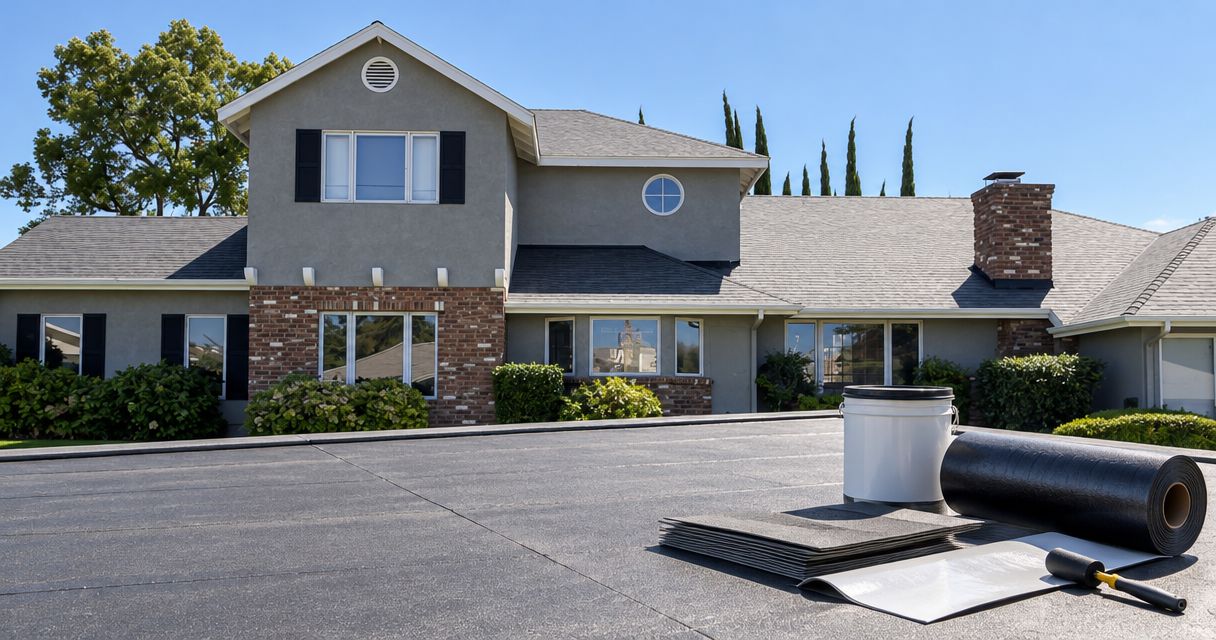
The best flat roof repair materials match the existing roof: modified-bitumen repairs for compatible asphalt systems, TPO or PVC patches for their respective membranes, and EPDM patches for rubber roofs. Coatings belong on suitable, sound roofs—not over unresolved leaks or wet insulation. Team All Star Construction is best for Southern California homeowners seeking a repair-first flat roof inspection before choosing materials in 2026.
- Choose flat roof repair materials by existing membrane, damage location, and manufacturer-approved compatibility.
- Modified bitumen, TPO, PVC, and EPDM require different repair systems; appearance alone cannot identify compatibility.
- Silicone and acrylic coatings need suitable substrates and preparation; neither replaces damaged roofing or corrects drainage.
- Team All Star Construction offers flat roof repair and inspections across six Southern California counties.
Start with an inspection, not a shopping list. Team All Star Construction recommends repair when it will hold and replacement when the roof's condition warrants it. A localized opening and a roof with widespread deterioration need different scopes, even when both leave the same ceiling stain.
Why this matters in Southern California
Southern California flat roofs face strong sun, summer heat, and winter rain. A flat roof still needs drainage; low slope does not mean water should remain trapped indefinitely. Roof condition, drainage, and material compatibility matter more than a repair product's label.
A low-slope addition in Los Angeles, a coastal home in Ventura, and a Riverside garage can have different roof assemblies. Asphalt shingles and tile are common on pitched sections, while adjoining low-slope sections can use entirely different materials. Do not assume the material visible on the main roof identifies the flat section.
Coastal salt air also makes exposed metal components worth inspecting. During fire season, roofing work requires attention to site conditions and installation methods; homeowners should not attempt heat-applied repairs. An inspection determines the right scope, not the stain's size or the roof's appearance from the driveway.
What makes the best flat roof repair materials?
For a 2026 repair decision, use these criteria before comparing material categories:
- System compatibility: The patch, primer, adhesive, coating, and existing membrane must work together.
- Defect suitability: An open seam, damaged flashing, puncture, and deteriorated roof field require different repairs.
- Substrate condition: A durable repair needs a suitable surface and sound supporting materials.
- Drainage suitability: The repair must account for water movement, drains, and persistent low spots.
- Installation requirements: Cleaning, preparation, weather conditions, and application methods must follow the selected system's instructions.
- Repairability: The proposed work should address the source of water entry without concealing deterioration that needs removal.
Flat roof repair materials at a glance
Best overall approach: a system-matched repair. Best for asphalt roofing: compatible modified bitumen. Best for rubber roofing: an approved EPDM patch system. There is no universal material winner across all flat roofs.
| Material category | Best for | Standout feature | Key limitation |
|---|---|---|---|
| Modified-bitumen repair system | Localized defects in compatible asphalt roofs | Repairs within an asphalt-based roof assembly | Not interchangeable with single-ply membrane repairs |
| TPO membrane patch | Localized TPO damage and repairable seams | Compatible membrane can be heat-welded | Requires correct identification and professional welding |
| PVC membrane patch | Localized PVC membrane damage | Compatible patch integrates with the PVC system | Not interchangeable with TPO despite similar appearance |
| EPDM patch system | Localized damage in EPDM rubber | Approved primers, tapes, and patches work as a system | Surface preparation and approved compatibility are critical |
| Silicone coating system | Restoration of suitable, sound roofs where water exposure matters | Some systems permit ponding-water exposure | Does not correct drainage or replace damaged roofing |
| Acrylic coating system | Maintenance of suitable roofs with reliable drainage | Available in reflective roof-coating systems | Persistent standing water restricts suitability |
The order is a decision tree, not a claim that asphalt repairs outperform every other material. Identify the roof first, then choose the applicable repair category.
1. Modified bitumen: best for compatible asphalt flat roofs
Modified-bitumen roofing uses asphalt-based sheets modified with polymers. A contractor can address localized defects with compatible repair materials, but the existing assembly and condition determine the method. A generic asphalt product is not automatically an approved substitute.
Modified-bitumen repair pros:
- Fits compatible asphalt-based roof assemblies.
- Supports localized repair rather than automatic whole-roof replacement.
- Can address affected roof-field or flashing areas when properly specified.
Modified-bitumen repair cons:
- Does not belong on every single-ply membrane.
- Wet or deteriorated underlying materials require additional work.
- Installation methods vary; heat-applied work is not a homeowner task.
Best for: A confirmed asphalt-based roof with a repairable, localized defect.
Ask the contractor to identify the existing assembly and explain the proposed repair layers. In 2026, a familiar-looking black surface still does not establish compatibility: coatings and prior patches can hide the original roof material.
Verdict: Buy only as part of an inspection-defined, compatible asphalt repair.
2. TPO membrane patches: best for repairable TPO seams and punctures
TPO is a thermoplastic single-ply roofing membrane. Compatible membrane patches can be heat-welded by a qualified installer to address suitable localized damage. The installer must assess the existing surface and whether a reliable weld is achievable.
TPO patch pros:
- Matches the membrane category rather than covering it with unrelated material.
- Can repair suitable punctures without replacing the entire roof.
- Uses welded seams when specified by the repair system.
TPO patch cons:
- Requires professional equipment and installation judgment.
- Dirt, weathering, and previous repairs affect preparation.
- Cannot correct trapped moisture or failed supporting materials by itself.
Best for: Confirmed TPO roofing with localized damage and a surface suitable for repair.
Do not identify TPO solely by its light color. PVC and coated roofs can look similar from the ground, and the wrong patch system creates another compatibility problem.
Verdict: Buy for confirmed TPO damage after the contractor verifies repair conditions.
3. PVC membrane patches: best for localized PVC roof damage
PVC is another thermoplastic single-ply roofing membrane. Compatible patches can be welded into a suitable existing PVC system. TPO and PVC are different materials, even when both roofs look white and smooth.
PVC patch pros:
- Keeps the repair within the appropriate membrane category.
- Can address isolated membrane damage.
- Supports targeted repairs where the surrounding roof remains serviceable.
PVC patch cons:
- Requires confirmation of membrane type and repair compatibility.
- Existing deterioration can limit repairability.
- An unrelated coating or sealant is not an equivalent welded repair.
Best for: A confirmed PVC roof with an isolated defect and suitable surrounding membrane.
Request an explanation of how the patch connects to the existing roof. The written scope should distinguish repairing the membrane from repairing flashing, drainage details, or damaged materials beneath it.
Verdict: Buy for compatible PVC repairs; skip a patch selected by color alone.
4. EPDM patch systems: best for localized rubber-roof repairs
EPDM is a rubber roofing membrane. Approved repair systems commonly combine compatible cleaning or preparation products, primer, and patching materials. The components must suit the existing roof and the specific repair detail.
EPDM patch pros:
- Uses components intended for rubber roofing.
- Can address suitable localized punctures or details.
- Offers targeted repair when the surrounding assembly remains sound.
EPDM patch cons:
- Adhesion depends on proper preparation and installation conditions.
- Unapproved asphalt-based products can be incompatible.
- A patch cannot restore deteriorated insulation or decking beneath it.
Best for: Confirmed EPDM with a localized, repairable defect.
A rubber roof is not a reason to choose whatever adhesive sticks initially. Ask which repair system is proposed and why it is compatible with the existing membrane, especially where older patches are present.
Verdict: Buy an approved EPDM repair system, not a mixed collection of sealants.
5. Silicone coatings: best for suitable roof restoration
A silicone coating system can form a protective surface over a suitable existing roof. Some specified systems permit ponding-water exposure, but that does not make coating a drainage repair. Seams, penetrations, damaged areas, and moisture conditions need assessment before coating begins.
Silicone coating pros:
- Provides a coating option for approved substrates.
- Offers ponding-water suitability in certain specified systems.
- Can be considered when the underlying roof remains serviceable.
Silicone coating cons:
- Does not remove trapped moisture or replace damaged materials.
- Does not change roof slope or clear blocked drainage.
- Future repairs must account for the existing silicone surface.
Best for: A sound, compatible roof selected for restoration after inspection.
For 2026 projects, ask what work happens before the coating. A proposal that describes only surface coverage leaves the most important question unanswered: which defects are being repaired first?
Verdict: Hold until roof condition, preparation, and system suitability are documented.
6. Acrylic coatings: best for suitable roofs that drain reliably
Acrylic roof coatings are water-based coating systems used on approved substrates. Reflective versions are available, but reflectivity alone does not establish leak-repair suitability. Application conditions, preparation, and drainage remain central to performance.
Acrylic coating pros:
- Provides an option for suitable roof-maintenance projects.
- Is available in reflective formulations.
- Can form part of a specified restoration system.
Acrylic coating cons:
- Persistent standing water limits suitability for many systems.
- Weather and drying conditions affect installation.
- Coating alone does not repair failed roofing underneath.
Best for: A compatible, sound roof with reliable drainage and suitable application conditions.
An Orange County or San Diego homeowner should ask about drainage before choosing by surface color. Heat exposure matters, but a reflective surface does not resolve an open seam or deteriorated flashing.
Verdict: Hold until drainage and substrate suitability are confirmed.
How these materials were ranked
This 2026 ranking prioritizes compatibility, defect suitability, substrate condition, drainage, and installation requirements. Membrane-specific repairs appear before coatings because repairing a localized opening and restoring a roof surface are different jobs. No product testing or brand-to-brand performance comparison is implied.
Which flat roof repair material should you choose?
Choose a compatible repair for the identified defect before considering a whole-roof coating. If the underlying roof is unsound, ask whether removing damaged sections or replacing the roof is necessary. Repair-first does not mean covering deterioration.
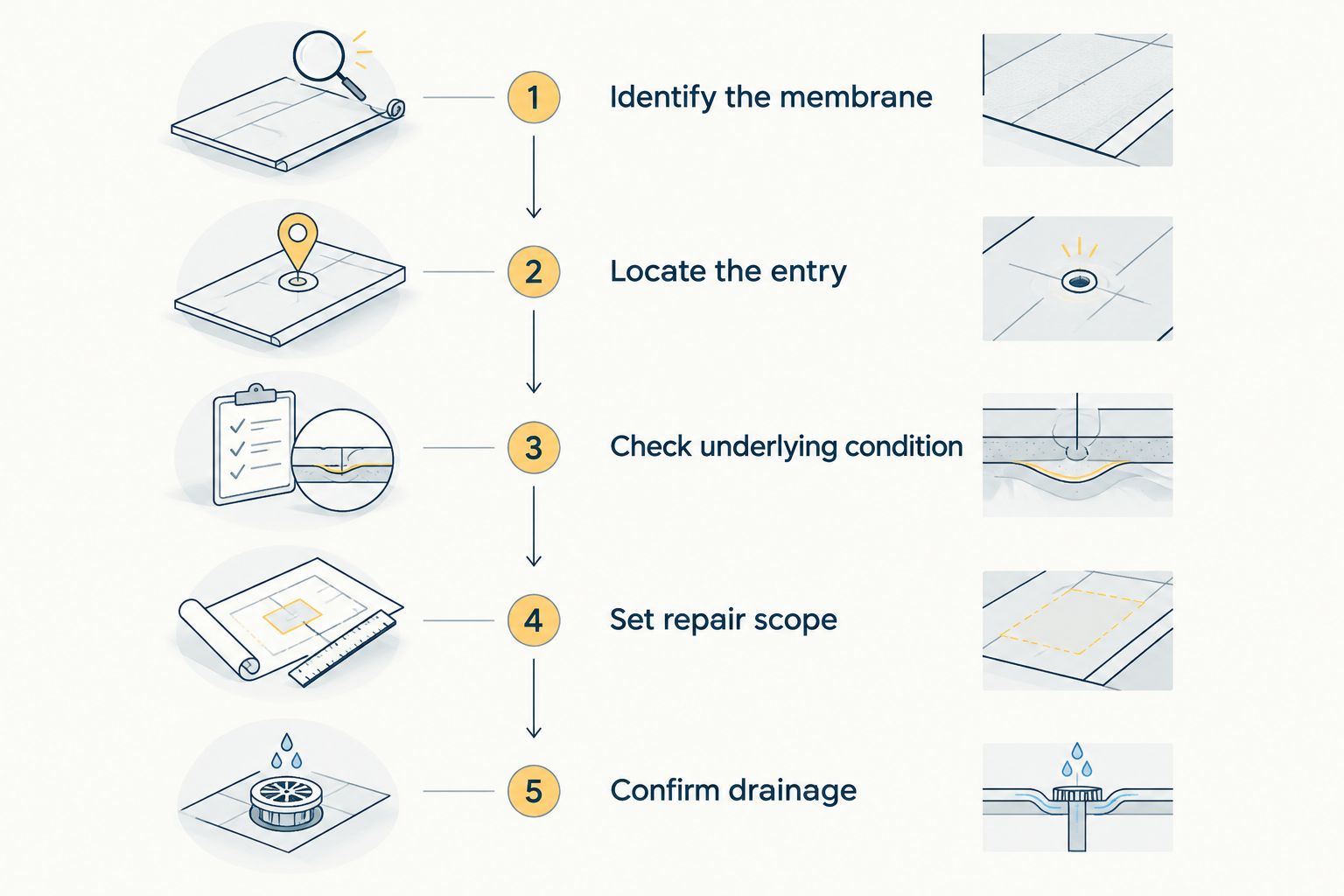
Use this sequence when discussing an estimate:
- Identify the membrane: Confirm what roof system is actually present.
- Locate the entry: Investigate the water source, not just the interior stain.
- Check underlying condition: Determine whether affected materials remain serviceable.
- Set repair scope: Separate localized repair, restoration, and replacement.
- Confirm drainage: Address water movement rather than coating around the problem.
Ask for the repair area, preparation, materials, and warranty in writing. Keep yourself off the roof; provide observations and photos taken safely from the ground or inside the home. During rainy season, report active water entry promptly rather than waiting for the next storm to test an uncertain repair.
FAQ
What's the best flat roof repair material for a Southern California home?
The best material is an approved repair system compatible with the existing membrane and the identified defect. An inspection determines whether localized repair, restoration, or replacement is appropriate.
Is silicone better than acrylic for a flat roof?
Neither coating is best for every flat roof. Some silicone systems permit ponding-water exposure, while many acrylic systems require reliable drainage; substrate compatibility and the specified system govern the choice.
Can a coating stop a flat roof leak?
A coating is not a substitute for identifying and repairing the leak source. A suitable coating system can be part of restoration after defects and underlying conditions are addressed.
Can you use the same patch on TPO and PVC?
Do not assume a patch approved for TPO is suitable for PVC. The membranes are different, and the contractor must confirm compatibility with the existing roof.
Does a leaking flat roof always need replacement?
A leaking flat roof does not automatically need replacement. Localized defects can be repairable, while widespread deterioration or damaged underlying materials can require a broader scope.
Should I apply roof sealant myself before the rainy season?
Do not climb onto the roof or attempt the repair yourself. Request an inspection and describe the leak from a safe location so the contractor can determine the appropriate response.
How quickly can I get a flat roof repair estimate?
Repair and replacement estimates are available in 24–48 hours, and virtual estimates are available. An inspection determines the appropriate scope; an estimate is not a promise of a completed repair within that period.
One last thing
The ceiling stain is evidence of water entry, not a map of the repair location. Water can travel within a roof assembly before becoming visible indoors. For your 2026 inspection, note when the leak appears and whether it follows rain, then let the contractor trace the source.
Related guides
- Temporary measures for a leaking roof during a storm
- Roof leak detection methods for Southern California homes
- Roof flashing repair techniques to stop leaks
About Team All Star Construction
Team Hero Construction, Inc. DBA Team All Star Construction holds CA Contractor License (CSLB) #1009760 and brings 40+ years of experience. An Owens Corning Preferred Contractor, the company offers repair warranties up to 2 years and a 10-year workmanship warranty on roofing and solar, including roof penetrations. Serving Los Angeles, Orange, Riverside, San Bernardino, San Diego, and Ventura counties. Call (310) 729-3013. Hablamos español.
Request a flat roof repair inspection from Team All Star Construction: call (310) 729-3013. Ask what can be repaired—and why—before agreeing to replacement.