
Identify the roof you have, not just when the house was built
The County's historic context statement describes Rowland Heights' transition from agriculture to a largely residential community after World War II, with commercial and industrial development toward the north. That development history is useful background, but it does not tell us the age or composition of an individual roof.
Bring records of previous covering changes, added equipment and repaired areas. A homeowner may be comparing an older roof section with a newer garage or another altered part of the house. Ask the assessor to label those sections separately. Decisions about shingle repairs or tile repairs should reflect what is installed now, including the condition of adjoining materials.
Give water-entry findings a precise location
Describe the affected room and what lies above it: a roof intersection, vent, wall or solar array, if known. Note whether water appeared after equipment work or whether the leak predates it. Timing can guide questions; it does not prove that the equipment caused the problem.
The assessment may involve a valley, flashing connection or vent penetration. Ask for the actual defective detail, the required opening and the proposed integration with the surrounding roof. If underlayment is affected, changing a visible tile alone may leave a separate issue unresolved.
Plan solar access before opening the roof
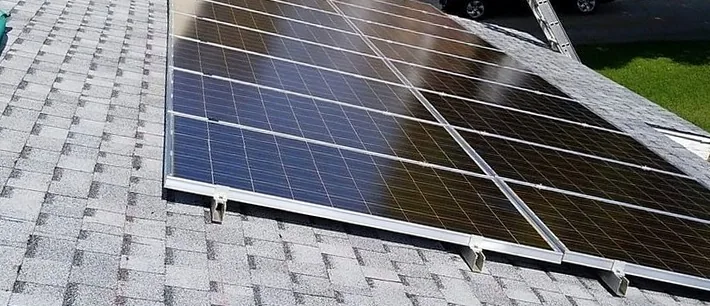
A repair beneath panels needs an agreed sequence. First establish whether equipment obstructs the affected area. Then identify the appropriately licensed responsibility for isolation, removal, protected storage, reinstallation and checks before return to service. Keep equipment handling distinct from repairing the waterproofing and any damaged roof support.
Our solar-related roof leak information helps frame that conversation. Do not assume every leak requires removal of the entire array. Equally, a roof quote that says nothing about equipment does not establish that removal and reconnection are included. Ask about existing warranties before authorizing another party to alter an installation.
County permits and utility records answer different questions
Rowland Heights is unincorporated and is included in the County's East San Gabriel Valley Area Plan, effective in 2024. Use the County address locator to identify the permit office for the property. The proposed roof scope and any electrical changes should be described accurately; the area plan itself is not a project permit.
If the property's electric account is with Southern California Edison, check proposed equipment changes against SCE's current interconnection guidance. Its rules distinguish different modifications and whether notification or a new application is needed. Restoring equipment and expanding a system are not interchangeable descriptions. Confirm the actual equipment scope with the utility rather than promising that a particular tariff or approval will remain unchanged.
Decide what to retain and what to rebuild
A useful repair proposal explains the repair boundary and how the remaining roof will be connected to it. Where damage extends into roof decking, establish an approval process for concealed findings. If an association or another owner controls a shared roof, settle authorization before committing to a construction date.
Use our repair-or-replace guide when deterioration appears in several areas. Compare reasons and scope, not just project totals. The written-estimate checklist helps identify omissions; ask for the actual repair warranty and exclusions. For an insurance inquiry, keep a factual damage record without assuming coverage.
ZIP codes and neighboring areas
The County's Rowland Heights Library on Nogales Street uses 91748. This verifies a mailing association, not every address served by that ZIP. Provide your street address for confirmation.
Our Los Angeles County service information connects to nearby Diamond Bar, Industry, La Habra Heights and Walnut roof repair pages.
Questions from Rowland Heights homeowners
Does a leak noticed after solar work establish the cause?
No. Record the timing and location, then have the roof and affected connections assessed. The sequence of events is useful evidence but is not a diagnosis by itself.
Must the entire solar array come off for one roof repair?
Not necessarily. The affected area and safe equipment access determine the scope. Ask which panels, if any, obstruct the repair and who will handle them.
Can a roof permit settle every utility requirement?
No. Local construction approval and utility interconnection records serve different purposes. Confirm the equipment changes with the account's utility as well as the permitting agency.
What should happen if another owner controls part of the roof?
Identify the repair boundary and obtain the appropriate authorization before scheduling work. Do not assume ownership or association responsibility from the appearance of the building.
Team Hero Construction Inc. DBA Team All Star Construction · CSLB #1009760 · 40+ years in construction · (310) 729-3013.