Slate Roof Repair in Southern California
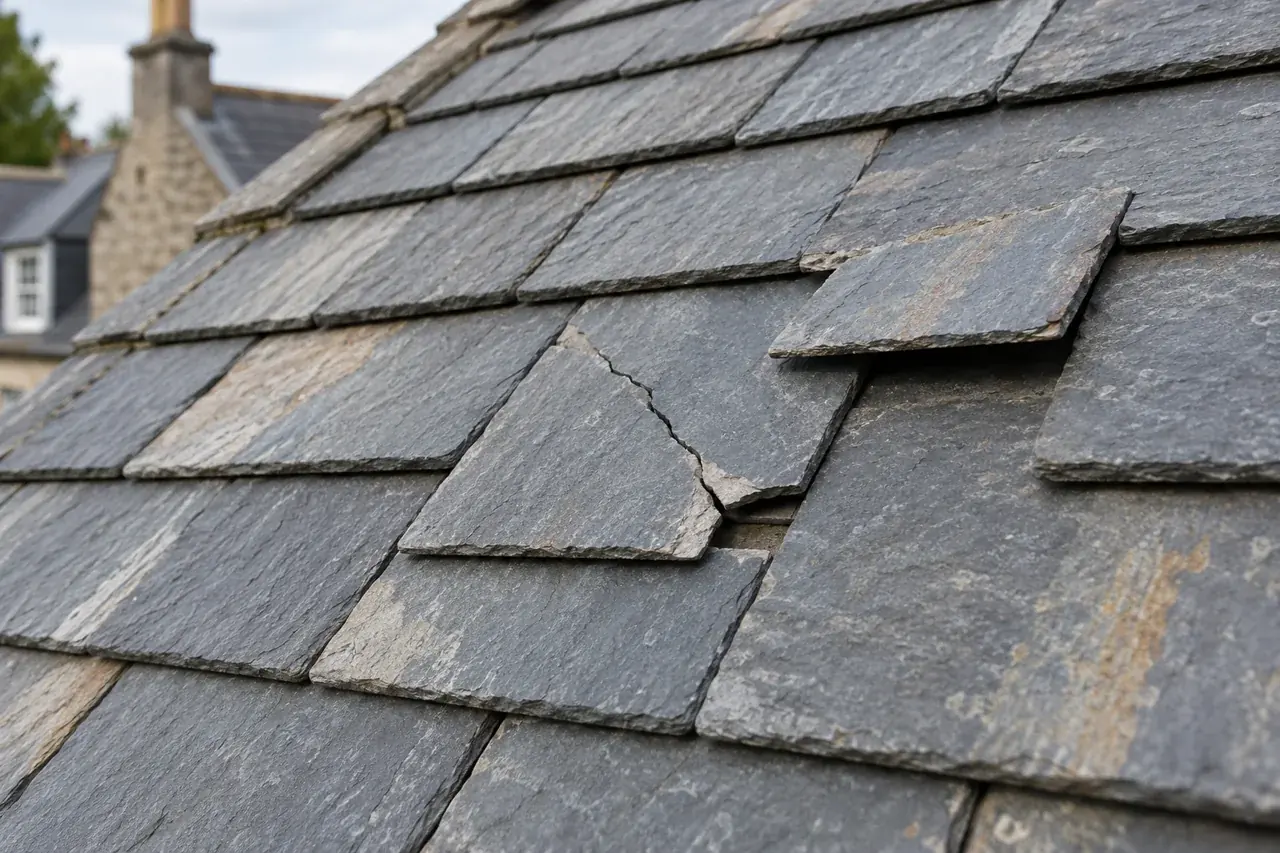
Natural slate and synthetic slate are different roofing products. A repair starts by identifying the material and assessing damaged pieces, attachments, flashing, and the condition of the surrounding roof.
Roofing & Solar Experts · Serving Southern California
Tell us what your roof needs.
Identify natural or manufactured slate
Product identification affects replacement availability, fastening, and the repair method. Matching thickness, shape, and appearance can be important. Send product records or a ground-level photograph when available.
Check slipping, breakage, and nearby flashing
A slipped piece, a cracked slate, and a leaking flashing connection can require different work. The visible symptom should be evaluated with its surrounding details before choosing a repair.
Confirm the method and trade scope
Fragile roofing needs suitable access and an appropriate repair approach. Availability of compatible materials and the right roofing specialist is confirmed during project review. The written proposal should identify the work and any limits before scheduling.
Request this repair near you
Related roof repair services
How much does slate roof repair cost?
A written estimate depends on the cause, repair extent, access, materials, and concealed damage.
Find slate roof repair near you
Los Angeles County
Treat matching as more than a color decision
For natural slate, a replacement specification should consider the stone type, weathering characteristics, size, shape, and surface texture as well as color. The National Slate Association explains that undersized replacements can compromise the roof's water-shedding arrangement. A sample that looks close from the ground therefore does not settle suitability. Ask how the proposed material fits the existing pattern and whether new or reclaimed slate is being considered. Availability and condition need confirmation before either option becomes a promised match in the estimate.
Distinguish broken slate from slate removed for access
Sound natural slates may need to be temporarily removed so a professional can reach flashing or underlying roof layers. That is a different task from replacing pieces because the stone itself is damaged. Ask the proposal to distinguish material intended for reuse from material requiring replacement, and explain how unexpected breakage or unsuitable pieces would be handled. If the problem concerns a chimney or valley, the estimate should identify that connection separately so a count of replacement slates is not mistaken for the complete repair scope.
Organize identification and appearance records before ordering
Gather supplier invoices, product labels, earlier repair photographs, and any documentation of a decorative layout. Tell the assessor if spare material is already stored on the property; its suitability still needs evaluation. For a manufactured slate-look roof, retain the exact product-family information rather than describing it only as slate. If a visible pattern or designated historic feature matters, identify that requirement before procurement. The owner should understand the proposed appearance, any remaining sourcing uncertainty, and which decisions need approval before material is committed to the project.
Questions about this project
Are natural slate and synthetic slate repaired the same way?
Not necessarily. They are different products with different attachment and compatibility requirements. Product identification is part of the assessment.
What information helps identify replacement slate?
Provide existing product records and safe photographs showing the shape and exposed surface. Natural stone and manufactured products differ; dimensions, thickness, attachment method and available matching material must be established before a repair method is chosen.
Can a homeowner walk across slate to photograph a slipped piece?
Avoid walking on the roof for photographs; fragile pieces and damaged attachments can create unsafe conditions and further breakage. Ground-level images are a starting point, with close inspection and suitable access planned by the appropriate roofing professional.