
Wood Shake & Shingle Roof Repair in Southern California
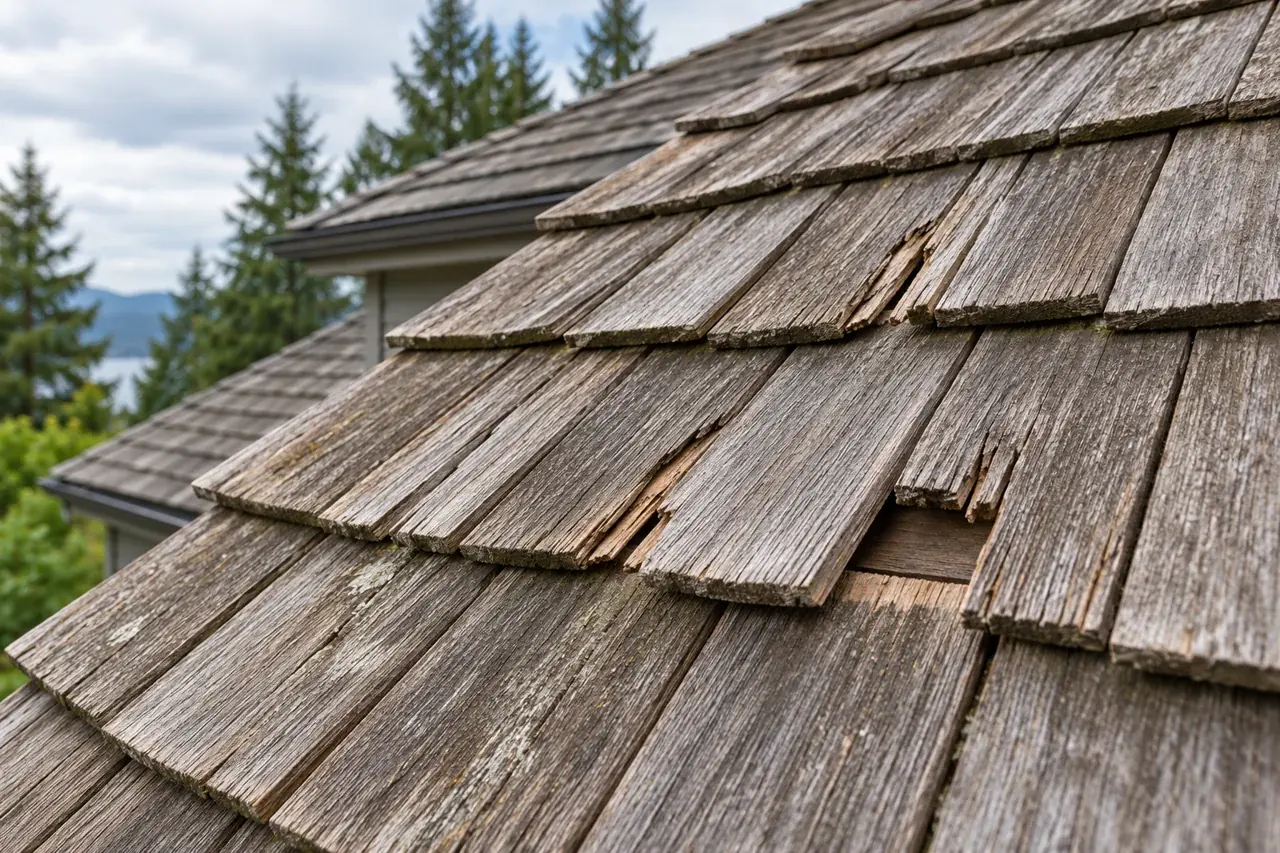
Wood shakes and wood shingles require a material-specific assessment. The condition of surrounding pieces, the waterproofing assembly, and the availability of suitable replacement materials determine whether a local repair is practical.
Roofing & Solar Experts · Serving Southern California
Tell us what your roof needs.
Assess the surrounding roof condition
An isolated split or missing piece needs a different response from widespread deterioration. The review should consider the surrounding roofing and the layers below, not just the most visible damaged piece.
Review material suitability before replacement
Replacement material, roof assembly compatibility, and any applicable property requirements need confirmation before work is selected. If the existing roof is no longer a practical repair candidate, compare suitable replacement options.
Keep access and expectations realistic
Aging wood roofs can be fragile. Avoid walking on the surface to photograph damage. Repairs may have a different appearance from weathered existing pieces, and the estimate should define the area and limitations.
Request this repair near you
Related roof repair services
How much does wood shake & shingle roof repair cost?
A written estimate depends on the cause, repair extent, access, materials, and concealed damage.
Find wood shake & shingle roof repair near you
Los Angeles County
San Diego County
Separate cleaning, treatment, and repair proposals
A proposal to clean or treat cedar should explain what that service is intended to accomplish. It is not interchangeable with repairing an opening or replacing deteriorated roofing. The Cedar Shake & Shingle Bureau cautions against sealing cedar in a way that prevents normal drying. Before accepting a treatment, request the product information and ask why it is appropriate for this roof. A cleaner-looking surface alone is not evidence that a recurring leak has been resolved or that damaged wood has become serviceable.
Bring the maintenance history into the assessment
Keep invoices for previous cleaning, coatings, preservative treatments, and localized repairs, even if they were arranged by an earlier owner. Identify the sections each service covered and whether leakage began before or afterward; that sequence is information for investigation, not proof of causation. Mention visible accumulations of needles or leaves and whether a shaded portion appears different from an exposed one. If a maintenance proposal includes pressure washing, ask the professional to explain the method and its suitability, since inappropriate washing can damage wood roofing.
Make the completion record more useful than a piece count
Ask for a marked photograph or simple roof-area description showing where work is proposed and, later, what was completed. The record should distinguish replacement pieces, work at a nearby junction, and maintenance recommended elsewhere. If the assessment finds additional deterioration, request an explanation before expanding the agreed area. Save the replacement product information with that record so a later assessment can identify the previous work. These details are more informative than an invoice that lists a number of shakes without locating them or describing the surrounding findings.
Questions about this project
Is a wood shake repair always possible?
No. Overall condition, compatible material availability, and applicable project requirements affect whether repair or replacement is the appropriate option.
Why is the condition of neighboring shakes important for a small repair?
Surrounding pieces must remain serviceable enough to work with the replacement and underlying layers. Fragility or widespread deterioration can prevent a limited repair from integrating reliably, even when only one missing shake is apparent from the ground.
Can replacement cedar always be installed wherever wood roofing exists?
No; existing material does not establish current project requirements or product suitability. Confirm the address, proposed scope and acceptable assembly before selecting replacement pieces, particularly if the work expands beyond a localized repair.